Results for “species”
Type a name: scientific, common, or one a species used to go by. Or narrow the catalogue with the filters.
Filters
Leiarius pictusSailfin Pim
authority not recorded
Max length600mm SL24in SLTank240 × 90cm96 × 36inTemp22–26°C72–79°FpH6.2–7.6Also known as the painted, saddle or marbled sailfin catfish, it's debatable as to whether this species should be considered an aquarium subject at all given its eventual size. All too often, juveniles are sold without adequate information regarding their long term care. These cats can and will attain something close to their maximum size in captivity, and will do so quite quickly. The myth that they will only grow to match the size of the tank they're kept in is just that. It's a...
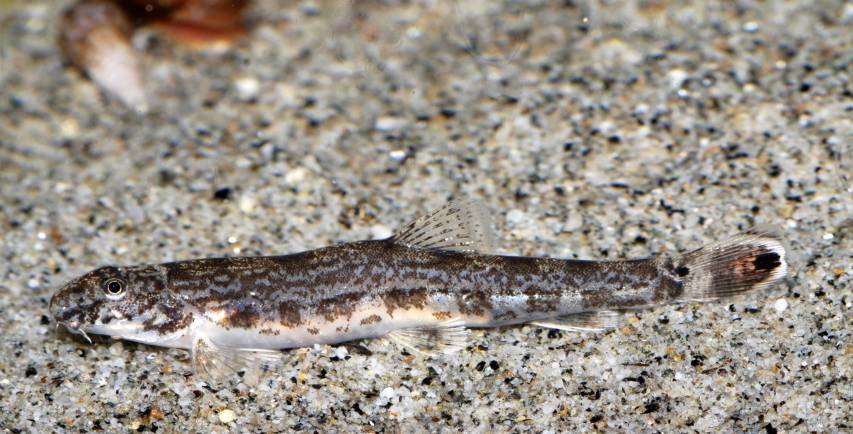
Lepidocephalichthys annandalei
Chaudhuri, 1912
Max length45mm SL1.8in SLTank45 × 30cm18 × 12inTemp22.5–26°C73–79°FpH5.5–7.5Sand-dwelling loaches from the families Botiidae, Cobitidae and Nemacheilidae are also suitable but proper research is essential as some can be excessively territorial or otherwise aggressive. A community based around fishes from its natural waters could include species such as Badis badis,...
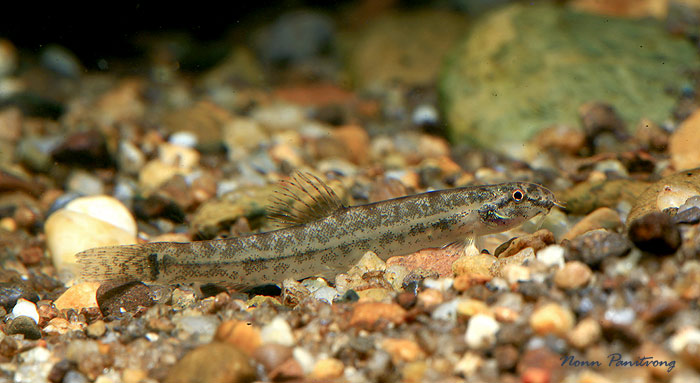
Lepidocephalichthys hasselti
Valenciennes, 1846
Max length60mm SL2.4in SLTank60 × 30cm24 × 12inTemp23–26°C73–79°FpH5.5–7.5At one locality close to Ban Na Hwai, Chiang Mai Province, Thailand L. hasselti was collected from a shallow (<0.5 m) pool in a swampy zone between forest and rice fields. The substrate was of mud, there was no aquatic vegetation and it was being used as drinking water by local animals, with the only effluent connected to a 'small creek'. Other species found there were Physoschistura pseudobrunneana, Rasbora hobelmani and Systomus cf. orphoides.
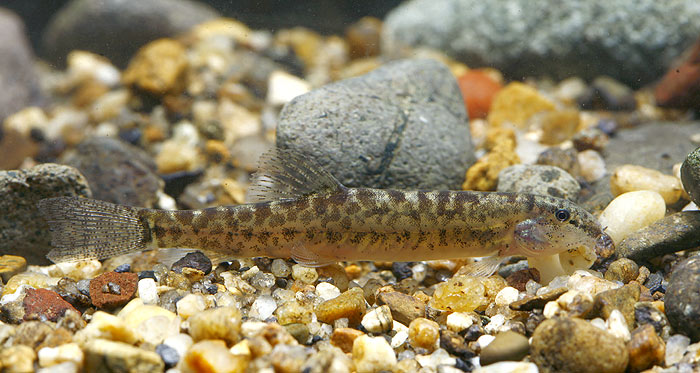
Lepidocephalichthys kranos
Havird & Page, 2010
Max length45mm SL1.8in SLTank60 × 30cm24 × 12inTemp23–26°C73–79°FpH5.5–7.5The family Cobitidae, often referred to as 'true' loaches, is widely-distributed across most of Eurasia with the Indian subcontinent, Southeast Asia and China representing particular centres of species diversity. Phylogenetic analyses by Tang et al. (2006), Šlechtová et al. (2007) and Šlechtová et a...
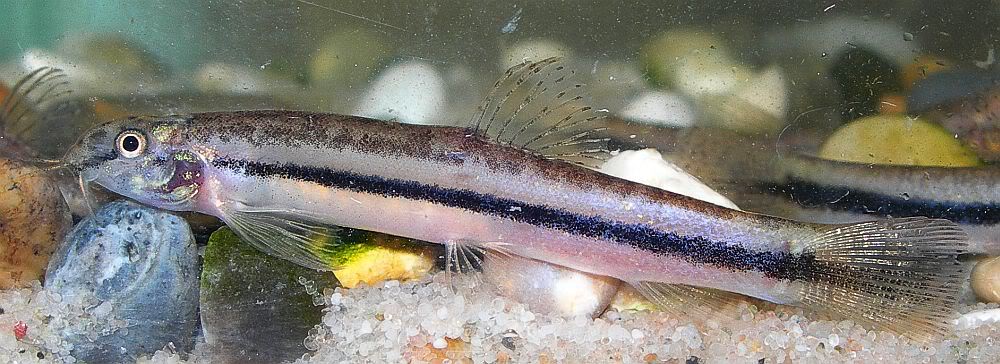
Lepidocephalichthys sp. 'LE2'
authority not recorded
Max length60mm SL2.4in SLTank45 × 30cm18 × 12inTemp26°C79°FpH6.0–7.5This fish may only have been exported for aquaria on a single occasion to date. It exhibits characters reminiscent of both L. alkaia and L. guntea, and has been referred to as L. cf. guntea) but is most likely an undescribed species (Havird, pers. comm.).
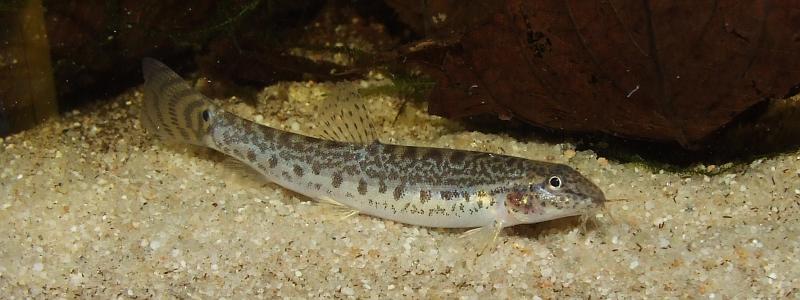
Lepidocephalichthys thermalis
Valenciennes, 1846
Max length50mm SL2.0in SLTank45 × 30cm18 × 12inTemp20–25°C68–77°FpH6.0–8.0This species is available sporadically and makes an excellent choice for those new to keeping loaches. It's distinguishable from congeners by a combination of characters including: truncate/rounded caudal-fin; no scales on top of head; dark, squarish spots o...
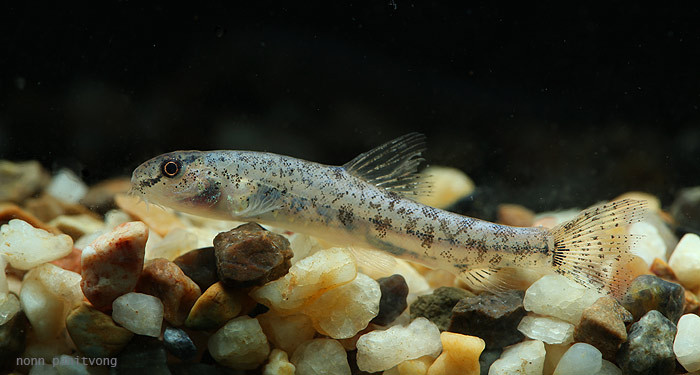
Lepidocephalichthys zeppelini
Havird & Tangjitjaroen, 2010
Max length26mm SL1.0in SLTank45 × 30cm18 × 12inTemp20–26°C68–79°FpH6.0–7.5The type locality consisted of remnant ephemeral pools in otherwise dry agricultural land, and many adults were collected from such habitats. Other species present included the congener L. hasselti plus members of Anabas, 'Puntius', Rasbora, Channa, and Hampala.
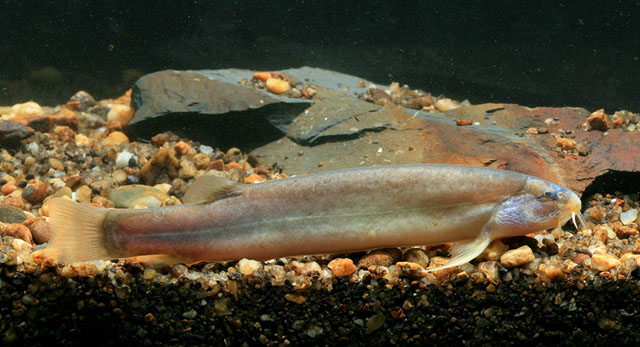
Lepidocephalus macrochir
Bleeker, 1854
Max length90mm SL3.5in SLTank75 × 30cm30 × 12inTemp22–26°C72–79°FpH5.5–7.5The distribution records for this species are somewhat confusing. It was described from the confluence of the Lamatang and Enim rivers, Palambang Province, Sumatra and has since been recorded from Thailand (Chao Phraya River), Peninsular Malaysia (Pahang River) plus the islands of Java (Solo River) and Borneo (Kapuas and Barito rivers).
Leporacanthicus joselimaiSultan Plec
authority not recorded
Max length150mm SL6in SLTank120 × 30cm48 × 12inTemp25–27°C77–81°FpH6.0–7.5Leporacanthicus species are commonly referred to as "vampire plecs". This is derived from the unique upper jaw dentition exhibited by members of this genus, unsurprisingly consisting of two large teeth or "fangs". The exact use for these is unknown, but they're probably utilised to grip prey items such as snails or other aquatic invertebrates in some way. Another feature shared by all Leporacanthicus is a small bony growth of unknown use on top of the head. This particul...
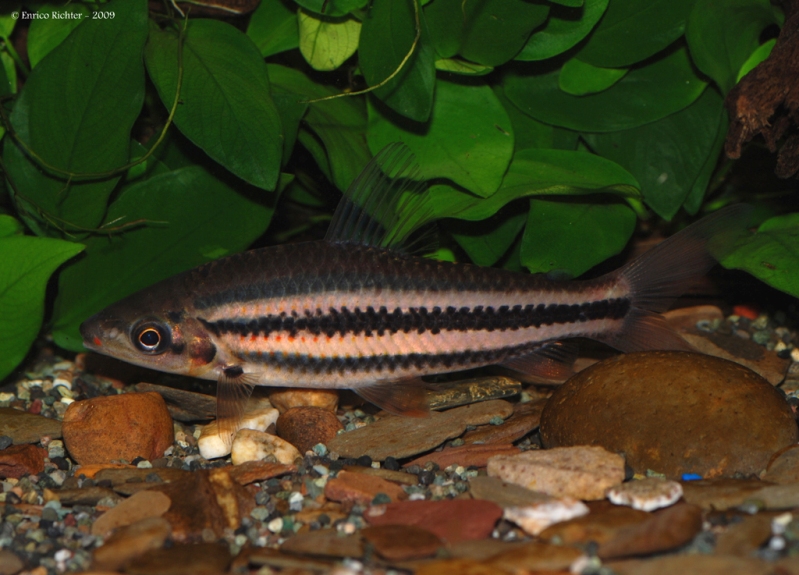
Leporinus arcusLipstick Leporinus
Eigenmann, 1912
Max length300mm SL12in SLTank210 × 60cm84 × 24inTemp20–28°C68–82°FpH6.0–7.5Type locality is 'Tukeit, Guyana', and this species is known from various river drainages of Venezuela, Guyana, Suriname and French Guiana including the Orinoco, Essequibo, and upper Courantyne (aka Corantijn) basins. Additional records exist from the upper Amazon basin in Guyana, these presumably corresponding to the Takutu river basin, itself part of the upper rio Branco.
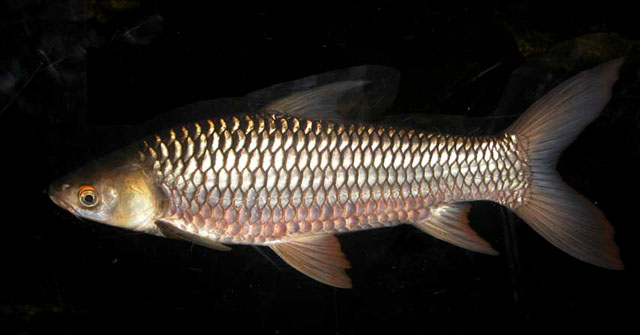
Leptobarbus hoeveniiMad Barb
Bleeker, 1851
Max length1000mm SL39in SLTanknot recordedTemp20–26°C68–79°FpH6.0–8.0Apparently native to Peninsular Malaysia plus the Greater Sunda Islands of Borneo, Sumatra, and Java. Reports of this species from the Mekong, Chao Phraya, and other rivers in Indochina refer to the congener L. rubripinna (see 'Notes'). Type locality is 'Indonesia: Borneo: Kalimantan Selatan: Banjarmasin'.
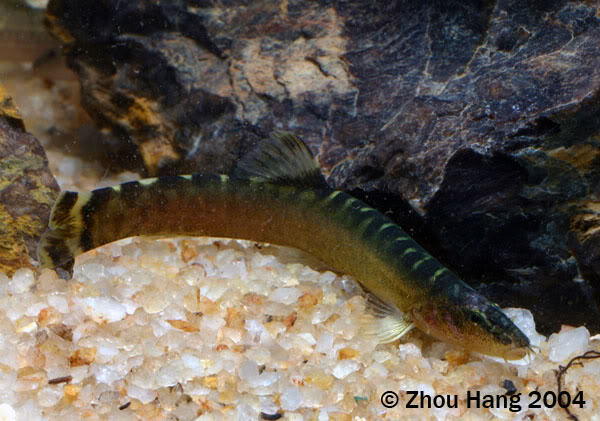
Leptobotia guilinensis
Chen, 1980
Max length100mm SL3.9in SLTank120 × 30cm48 × 12inTemp15.5–21°C60–70°FpH6.5–7.5L. elongata is the type species of the genus but according to current knowledge there exist 13 members in total, all of which are endemic to China and northern Vietnam. They're diagnosable by the following shared characters: possession of a simple (non-bifurcated), short sub-ocular spine not extending beyond the posterior edge of the eye; a laterally-compressed body; relatively deep caudal peduncle; pelvic fins reaching origin of anal-fin; anus below base of dorsal-fin and equidistant between pelvic and anal-fin origins.
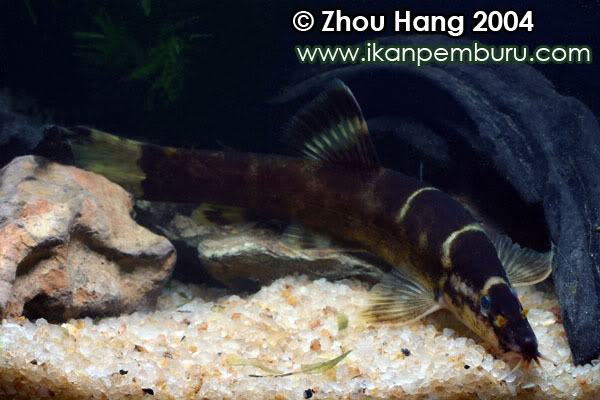
Leptobotia rubrilabris
Dabry de Thiersant, 1872
Max length150mm SL6in SLTank120 × 45cm48 × 18inTemp15.5–21°C60–70°FpH6.5–7.5Should be kept in a set-up designed to resemble a flowing stream with a substrate of variably-sized rocks, gravel and some water-worn boulders. This can be further furnished with driftwood roots and branches arranged to form some shaded spots while lengths of PVC piping or similar can be used to provide additional cover. Although most plant species will fail to thrive in such surroundings hardy genera such as Microsorum, Bolbitis or Anubias spp. can be grown attached to the décor and bright lighting will promote the growth of aufwuchs.
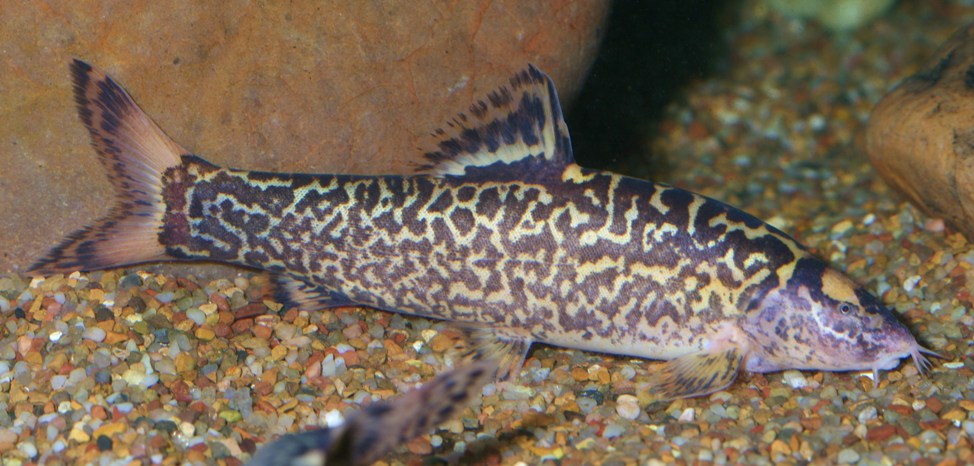
Leptobotia taeniops
Sauvage, 1878
Max length150mm SL6in SLTank120 × 45cm48 × 18inTemp15.5–21°C60–70°FpH6.5–7.5L. taeniops is almost unheard of in the aquarium trade although we know of one or two private collectors maintaining it. It was previously included in the related genus Parabotia. L. elongata is the type species of the genus but according to current thinking there exi...
Limia melanogasterBlack-bellied Limia
authority not recorded
Max length40mm SL1.6in SLTank60 × 30cm24 × 12inTemp22–28°C72–82°FpH7.5–8.5This species was originally classified in the genus Limia before this was made a sub-genus of Poecilia. Confusingly they have been reclassified once more into Limia, but are still referred to as members of Poecilia in much of the available literature. L. melanogaster is endemic to Jamaica. It is not often seen for sale in the hobby....
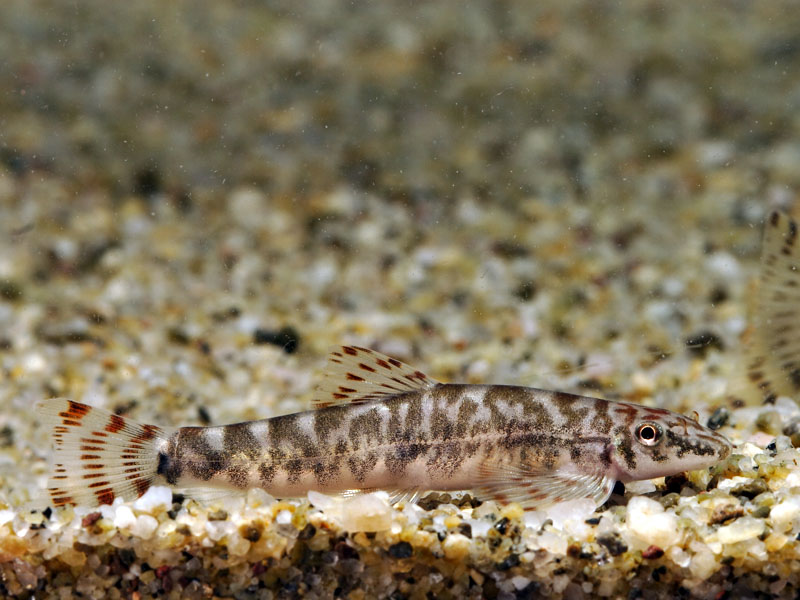
Liniparhomaloptera disparisBroken-band Hillstream Loach
Lin, 1934
Max length80mm SL3.1in SLTank80 × 30cm31 × 12inTemp20–24°C68–75°FpH6.5–8.0L. disparis is sometimes available as bycatch among shipments of other species such as Rhinogobius duospilus but also appears on trade lists under the fictitious scientific name 'Homaloptera hoffmani'. It can be told apart from similar-looking members of the genus Formosania by its noticeably shorter barbels and from Vanmanenia spp. by the fact that the rostral fold is not lobed and the mouth is relatively small (25% head width. In addition the lower lip in Liniparhomaloptera is not divided and has a flat, papillated edge.
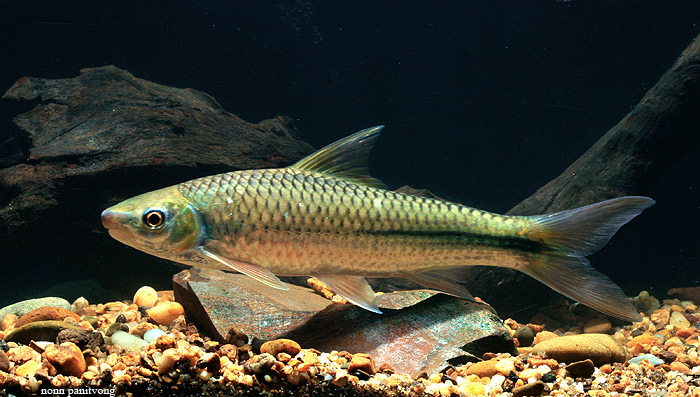
Lobocheilos melanotaenia
Fowler, 1935
Max length200mm SL8in SLTank180 × 60cm72 × 24inTemp20–26°C68–79°FpH6.0–8.0The majority of Lobocheilos species are endemic to the Greater Sunda Islands of Borneo, Sumatra, and Java, and are uncommon in the aquarium trade, but the widespread Indochinese taxa L. melanotaenia and L. rhabdoura are available on a sporadic basis. L. melanotaenia can be distinguished from L. rhabdoura by the following comb...
Lophiobagrus cyclurusAfrican Bullhead
authority not recorded
Max length100mm SL3.9in SLTank75 × 30cm30 × 12inTemp23–26°C73–79°FpH7.5–9.0An interesting addition to the Tanganyikan community that is not often seen in the hobby. There is a rumour that this cat can secrete a poisonous mucous when stressed that can kill other fish in the aquarium but this has not yet been 100% confirmed. It may be wise to keep it in as large an aquarium as possible just in case. There are currently just 4 species of Lophiobagrus described. All are from Lake Tanganyika....
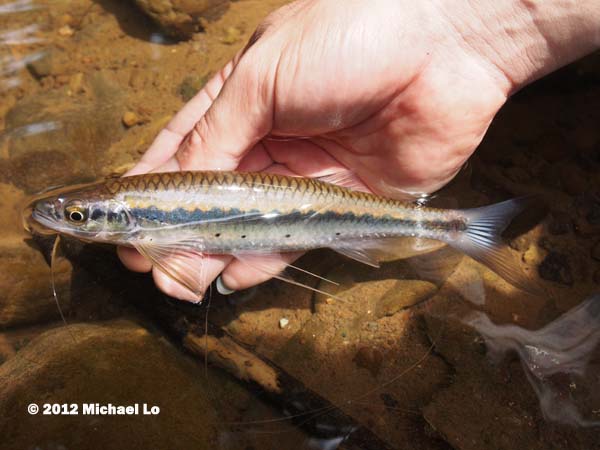
Luciosoma pellegrinii
Popta, 1905
Max length170mm SL7in SLTanknot recordedTempnot recordedpHnot recordedThe five species which currently comprise Luciosoma can be distinguished by elements of colour pattern. Popta described the colour pattern of L. pellegrinii as follows: body colour olive dorsally, with dark-edged scales, yellow ventrally; a lateral series of dark spots on the flank forming a midlateral band which extends onto the opercle but not the head; 4-8 blackish-brown, distinctly-separate spots on the lateral line; fins yellow; dorsal and anal fins with a blackish-brown band; anterior half of some pectoral-fin rays blackish-brown...
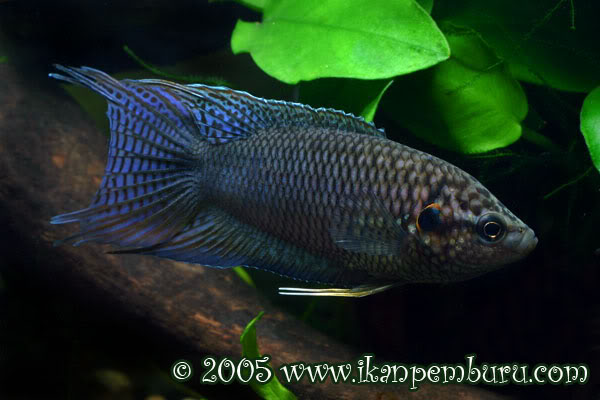
Macropodus hongkongensis
Freyhof & Herder, 2002
Max length70mm SL2.8in SLTank80 × 30cm31 × 12inTemp15–25°C59–77°FpH6.0–8.0In 1996 the species was known from five localities in Hong Kong, but at least one of these has been destroyed and it is now known only from Tai Po and Sai Kung districts. Additional populations have subsequently been discovered in Guangdong and Fujian provinces on the southern Chinese mainland. Type locality is 'China: Hong Kong: Tai Po: Sha Lo Tung'.