Lepidocephalichthys annandalei
Formerly Lepidocephalichthys menoni Pillai & Yazdani, 1976 · Lepidocephalus annandalei Chaudhuri, 1912
Last revised 2013Edit this page
On this page13 sections
Quick factsEdit
Difficulty5 of 8 measures
- Space
- medium tank
- Water
- flexible
- Temp
- needs a steady temperature
- Diet
- unknown
- Temperament
- unknown
- Social
- needs to be in a group
- Compatibility
- choose tankmates carefully
Other demands
Each of these can raise the rating on its own, whatever the measures above say.
- Hardiness
- unknown
Before you buy
Needs a tight-fitting lid as this species is known to jump
Ensure that small specimens are unable to enter filter intakes and cover the tank well as most loaches do jump at times, especially when first introduced.
Needs a soft, sandy substrate
Not difficult to keep but must be provided with a soft, sandy substrate since some of its time will be spent completely buried, or with only eyes protruding.
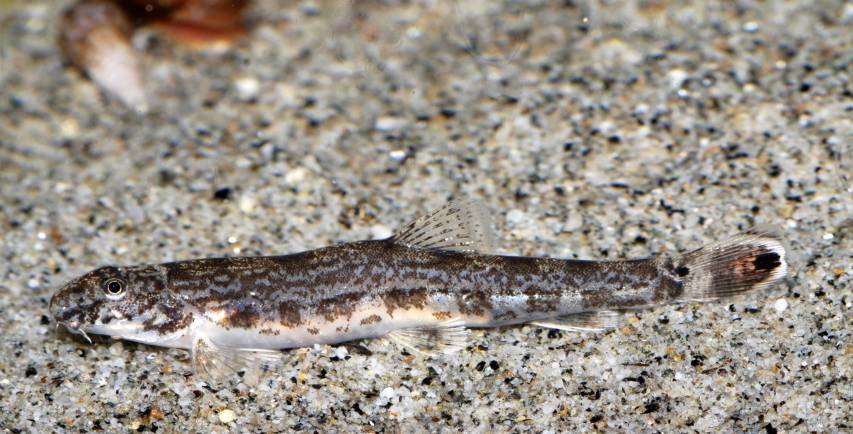
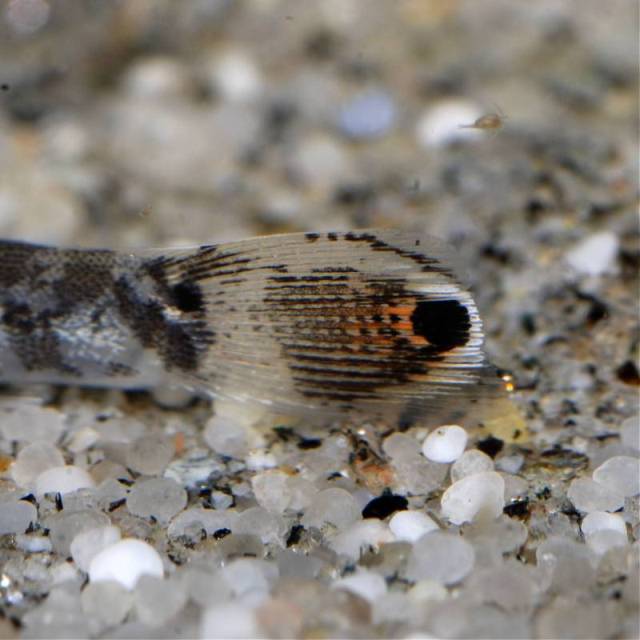
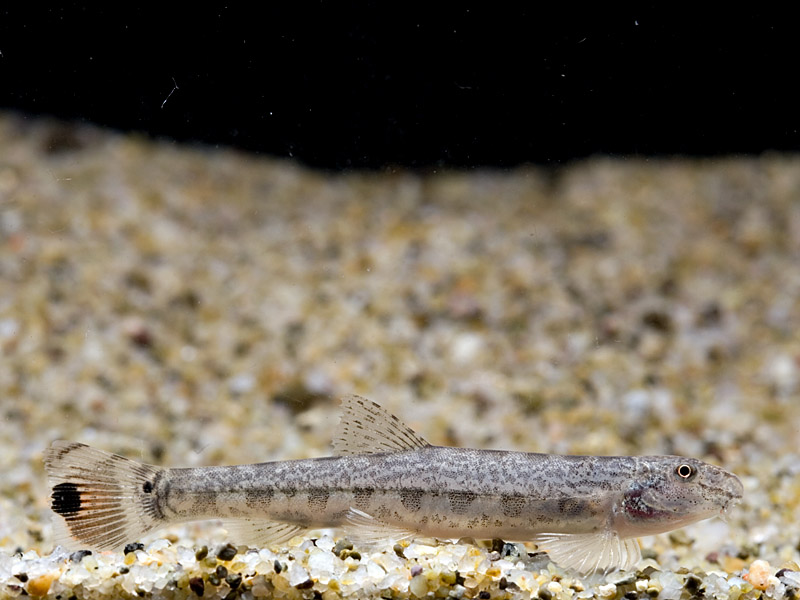
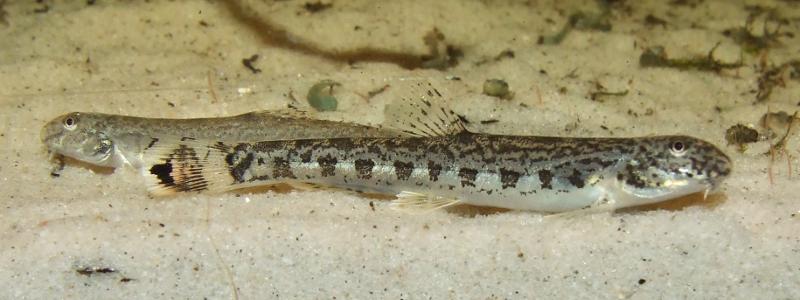
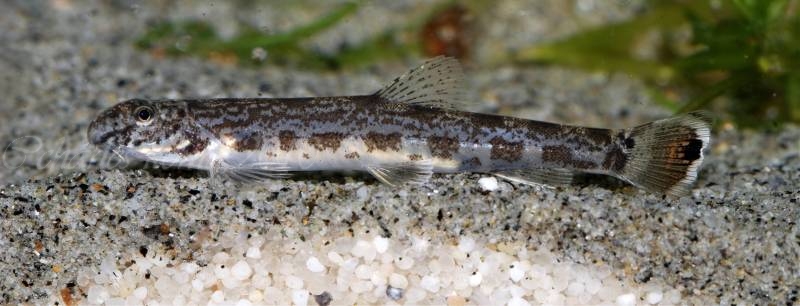
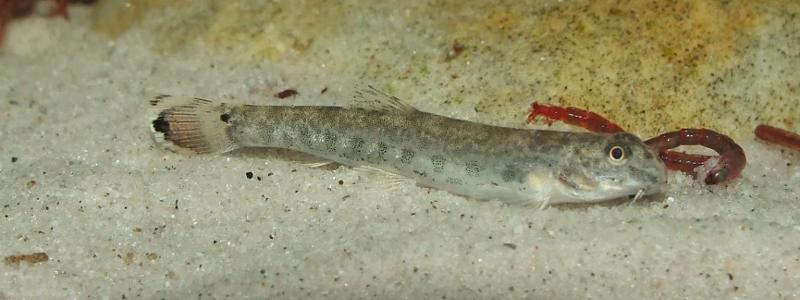
Lepidocephalichthys annandalei is a cobitid loach from the mid-to-lower Ganges and Brahmaputra systems in Nepal, Bangladesh and north-east India. Rarely traded, it has been sold as L. sp. 'peacock', presumably for its caudal-fin pattern of two dark v-shaped markings, unique within the genus. Fish in the trade differ slightly from the original description, in particular lacking a notched caudal fin.
Etymology
Editannandalei: named for Dr. N. Annandale, former Director of the Zoological Survey of India.
Distribution
EditMid-to-lower reaches of the Ganges and Brahmaputra river systems in Nepal, Bangladesh plus surrounding north-east Indian states of Uttar Pradesh, Bihar, West Bengal, Assam and Meghalaya.
The type series was collected from two localities in India; the Mahananda river near the city of Siliguri (Ganges basin) and Teesta river close to Jalpaiguri town (Brahmaputra).
Habitat
Write a noteEditMost commonly found in shallow, slow-moving sections of streams or calm habitats such as swamps, oxbows, backwaters and paddy fields. These are often heavily-vegetated or littered with submerged roots, branches and leaf litter, with substrates composed of soft mud or silt.
Water clarity and depth vary on a seasonal basis across much of its range, and at certain times of year it probably enters temporarily-flooded zones. Conversely during dry periods some habitats may become stagnant with blooms of macrophytic algae and resultant hypoxia (oxygen depletion).
Under such conditions members of this genus are able to use the intestine as a supplementary breathing organ and have been observed darting to the surface to gulp atmospheric air. Some species have even been recorded to survive periods in moist sand or mud in the absence of water.
Aquarium size
Write a noteEditBase dimensions of 45 ∗ 30 cm18 ∗ 12 in or more are required.
Maintenance
Write a noteEditNot difficult to keep but must be provided with a soft, sandy substrate since some of its time will be spent completely buried, or with only eyes protruding. When coarser gravel is used it may become stressed or damage itself trying to dig, and feeding behaviour can be inhibited.
Other décor can include water-worn rocks and driftwood branches and tree roots arranged to form plenty of hiding places and shaded spots - add these prior to the substrate to prevent them being toppled by digging activity.
Lighting can be quite dim unless you intend to grow plants and a few handfuls of leaf litter would complement the natural effect.
As this species hails from sluggish waters high flow rates are best avoided although a degree of oxygenation is recommended.
Ensure that small specimens are unable to enter filter intakes and cover the tank well as most loaches do jump at times, especially when first introduced.
Water conditions
EditThese recommendations come from this profile’s own figures. They contain affiliate links, so we may earn a commission.
Diet
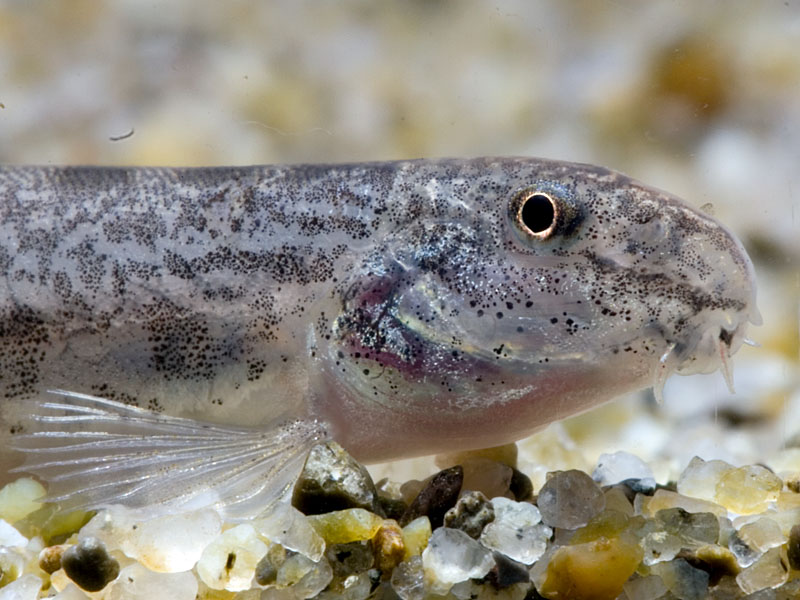
Write a noteEditChiefly a micropredator typically sifting mouthfuls of substrate through the gills from which insect larvae, small crustaceans and suchlike are extracted.
In the aquarium it will accept sinking dried foods but should also be offered regular meals of small live and frozen fare such as Daphnia, Artemia, bloodworm, etc.
Behaviour and compatibility
Write a noteEditLepidocephalichthys spp. are peaceful both with one another and other fishes and there exist no reports of them harming tankmates though they may prey on eggs or fry.
They fare best in the presence of conspecifics and should ideally be kept in a group of 4 or more specimens.
L. tomaculum should do well alongside fishes from similar environments that occupy the upper part of the water column such as Trichopodus, Trichogaster, Trichopsis or certain Danio species.
The presence of these should also make it less timid as the absence of fishes in the upper water column is often used as a signifier for approaching danger in nature.
Sand-dwelling loaches from the families Botiidae, Cobitidae and Nemacheilidae are also suitable but proper research is essential as some can be excessively territorial or otherwise aggressive.
A community based around fishes from its natural waters could include species such as Badis badis, Acanthocobitis zonalternans, Lepidocephalichthys guntea, Danio rerio, Trichogaster chuna and Trichogaster lalius.
Sexual dimorphism
Write a noteEditIn mature males the pectoral fins are enlarged with fused, thickened innermost (7th and 8th) rays forming a structure known as the lamina circularis.
This generally varies in form depending on species and is present in some other cobitid genera though may be formed by different rays.
Adult females are typically heavier-bodied and a little larger then males.
Reproduction
Write a noteEditPresumably a seasonal spawner in nature but hasn't been bred in captivity as far as we know.
Notes
EditL. annandalei is rarely-traded but when available it's been sold under the name L. sp. 'peacock'.
Presumably this is in reference to the caudal-fin patterning, unique within the genus and consisting of two dark, v-shaped markings with a dark blotch on the upper base and another towards its outer edge.
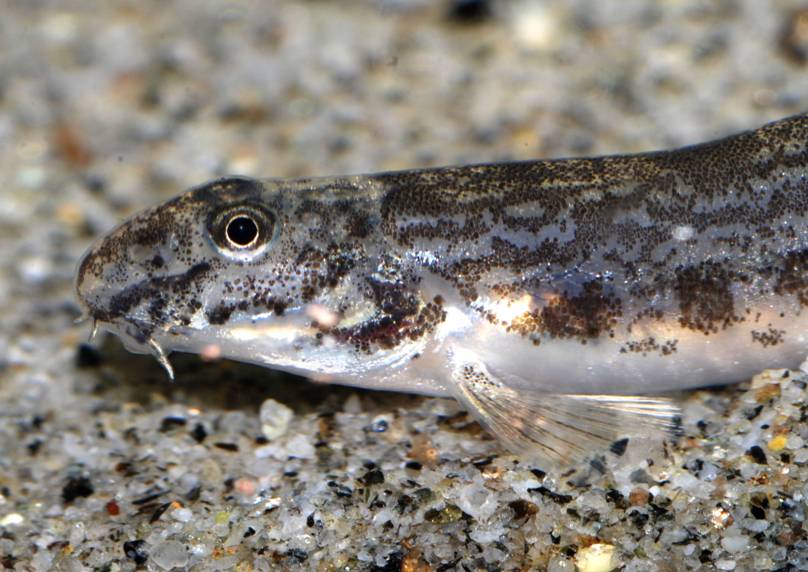
Other distinguishing characters include a combination of a truncate, notched caudal-fin; a patch of embedded or absent scales on top of the head; dorsal-fin origin anterior to pelvic-fin origin; moderate to large adult size; relatively short barbels with the first rostral pair failing to reach the anterior nostril.
The fish in the aquarium trade exhibit one or two differences when compared with the original descripition, in particular lacking a notched caudal-fin.
The family Cobitidae, often referred to as 'true' loaches, is widely-distributed across most of Eurasia with the Indian subcontinent, Southeast Asia and China representing particular centres of species diversity.
Phylogenetic analyses by Tang et al. (2006), Šlechtová et al. (2007) and Šlechtová et al. (2008) revealed that the group constitutes a separate genetic lineage to the family Botiidae (the two were previously grouped together under Cobitidae as subfamilies Cobitinae and Botiinae).
In the most recent study Lepidocephalichthys was not found to be as closely-related to Pangio, Lepidocephalus or Kottelatlimia as previously hypothesised though unfortunately the authors stop short of proposing an alternative theory.
All cobitids possess sharp, motile, sub-ocular spines which are normally concealed within a pouch of skin but erected when an individual is stressed, e.g. if removed from the water. Care is therefore necessary as these can become entangled in aquarium nets and with larger species even break human skin.
References
- Arunkumar, L. (2000). Loaches of the genus Lepidocephalicthys (Lepidocephalichthys) from Manipur, with description of a new species. Journal of Fish Biology 57(5), 1093-1104
- Chaudhuri, B. L. (1912). Descriptions of some new species of freshwater fishes from north India. Records of the Indian Museum (Calcutta) 7(5), 437-444
- Havird, J. C. and L. M. Page (2010). A revision of Lepidocephalichthys (Teleostei: Cobitidae) with descriptions of two new species from Thailand, Laos, Vietnam, and Myanmar. Copeia 2010(1), 137-159
- Mittal, S., P. Mittal and A.K. Mittal (2004). Operculum of peppered loach, Lepidocephalichthys guntea (Hamilton, 1822) (Cobitidae, Cypriniformes): a scanning electron microscopic and histochemical investigation. Belgian Journal of Zoology 134(1), 9-15
- Moitra, A., O. N. Singh and J. S. D. Munshi (1989). Microanatomy and cytochemistry of the gastro-respiratory tract of an air-breathing cobitidid fish, Lepidocephalichthys guntea. Japanese Journal of Icthyology 36(2), 227-231
- Tang, Q., H. Liu, R. Mayden and B. Xiong (2006). Comparison of evolutionary rates in the mitochondrial DNA cytochrome b gene and control region and their implications for phylogeny of the Cobitoidea (Teleostei: Cypriniformes). Molecular Phylogenetics and Evolution 39(2), 347-357
- Šlechtová, V., J. Bohlen and H. H. Tan (2007). Families of Cobitoidea (Teleostei; Cypriniformes) as revealed from nuclear genetic data and the position of the mysterious genera Barbucca, Psilorhynchus, Serpenticobitis and Vaillantella. Molecular Phylogenetics and Evolution 44(3), 1358-1365
- Šlechtová, V., J. Bohlen and A. Perdices (2008). Molecular phylogeny of the freshwater fish family Cobitidae (Cypriniformes: Teleostei): delimitation of genera, mitochondrial introgression and evolution of sexual dimorphism. Molecular Phylogenetics and Evolution 47(2), 812-831
- Kottelat, M. (2012). Conspectus cobitidum: an inventory of the loaches of the world (Teleostei: Cypriniformes: Cobitoidei). Raffles Bulletin of Zoology Supplement 26, 1-199
Species images · 11
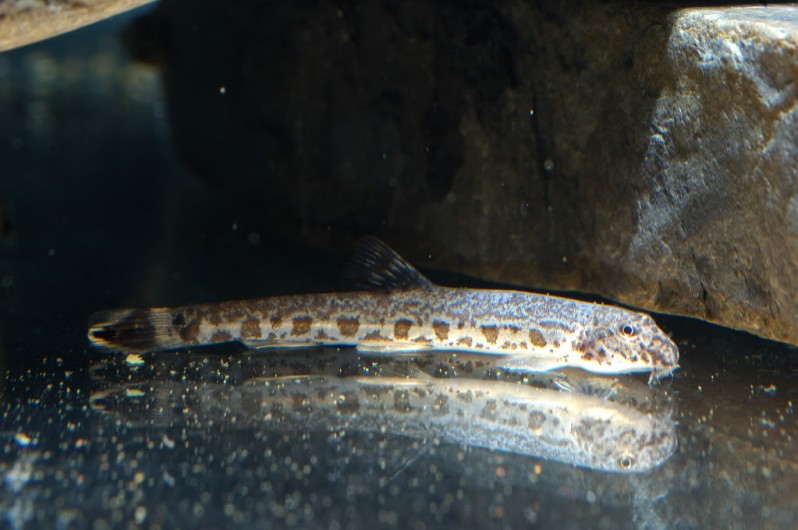
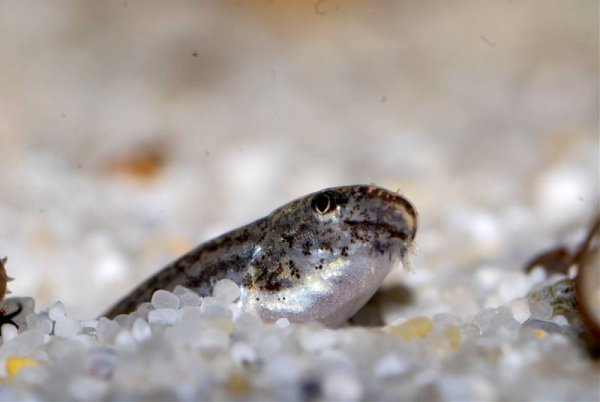
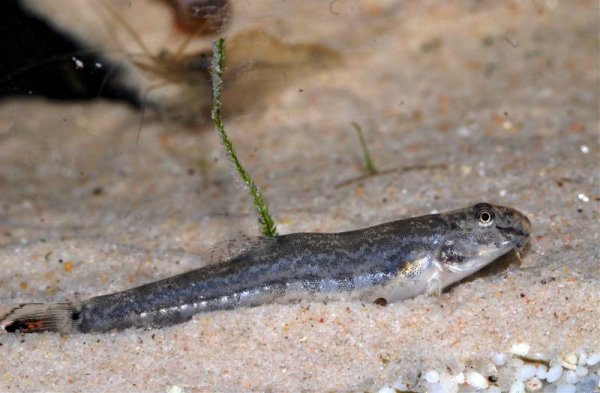
These photographs are used with each photographer's permission.
Send a photographDistribution
Profile completeness21 of 24
Community
Questions about Lepidocephalichthys annandalei?
Ask on Discord