Results for “species”
Type a name: scientific, common, or one a species used to go by. Or narrow the catalogue with the filters.
Filters
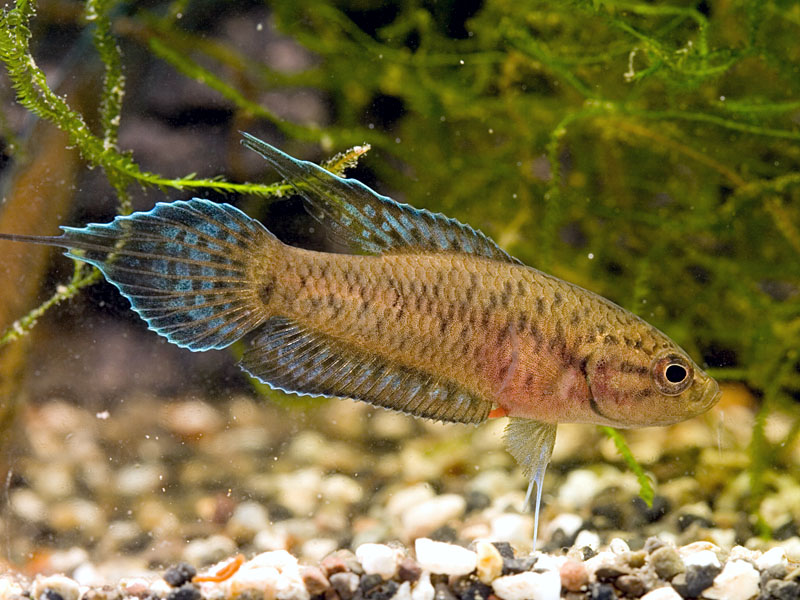
Malpulutta kretseriOrnate Paradisefish
Deraniyagala, 1937
Max length50mm SL2.0in SLTank40 × 20cm16 × 8inTemp16–22°C61–72°FpH5.0–7.5This species is also referred to as 'Kretser's paradisefish' and 'spotted gourami'. There exist three colour forms, two of which exhibit a greater degree of reddish or violet pigmentation in the fins, respectively. The third is more bluish and was described as M. kretseri minor by Deraniyagala (1958).
Maylandia callainosCobalt Blue Zebra
authority not recorded
Max length135mm SL5in SLTank120 × 30cm48 × 12inTemp24–28°C75–82°FpH7.6–8.8This species was formerly classified as Pseudotropheus callainos and Metriaclima callainos and is still named as one of these by many sources. It has also been seen for sale as Pseudotropheus zebra "pearly". The genus name Maylandia is now used to describe all former members of the 'zebra' group of Pseudotropheus. It exists in three main colour forms, namely "cobalt blue", "orange blotch" and "pearl zebra". It is very easily confused with similar...
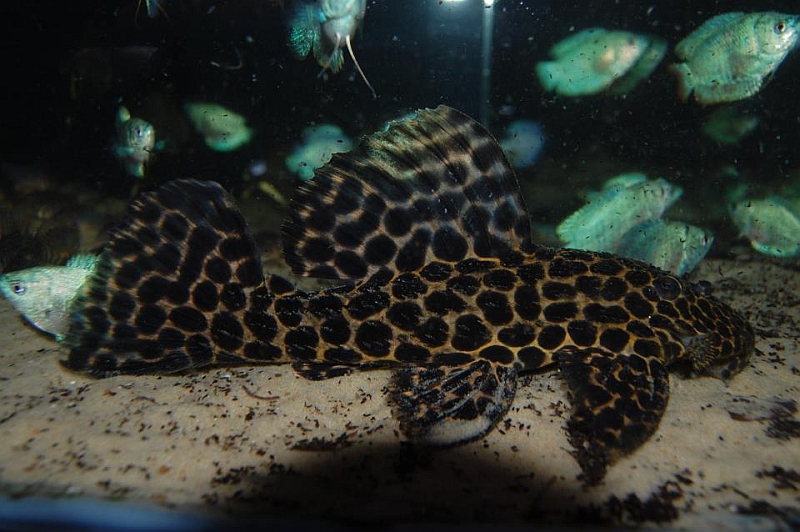
Megalancistrus parananusL113
Peters, 1881
Max length588mm SL23in SLTanknot recordedTemp20–28°C68–82°FpH6.0–7.5This species was formerly considered to be represented by the L-numbers L113 and L234 but it appears that only the former is native to the Paraná, Paraguay and Uruguay drainages, whereas L234 is collected in the rio São Francisco in eastern Brazil. M. barrae and M. sp. 'LDA097' are also exported from the São Francisco system.
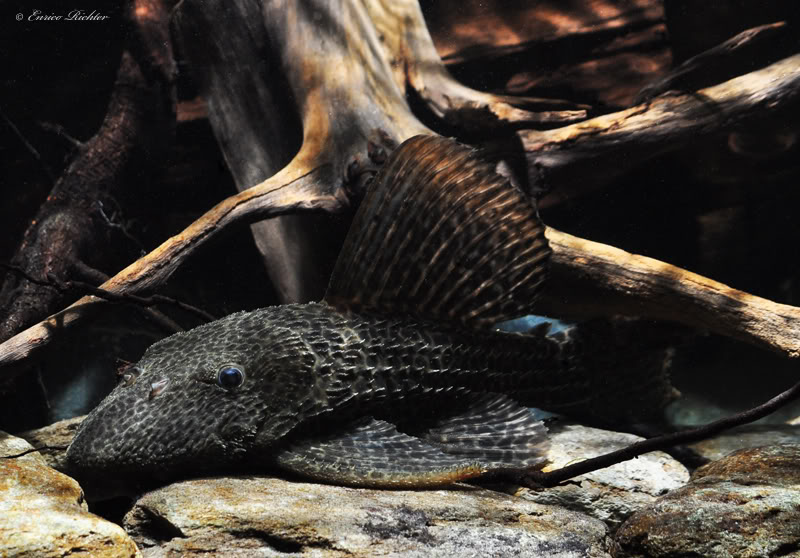
Megalancistrus sp.L234
authority not recorded
Max length600mm SL24in SLTanknot recordedTemp20–30°C68–86°FpH6.0–7.5L234 was previously applied to M. paranus, which has also has the L-number L113 assigned to it. However M. paranus is native to the Paraná, Paraguay and Uruguay drainages, whereas L234 is collected in the rio São Francisco so appears to represent an unidentified species. M. barrae and M. sp. 'LDA097' are also exported from the São Francisco system.
Megalodoras uranoscopusGiant Raphael Catfish
authority not recorded
Max length700mm SL28in SLTank240 × 120cm96 × 48inTemp21.1–25°C70–77°FpHnot recordedThis species is also known by the vernacular name "ripsaw catfish" (U.S.) and was often referred to by the scientific name M. irwini, now considered a junior synonym of M. uranoscopus, in older literature. Within the family Doradidae the genus Megalodoras is considered most closely-related to Lithodoras, Centrodoras and Platydoras, respectively. Members of the family Doradidae can be distinguished from all other Siluriformes by possession of a unique infranuchal scute, a dermal bon...
Melanochromis auratusGolden Mbuna
authority not recorded
Max length110mm SL4in SLTank120 × 45cm48 × 18inTemp24–28°C75–82°FpH7.6–8.8Despite its ready availability, M. auratus is not recommended for the beginner due to its intolerant nature. Do not keep it with other Melanochromis species as they may hybridise. Male fish can revert to the golden colouration when stressed, and older females often darken with age until they superficially resemble males....
Melanochromis cyaneorhabdos
authority not recorded
Max length100mm SL3.9in SLTank90 × 45cm36 × 18inTemp24–28°C75–82°FpH7.6–8.8M. cyaneorhabdos was formerly known as M. "maingano", after a village located on the shore off which it is found. It can be distinguished from the similar M. johanni by the overall blueish colouration of dominant males, as opposed to the more black patterning of johanni. It is sometimes incorrectly sold as "electric blue" johanni. Do not keep it with other Melanochromis species as they may hybridise....
Melanotaenia affinisNew Guinea Rainbowfish
authority not recorded
Max length120mm SL5in SLTank120 × 30cm48 × 12inTemp20–30°C68–86°FpH6.5–8.0M. affinis was one of the first rainbowfish species to be imported for the hobby in any numbers. There are several geographical variants, three of which can be found in the hobby. The "standard" form has a large natural range and is the most commonly encountered. The "Pagwi" form has a very limited distribution, being known only from a tributary of the Sepik River in New Guinea, while the "Bluewater Creek" form has only been collected from a single location close t...
Melanotaenia herbertaxelrodiLake Tebera Rainbowfish
authority not recorded
Max length90mm SL3.5in SLTank90 × 30cm36 × 12inTemp20–26°C68–79°FpH7.0–8.0One of the more beautifull-coloured rainbowfish available when mature, M. herbertaxelrodi is probably at risk from overfishing, but not enough data is available to consider it an endangered species as yet....
Melanotaenia splendida inornataCheckered Rainbowfish
authority not recorded
Max length150mm SL6in SLTank120 × 30cm48 × 12inTemp26–33°C79–91°FpH6.5–8.0There are currently 4 described subspecies of Melanotaenia splendida. The principle differences are generally in colour, pattern and fin counts, although even these vary depending on the locality of the fish. The different forms and subspecies should not be mixed in the aquarium, as they may hybridise. Adult specimens are rarely seen for sale, and it's the much drabber juvenile fish that are almost always offered in dealers tanks. However, exercise some patience (even on a good diet, full c...
Melanotaenia splendida splendidaEastern Rainbowfish
authority not recorded
Max length150mm SL6in SLTank120 × 30cm48 × 12inTemp20–30°C68–86°FpH5.0–8.0There are currently 4 described subspecies of Melanotaenia splendida. The principle differences are generally in colour, pattern and fin counts, although even these vary depending on the locality of the fish. M s. splendida in particular also exhibits a wide variation in colour and patterning depending on locality within the subspecies, and the species name is often suffixed with a place name when the fish are seen for sale. The different forms and subspecies should not be mixed in the aquarium,...
Melanotaenia trifasciataBanded Rainbowfish
authority not recorded
Max length150mm SL6in SLTank120 × 30cm48 × 12inTemp24–33°C75–91°FpH6.5–8.0M. trifasciata exhibits a wide variation in colour and patterning depending on locality, and it's very important that the different morphs are not mixed in the aquarium, as they will hybridise freely. These different forms are often distinguished by the addition of the name of collection locality being added to the scientific name of the fish. It's thought that several species may in fact be in evidence here, and a reclassification will probably occur at some point As with many othe...
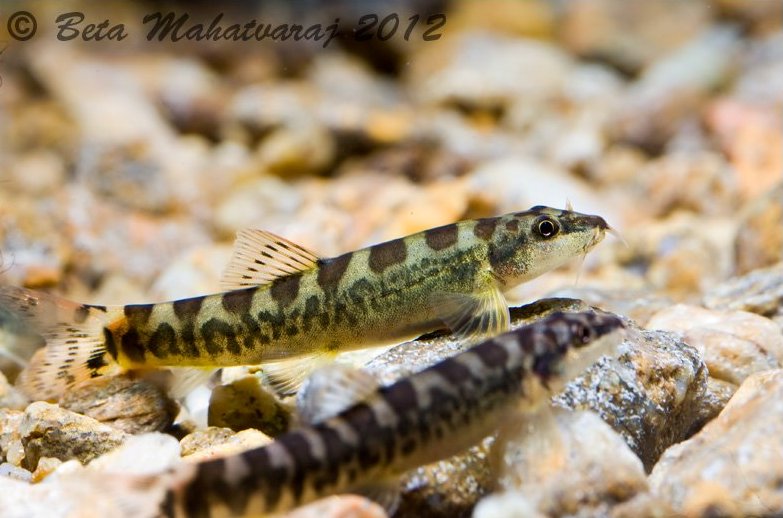
Mesonoemacheilus petrubanarescui
Menon, 1984
Max length50mm SL2.0in SLTank60 × 30cm24 × 12inTemp18–25.5°C64–78°FpH6.0–7.5Type locality is 'Netravati River, Dharmasthala, Karnataka State, India', with the species subsequently recorded from the Kabini (aka Kabani) River basin and it may be endemic to these two drainages. While the Netraviti flows through Karnataka in its entirety before emptying into the Arabian Sea just south of the city of Mangalore, th...
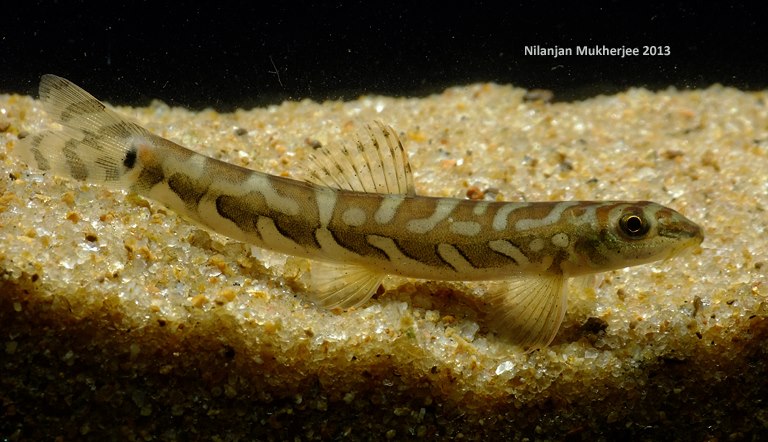
Mesonoemacheilus triangularisZodiac Loach
Day, 1865
Max length60mm SL2.4in SLTank75 × 30cm30 × 12inTemp18–25.5°C64–78°FpH6.0–7.5This species is also referred to by the alternative vernacular name 'Batik loach' and is the most-commonly traded member of the genus at present. It's easily-distinguished from congeners by body patterning which comprises a series of pale, oblique saddle-like markings edged in black and running along the dorsal surface, plus a similar set of bars originating from the otherwise plain ventral surface.
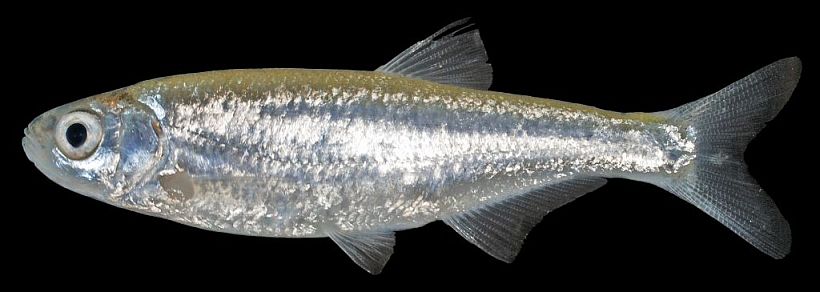
Metzia bounthobi
Shibukawa, Phousavanh, Phongsa & Iwata, 2012
Max length61mm SL2.4in SLTanknot recordedTempnot recordedpHnot recordedThis species can be distinguished from congeners by the following combination of characters: 18–20 (vs. 10-18) branched anal-fin rays; 49–55 (vs. 35-48) lateral-line scale rows; 33–36 (vs. 15-20) predorsal sca...
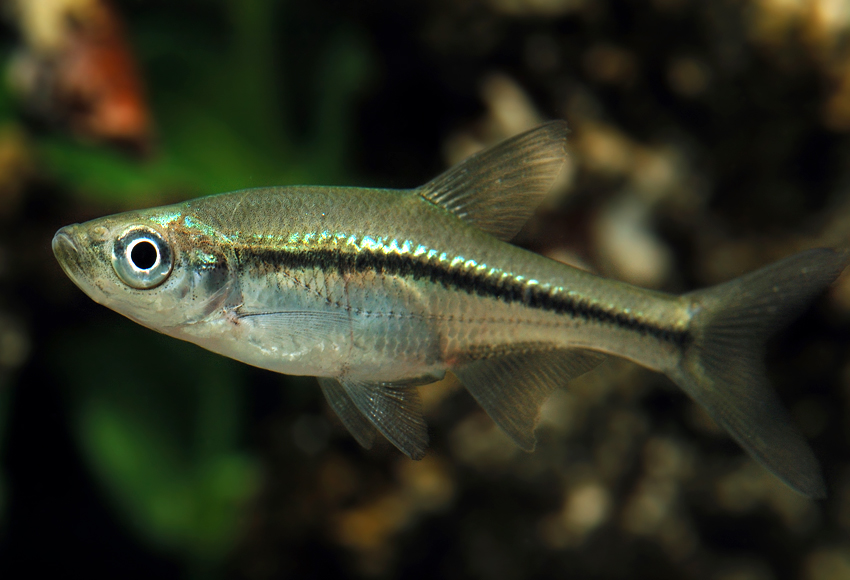
Metzia formosae
Oshima, 1920
Max length75mm SL3.0in SLTanknot recordedTempnot recordedpHnot recordedAlthough it is included in the genus Metzia this grouping remains somewhat unresolved in terms of taxonomy and it may contain more than a single genetic lineage. For example, members share a number of characters with the genera Ischikauia Jordan and Snyder 1900, Hemiculterella Warpachowski 1887, and several species of Anabarilius Cockerell 1923, including a bipartite gas bladder, a non-spinous dorsal-fin ray, and a sharp ventral keel between the pelvic-fin insertion and anus.
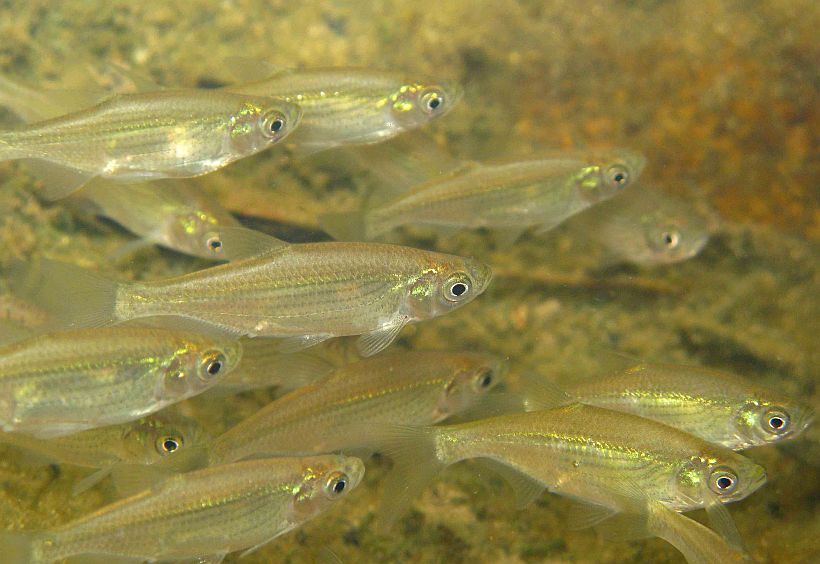
Metzia lineata
Pellegrin, 1907
Max length100mm SL3.9in SLTanknot recordedTempnot recordedpHnot recordedPopulations from the upper Pearl River (Nanpan Jiang basin) differ in several morphological characters from those inhabiting Guangdong, Guangxi, and Guizhou Provinces, and Hainan Island. Those from Vietnam also seem to be different (Gan et al., 2009), the implication being that there may be several species currently included under the name M. lineata.
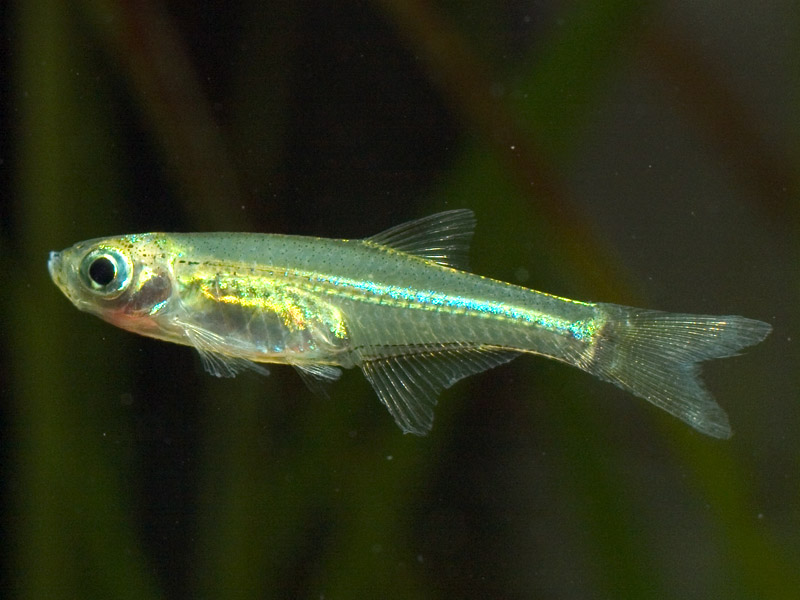
Microdevario gatesi
Herre, 1939
Max length23mm SL0.9in SLTank45 × 30cm18 × 12inTemp20–27°C68–81°FpH6.0–7.5The genus Microdevario was raised by Fang et al. (2009) after phylogenetic analyses revealed that some species formerly included in Microrasbora to be more closely allied with Devario and in need of reclassification. Microdevario is largely separated from Devario and other closely related genera such as Chela and Laubuca by virtue of internal characters but also the following: small adult size; anal and dorsal fins with concave-shaped distal margin; absence of barbels; absence of perforated scales; 9-10 branched anal-fin rays; 7 branched dorsal-fin rays; less abdominal than caudal vertebrae.
Micronema bleekeriBleeker's Sheatfish
authority not recorded
Max length600mm SL24in SLTank180 × 60cm72 × 24inTemp22–27°C72–81°FpH6.0–7.0An irregular import, this species is often confused with some of its congeners. It makes an interesting addition to a community of larger fish.
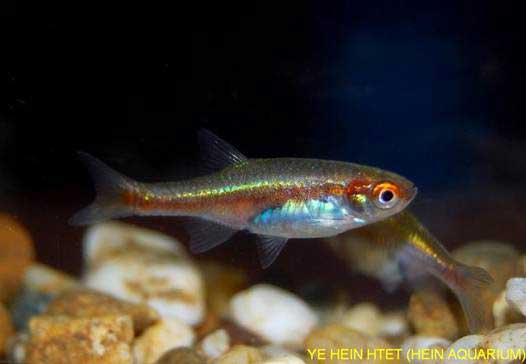
Microrasbora cf. rubescensFlame Red 'Rasbora'
authority not recorded
Max length40mm SL1.6in SLTank60 × 30cm24 × 12inTemp20–26°C68–79°FpH6.5–7.5This is possibly an undescribed species and has been marketed as 'Asian Cardinal Rasbora', 'flame red rasbora', M. sp. 'rose blue line' or M. 'thuzari' in the ornamental trade. It differs from M. rubescens by its larger adult size, possession of a greenish to bluish lateral stripe, and lesser extent of orange pigmentation on the body. It also appears to represent a distinct genetic lineage (Collins et al., 2012).