Micronema bleekeri
Bleeker's Sheatfish
Last revised 2012Edit this page
On this page11 sections
Quick factsEdit
Difficulty3 of 8 measures
- Space
- very large tank
- Water
- needs a steady pH
- Temp
- flexible
- Diet
- unknown
- Temperament
- unknown
- Social
- unknown
- Compatibility
- unknown
Other demands
Each of these can raise the rating on its own, whatever the measures above say.
- Hardiness
- unknown
- Needs a very large tank
Before you buy
Needs a tight-fitting lid as this species is known to jump
The tank should also have a very heavy, tightly fitting cover, as the fish are good jumpers.
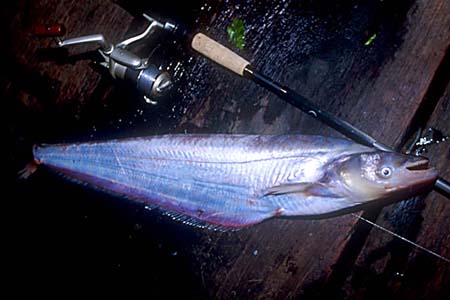
Bleeker's sheatfish (Micronema bleekeri) is a large silurid catfish from Thailand, Cambodia, Laos and Vietnam. An irregular import, it is often confused with some of its congeners. At up to 60 cm it needs a lot of open swimming space, powerful filtration and a heavy, tightly fitting cover, and it will eat any smaller fish it can fit in its mouth.
Distribution
EditHabitat
Write a noteEditInhabits rivers, lakes, streams and ponds. Migrates into flooded areas during the rainy season. These migrations are affected by the lunar cycle as well as changing water levels.
Aquarium size
Write a noteEdit72" X 24" X 24" 180 ∗ 60 ∗ 60 cm72 ∗ 24 ∗ 24 in - ~648 litres~171 US gal bare minimum for an adult fish though the bigger the tank the better.
Maintenance
Write a noteEditThis species requires a lot of open swimming space, along with some suitably-sized hiding places. Lengths of thick plastic piping should be adequate for this, as it is doubtful that any aquatic plants could withstand the movements of a fish this size. Filtration should be powerful and efficient, as this fish is a messy eater and produces a lot of waste, ande is sensitive to deteriorating water conditions. Regular water changes must be strictly observed for the same reason. The tank should also have a very heavy, tightly fitting cover, as the fish are good jumpers.
Water conditions
EditTemperature: 22 – 27 °C72 – 81 °F
pH: 6.0-7.0
Hardness: 3-10°H
These recommendations come from this profile’s own figures. They contain affiliate links, so we may earn a commission.
Diet
Write a noteEditRelatively unfussy and will take most live, frozen and dried foods. Offer larger specimens earthworms, pieces of prawn and mussel and dried pellets.
Behaviour and compatibility
Write a noteEditFairly peaceful for its size, although it will eat any smaller fish it can fit in its mouth. Good tankmates include medium to large sized cyprinids, characins, similarly-sized Asian or South American catfish and larger cichlids.
Sexual dimorphism
Write a noteEditMales have a serrated edge to the pectoral spine, while females do not. Mature females are thicker-bodied than males.
Reproduction
Write a noteEditNot yet thought to have been achieved in the aquarium.
Notes
EditAn irregular import, this species is often confused with some of its congeners. It makes an interesting addition to a community of larger fish.
Species images · 2
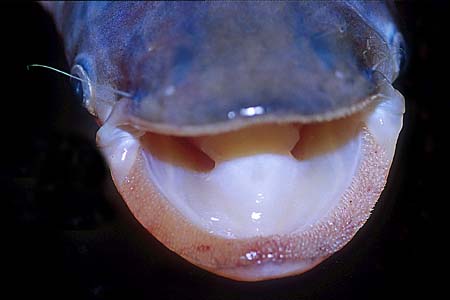
These photographs are used with each photographer's permission.
Send a photographProfile completeness17 of 24
Community
Questions about Micronema bleekeri?
Ask on Discord