Search the catalogue
Type a name: scientific, common, or one a species used to go by. Or narrow the catalogue with the filters.
Filters
Lamprologus speciosus
authority not recorded
Max length65mm SL2.6in SLTanknot recordedTemp23–27°C73–81°FpH7.5–9.0This species is very similar to L. ocellatus and often carries the trade name "black ocellatus". It is found living alongside L. stappersi in nature....
Lamprologus stappersi
authority not recorded
Max length63mm SL2.5in SLTanknot recordedTemp23–27°C73–81°FpH7.5–9.0This fish was originally thought to be a morph of L. ocellatus but has now been described as a distinct species. It is still occasionally offered for sale as "pearly ocellatus" and may also be seen under the invalid name L. meleagris....
Lasiancistrus tentaculatusL092
authority not recorded
Max length120mm SL5in SLTank75 × 30cm30 × 12inTemp24–28°C75–82°FpH6.0–7.4This lovely little species was only described in 2005 and the same study also reclassified most of the species previously assigned to Laciancistrus. Many were found to be of different genera or representatives of the same species. Laciancistrus can be easily distinguished from Ancistrus (and indeed all other Loricariids) by the presence of whiskerlike odontotes growing among the cheek odontotes. These are very thin and clearly visible, and are indeed reminiscent of mammalian hairs. This part...
Lates angustifronsTanganyika Lates
authority not recorded
Max length2000mm SL79in SLTanknot recordedTemp22–28°C72–82°FpH7.5–9.5We've included this species on the site purely because there have been an alarming number of juvenile fish showing up in some aquatic stores, and as a result, in hobbyists tanks. This species is simply not suited to captive life in any respect. If you see one for sale, and they are undeniably an attractive fish, please don't be tempted to buy it. As responsible fishkeepers, we should consider the long term well-being of any fish that we buy, and housing a L. angustifrons for life is ev...
Lates calcariferBarramundi
authority not recorded
Max length2000mm SL79in SLTanknot recordedTemp15–28°C59–82°FpH7.0–8.5This species is included purely because there have been an alarming number of juvenile fish showing up recently in some aquatic stores and as a result, in hobbyists tanks. This fish is simply not suited to captive life in any respect. To know that it's one of the most sought after sport fish in Australia should tell you all you need to know about it. Although undeniably attractive when juvenile, please don't be tempted to buy if you see these for sale. Housing one for life is beyond th...
Lates niloticusNile Perch
authority not recorded
Max length1930mm SL76in SLTanknot recordedTemp22–28°C72–82°FpH7.0–8.5This species has been introduced into many areas in Africa for commercial purposes, and it's had a hugely detrimental effect on local fish populations in some of these environments. The most notable case is that of Lake Victoria, where much of the endemic cichlid population has been wiped out. L. niloticus is thought to have directly contributed to the extinction of over 200 endemic species in the lake by predation, or outcompeting them for food. The IUCN have included it in their list of t...
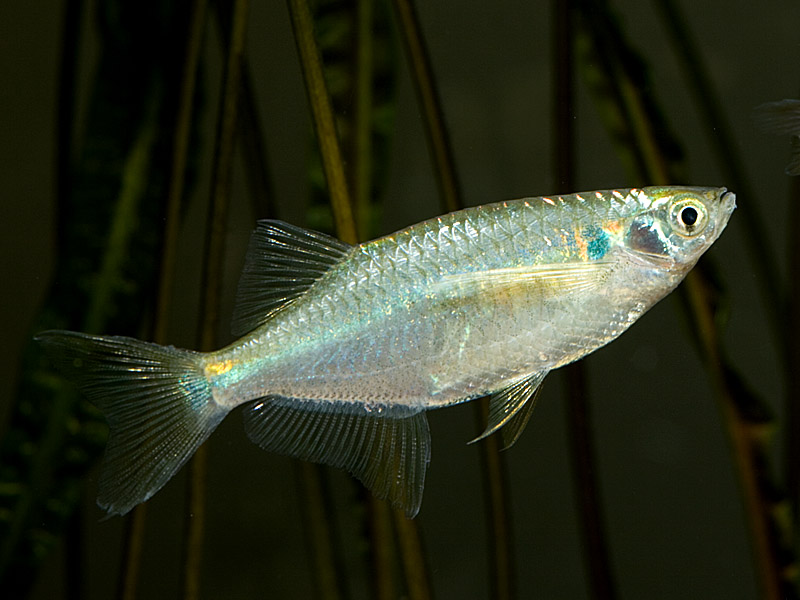
Laubuka caeruleostigmataFlying Minnow
Smith, 1931
Max length70mm SL2.8in SLTank120 × 30cm48 × 12inTemp20–26°C68–79°FpH6.0–8.0This species is also known as 'leaping barb' and was once quite common in the ornamental trade but is now seldom seen. It can be distinguished from other members of the genus by the following characters: bright blue spot on top of head; series of 4-5 short faint bars on anterior portion of body; 19-23½ branched anal-fin rays; body depth fits 2.1-2.9 times in SL.
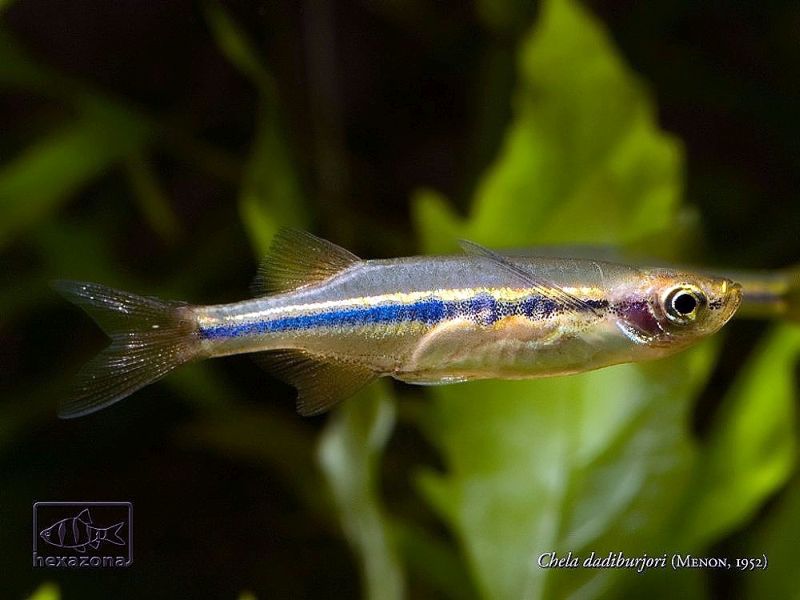
Laubuka dadiburjoriDadio
Menon, 1952
Max length30mm SL1.2in SLTank90 × 30cm36 × 12inTemp20–24°C68–75°FpH6.0–7.5It can be distinguished from other members of the genus by the following characters: lateral line absent or perforating only 2-5 scales; pharyngeal teeth hooked; body size small, not exceeding 30 mm SL; body depth less than 25 % SL; colour pattern comprising a dark bluish lateral stripe extending from the eye to the caudal peduncle, typically, but not always, forming 2-5 circular spots along its length.
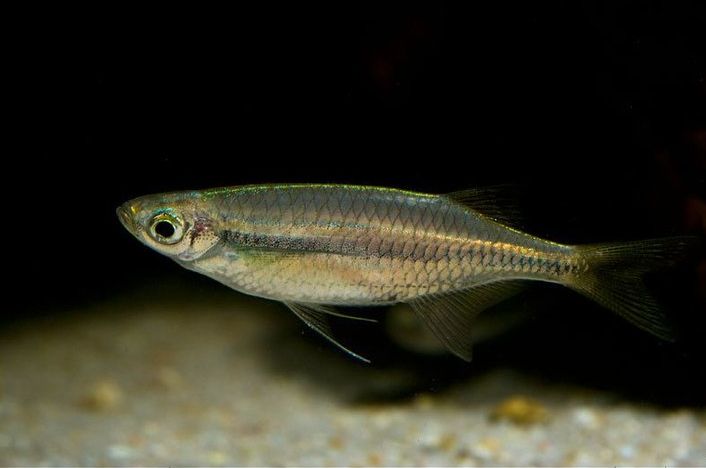
Laubuka fasciataMalabar Hatchet Chela
Silas, 1958
Max length50mm SL2.0in SLTank120 × 30cm48 × 12inTemp20–26°C68–79°FpH6.5–7.5It can be distinguished from other members of the genus by the following characters: dark longitudinal stripe on body, extending from eye to caudal peduncle; scattered tubercles present on lower jaw; 14½-16½ branched anal-fin rays; pelvic-fin long, reaching beyond anus.
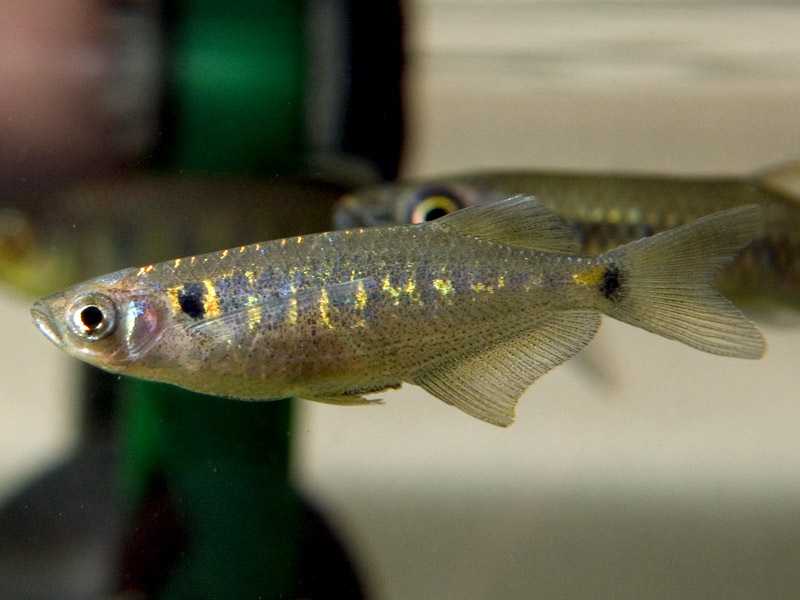
Laubuka laubucaIndian Glass Barb
Hamilton, 1822
Max length60mm SL2.4in SLTank120 × 30cm48 × 12inTemp18–24°C64–75°FpH6.0–8.0Probably endemic to northern India, Bangladesh, and Nepal. Records from Sri Lanka, southern India, Myanmar, Thailand, Laos, Cambodia, Vietnam, Malaysia, and Indonesia appear to represent other species. Given the distribution of L. siamensis, it seems likely that many of the fish entering the aquarium trade are this species and not L. laubuca. The two species can be distinguished b...
Laubuka siamensis
Fowler, 1939
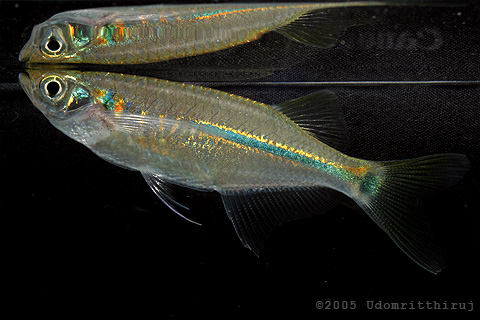
Max length60mm SL2.4in SLTank120 × 30cm48 × 12inTemp20–28°C68–82°FpH6.0–7.5Considered synonymous with the congener L. laubuca for a number of years, thus reports of that species from anywhere in Indochina actually refer to the current concept of L. siamensis. Given the distribution of L. siamensis, it seems likely that many of the fish entering the aquarium trade are also this species and not L. laubuca. The two species can be distinguished by...
Leiarius longibarbisMarbled Pim
authority not recorded
Max length800mm SL31in SLTank300 × 90cm118 × 36inTemp21–26°C70–79°FpH5.8–7.4It's debatable as to whether this species should be considered an aquarium subject at all, given its eventual size. All too often, juveniles are sold without adequate information regarding their long term care. These cats can and will attain something close to their maximum size in captivity, and will do so quite quickly. The myth that they will only grow to match the size of the tank they're kept in is just that. It's also worth noting that species such as this can live for well ...
Leiarius pictusSailfin Pim
authority not recorded
Max length600mm SL24in SLTank240 × 90cm96 × 36inTemp22–26°C72–79°FpH6.2–7.6Also known as the painted, saddle or marbled sailfin catfish, it's debatable as to whether this species should be considered an aquarium subject at all given its eventual size. All too often, juveniles are sold without adequate information regarding their long term care. These cats can and will attain something close to their maximum size in captivity, and will do so quite quickly. The myth that they will only grow to match the size of the tank they're kept in is just that. It's a...
Lepidocephalichthys annandalei
Chaudhuri, 1912
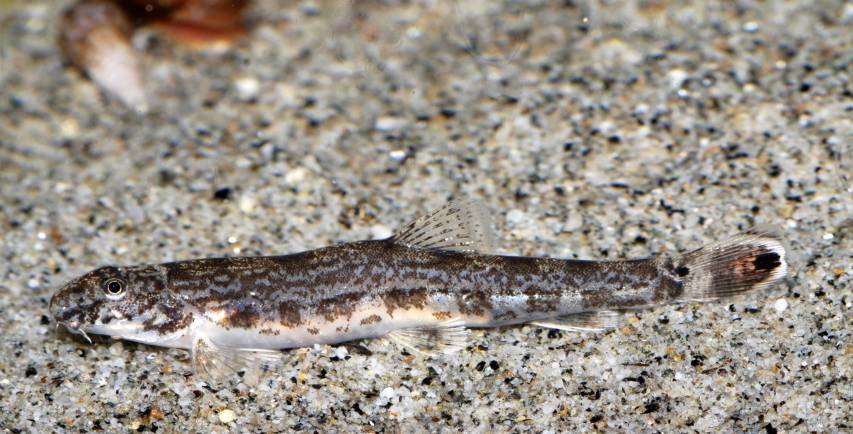
Max length45mm SL1.8in SLTank45 × 30cm18 × 12inTemp22.5–26°C73–79°FpH5.5–7.5Sand-dwelling loaches from the families Botiidae, Cobitidae and Nemacheilidae are also suitable but proper research is essential as some can be excessively territorial or otherwise aggressive. A community based around fishes from its natural waters could include species such as Badis badis,...
Lepidocephalichthys berdmorei
Blyth, 1860
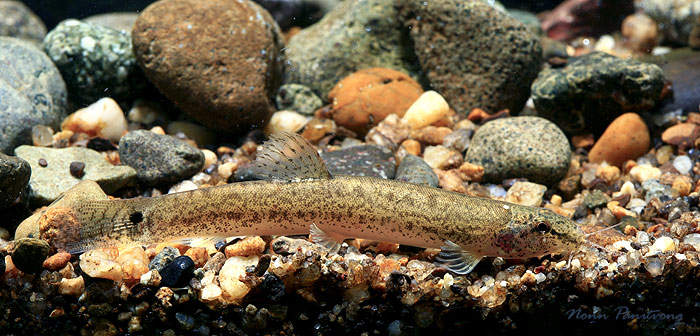
Max length120mm SL5in SLTank75 × 30cm30 × 12inTemp20–25°C68–77°FpH6.0–8.0This is one of the most frequently-traded members of the genus and is an excellent choice for those new to keeping loaches. It's distinguishable from congeners by a combination of characters including: relatively large adult size (to at least 80 mm SL); rounded/truncate caud...
Lepidocephalichthys cf. irrorataLoktak Loach
Hora, 1921
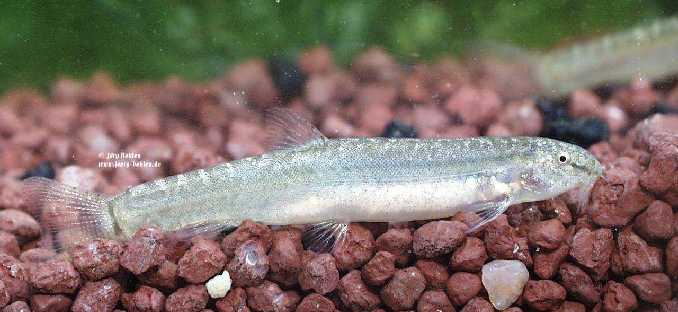
Max length30mm SL1.2in SLTank45 × 30cm18 × 12inTemp20–25°C68–77°FpH5.5–7.5This species is not traded often but may occasionally be exported as bycatch among shipments of other species. It can be distinguished from congeners by the following combination of characters: presence of large, exposed scales on top of head; dorsal-fin origin posterior to pelvic-fin origin; moderate to small size (to 29 mm SL); caudal-fin emarginate and with dark reticulations; caudal-fin lobes with dark, elongated spots along upper and lower edges.
Lepidocephalichthys furcatus
de Beaufort, 1933
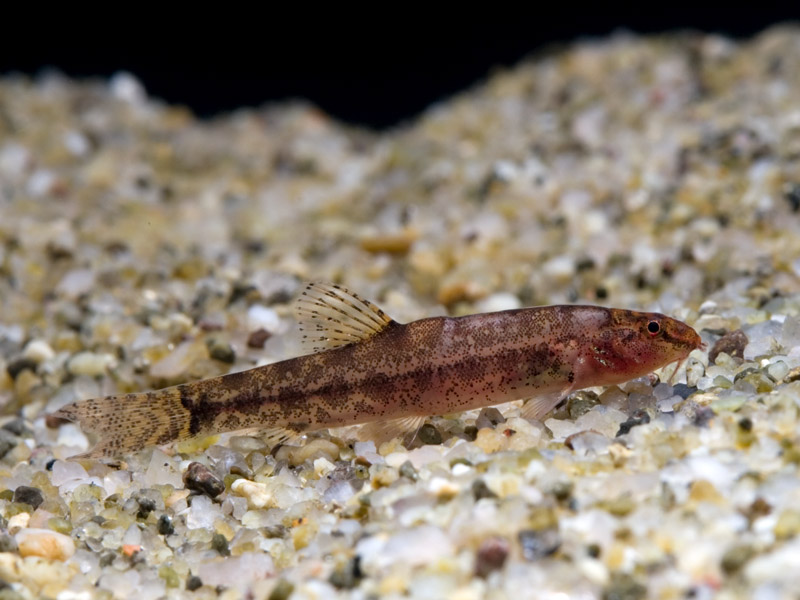
Max length50mm SL2.0in SLTank45 × 30cm18 × 12inTemp23–26°C73–79°FpH5.5–7.5This species is not traded often but is occasionally available as bycatch among shipments of other species. It can be told apart from congeners most easily by the prominent, dorsally-orientated, roughly semi-circular lamina circularis in males, a feature unique within the genus. Other distinguishing characters include a combination of: forked caudal-fin; relatively small adult size; dark <-shaped mark at the base of the caudal-fin; a black spot at the base of branched caudal-fin rays 3-5.
Lepidocephalichthys goalparensis
Pillai & Yazdani, 1976
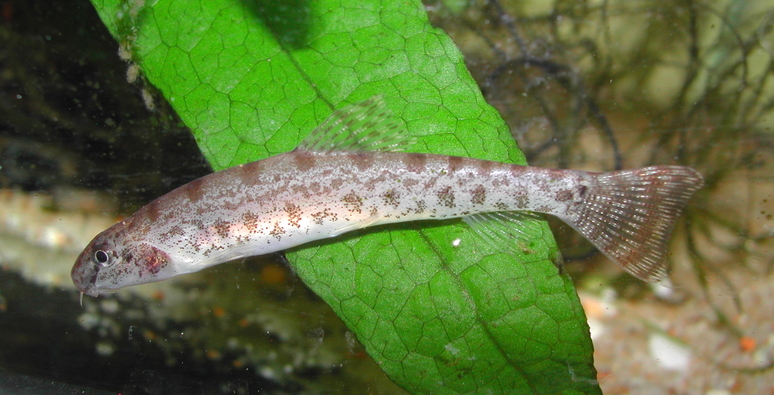
Max length45mm SL1.8in SLTank45 × 30cm18 × 12inTemp22.8–26.1°C73–79°FpH6.0–7.5This species is almost unheard of in the hobby with the specimen pictured above the only one we're aware of. It was imported into the United Kingdom in late 2011 as bycatch among a shipment of mastacembelid eels from northern India, and the identification was subsequently confirmed by Justin Havird, senior author of the most recent revision of the genus.
Lepidocephalichthys guntea
Hamilton, 1822
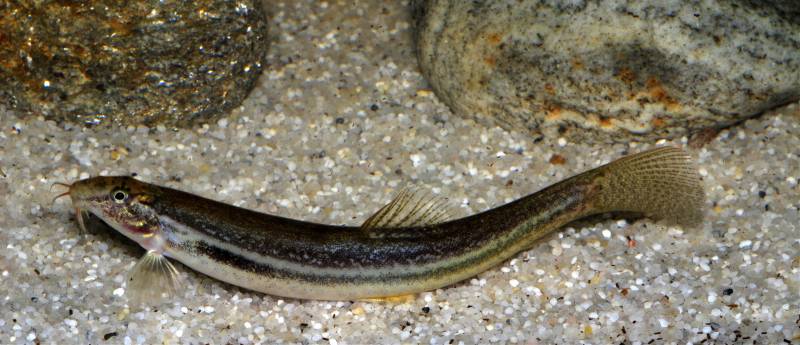
Max length150mm SL6in SLTank80 × 30cm31 × 12inTemp20–25°C68–77°FpH6.0–8.0This is one of the most frequently-traded members of the group and is an excellent choice for those new to keeping loaches. It's distinguishable from congeners by a combination of characters including: rounded/truncate caudal-fin; a scaleless patch on top of the head; relatively large adult size; flanks with spotted patterning in females and a solid...
Lepidocephalichthys hasselti
Valenciennes, 1846
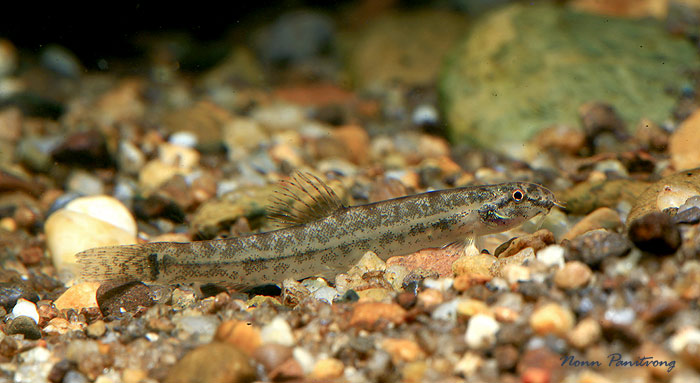
Max length60mm SL2.4in SLTank60 × 30cm24 × 12inTemp23–26°C73–79°FpH5.5–7.5At one locality close to Ban Na Hwai, Chiang Mai Province, Thailand L. hasselti was collected from a shallow (<0.5 m) pool in a swampy zone between forest and rice fields. The substrate was of mud, there was no aquatic vegetation and it was being used as drinking water by local animals, with the only effluent connected to a 'small creek'. Other species found there were Physoschistura pseudobrunneana, Rasbora hobelmani and Systomus cf. orphoides.