Results for “gene”
Type a name: scientific, common, or one a species used to go by. Or narrow the catalogue with the filters.
Filters
Horabagrus brachysomaSun Catfish
authority not recorded
Max length450mm SL18in SLTanknot recordedTemp23–25°C73–77°FpH6.0–7.5Also known as the bullseye, solar, eclipse or golden red-tailed catfish, this species is relatively common in the trade. Unfortunately, it's a victim of some rather misplaced marketing, as it's often sold as being suitable for the general community tank found in homes worldwide. The majority of specimens seen for sale measure only 2-3", which only serves to make the situation worse. Obviously, given its adult size it's totally unsuitable for this kind of setup, but makes a fi...
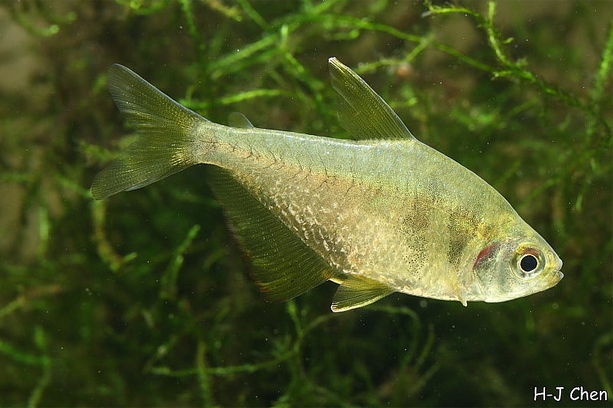
Hyphessobrycon bifasciatusYellow Tetra
Ellis, 1911
Max length45mm SL1.8in SLTanknot recordedTemp20–25°C68–77°FpH5.0–7.5Generally peaceful making it an ideal resident of the well-researched community aquarium. It is perhaps best-maintained alongside similarly-sized characids, gasteropelecids, lebiasinids, smaller callichthyid or loricariid catfishes and non-predatory, medium-sized cichlids. Try to buy a mixed-sex group of at least 8-10 specimens, incl...
Hyphessobrycon metaePurple Tetra
Eigenmann & Henn, 1914
Max length40mm SL1.6in SLTank80 × 30cm31 × 12inTemp20–28°C68–82°FpH4.0–7.0A beautiful species that's not often seen for sale in the hobby, and is usually a little more expensive than other tetras when available. This is mainly due to the wild caught nature of most specimens entering the trade. It can be a little delicate when initially imported, and is sensitive to deteriorating water conditions in general. As a result, it's not a good choice for the beginner, and should only be added to well-matured tanks. As with the closely related Hemigrammus, the ta...
Hypostomus cf. cochliodonSpotted Cochliodon
authority not recorded
Max length230mm SL9in SLTank120 × 45cm48 × 18inTemp21–24°C70–75°FpH6.3–7.2This undescribed species is part of the Hypostomus cochliodon complex, all of which were previously included in the genus Cochliodon. This is now considered a synonym of Hypostomus. Members of this group can be distinguished from congeners by several differences in morphology, most notably the hump-backed profile of mature fish and spoon-shaped dentition. These features, along with the fishes tendency to eat wood, are shared with the Panaque genus of the Ancistrinae subfamily, but the two genera...
Hypostomus plecostomoidesLDA42
authority not recorded
Max length250mm SL10in SLTank120 × 45cm48 × 18inTemp21–27°C70–81°FpH6.5–8.0This species is part of the Hypostomus cochliodon complex, all of which were previously included in the genus Cochliodon, which is now considered a synonym of Hypostomus. Members of this group can be distinguished from congeners by several differences in morphology, most notably the hump-backed profile of mature fish and spoon-shaped dentition. These features, along with the fishes tendency to eat wood, are shared with the Panaque genus of the Ancistrinae subfamily, but the two genera are known ...
Hypostomus sp.L229
authority not recorded
Max length250mm SL10in SLTank120 × 45cm48 × 18inTemp21–27°C70–81°FpH6.0–7.5This undescribed species is part of the Hypostomus cochliodon complex, all of which were previously included in the genus Cochliodon, which is now considered a synonym of Hypostomus. Members of this group can be distinguished from congeners by several differences in morphology, most notably the hump-backed profile of mature fish and spoon-shaped dentition. These features, along with the fishes tendency to eat wood, are shared with the Panaque genus of the Ancistrinae subfamily, but the two gener...
Hypsophrys nicaraguensisNicaragua Cichlid
authority not recorded
Max length250mm SL10in SLTank120 × 45cm48 × 18inTemp23–28°C73–82°FpH7.0–8.0Also known as the Spilotum or Moga, this is a popular and beautiful cichlid that exists in several different colour forms, depending on collection locality. It has also been hybridised with the convict cichlid (Archocentrus nigrofasciatus), although this is not to be encouraged. A study in 2004 found an apparent close genetic association between this species and Neetroplus nematopus, another cichlid found in the same area in nature. The 2 show remarkable similarities strategy, patterning and uni...
Inpaichthys kerriPurple Emperor Tetra
authority not recorded
Max length35mm SL1.4in SLTank60 × 38cm24 × 15inTemp24–27°C75–81°FpH5.5–7.0This pretty little species can be seen for sale with various common names, including the 'blue emperor', 'regal' or 'royal' tetra. It's sometimes confused with the emperor tetra, Nematobrycon palmeri but can be easily distinguished as it possesses an adipose fin, whilst Nematobrycon species do not. The genus Inpaichthys is currently monotypic (contains only one species), and like other related genera such as Hyphessobrycon its taxonomic status is Incertae s...
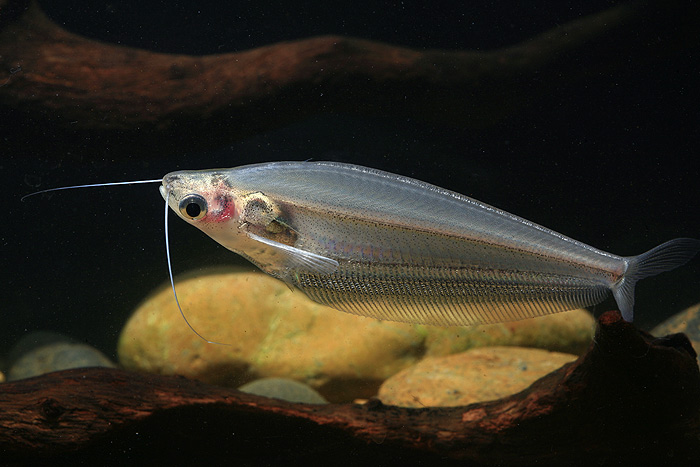
Kryptopterus bicirrhis
Valenciennes, 1840
Max length150mm SL6in SLTank120 × 45cm48 × 18inTemp20–28°C68–82°FpH6.0–7.5Generally peaceful though it may predate on smaller fishes and is somewhat timid so does not compete well with much larger, robust or otherwise boisterous species. Peaceful, comparably-sized cyprinids, loaches and other catfishes perhaps constitute the best options but be sure to research your choices thoroughly prior to purchase.
Lamprologus lemairiiLemaire's Lamprologus
authority not recorded
Max length250mm SL10in SLTank120 × 45cm48 × 18inTemp23–27°C73–81°FpH7.5–9.0A highly piscivorous, predatory species unsuited to the general aquarium. It is an ambush predator in nature, often being seen hanging motionless around rocky structures or on the floor of the lake. It is a sedentary species and does not move around a lot. This is a behavioural adaptation known as thanatosis, or 'playing dead'. This strategy is usually used as a defensive means in other animals, but in L. lemairii it is adapted for offensive means. The fish has a mottled colour pattern...
Lasiancistrus tentaculatusL092
authority not recorded
Max length120mm SL5in SLTank75 × 30cm30 × 12inTemp24–28°C75–82°FpH6.0–7.4This lovely little species was only described in 2005 and the same study also reclassified most of the species previously assigned to Laciancistrus. Many were found to be of different genera or representatives of the same species. Laciancistrus can be easily distinguished from Ancistrus (and indeed all other Loricariids) by the presence of whiskerlike odontotes growing among the cheek odontotes. These are very thin and clearly visible, and are indeed reminiscent of mammalian hairs. This part...
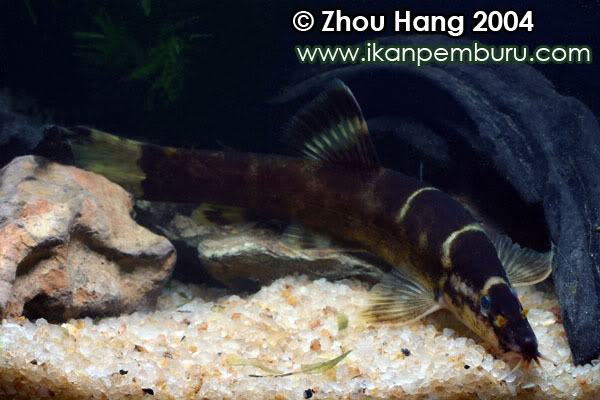
Leptobotia rubrilabris
Dabry de Thiersant, 1872
Max length150mm SL6in SLTank120 × 45cm48 × 18inTemp15.5–21°C60–70°FpH6.5–7.5Should be kept in a set-up designed to resemble a flowing stream with a substrate of variably-sized rocks, gravel and some water-worn boulders. This can be further furnished with driftwood roots and branches arranged to form some shaded spots while lengths of PVC piping or similar can be used to provide additional cover. Although most plant species will fail to thrive in such surroundings hardy genera such as Microsorum, Bolbitis or Anubias spp. can be grown attached to the décor and bright lighting will promote the growth of aufwuchs.
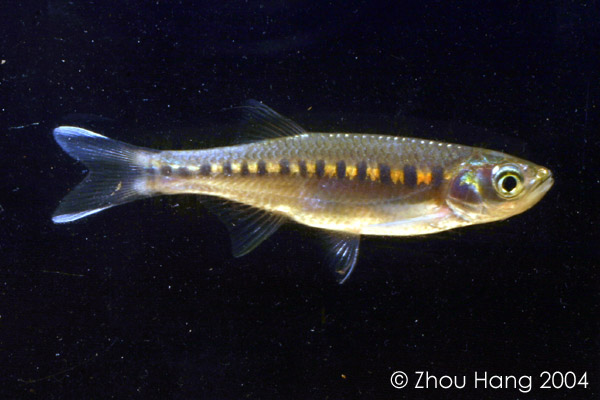
Luciosoma spilopleura
Bleeker, 1855
Max length82mm SL3.2in SLTanknot recordedTempnot recordedpHnot recordedThis species is poorly known in general and is not present in the ornamental trade, although its name is widely misapplied to other Luciosoma species. Its congeners are mostly marketed as 'apollo shark', 'shark minnow', or similar, and often labelled with incorrect scientific names. Identification of the fish pictured here is based on Bleeker (1855, 1860) and Roberts (1989), plus drawings by Bleeker, thus...
Melanotaenia splendida inornataCheckered Rainbowfish
authority not recorded
Max length150mm SL6in SLTank120 × 30cm48 × 12inTemp26–33°C79–91°FpH6.5–8.0There are currently 4 described subspecies of Melanotaenia splendida. The principle differences are generally in colour, pattern and fin counts, although even these vary depending on the locality of the fish. The different forms and subspecies should not be mixed in the aquarium, as they may hybridise. Adult specimens are rarely seen for sale, and it's the much drabber juvenile fish that are almost always offered in dealers tanks. However, exercise some patience (even on a good diet, full c...
Melanotaenia splendida rubrostriataRed-striped Rainbowfish
authority not recorded
Max length125mm SL5in SLTank120 × 30cm48 × 12inTemp24–30°C75–86°FpHnot recordedThere are currently 4 described subspecies of Melanotaenia splendida, of which this species is one of the most colourful. The principle differences are generally in colour, pattern and fin counts, although even these vary depending on the locality of the fish. The different forms and subspecies should not be mixed in the aquarium, as they may hybridise. Adult specimens are rarely seen for sale, and it's the much drabber juvenile fish that are almost always offered in dealers tanks. However,...
Melanotaenia splendida splendidaEastern Rainbowfish
authority not recorded
Max length150mm SL6in SLTank120 × 30cm48 × 12inTemp20–30°C68–86°FpH5.0–8.0There are currently 4 described subspecies of Melanotaenia splendida. The principle differences are generally in colour, pattern and fin counts, although even these vary depending on the locality of the fish. M s. splendida in particular also exhibits a wide variation in colour and patterning depending on locality within the subspecies, and the species name is often suffixed with a place name when the fish are seen for sale. The different forms and subspecies should not be mixed in the aquarium,...
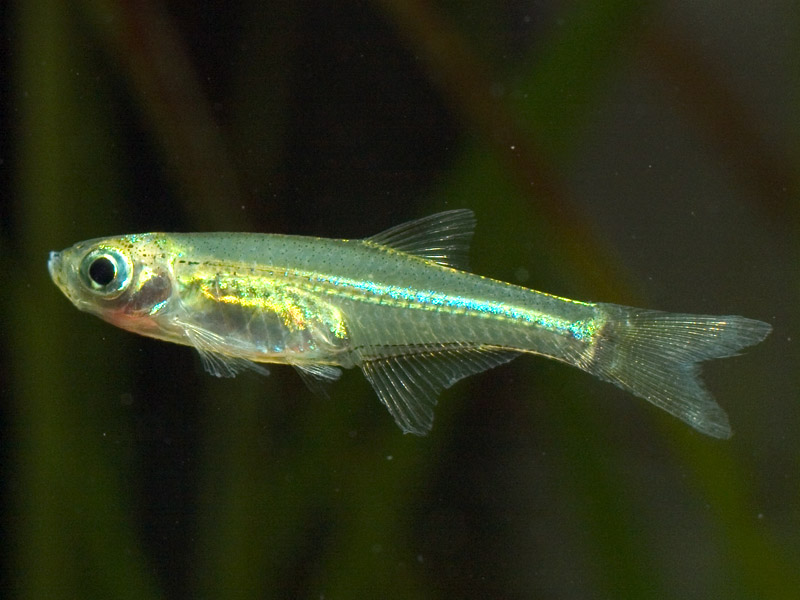
Microdevario gatesi
Herre, 1939
Max length23mm SL0.9in SLTank45 × 30cm18 × 12inTemp20–27°C68–81°FpH6.0–7.5The genus Microdevario was raised by Fang et al. (2009) after phylogenetic analyses revealed that some species formerly included in Microrasbora to be more closely allied with Devario and in need of reclassification. Microdevario is largely separated from Devario and other closely related genera such as Chela and Laubuca by virtue of internal characters but also the following: small adult size; anal and dorsal fins with concave-shaped distal margin; absence of barbels; absence of perforated scales; 9-10 branched anal-fin rays; 7 branched dorsal-fin rays; less abdominal than caudal vertebrae.
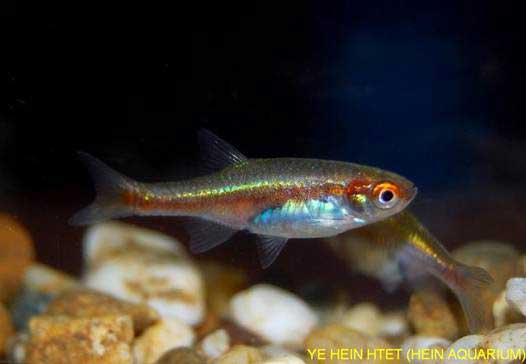
Microrasbora cf. rubescensFlame Red 'Rasbora'
authority not recorded
Max length40mm SL1.6in SLTank60 × 30cm24 × 12inTemp20–26°C68–79°FpH6.5–7.5This is possibly an undescribed species and has been marketed as 'Asian Cardinal Rasbora', 'flame red rasbora', M. sp. 'rose blue line' or M. 'thuzari' in the ornamental trade. It differs from M. rubescens by its larger adult size, possession of a greenish to bluish lateral stripe, and lesser extent of orange pigmentation on the body. It also appears to represent a distinct genetic lineage (Collins et al., 2012).
Microsynodontis batesiiDwarf Synodontis
authority not recorded
Max length88mm SL3.5in SLTank60 × 30cm24 × 12inTemp22–26°C72–79°FpH6.7–7.5There are a dozen described species of Microsynodontis but most are not seen in the hobby. This species is one of the commoner ones however. Microsynodontis are much smaller than Synodontis species, with M. batesii being the largest. They can be distinguished from Synos and the similar Mochokiella by the rounded or slightly forked caudal fin. The is highly forked in the other genera. Interestingly in Microsynodontis the eyeball is fixed and cannot be moved unlike in Synodontis which has a moveab...
Microsynodontis polliPygmy Synodontis
authority not recorded
Max length40mm SL1.6in SLTank45 × 30cm18 × 12inTemp24–27°C75–81°FpH6.8–7.5There are a dozen described species of Microsynodontis but most are not seen in the hobby. This species is one of the commoner ones however. Microsynodontis are much smaller than Synodontis species, with M. batesii being the largest. They can be distinguished from Synos and the similar Mochokiella by the rounded or slightly forked caudal fin. The is highly forked in the other genera. Interestingly in Microsynodontis the eyeball is fixed and cannot be moved unlike in Synodontis which has a moveab...