Results for “rare”
Type a name: scientific, common, or one a species used to go by. Or narrow the catalogue with the filters.
Filters
Piabucus dentatusPiabuco Tetra
authority not recorded
Max length130mm SL5in SLTank120 × 30cm48 × 12inTemp20–25°C68–77°FpH6.0–7.5There are only three species in this little known genus, all of which are rarely seen in the hobby. In 2007 an apparently undescribed Piabucus was seen on sale in the UK under the name "chin tetra", in reference to the black marking on the lower jaw of the fish....
Piaractus brachypomusRed-bellied Pacu
authority not recorded
Max length880mm SL35in SLTank300 × 90cm118 × 36inTemp23–28°C73–82°FpH4.8–7.5Know as the pirapitinga in its native countries, this is the one of the largest species of scaled fish found in the Amazon basin. This alone should tell you much of what you need to know about its suitability as an aquarium inhabitant. In reality it's debatable as to whether the species should be considered an aquarium subject at all. While pacu rarely reach their maximum size in captivity, they're still easily capable of growing to a couple of feet in length. The myth that fish will o...
Polypterus weeksiiMottled Bichir
authority not recorded
Max length550mm SL22in SLTank150 × 60cm60 × 24inTempnot recordedpHnot recordedP. weeksii is one of the "upper-jawed" tribe of polypterids so named on account of the upper jaw being longer than or equal in length to the lower jaw. It is one of the rarer bichir species in the hobby. Like other bichirs it is an incredibly hardy, nocturnal species with very poor vision, relying on its excellent sense of smell to locate food. This species along with others of its genus are some of the last surviving relatives of very ancient species. Fossils of earlier relatives have...
Potamotrygon falkneriLarge Spot Stingray
authority not recorded
Max length470mm SL19in SLTank180 × 60cm72 × 24inTemp23.9–28.9°C75–84°FpH6.0–7.5P. falkneri is arguably among the most beautiful Potamotrygonids seen in the hobby. It's not imported with any great degree of regularity, and is usually expensive when available. There are currently three genera in the family Potamotrygonidae, all of which hail from South America. Paratrygon and Plesiotrygon are both monotypic genera (contain only a single described species) and are rarely seen in the hobby. The vast majority of imported rays belong to the biggest genus, Potamotrygon. T...
Potamotrygon leopoldiPolka Dot Stingray
authority not recorded
Max length600mm SL24in SLTank240 × 90cm96 × 36inTemp20–29°C68–84°FpH6.0–7.5P. leopoldi is aruably one of the most stunning freshwater species in the hobby and comes with a price tag to match. A fully grown one of these makes a jaw-dropping sight. Sadly exports from Brazil are now illegal under the IBAMA regulations, although captive bred fish are available occasionally. The price tends to be even more expensive as a result. A rare form in which the light spots appear as rings with black centres is known as P. leopoldi "eclipse" is more costly still. The stunn...
Potamotrygon scobinaMosaic Stingray
authority not recorded
Max length350mm SL14in SLTank180 × 75cm72 × 30inTemp24–26°C75–79°FpH6.0–7.5There are currently three genera in the family Potamotrygonidae, all of which hail from South America. Paratrygon and Plesiotrygon are both monotypic genera (contain only a single described species) and are rarely seen in the hobby. The vast majority of captive rays belong to the biggest genus, Potamotrygon. This contains 17 species at present, and its members are sometimes referred to as "big-eyed" stingrays for fairly obvious reasons. There are also a number of undescribed species th...
Pristolepis marginatusMalabar Leaffish
authority not recorded
Max length150mm SL6in SLTank120 × 30cm48 × 12inTemp23–28°C73–82°FpH6.5–7.5Also known as the common catopra, this is still quite a rare species in the hobby, although it's becoming more readily available due to captive breeding efforts. It makes an interesting addition to the larger community or oddball tank....
Protomelas pleurotaenia
authority not recorded
Max length140mm SL6in SLTank120 × 45cm48 × 18inTemp24–28°C75–82°FpH7.6–8.8This species has an interesting method of feeding in nature. It 'blows' at the top layer of the substrate (usually sand) and feeds on any invertebrates or other morsels that are uncovered. It is rare in the hobby and little information regarding it's care is available....
Pseudocrenilabrus nicholsi
authority not recorded
Max length85mm SL3.3in SLTank90 × 30cm36 × 12inTemp22–25°C72–77°FpH6.0–8.0Rarely seen in the hobby, P. nicholsi is a stunning but pugnacious little fish that is nevertheless well worth seeking out. Some males develop long extensions to the ventral fins.
Pungu maclareni
authority not recorded
Max length100mm SL3.9in SLTank75 × 30cm30 × 12inTemp28–30°C82–86°FpH7.5–8.5This is currently the only described species in the genus Pungu. Because of it's its tiny natural range, habitat destruction due to excess water removal (the nearby town of Kumba relies on the lake for it's water supply), deforestation, the introduction of non-native species and overfishing, it is considered to be critically endangered and all efforts at captive breeding are to be encouraged. It is correspondingly rare in the hobby, and we suggest purchasing some only if you intend to ...
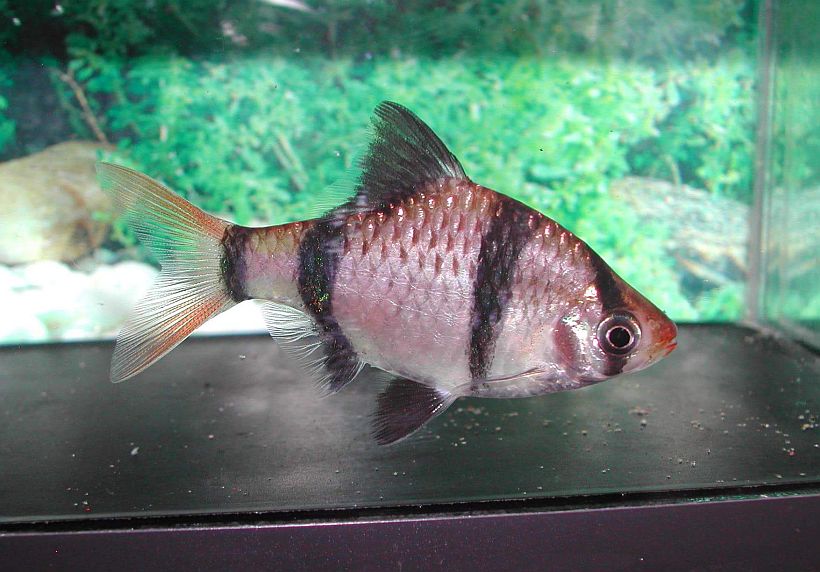
Puntigrus tetrazonaTiger Barb
Bleeker, 1855
Max length60mm SL2.4in SLTank80 × 30cm31 × 12inTemp20–26°C68–79°FpH5.0–8.0P. tetrazona is traditionally considered to be among the most ubiquitous species available in the aquarium trade. Wild examples are rarely traded, however, and there exists ongoing confusion as to the identity of the commercially-produced 'aquarium' tiger barb. A number of selectively-bred, ornamental strains are available. The albino, 'green' (aka 'moss'), and 'golden' (leucistic) variants are particularly pop...
Rasbora cf. dandia
authority not recorded
Max length99mm SL3.9in SLTank120 × 45cm48 × 18inTemp22–25°C72–77°FpHnot recordedThis fish may well be a form of R. dandia itself but in the absence of scientific confirmation we list it with a 'cf' abbreviation for the time being. It appears to be widely available in the trade but is often (mis)identified as R. wilpita, a species now confirmed as endemic to a small number of streams in Sri Lanka and which is probably much rarer in the hobby than previously thought. Valenciennes initially described Leuciscus dandia as a new species from Sri Lanka in 1844 but the...
Rasbora rasboraGangetic Scissortail Rasbora
authority not recorded
Max length130mm SL5in SLTank120 × 45cm48 × 18inTemp20–25°C68–77°FpHnot recordedThis species is rarely seen in the trade and little has been written regarding its captive care. It's possible that several colour forms may exist depending on collection locality. Rainboth's 'Fishes of the Cambodian Mekong' characterised members of Rasbora by possession of an unbranched, non-spiny firstray and seven soft dorsal rays, origin of thein the middle of the body, five branchedrays, a small mouth not extending below the eye and a lack of barbels. It's long b...
Rasbora rubrodorsalis
authority not recorded
Max length30mm SL1.2in SLTank45 × 30cm18 × 12inTemp24–28°C75–82°FpHnot recordedR. rubrodorsalis occurs sympatrically with the very similar-looking R. borapetensis over some of its natural range but is much the rarer of the two in the aquarium hobby. They are easily distinguishable from one another because R. rubrodorsalis has a bright red blotch in thewhilst in R. borapetensis the dorsal is colourless and only the base of the is coloured red. This species is sometimes sold under the erroneous name(s) R. beauforti or R. sp. cf. beauforti, probably because it was picture...
Rasbosoma spilocercaDwarf Scissortail Rasbora
authority not recorded
Max length30mm SL1.2in SLTank45 × 30cm18 × 12inTemp22–26°C72–79°FpHnot recordedThis miniature look-a-like of the popular Rasbora trilineata is rarely seen in the aquatic hobby, probably as a result of its relatively plain patterning and rather delicate nature. However if a group is well looked-after they will exhibit some interesting behaviour and surprising colour. As it also makes an ideal resident of the ornamental planted aquaria that are currently so popular in the hobby we'd love to see it become more widely-available. The genus is currently monotypic and dis...
Reganochromis calliurus
authority not recorded
Max length150mm SL6in SLTank120 × 45cm48 × 18inTemp24–27°C75–81°FpH8.0–9.2A rarely seen species in the hobby due to its deep water lifestyle and the associated difficulties with collecting it.
Rhynchodoras woodsiParrot Doradid
authority not recorded
Max length110mm SL4in SLTank90 × 38cm36 × 15inTemp24–26°C75–79°FpH5.8–7.0An interesting but rare species in the hobby, R. woodsi is nicknamed the "parrot doradid" due to its inquisitive feeding habits, and the curious bony growth extending from the upper mouthparts. The precise use of the bony growth isn't known, although one theory suggests it provides protection for the delicate barbels. Another hypothesis considers that it's some sort of feeding tool, possibly being used to lever aquatic invertebrates from crevices in submerged logs and roots....
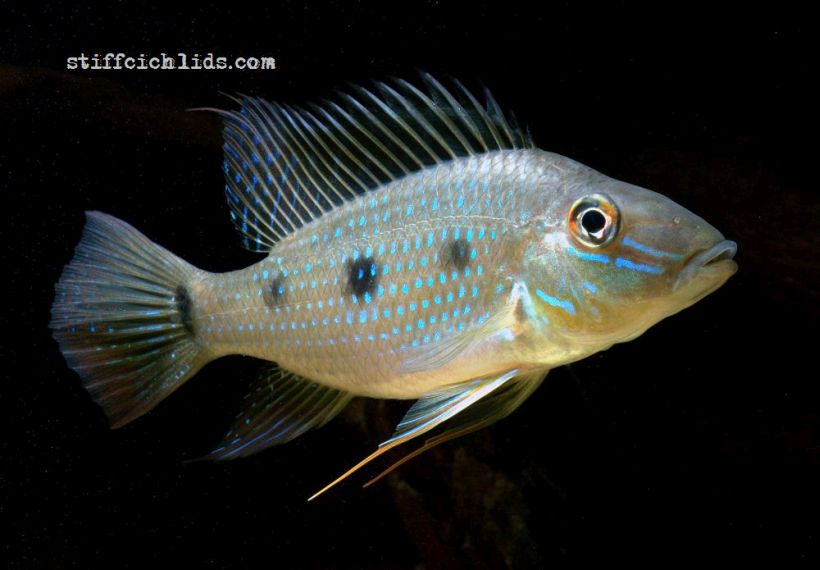
Satanoperca acuticepsSharphead Eartheater
Heckel, 1840
Max length170mm SL7in SLTank180 × 60cm72 × 24inTemp20–28°C68–82°FpH5.5–7.5This species is relatively rare in the ornamental trade, where it is sometimes confused with its similarly-patterned congeners S. daemon and S. lilith. These three species all possess 1-3 dark blotches on the side of the body and a relatively large ocellus on the upper caudal-fin base, characters that immediately separate them from the remainder of the genus which lack blotches on the body and have a relatively small ocellus on the upper caudal-fin base.
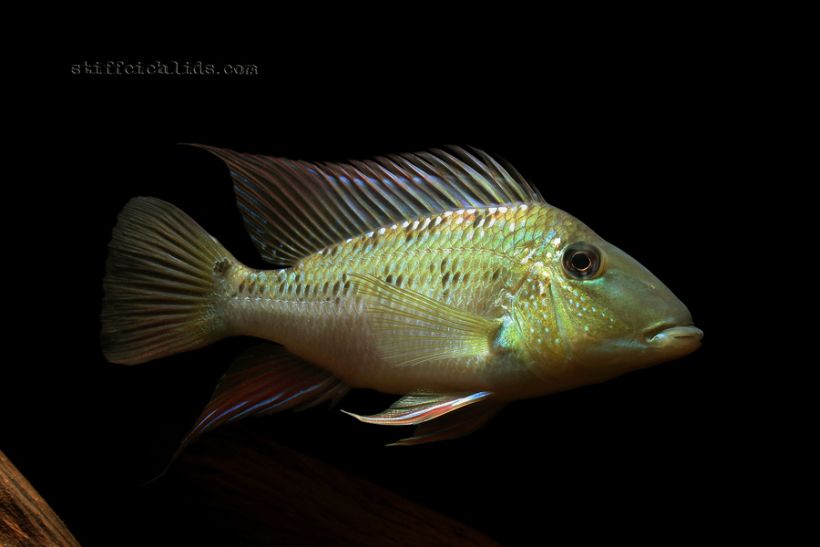
Satanoperca pappaterraPantanal Eartheater
Heckel, 1840
Max length200mm SL8in SLTank210 × 60cm84 × 24inTemp20–28°C68–82°FpH5.5–7.5S. pappaterra is relatively rare in the ornamental trade and much sought after by enthusiasts. It is easily distinguished from all known congeners by presence of a series of prominent black blotches beneath the dorsal-fin, plus a well-defined dark band extending along the side of the body. In recent genetic analyses its genetic distinctness was strongly supported, with S. jurupari and S. leucosticta its closest relatives.
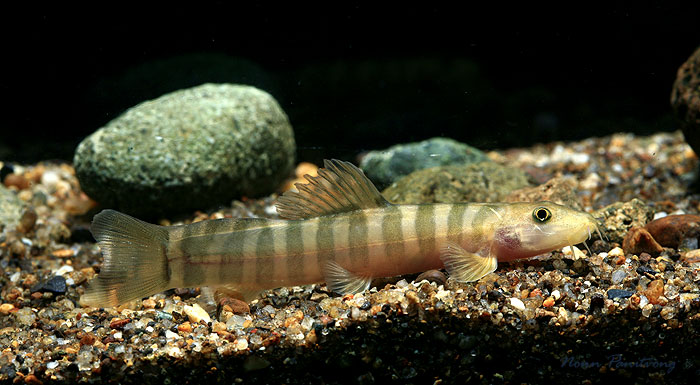
Schistura alticrista
Kottelat, 1990
Max length75mm SL3.0in SLTank90 × 30cm36 × 12inTemp21–26°C70–79°FpH6.0–7.5This species is very rare in the aquarium trade but available on occasion. It has 8-9 darkish body bars which usually split vertically as the fish mature, and like some conspecifics possesses a prominent dorsal adipose crest on the caudal peduncle. Schistura is the most species-rich genus among...