Results for “sp.”
Type a name: scientific, common, or one a species used to go by. Or narrow the catalogue with the filters.
Filters
Nimbochromis livingstonii
authority not recorded
Max length250mm SL10in SLTank120 × 45cm48 × 18inTemp24–28°C75–82°FpH7.6–8.8Not a fish for the general Malawi cichlid community, N. livingstonii is an ambush predator in nature, often being seen hanging motionless around rocky structures, in Vallisneria thickets or on the floor of the lake. It is a sedentary species and does not move around a lot. This is a behavioural adaptation known as thanatosis, or 'playing dead'. This strategy is usually used as for defensive means in other animals but in N. livingstonii is adapted for offensive means. The fish has a mot...
Nimbochromis venustusVenustus
authority not recorded
Max length250mm SL10in SLTank120 × 45cm48 × 18inTemp24–28°C75–82°FpH7.6–8.8Not a fish for the general Malawi cichlid community, N. venustus is an ambush predator in nature. It is often found hanging motionless around rocky structures, in Vallisneria thickets or on the floor of the lake. It is a sedentary species and does not move around a lot. This is a behavioural adaptation known as thanatosis, or 'playing dead'. This strategy is usually used as for defensive means in other animals but in N. venstus is adapted for offensive means. The fish has a mottled col...
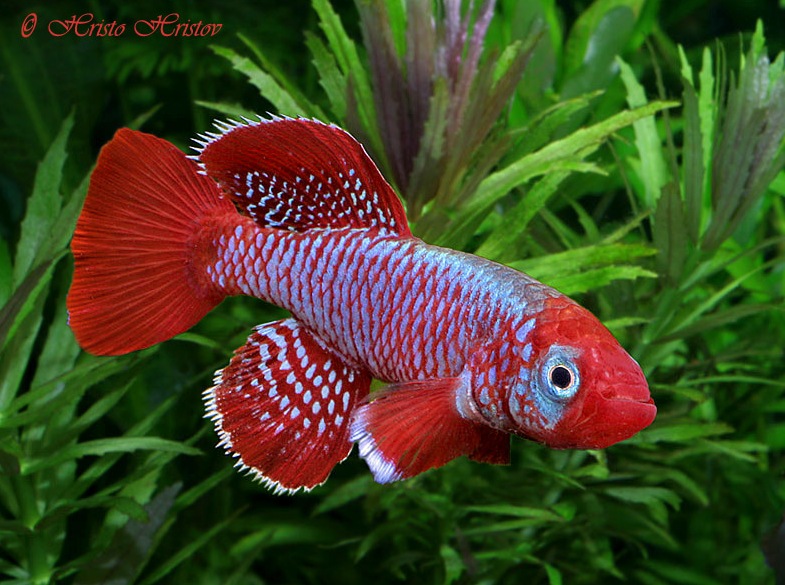
Nothobranchius eggersi
Seegers, 1982
Max length50mm SL2.0in SLTank45 × 30cm18 × 12inTemp20–24°C68–75°FpH7.0–8.2Type locality is 'Rufiji River near Utete, eastern Tanzania', and this species is apparently endemic to the lower Rufiji including the Selous Game Reserve and freshwater parts of the Rufiji delta region. Populations in the aquarium hobby include 'Rufiji river camp', 'Kikongono', 'Ruhoi River', 'Kanga', 'Utete', 'Saadani Game Reserve', 'Ruvu River', 'Bagamoyo', 'Makurunge', 'Killimani', 'Chamakwese', 'Nyamwage', 'Mohoro', and 'Ukuni'.
Ophthalmotilapia boops
authority not recorded
Max length150mm SL6in SLTank120 × 38cm48 × 15inTemp23–27°C73–81°FpH7.5–9.0This was the first species to be placed into the genus Ophthalmotilapia.
Ophthalmotilapia ventralis
authority not recorded
Max length150mm SL6in SLTank135 × 45cm53 × 18inTemp23–27°C73–81°FpH7.5–9.0This is a truly stunning species that does well in a Tanganyikan community with well-chosen tankmates. It exists in well over 20 colour morphs, too many to list here. Obviously these should not be mixed in aquaria as they will hybridise freely. In nature, it is only the largest dominant males that build nests whilst the subdominant males and females shoal together. The territories of these dominant fish may measure several metres across....
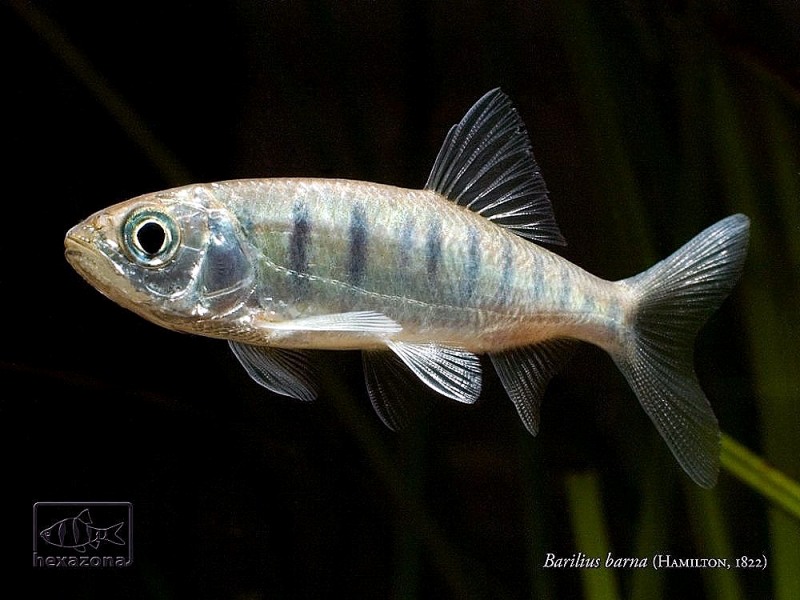
Opsarius barna
Hamilton, 1822
Max length130mm SL5in SLTank150 × 60cm60 × 24inTemp16–24°C61–75°FpH6.0–8.0This species occasionally appears in the ornamental trade, usually as 'striped hill trout' or 'banded hill trout'. It can be distinguished from congeners by the following combination of characters: lateral line complete with 40-42 scales; barbels absent; 10-13 anal-fin rays; body with 9-11 dark blue vertical bars; last dorsal-fin ray extending to caudal-fin base.
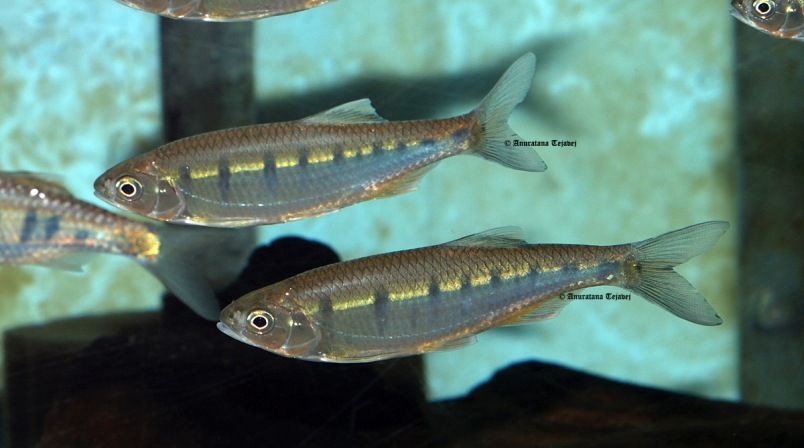
Opsarius ornatus
Sauvage, 1883
Max length110mm SL4in SLTank150 × 60cm60 × 24inTemp18–26°C64–79°FpH6.0–8.0Type locality is 'Mé-Nam River, Thailand', with 'Mé-Nam' having been considered an older name for the Chao Phraya river in central and western Thailand prior to this species' redescription by Tejavej (2012). In fact 'menam' is the Thai word for 'river' and thus could refer to any drainage, and B. ornatus is restricted to...
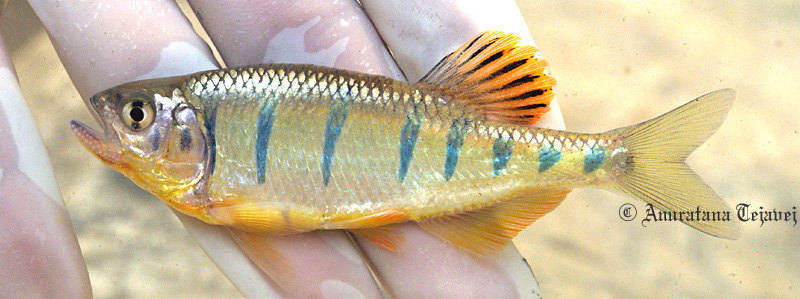
Opsarius pulchellus
Smith, 1931
Max length110mm SL4in SLTank120 × 45cm48 × 18inTemp18–26°C64–79°FpH6.0–7.5This species is traded for aquaria under various names including 'butterfly barb', 'mackerel barb', 'green-barred danio', and 'royal opsarius'. It can be told apart from other memb...
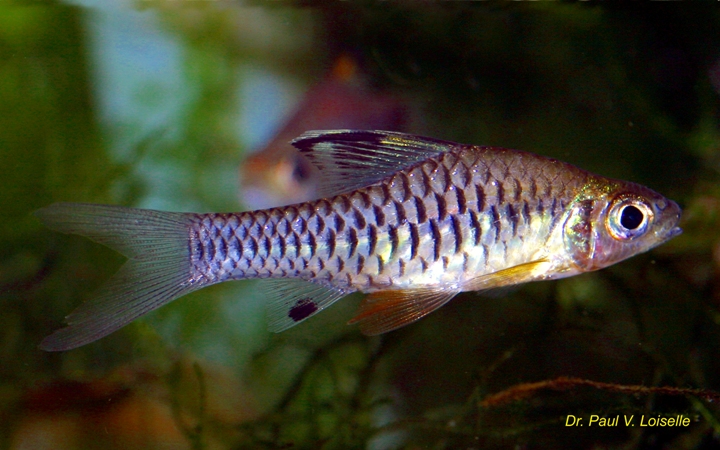
Oreichthys cosuatis
Hamilton, 1822
Max length43mm SL1.7in SLTank60 × 30cm24 × 12inTemp24–28°C75–82°FpH6.5–7.5An assortment of undescribed Oreichthys spp. from India, Myanmar and Thailand are currently traded as O. cosuatis. It can be distinguished from other described members of the genus by lacking a black blotch on the caudal peduncle, plus the following combination of characters: 2-3 perforated scales in lateral line; ½6½ between pelvic-fin origin and dorsal midline; presence of dark stripe in centre of anal-fin, forming a triangular blotch in adult individuals; dorsal-fin with whitish tip and broad, black, subdistal margin in the upper portion of the fin; 11-13 rows...
Orthochromis stormsi
authority not recorded
Max length120mm SL5in SLTank120 × 30cm48 × 12inTemp22–27°C72–81°FpH6.5–7.5O. stormsi was previously classified as Schwetzochromis stormsi and is still named as such by many sources. Its swimbladder is modified, being much reduced in size. This makes the fish less buoyant and therefore less likely to be swept away by the strong currents in its natural habitat. In the aquarium it spends most of its time on the substrate, where it swims in a characteristic 'hopping' fashion. Unfortunately, it is rather rare in the hobby....
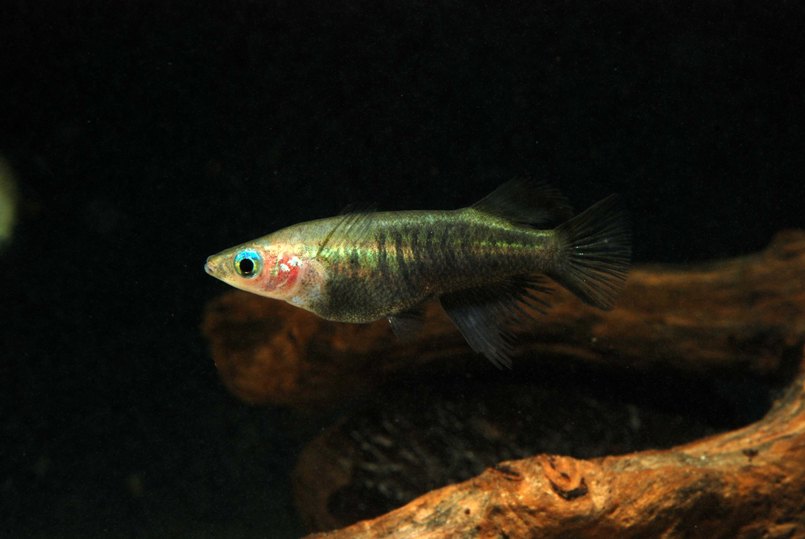
Oryzias eversi
Herder, Hadiaty & Nolte, 2012
Max length40mm SL1.6in SLTank75 × 30cm30 × 12inTemp18–24°C64–75°FpH6.0–7.5The type locality is a karst pool around 30-40 m in length, 10m in width and up to 4 m deep. It contains still, transparent water, has a single inflow and outflow, is surrounded by rainforest and in September 2010 the water temperature was 21.5°C/70.7°F. The habitat is used by locals as a bathing pool and sympatric species included a nat...
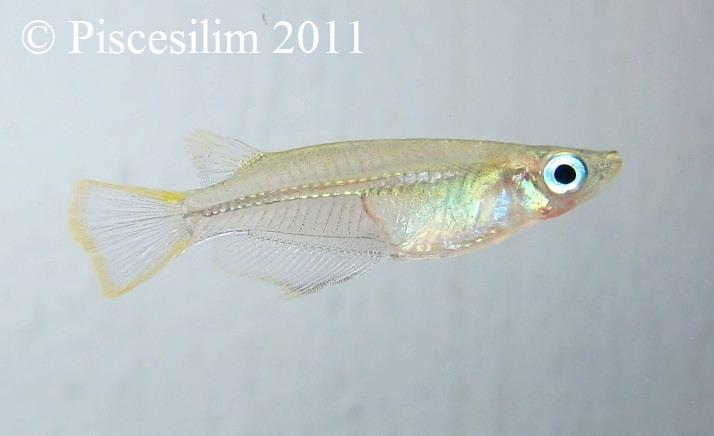
Oryzias javanicusJavanese Ricefish
Bleeker, 1854
Max length35mm SL1.4in SLTank45 × 30cm18 × 12inTemp24–29°C75–84°FpH7.0–9.0This species is widely-distributed throughout Peninsular Thailand, Malaysia (Malay Peninsula plus the states of Sabah and Sarawak, Borneo), Singapore and Indonesia, with records from the Riau Archipelago, Sumatra, Java, Borneo, Bali, Lombok, and Sulawesi existing in the latter. Type locality is 'Panimbang River, Perdana, Indonesia'. It's typically found in coastal, normally brac...
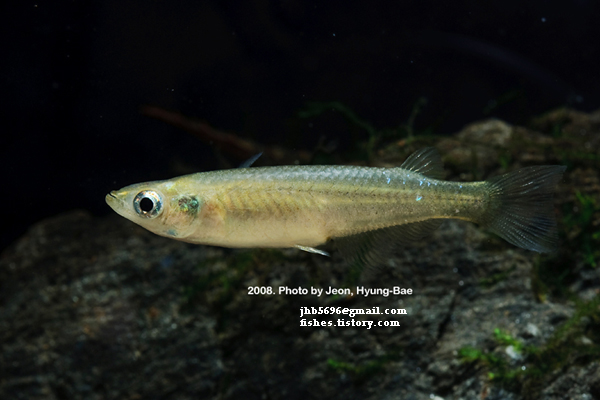
Oryzias latipesMedaka
Temminck & Schlegel, 1846
Max length36mm SL1.4in SLTank45 × 30cm18 × 12inTemp16–22°C61–72°FpH6.5–8.5Commonly known as 'Japanese rice fish' or simply 'rice fish', O. latipes is well-known to science having been widely used as a model organism in genomic and experimental biology for well over a century and was the first vertebrate animal to mate in space during the mid-1990s. It's also been a popular aquarium fish for many years, though is less widely-available than it once was, with the ornamental 'gold' vari...
Osphronemus exodonElephant Ear Gourami
authority not recorded
Max length600mm SL24in SLTank180 × 60cm72 × 24inTemp20–30°C68–86°FpH6.5–8.0A bizarre and very recent addition to the genus, O. exodon is infrequently imported to the hobby, but has been seen occasionally. It has specially adapted mouthparts whereby it has greatly enlarged teeth. An extra set of teeth can also be seen growing in concentric bands on the outer lips! These are used in nature to literally 'pick' fruit from overhanging branches, with the fish often leaping from the water to grab a particularly juicy fig or other fruit. When the mouth of the fish is...
Osteochilus hasseltiiHard-lipped Barb
authority not recorded
Max length320mm SL13in SLTank180 × 60cm72 × 24inTemp22–25°C72–77°FpHnot recordedThere are currently 34 described species of Osteochilus although none can be considered popular in the aquarium hobby. According to Rainboth's 'Fishes of the Cambodian Mekong' members of the genus are characterised by lack of aspine, presence of 11-18rays, large rostral and maxillary barbels, papillae on both upper and lower lips, darkened but not black median fins and the fact that the lower lip is not separated from the isthmus by a deep post-labial groove. O. hasseltii can be f...
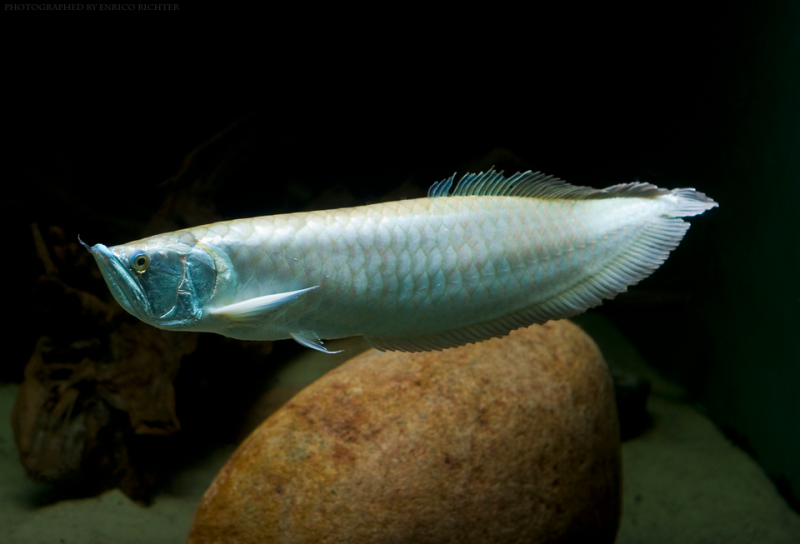
Osteoglossum bicirrhosumSilver Arowana
Cuvier, 1829
Max length800mm SL31in SLTanknot recordedTemp20–30°C68–86°FpH5.0–7.5Given its eventual size and natural behaviour this species is largely unsuitable for the home aquarium, and we know of only a handful of private aquarists with the facilities required to house it long-term. Unfortunately juveniles are readily available in the trade, although the scarcity of privately-maintained adults would suggest that most fail to reach their potential.
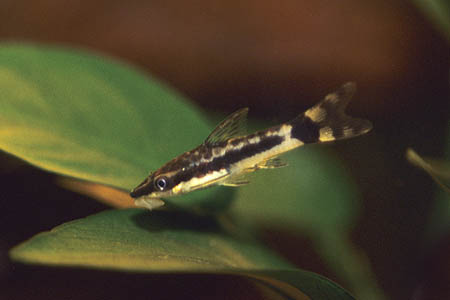
Otocinclus macrospilusOto
Eigenmann & Allen, 1942
Max length35mm SL1.4in SLTank45 × 30cm18 × 12inTemp21–26°C70–79°FpH5.5–7.5This is one of the commoner "otos" seen in the hobby, and is an ideal species for the planted aquarium. Unfortunately it can be quite delicate when first imported, and losses are not uncommon. This is usually down to lack of food, as it's a small fish and needs to feed almost constantly, so it's easily starved during transportation. As almost all otos are wild caught, they can be quite sensitive to water quality, too. Many hobbyists report fewer problems if the fish are added...
Oxydoras nigerRipsaw Catfish
authority not recorded
Max length900mm SL35in SLTank240 × 60cm96 × 24inTempnot recordedpH6.0–7.0Previously referred to a Pseudodoras niger, the Ripsaw Cat is a fish only for the experienced fishkeeper due to its large adult size. Although a visually stunning fish, realistically, it is best suited to public aquaria. Much more peaceful than its common name suggests, which it gets from the spines that run down the lateral line of the fish. This fish is becoming more readily available to the hobby and prices are also falling, meaning that many fishkeepers are being tempted into buying a fis...
Oxyeleotris marmorataMarbled Goby
authority not recorded
Max length650mm SL26in SLTank150 × 60cm60 × 24inTemp22–28°C72–82°FpH6.5–7.5One of the largest goby species in the world, O. marmoratus is unsuitable for the vast majority of aquaria, but is an interesting oddball for the true enthusiast with the facilities to house it properly. It is a nocturnal ambush predator and generally remains motionless during daylight hours unless striking at food. It is a popular food fish in some of its native countries, where it is known as soon hock....
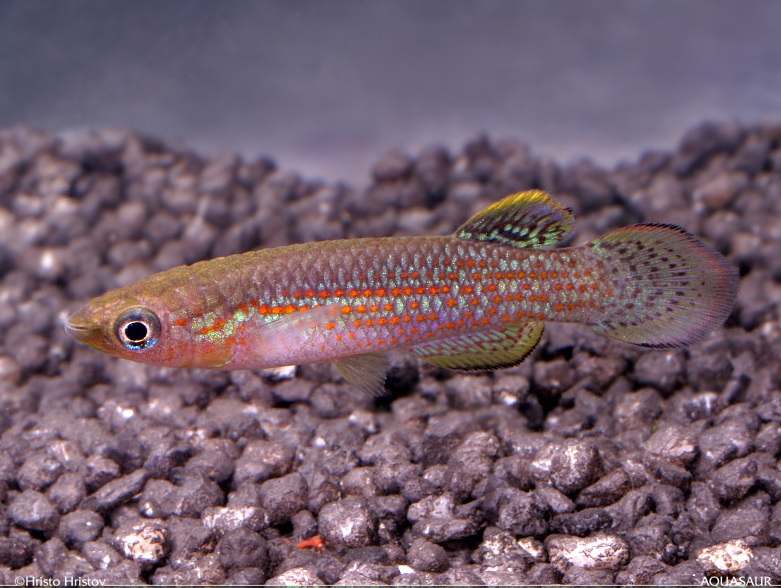
Pachypanchax playfairiiPlayfair's Panchax
Günther, 1866
Max length100mm SL3.9in SLTanknot recordedTemp18–24°C64–75°FpH6.0–8.0Type locality is given simply as 'Seychelles' and this species was originally endemic to the Granitic Seychelles, i.e., those islands in the centre of the group composed chiefly of granite rock. A translocated population now exists on Zanzibar while in the Seychelles it's known from the islands of Mahé, Praslin, Silhouette and La Digue.