Results for “population”
Type a name: scientific, common, or one a species used to go by. Or narrow the catalogue with the filters.
Filters
Moenkhausia oligolepisGlass Tetra
authority not recorded
Max length50mm SL2.0in SLTank60 × 38cm24 × 15inTemp24–28°C75–82°FpH5.5–7.2This species is one of a handful that closely resemble the popular red-eyed tetra, M. sanctaefilomenae. This species is seen much less often in the hobby than its relative however and is also known as the glassy tetra. The taxonomic status of all species in the genus Moenkhausia is currently Incertae Sedis, meaning uncertain. The genus is currently used as something of a catch-all for a large number of small characin species. Most experts agree that a full revision is required, with the likel...
Mylochromis melanonotusHaplochromis Yellow-black Line
authority not recorded
Max length260mm SL10in SLTank150 × 60cm60 × 24inTemp24–28°C75–82°FpH7.6–8.8M. melanonotus is rarely imported and little information is available regarding its captive care. The shovel-like lower jaw possessed by some individuals of this species has been the cause of some confusion regarding the fishes' true identity. It was originally placed in the genus Platygnathochromis, in which it was the only species. However, Ad Konings observed that amongst wild breeding populations there existed individuals both with and without the modified lower jaw. The specimens witho...
Mystus bimaculatusTwo Spot Mystus
authority not recorded
Max length65mm SL2.6in SLTank45 × 30cm18 × 12inTemp23–30°C73–86°FpH4.0–6.5A delightful little species that deserves greater popularity in the hobby. All attempts at captive breeding should be encouraged, as its natural habitat is in danger of destruction by human activity.
Mystus leucophasisAsian Upside Down Catfish
authority not recorded
Max length300mm SL12in SLTank120 × 60cm48 × 24inTemp23–27°C73–81°FpH6.0–8.0Like some members of the African catfish genus Synodontis, this species spends the vast majority of it's time swimming in an inverted position. It is often seen for sale at only a couple of inches in length and may be confused with the popular (and much smaller) Synodontis nigriventris. It can easily be distinguished from this species by its patterning. It does not exhibit the or brown colours of the Synodontis and is a uniform black colour all over. Larger specimens may have some lighter c...
Nannaethiops unitaeniatusOne-lined African Characin
authority not recorded
Max length65mm SL2.6in SLTank60 × 30cm24 × 12inTemp22–26°C72–79°FpH6.5–7.5Not often seen for sale this is a pretty, peaceful little fish that deserves more popularity in the hobby. It is often confused with similar-looking members of the genus Neolebias.
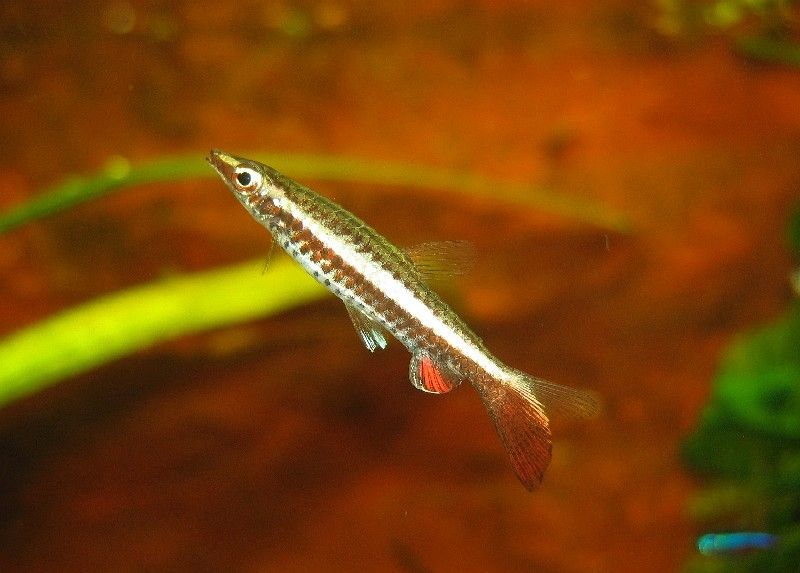
Nannostomus equesHockeystick Pencilfish
Steindachner, 1876
Max length35mm SL1.4in SLTank60 × 30cm24 × 12inTemp22–28°C72–82°FpH4.5–7.5This species has been referred to the genera Poecilobrycon and Nannobrycon in the past and in the aquarium hobby is also known as 'rocket', 'brown', 'brown-tailed', 'diptail', or 'tubemouth' pencilfish.It's a popular aquarium fish and has an interesting oblique swimming-style, a behavioural trait shared only with N. unifasciatus among congeners. In the original description the colour pattern is given by Steindachner as a brown lateral stripe exte...
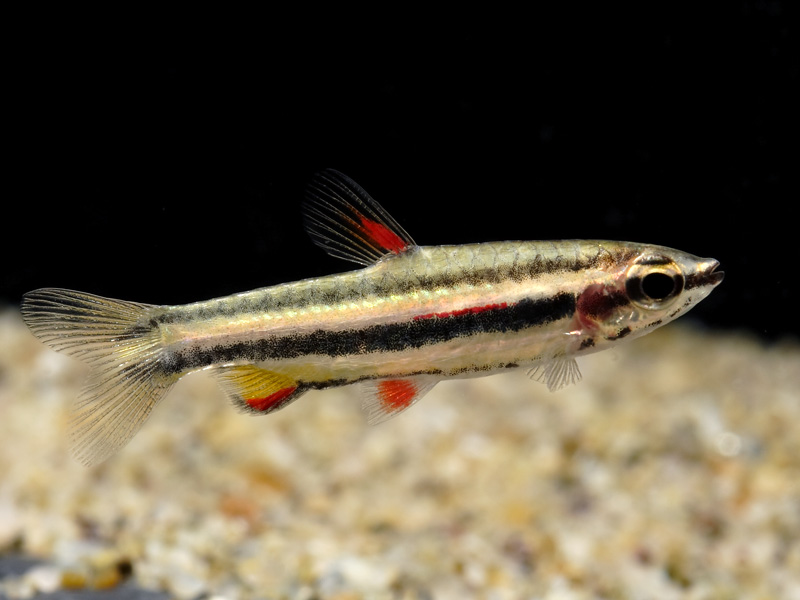
Nannostomus marginatusDwarf Pencilfish
Eigenmann, 1909
Max length25mm SL1.0in SLTank45 × 30cm18 × 12inTemp22–28°C72–82°FpH4.0–7.0There also exist a number of minor differences in colour pattern between populations. For example some Peruvian forms have yellow pigmentation on the body and fins, and those from Guyana and Suriname possess a short red stripe on vertical scale rows 6-9, above the central dark stripe on the body. Rio Negro forms have a similar red stripe but overlapping the central dark stripe and extending along most of the flank, while a form from Colombia has an elongate red stripe which is broken in two beneath the dorsal-fi...
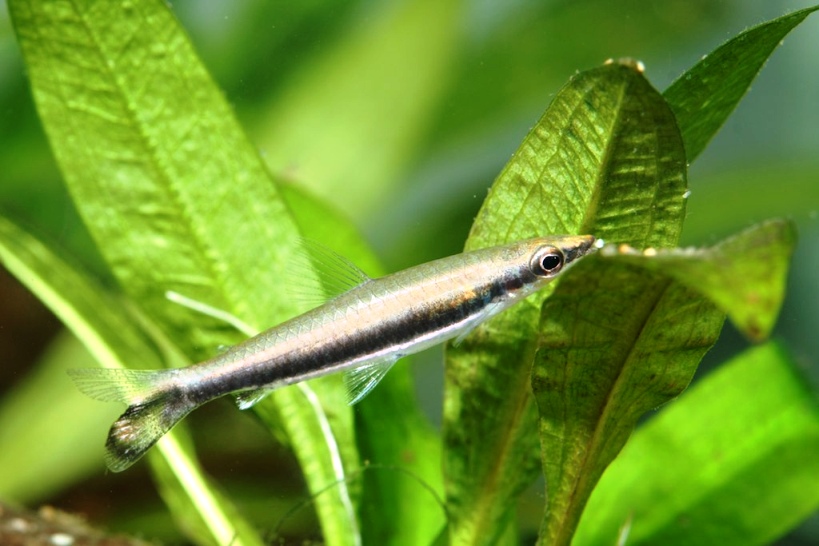
Nannostomus unifasciatusOne-lined Pencilfish
Steindachner, 1876
Max length40mm SL1.6in SLTank75 × 30cm30 × 12inTemp23–28°C73–82°FpH4.0–7.0This species has been referred to the genera Poecilobrycon and Nannobrycon in the past and in the aquarium hobby is also known as 'oneline' or 'red fin' pencilfish. It's a popular aquarium fish and has an interesting oblique swimming-style, a behavioural trait shared only with N. eques among congeners. The most recent diagnosis of the species appears to be that giv...
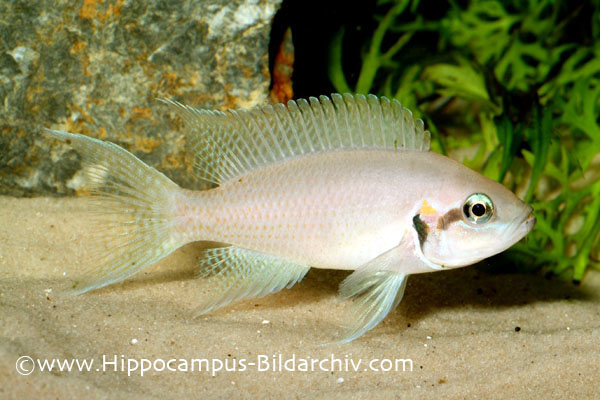
Neolamprologus pulcherBrichardi
Trewavas & Poll, 1952
Max length90mm SL3.5in SLTank120 × 30cm48 × 12inTemp23–27°C73–81°FpH8.0–9.0Deservedly one of the most popular Tanganyikan species available in the hobby, N. brichardi is ideal for newcomers to both Rift Lake cichlids and cichlids in general, being beautiful and easy to keep and breed. It is seen for sale under several common names including "Fairy Cichlid", "Lyretail Cichlid" and "Princess of Burundi". There are several colour morphs available, although these do not vary much in patterning, and an albino form is also occasionally available...
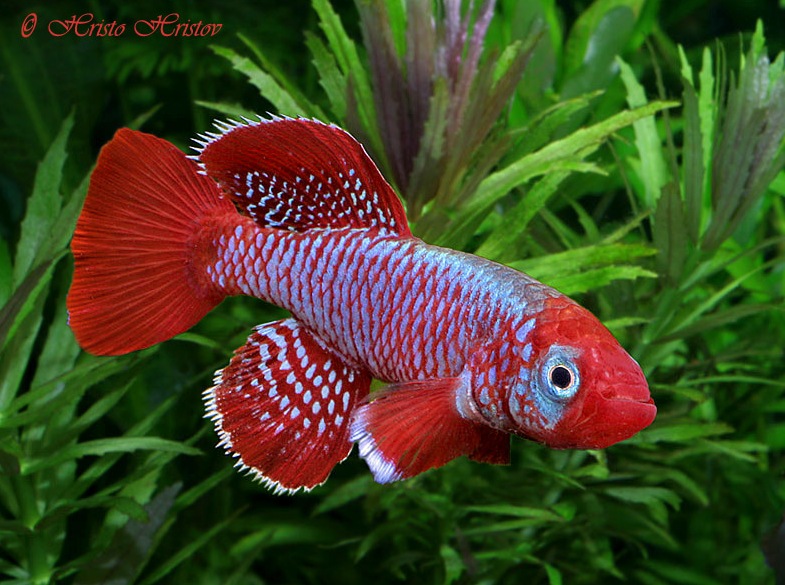
Nothobranchius eggersi
Seegers, 1982
Max length50mm SL2.0in SLTank45 × 30cm18 × 12inTemp20–24°C68–75°FpH7.0–8.2Type locality is 'Rufiji River near Utete, eastern Tanzania', and this species is apparently endemic to the lower Rufiji including the Selous Game Reserve and freshwater parts of the Rufiji delta region. Populations in the aquarium hobby include 'Rufiji river camp', 'Kikongono', 'Ruhoi River', 'Kanga', 'Utete', 'Saadani Game Reserve', 'Ruvu River', 'Bagamoyo', 'Makurunge', 'Killimani', 'Chamakwese', 'Nyamwage', 'Mohoro', and 'Ukuni'.
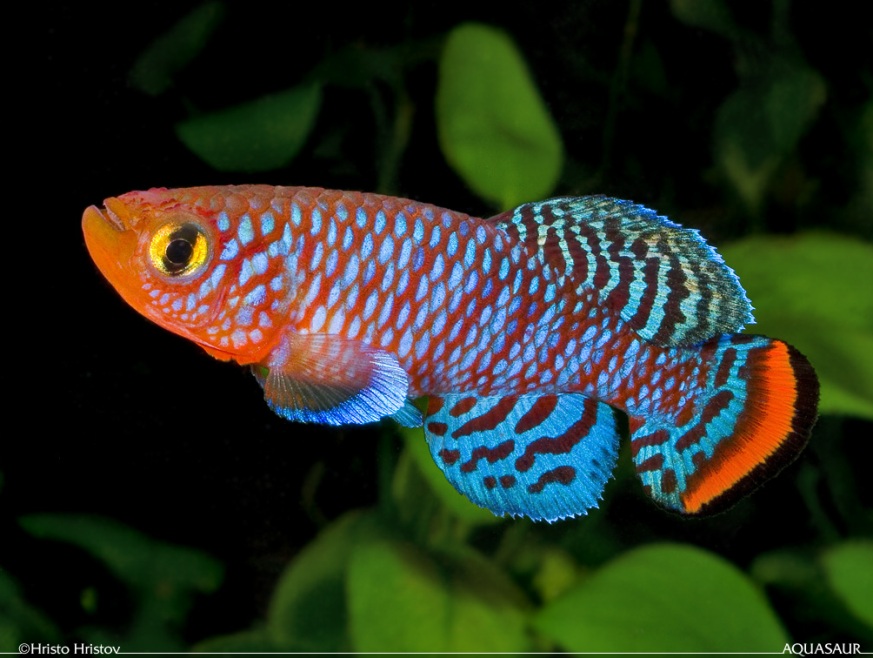
Nothobranchius rachoviiBluefin Nothobranch
Ahl, 1926
Max length55mm SL2.2in SLTank45 × 30cm18 × 12inTemp20–24°C68–75°FpH6.0–7.5Described from close to the city of Beira, Mozambique and for many years thought widely-distributed between the Kruger National Park, South Africa to the Kwa-Kwa River north of the Zambezi delta. Populations from the south and north of this range exhibiting differences in colour pattern and morphology have now been described as N. pienaari and N. krysanovi, respectively, meaning N. rachovii sensu stricto is restricted to the area between the lower Pungwe and Zambezi river basins in eastern Mozambique.
Ompok bimaculatusButter Catfish
authority not recorded
Max length450mm SL18in SLTank180 × 60cm72 × 24inTemp20–26°C68–79°FpH6.0–8.0This infrequently seen (in the trade) species is also known as the two spot glass catfish, for fairly obvious reasons. It is more than likely that a number of separate species are currently considered within this one, as there are clear morphological differences between populations. Pending a taxonomic revision, these currently all remain classified as O.bimaculatus. This would also seem to explain the apparent toleration of the fish to wildly different water chemistry. Xanthic and albino forms ...
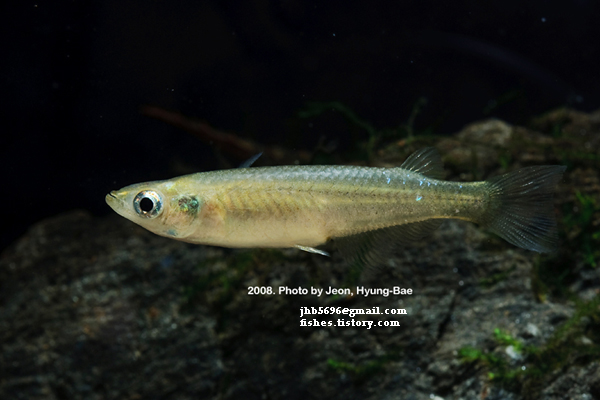
Oryzias latipesMedaka
Temminck & Schlegel, 1846
Max length36mm SL1.4in SLTank45 × 30cm18 × 12inTemp16–22°C61–72°FpH6.5–8.5Commonly known as 'Japanese rice fish' or simply 'rice fish', O. latipes is well-known to science having been widely used as a model organism in genomic and experimental biology for well over a century and was the first vertebrate animal to mate in space during the mid-1990s. It's also been a popular aquarium fish for many years, though is less widely-available than it once was, with the ornamental 'gold' vari...
Osteochilus hasseltiiHard-lipped Barb
authority not recorded
Max length320mm SL13in SLTank180 × 60cm72 × 24inTemp22–25°C72–77°FpHnot recordedThere are currently 34 described species of Osteochilus although none can be considered popular in the aquarium hobby. According to Rainboth's 'Fishes of the Cambodian Mekong' members of the genus are characterised by lack of aspine, presence of 11-18rays, large rostral and maxillary barbels, papillae on both upper and lower lips, darkened but not black median fins and the fact that the lower lip is not separated from the isthmus by a deep post-labial groove. O. hasseltii can be f...
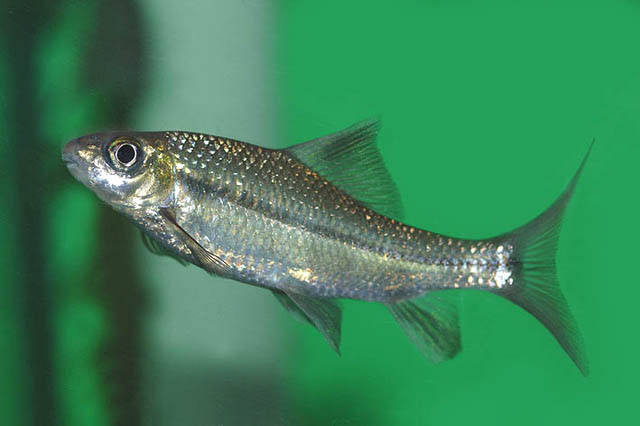
Osteochilus nashii
authority not recorded
Max length180mm SL7in SLTank120 × 45cm48 × 18inTemp22–25°C72–77°FpH6.5–7.5This species is very scarce in the trade indeed and you're most likely to see it on sale as a contaminant among import of other Indian species. There are currently 34 described species of Osteochilus although none can be considered popular in the aquarium hobby. According to Rainboth's 'Fishes of the Cambodian Mekong' members of the genus are characterised by lack of aspine, presence of 11-18rays, large rostral and maxillary barbels, papillae on both upper and lower lips,...
Oxyeleotris marmorataMarbled Goby
authority not recorded
Max length650mm SL26in SLTank150 × 60cm60 × 24inTemp22–28°C72–82°FpH6.5–7.5One of the largest goby species in the world, O. marmoratus is unsuitable for the vast majority of aquaria, but is an interesting oddball for the true enthusiast with the facilities to house it properly. It is a nocturnal ambush predator and generally remains motionless during daylight hours unless striking at food. It is a popular food fish in some of its native countries, where it is known as soon hock....
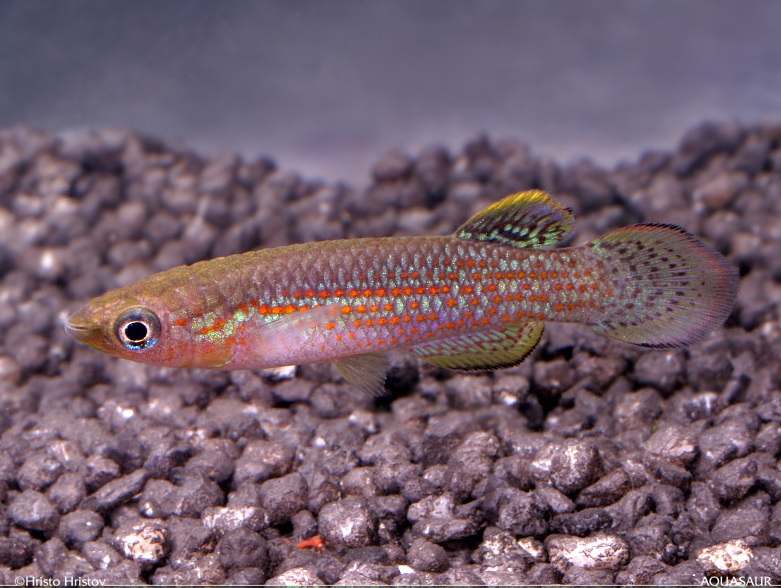
Pachypanchax playfairiiPlayfair's Panchax
Günther, 1866
Max length100mm SL3.9in SLTanknot recordedTemp18–24°C64–75°FpH6.0–8.0Type locality is given simply as 'Seychelles' and this species was originally endemic to the Granitic Seychelles, i.e., those islands in the centre of the group composed chiefly of granite rock. A translocated population now exists on Zanzibar while in the Seychelles it's known from the islands of Mahé, Praslin, Silhouette and La Digue.
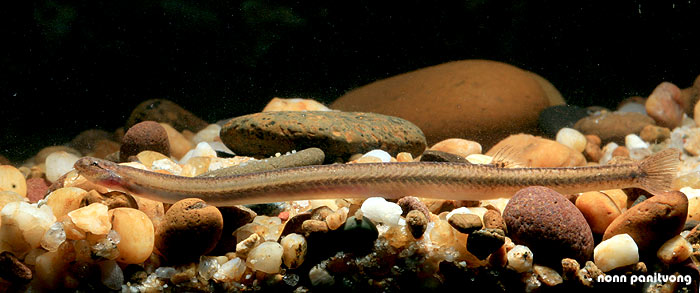
Pangio anguillaris
Vaillant, 1902
Max length120mm SL5in SLTank60 × 30cm24 × 12inTemp22–29°C72–84°FpH6.0–7.5One of a handful of Pangio spp. traded under the generic name 'eel loach'. Wild populations tend to differ in colour pattern to some extent, with some exhibiting a more intense lateral stripe while others display an irregular pattern of fine dark spots on the body, for example.
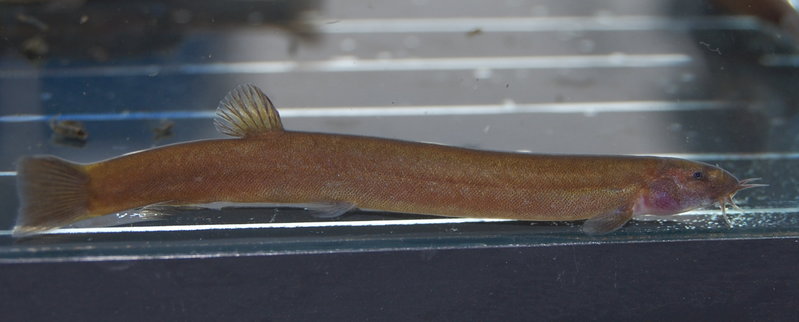
Pangio oblongaBlack Kuhli Loach
Valenciennes, 1846
Max length80mm SL3.1in SLTank60 × 30cm24 × 12inTemp21–26°C70–79°FpH3.5–7.0Described from close to the city of Bogor, Jawa Barat (West Java) province on the island of Java, Indonesia, but currently considered widespread with recorded occurrences on Java, Sumatra, Borneo and mainland Peninsular Malaysia. Some populations exhibit lighter...
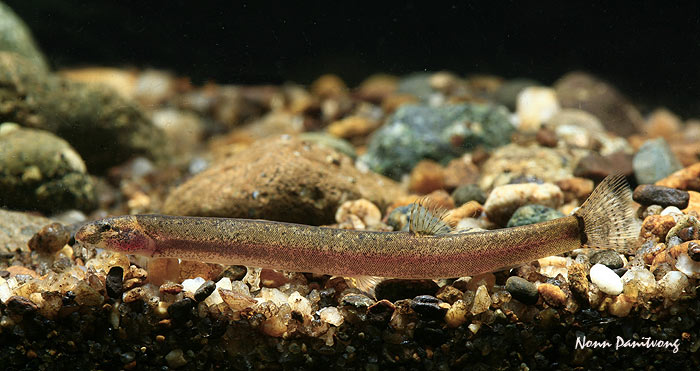
Pangio piperata
Kottelat & Lim, 1993
Max length60mm SL2.4in SLTank45 × 30cm18 × 12inTemp21–26°C70–79°FpH4.0–7.5Some Sumatran and Bornean populations of the highly variable P. shelfordii superficially resemble P. piperata which can cause issues with identification as the two often occur together. In general however the body patterning in P. piperata is than that of P. shelfordii and they differ in vertebral counts (mode 47 vs. 50, respectively).