Results for “community”
Type a name: scientific, common, or one a species used to go by. Or narrow the catalogue with the filters.
Filters
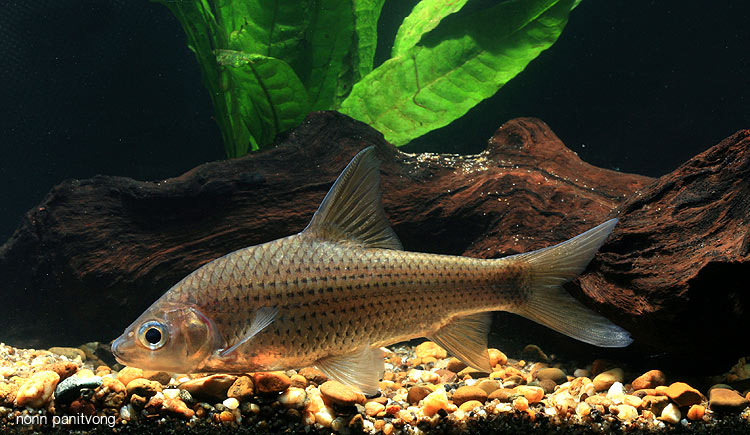
Cyclocheilichthys repasson
Bleeker, 1853
Max length280mm SL11in SLTank180 × 45cm72 × 18inTemp20–26°C68–79°FpH5.0–8.0An ideal resident of the larger, well-furnished community set-up though it might upset slow-moving or timid companions simply by its size. There are plenty of suitable tankmates including many cyprinids, loaches, cichlids, catfish and characins, but as always when selecting a compatible community of fish proper research is essential. A community based around one of its native countries or river basins...
Synodontis petricolaDwarf Lake Synodontis
authority not recorded
Max length130mm SL5in SLTank90 × 30cm36 × 12inTemp24–28°C75–82°FpH7.5–8.5One of our favourite Synos and highly recommended for any Tanganyikan community aquarium. The dwarf form can even be kept in a South American community.
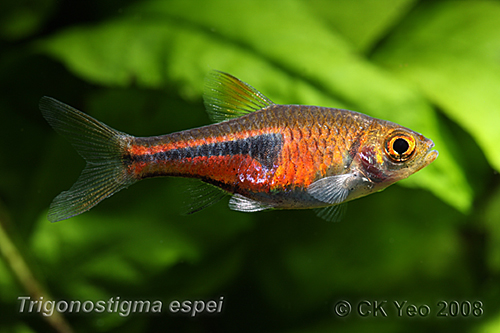
Trigonostigma espeiLambchop Rasbora
Meinken, 1967
Max length30mm SL1.2in SLTank60 × 30cm24 × 12inTemp23–28°C73–82°FpH5.5–7.5This species is very peaceful indeed making it an ideal resident of the well-maintained community tank. As it places no extreme demands in terms of water chemistry it can be combined with many of the most popular fish in the hobby including other small cyprinids as well as tetras, livebearers, dwarf cichlids, catfishes, and loaches. As always when selecting a compatible community of fish thorough research is essential and its small adult size must be a consideration, however.
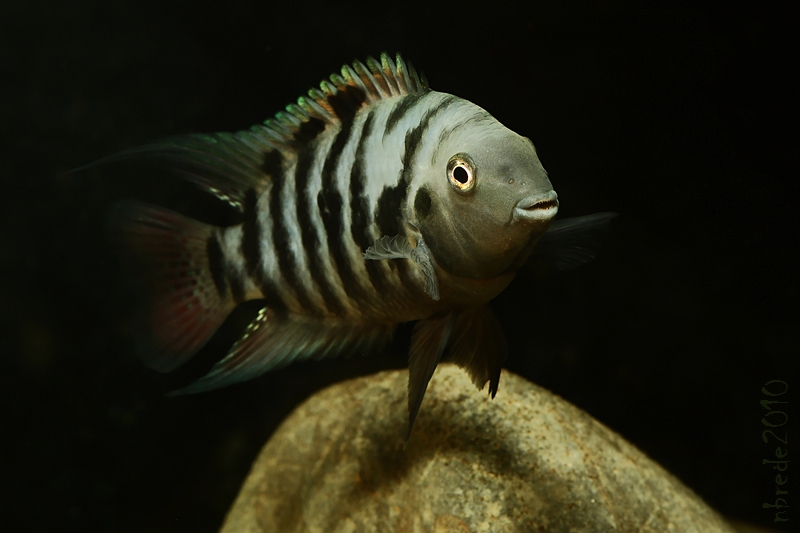
Amatitlania nigrofasciataConvict Cichlid
Günther, 1867
Max length150mm SL6in SLTanknot recordedTemp24–28°C75–82°FpH6.0–8.0A hugely popular and very adaptable species, the convict is one of the most ubiquitous fish in the hobby. It is often referred to by synonyms such as Cryptoheros nigrofasciatus and Cichlasoma nigrofasciatus. It's difficult to know how much to recommend it to the beginner, as despite its hardiness and ease of breeding, it's not really a community fish. However, if you want to breed a species and witness some amazing parental behaviour, it's an unreserved recommendation. It now exis...
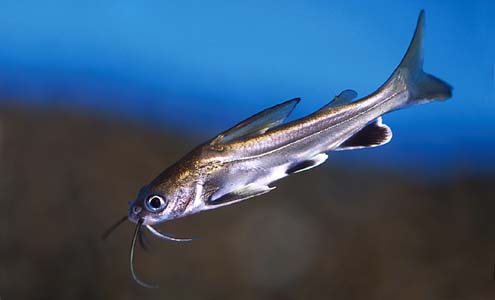
Ariopsis seemanniColombian Shark Catfish
Günther, 1864
Max length350mm SL14in SLTank240 × 60cm96 × 24inTemp22–26°C72–79°FpH6.8–8.5This species is not recommended to those lacking the facilities to house it for life. Sadly it's all too often seen for sale as an attractive, silvery 2-3" juvenile, supposedly suitable for the general freshwater community tank. To make matters worse, it is also usually given an 'alluring' name such as 'black-finned' or 'silvertip' shark catfish. The fate of the majority of these specimens is in all likelihood a depressing one.
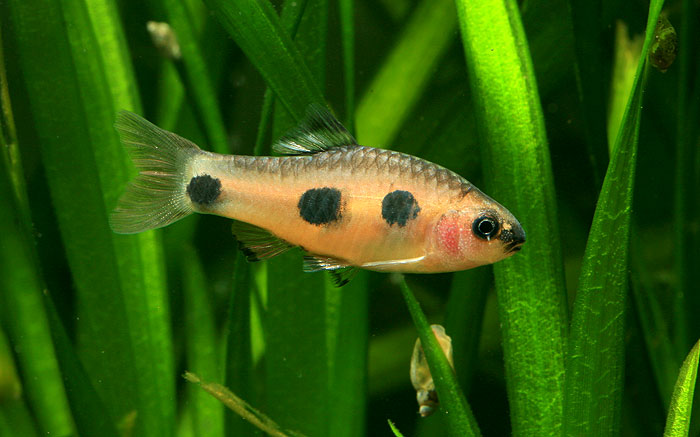
'Barbus' candens
Nichols & Griscom, 1917
Max length35mm SL1.4in SLTank45 × 30cm18 × 12inTemp17–24°C63–75°FpH5.0–7.0'B.' candens is not really suitable for most community aquaria as it has something of a shy, retiring nature and may be intimidated or outcompeted for food by larger/more boisterous tankmates. Choose similarly-sized, peaceful African species such as 'B.' jae, Aplocheilichthys spp., Ladigesia roloffi or Lepidarchus adonis. We suspect it will also do ok with many small South American characins, Otocinclus or smaller Corydoras catfish and other cyprinids like Trigonostigma or Boraras species.
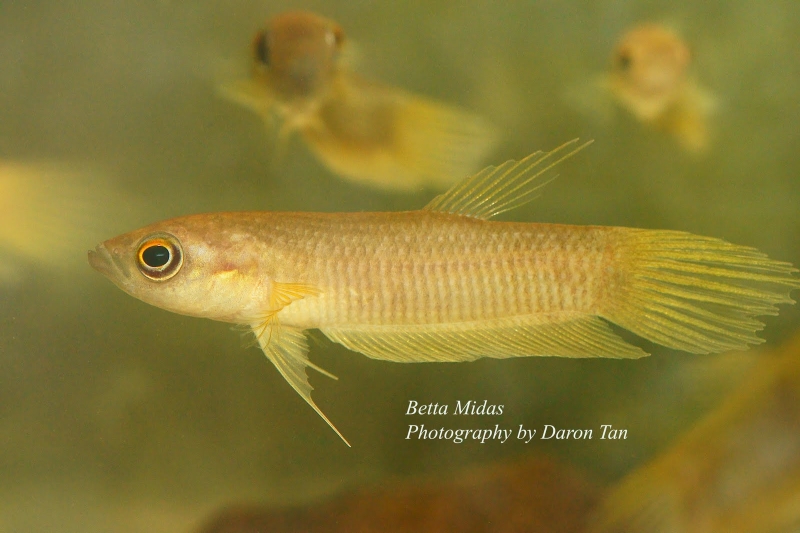
Betta midas
Tan, 2009
Max length66mm SL2.6in SLTank80 × 30cm31 × 12inTemp22–28°C72–82°FpH3.5–6.5Not recommended for the standard community set-up for reasons already touched upon. It's requirements and disposition mean it's best kept alone or with very peaceful species since much bigger or more vigorous fishes are likely to intimidate and outcompete it. Some small cyprinids and loaches that inhabit similar environments in nature are compat...
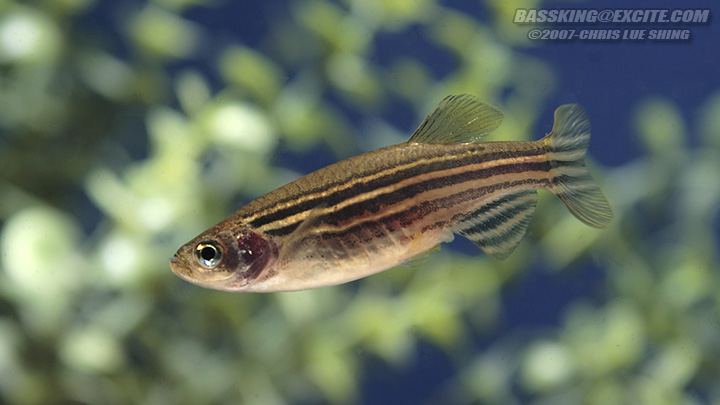
Brachydanio rerioZebra 'Danio'
Hamilton, 1822
Max length50mm SL2.0in SLTank90 × 30cm36 × 12inTemp18–25°C64–77°FpH6.0–8.0This species is very peaceful indeed and can be combined with many of the most popular fish in the hobby including other small cyprinids as well as tetras, livebearers, rainbowfishes, anabantoids, catfishes and loaches. As always when selecting a compatible community of...
Bryconaethiops boulengeriBoulenger's Featherfin Tetra
authority not recorded
Max length250mm SL10in SLTank120 × 45cm48 × 18inTemp22–26°C72–79°FpH6.0–8.0This rarely imported species makes an attractive addition to a community of larger peaceful fish. It is farmed commercially for food in its native countries....
Bunocephalus coracoideusBanjo Catfish
authority not recorded
Max length150mm SL6in SLTank60 × 38cm24 × 15inTemp20–27°C68–81°FpH5.8–7.8Bunocephalus is the largest genus within the Aspredinidae family and there are several undescribed species. B. coracoideus is the most common member seen in dealers' tanks. Its native name "Guitarrita" translates as "little guitar" and refers to the shape of the fish when viewed from above. Despite the regularity with which it is seen for sale, it isn't really a good catfish for the general community tank because it's a largely inactive, secretive species, ...
Caecomastacembelus albomaculatus
authority not recorded
Max length220mm SL9in SLTank120 × 30cm48 × 12inTemp23–27°C73–81°FpH8.0–9.5This is a great oddball species for the Tanganyikan community tank, although it is not as attractive as the closely related Aethiomastacembelus ellipsifer. It is rarely seen in the hobby. The species in the family Mastacembelidae are known as "spiny" eels because the dorsal rays are stiffened. Care must therefore be exercised when handling them to avoid injuries. Spiny eels also have no swim bladder, an adaptation to their benthic lifestyle....
Caecomastacembelus plagiostomus
authority not recorded
Max length300mm SL12in SLTank120 × 45cm48 × 18inTemp23–27°C73–81°FpH8.0–9.5Very rarely seen in the hobby, this species makes an interesting oddball addition to the Tanganyikan community tank. The species in the family Mastacembelidae are known as "spiny" eels because the dorsal rays are stiffened. Care must therefore be exercised when handling them to avoid injuries. Spiny eels also have no swim bladder, an adaptation to their benthic lifestyle.....
Champsochromis caeruleusMalawi Trout
authority not recorded
Max length325mm SL13in SLTank180 × 60cm72 × 24inTemp24–27°C75–81°FpH7.5–8.5Also known as the trout cichlid, this species makes a great centrepiece to a well-chosen community of big Rift Lake cichlids. An adult male in top condition makes for a truly jaw dropping sight. It is only occasionally offered for sale, as it is difficult to collect, living a predominantly solitary lifestyle. As a result, it is much sought after by enthusiasts. It is sometimes confused with the other species in the genus, C. spilorhynchus, but can be distinguished by its more elongate shape. ...
Cichlasoma bolivienseBolivia Cichlid
authority not recorded
Max length110mm SL4in SLTanknot recordedTemp23–27°C73–81°FpH6.5–7.4Sometimes referred to (incorrectly) as cichlasoma boliviensis, the Bolivia cichlid is not commonly seen in the hobby. A good candidate for a community of medium sized cichlids, assuming aggression problems can be overcome.
Cyrtocara mooriiMalawi Blue Dolphin
authority not recorded
Max length250mm SL10in SLTank150 × 38cm60 × 15inTemp25–29°C77–84°FpH7.5–8.8A gentle giant ideal for the larger community of Malawi cichlids, this species was formerly named Haplochromis moorii. It is occasionally referred to by the common name, "Humphead Mouthbrooder". In nature, it exhibits an interesting feeding behaviour in which it will be attracted to clouds of sand thrown up by the activity of substrate-sifting species such as Fossorochromis rostratus or Taeniolethrinops praeorbitalis. Shoals of C. moorii will follow these species and feast on any mo...
Dianema longibarbisPorthole Catfish
authority not recorded
Max length100mm SL3.9in SLTank90 × 38cm36 × 15inTemp24–28°C75–82°FpH5.5–7.5So named because of the row of spots running along the lateral line, the porthole cat is a good community species. Newly imported fish tend to be a little delicate and are susceptible to disease. This is at least in part because all specimens sold for the trade are wild caught. Once acclimatised, it usually proves very hardy and can be exceptionally long-lived for a fish of this size, having the potential to survive for over 10 years....
Dianema urostriatumFlagtail Catfish
authority not recorded
Max length125mm SL5in SLTank120 × 38cm48 × 15inTemp25–28°C77–82°FpH6.0–8.0A good choice for the larger community tank. Newly imported fish tend to be a little delicate and can be susceptible to disease. This is at least in part because all specimens sold for the trade are wild caught. Once acclimatised it usually proves very hardy and adaptable....
Distichodus affinisSilver Distichodus
authority not recorded
Max length200mm SL8in SLTank120 × 30cm48 × 12inTemp23–27°C73–81°FpH6.0–8.0This species has become more common in the trade in recent years, and makes an interesting addition to larger communities. It develops bright red fins as it matures. Some specimens develop a pink sheen on the underside. These variations may indicate different species, as there are several in the genus that superficially resemble D. affinis....
Distichodus sexfasciatusSix-banded Distichodus
authority not recorded
Max length750mm SL30in SLTank150 × 60cm60 × 24inTemp22–26°C72–79°FpH6.0–7.5This is the most common of the few Distichodus species regularly seen in the hobby, and sadly, it is often sold as being suitable for the general community tank. This is clearly not the case in terms of both its temperament and potential size. Do not buy one unless you have the facilities to house it for life. It is usually seen for sale at a couple of inches long, and at this size is a very attractive orange and black striped fish with bright red finnage. Unfortunately, much of this colour and ...
Dormitator lebretonisClay Goby
authority not recorded
Max length120mm SL5in SLTanknot recordedTemp22–26°C72–79°FpH7.0–8.5Not often seen for sale, but if you can find it, it makes a peaceful addition to the brackish or hardwater community of medium-sized fish. It was previously considered a member of the now defunct genus Batanga. The fish in our picture is a young specimen. Adults develop a pleasing pattern of reds and blues and are most attractive....