Results for “endangered”
Type a name: scientific, common, or one a species used to go by. Or narrow the catalogue with the filters.
Filters
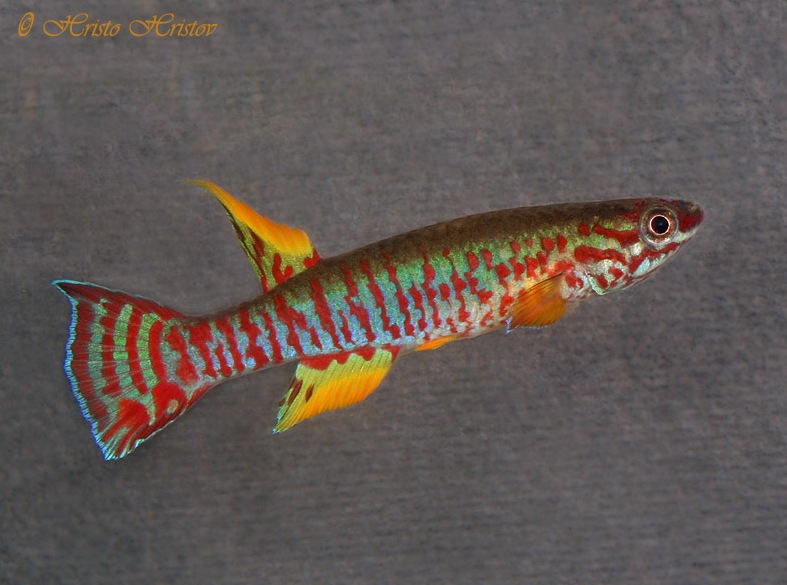
Aphyosemion bualanumBouala Lyretail
Ahl, 1924
Max length50mm SL2.0in SLTanknot recordedTempnot recordedpHnot recordedDescribed from 'Buala, Cameroon', which corresponds to modern-day Bouala in Central African Republic. It's known distribution includes parts of northern Cameroon, western Central African Republic, southeastern Chad and possibly eastern Nigeria in the upper Benue and Mayo Kébbi river systems. The specific name was mis-used to refer to various populations of the congener A. elberti prior to 1990, and we've been unable to confirm if the specimen pictured here is correctly identified or not. It is listed as 'endangered' by the IUCN.
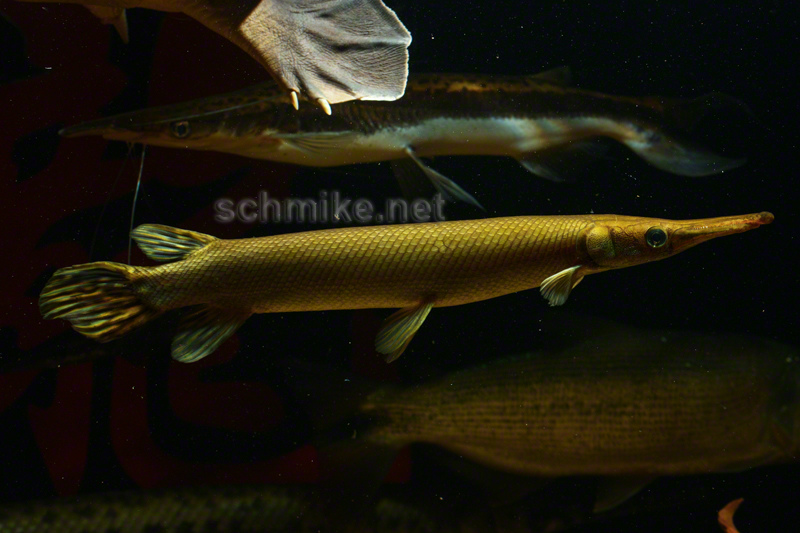
Atractosteus tristoechusCuban Gar
Bloch & Schneider, 1801
Max length1800mm SL71in SLTanknot recordedTempnot recordedpHnot recordedEndemic to Cuba where it's found throughout western parts of the island plus Isla de la Juventud (Isle of Youth, formerly known as the Isle of Pines). It's endangered across most of this range and captive breeding efforts are well-established. Known locally in Cuba as 'manjuari', it clearly shouldn't be considered a home aquarium subject...
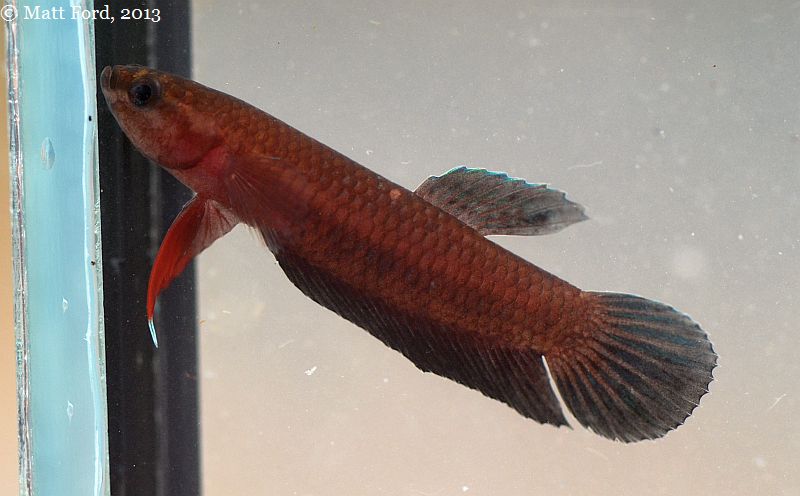
Betta miniopinna
Tan & Tan, 1994
Max length35mm SL1.4in SLTank45 × 30cm18 × 12inTemp22–28°C72–82°FpH4.0–6.0Bintan has been developed for tourism over the last decades and is heavily-promoted by Indonesia, with luxury beach resorts and golf courses increasing in number. Further deforestation has occurred in order to establish large rubber plantations in the interior of the island. B. miniopinna is now restricted to a few remaining pockets of primary peat swamp forest and has been listed as 'Critically Endangered' on the IUCN Red List of Threatened Species since 1996.
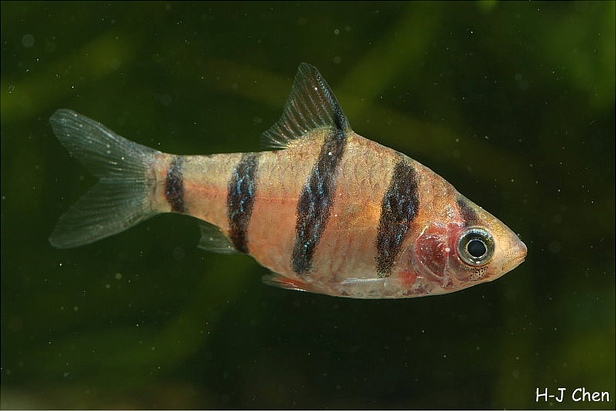
Desmopuntius hexazona'Pentazona' Barb
Weber & de Beaufort, 1912
Max length55mm SL2.2in SLTank80 × 30cm31 × 12inTemp20–26°C68–79°FpH4.0–7.0Native to parts of southern Borneo, eastern Sumatra, Singapore, and the Malay Peninsula. In Singapore it's considered highly-endangered and is now restricted to the Central Catchment nature reserve. Type locality is 'Tuluk and Gunung Sahilan, Sumatra, Indonesia' which appears to correspond to localities within the Kampar River drainage of which the former is now known as Teluk Meranti and is o...
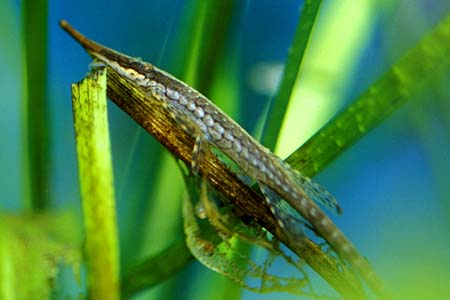
Farlowella vittataTwig Catfish
Myers, 1942
Max length150mm SL6in SLTank90 × 30cm36 × 12inTemp24–27°C75–81°FpH6.0–7.0Although often sold as the closely related F. acus (a species that is highly endangered and imported very rarely, if at all), F. vittata is the most common representative of the genus in hobbyists' tanks. The easiest way to distinguish the two is by comparing the shape of the rostrum, which is longer and more slender in vittata, although there are also differences in the arrangement of the ventral scutes. They are adapted for life among peripheral vegetation and tree roots along the edges o...
Haplochromis latifasciatus
authority not recorded
Max length125mm SL5in SLTank120 × 30cm48 × 12inTemp23–28°C73–82°FpH7.2–8.2This beautiful species is critically endangered in nature but is not that rare in the hobby being quite easily bred. Many sources refer to it by the invalid scientific name Astatotilapia latifasciata and may also be seen for sale as Haplochromis sp. "zebra obliquidens" or H. obliquidens. Sadly it's thought that the latter fish has never even been exported and is extinct in nature. Furthermore, H. obliquidens is a Victorian species and does not even inhabit the same lake as H. l...
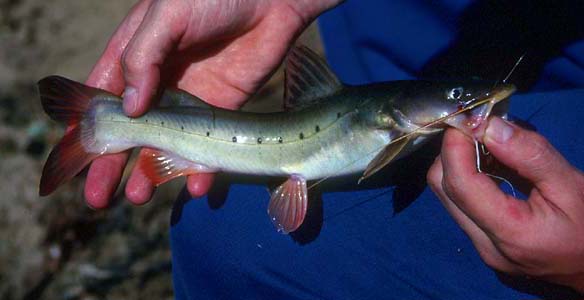
Hemibagrus punctatusPorthole Bagrid
Jerdon, 1849
Max length197mm SL8in SLTanknot recordedTemp20–27°C68–81°FpH6.0–7.0Confirmed localities include the Kabini, Bhadra and Moyar tributary systems where it was last collected in 1998, the 1980s and 1990-92, respectively. The IUCN currently list it as Critically Endangered (possibly extinct).
Melanotaenia boesemaniBoeseman's rainbowfish
authority not recorded
Max length110mm SL4in SLTank120 × 30cm48 × 12inTemp27–30°C81–86°FpH7.0–8.0This uniquely-patterned species is one of the most popular rainbowfish in the hobby and can be found swimming in most dealers' tanks. However, virtually all these fish are mass-produced on fish farms in the Far East and Eastern Europe. M. boesmani is actually quite rare in nature, and is on the IUCN red list of endangered species. Unfortunately this is one species on which the aquarium trade has had a massively detrimental effect, with an estimated one million fish a year being collected to...
Melanotaenia herbertaxelrodiLake Tebera Rainbowfish
authority not recorded
Max length90mm SL3.5in SLTank90 × 30cm36 × 12inTemp20–26°C68–79°FpH7.0–8.0One of the more beautifull-coloured rainbowfish available when mature, M. herbertaxelrodi is probably at risk from overfishing, but not enough data is available to consider it an endangered species as yet....
Mogurnda adspersaSouthern Purple Spotted Gudgeon
authority not recorded
Max length140mm SL6in SLTank120 × 30cm48 × 12inTemp16–24°C61–75°FpH7.0–7.5This species is considered endangered across its native range, but has recently begun to appear in the hobby a little more often as a result of commercial farming. It's still by no means common though. Superficially it looks very similar to the much commoner Northern purple spotted gudgeon (Mogurnda mogurnda), but can be distinguished by the presence of only 30-36 scales along its lateral line, (as opposed to 37-48 in M. mogurnda), and a higher degree of red spotting in the second dorsal fi...
Mogurnda mogurndaNorthern Purple Spotted Gudgeon
authority not recorded
Max length170mm SL7in SLTank120 × 30cm48 × 12inTemp24–26°C75–79°FpH6.0–8.0A good species of gudgeon for the beginner, being tolerant of a wide range of water conditions, hardy and easily bred. We've even seen them spawning in dealer's tanks on more than one occasion. It's easily confused with the similar looking, but rarer Southern purple spotted gudgeon, Mogurnda adspersa, a fish which is now being farmed for the trade despite being endangered in nature....
Paratilapia polleni
authority not recorded
Max length280mm SL11in SLTank120 × 45cm48 × 18inTemp17–28°C63–82°FpH6.5–8.0Now the only species in the genus Paratilapia, P. polleni is known as the "marakely" to many natives in Madagascar, which means "black fish". As with most Madagascan cichlid species, it is highly endangered in the wild due to habitat destruction and competition from introduced species and all attempts at captive breeding are to be encouraged. There is still some confusion as to the identity of the "true" P. polleni as there are both large and small-spotted forms...
Pungu maclareni
authority not recorded
Max length100mm SL3.9in SLTank75 × 30cm30 × 12inTemp28–30°C82–86°FpH7.5–8.5This is currently the only described species in the genus Pungu. Because of it's its tiny natural range, habitat destruction due to excess water removal (the nearby town of Kumba relies on the lake for it's water supply), deforestation, the introduction of non-native species and overfishing, it is considered to be critically endangered and all efforts at captive breeding are to be encouraged. It is correspondingly rare in the hobby, and we suggest purchasing some only if you intend to ...
Stomatepia pindu
authority not recorded
Max length90mm SL3.5in SLTank75 × 30cm30 × 12inTemp28–30°C82–86°FpH7.5–8.5Because of it's its tiny natural range, habitat destruction due to excess water removal (the nearby town of Kumba relies on the lake for it's water supply), deforestation, the introduction of non-native species and overfishing, it is considered to be critically endangered. All efforts at captive breeding are to be encouraged. However, it is correspondingly rare in the hobby. The area around Lake Barombi Mbo has been suggested to be designated a protected area, but as yet this has not o...
Tilapia guinasana
authority not recorded
Max length140mm SL6in SLTank120 × 30cm48 × 12inTemp19–25°C66–77°FpH7.0–7.8Rare in the hobby, this species is unfortunately considered critically endangered in the wild. The lake in which it is found is receiving less groundwater than it once was, due to extraction of water for agriculture. Even if this were not the case, the species is found over such an enclosed range that it would still be at extreme risk. All attempts at captive breeding are therefore to be encouraged, with care being taken to keep the different lines pure. Interestingly, as there are no natural...