Results for “lateral scale rows”
Type a name: scientific, common, or one a species used to go by. Or narrow the catalogue with the filters.
Filters
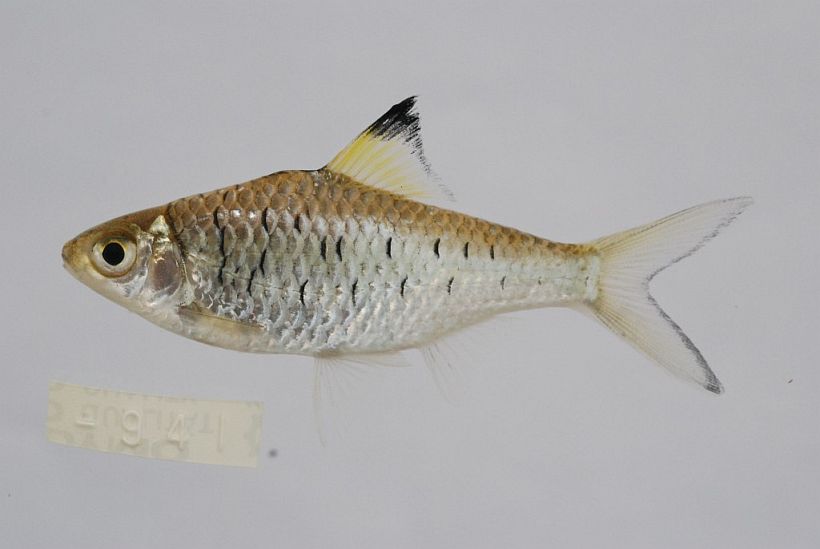
Mystacoleucus atridorsalis
Fowler, 1937
Max length80mm SL3.1in SLTanknot recordedTempnot recordedpHnot recordedThis species can be distinguished from congeners by the following combination of characters: body depth fits 2.5-2.7 times in SL; 28-31 +2-3 lateral line scales; 14-16 circumpeduncular scale rows; 5-5½ scale rows between the lateral line and dorsal-fin origin; a triangular distal blotch on the dorsal-fin; a few body scales with crescent-shaped black edges; a thin dark margin on the dorsal-fin, posterior to the distal blotch; a dark posterior margin on the caudal-fin; normally a single pair of rudimentary barbels present.
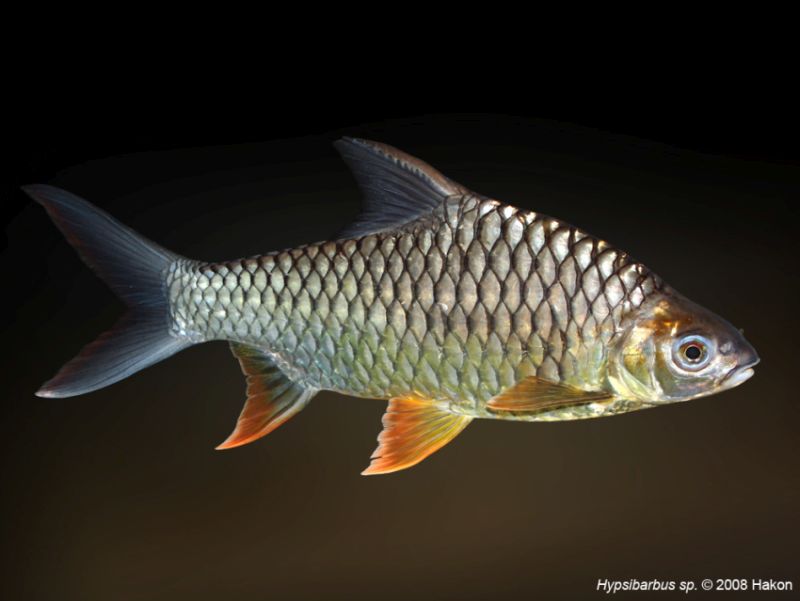
Hypsibarbus wetmorei
Smith, 1931
Max length250mm SL10in SLTank240 × 60cm96 × 24inTemp20–26°C68–79°FpH6.0–8.0H. wetmorei is distinguished from congeners by the following combination of characters: upper body reddish brown; robust body, not compressed; usually 4½ scale rows between lateral line and dorsal-fin origin; 8-12 rakers on first gill arch; 7-9 predorsal scales; 14 circumpeduncular scale rows; usually two scale rows separating vent and anal-fin; <29 lateral line scales; 9-14 serrations on the spinous dorsal-fin ray; distance between distal serrae on posterior margin of last unbranched dorsal-fin ray much greater than the width of their bases.
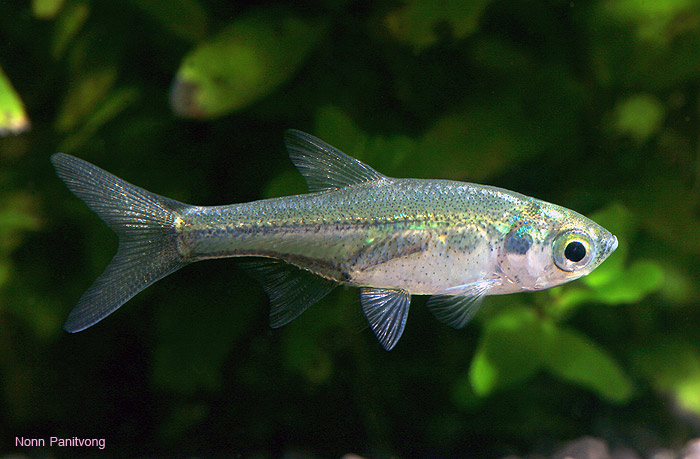
Amblypharyngodon chulabhornaePrincess Carplet
Vidthayanon & Kottelat, 1990
Max length40mm SL1.6in SLTank90 × 30cm36 × 12inTemp18–28°C64–82°FpH6.0–8.0The genus Amblypharyngodon currently contains five valid species, and A. chulabhornae can be distinguished from congeners by the following combination of characters: 42-50 (vs. 50-79) scales in the lateral row; lateral line incomplete with 6-7 (vs. 7-23) perforated scales; 4-5 scales on a transverse row between the lateral line and pelvic-fin base. All members of the genus lack barbels.
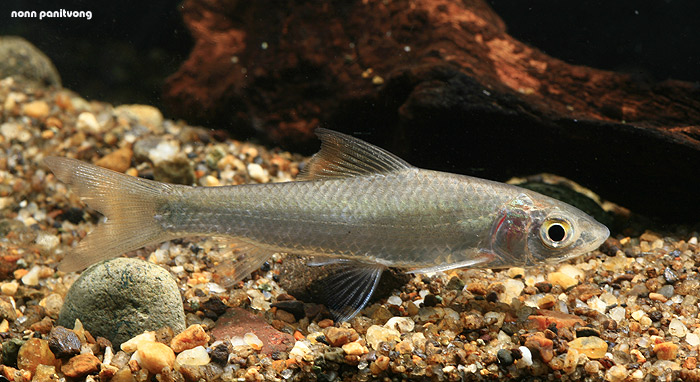
Gymnostomus lobatus
Smith, 1945
Max length150mm SL6in SLTanknot recordedTempnot recordedpHnot recordedG. lobatus can be distinguished from congeners by the following combination of characters: possession of 32-33 + 2-3 lateral line scales; 5½ scale rows between lateral line and base of dorsal-fin; body relatively slender, depth fits 3.7-4.0 times in SL; snout often projecting strongly; body plain silver in colour.
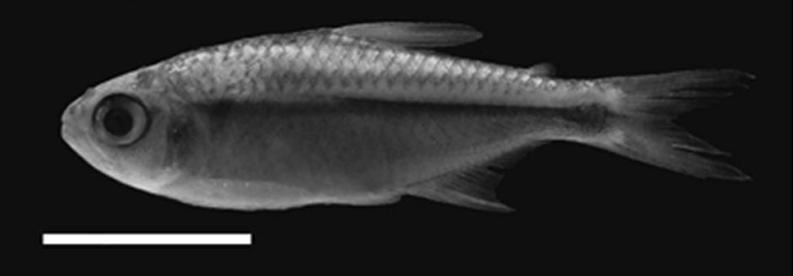
Hyphessobrycon acaciae
García-Alzate, Román-Valencia & Prada-Pedreros, 2010
Max length30mm SL1.2in SLTanknot recordedTempnot recordedpHnot recordedIt differs from H. paucilepis by possessing 30-31 scales in the lateral row (vs. 28-29), 3 scales between the lateral line and anal-fin (vs. 4), 10 predorsal scales (vs. 9), ii, 9 dorsal-fin rays (vs. iii, 8), 4 maxillary teeth (vs. 1), and the distance between the dorsal-fi...
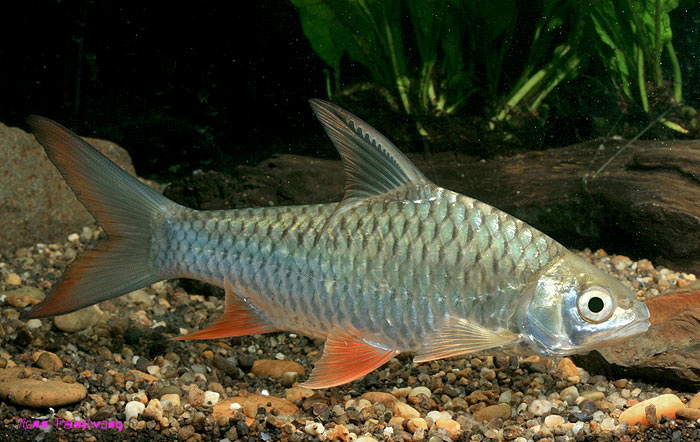
Hypsibarbus malcolmiGoldfin Tinfoil Barb
Smith, 1945
Max length500mm SL20in SLTanknot recordedTemp20–26°C68–79°FpH6.0–8.0H. malcolmi is distinguished from congeners by the following combination of characters: 12-17 (usually 14-15) rakers on first gill arch; usually 16 circumpeduncular scale rows; less than 30 lateral line scales; some branched lateral line canals, but branching not extensive, median portion of dorsal-fin dark.
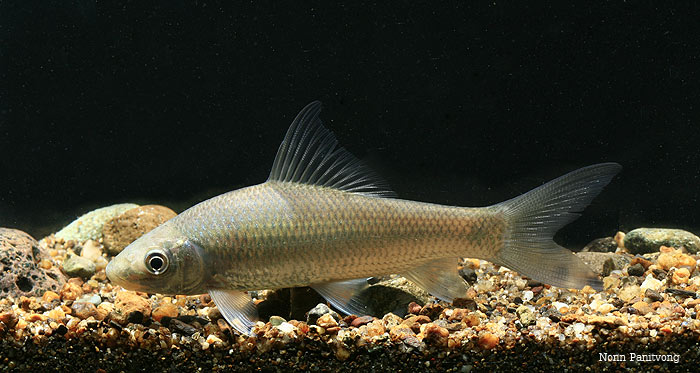
Labeo pierrei
Sauvage, 1880
Max length800mm SL31in SLTanknot recordedTempnot recordedpHnot recordedThis species can be distinguished by the following characters: juveniles with brown body and dark marking at base of caudal-fin; 37-42 + 3-4 lateral line scales; 11½ branched dorsal-fin rays; 7½ scale rows between lateral line and dorsal-fin origin; 20-25 predorsal scales; dorsal-fin relatively small with anterior branched rays shorter than head in juveniles, slightly longer than head in adults.
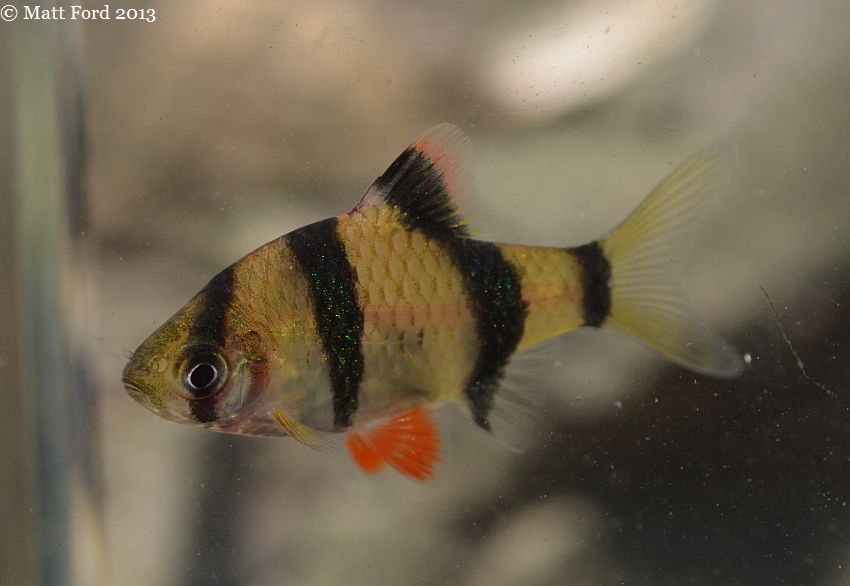
Puntigrus anchisporus
Vaillant, 1902
Max length60mm SL2.4in SLTank80 × 30cm31 × 12inTemp20–26°C68–79°FpH5.5–7.0This species occasionally appears in the aquarium hobby, but the trade is largely reliant on commercially-produced 'tiger barbs' of questionable origin. It is distinguished from congeners by the following combination of characters: lateral line complete; 14 circumpeduncular scales; 21-23+2 scales in the lateral row; dorsal-fin black with red outer band; pelvic fins red.
Pethia punctata
Day, 1865
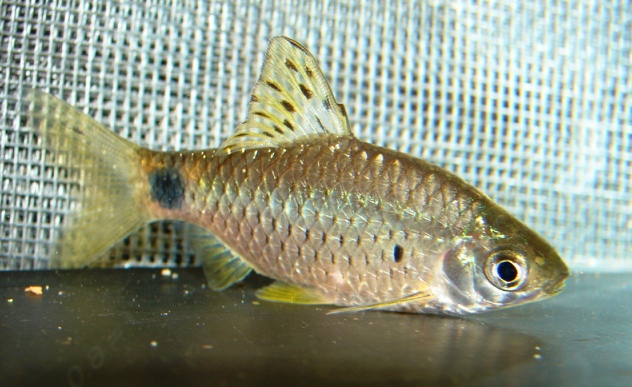
Max length55mm SL2.2in SLTank75 × 30cm30 × 12inTemp21–26°C70–79°FpH6.0–7.5This species is poorly-known in the aquarium hobby and has a confusing taxonomic history having been considered both synonymous with or a subspecies of the congener P. ticto in the past. It can be distinguished from other members of the genus by the following combination of characters: lateral line complete with 27 scales (following Day); body with two dark blotches; anterior spot one scale row below lateral line; dorsal-fin with rows of spots.
Brevibora cheeya
Liao & Tan, 2011
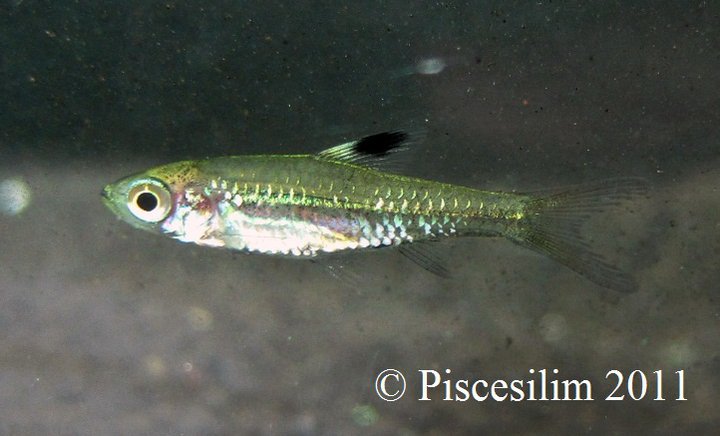
Max length55mm SL2.2in SLTank80 × 30cm31 × 12inTemp20–25°C68–77°FpH4.0–7.0This species is very rare in the trade and is normally imported only as bycatch among shipments of other fishes. It can be told apart from its well-known congener B. dorsiocellata by a combination of characters as follows: lateral line complete (25-30 pored scales vs. 4-9); more scales in the lateral row (29-32 vs. 25-27); larger adult siz...
Garra rakhinica
Kullander & Fang, 2004
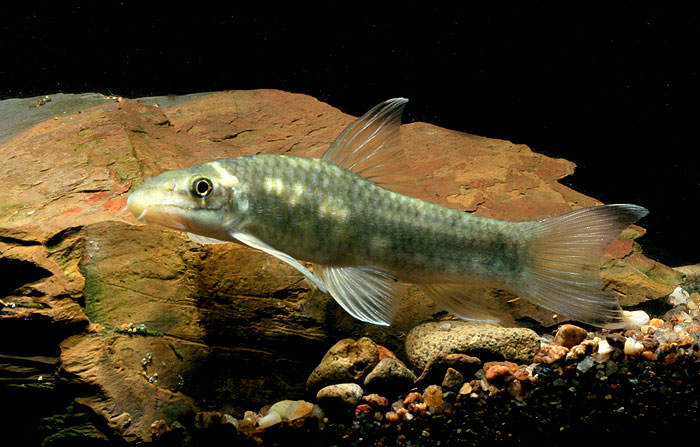
Max length60mm SL2.4in SLTanknot recordedTempnot recordedpHnot recordedG. rakhinica can be distinguished from other members of the genus by the following combination of characters: rostral furrow shallow and snout tip smoothly rounded; rostral lobe present, proboscis absent; scaled predorsal region, chest, and abdomen; two pairs of barbels; 28 lateral line scales; 16 circumpeduncular scale rows; colour pattern almost uniform greyish on body and caudal-fin; a dark spot immediately posterior to the upper extremity of the...
Laemolyta taeniataStriped Headstander
Kner, 1858
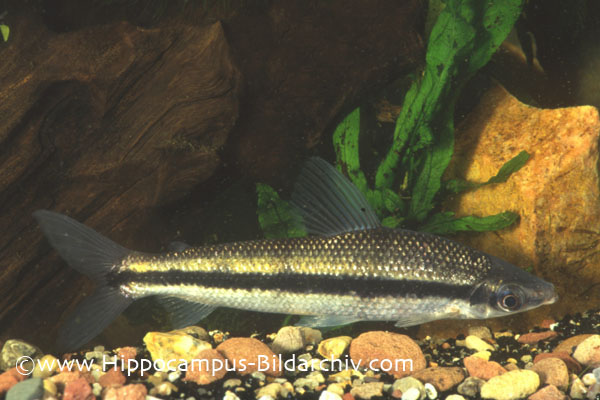
Max length288mm SL11in SLTank120 × 60cm48 × 24inTemp20–28°C68–82°FpH4.0–7.5L. taeniata is the largest-growing and second most widely-distributed member of the genus although it's a rarely-seen in the aquarium trade. It can be distinguished from all congeners since it uniquely possesses 5 lateral scale rows between the lateral line and dorsal-fin origin (vs. 4 or 6–8 in the remaining species).
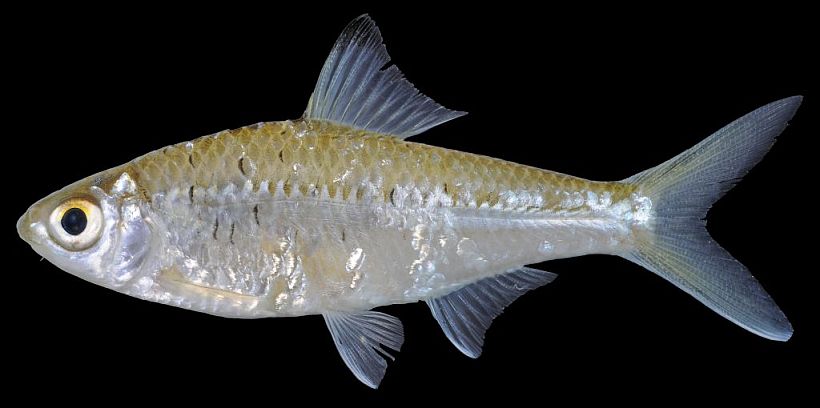
Mystacoleucus lepturus
Huang, 1979
Max length95mm SL3.7in SLTanknot recordedTempnot recordedpHnot recordedThis species can be distinguished from congeners by the following combination of characters: body relatively slender, depth fitting 3.4-3.8 times in SL; 32-33 + 2 lateral line scales; 14 circumpeduncular scale rows; presence of a single pair of barbels; black distal margin on dorsal-fin; numerous body scales with dark, crescent-shaped markings.
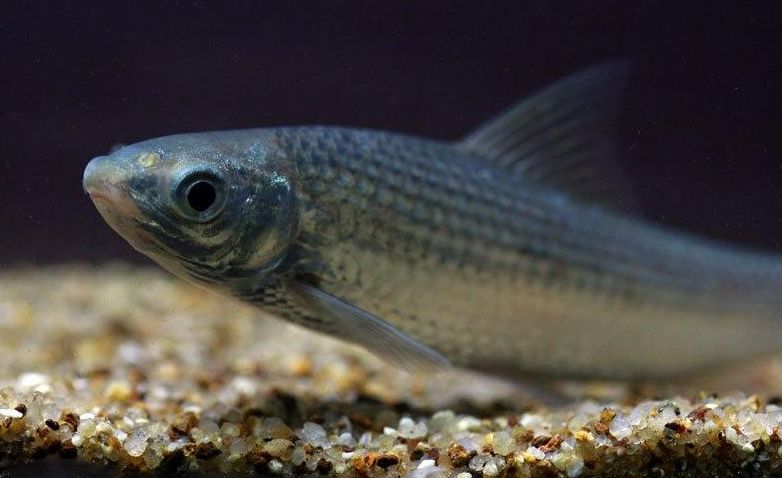
Gymnostomus ariza
Hamilton, 1807
Max length300mm SL12in SLTanknot recordedTempnot recordedpHnot recordedFollowing Roberts (1997) G. ariza can be diagnosed by the following combination of characters: body with variably intense thin stripes dustributed mostly above the lateral line; larger individuals sometimes with a broad midlateral stripe; 32-35 lateral scales; 7-8/1/5-6 transverse scale rows; 8-9 branched dorsal-fin rays 8-9; 22-24+ 11-12=34(4), 35 (3) vertebrae; live colour pattern variable, overall dull dirty white to greyish, silvery or yellow.
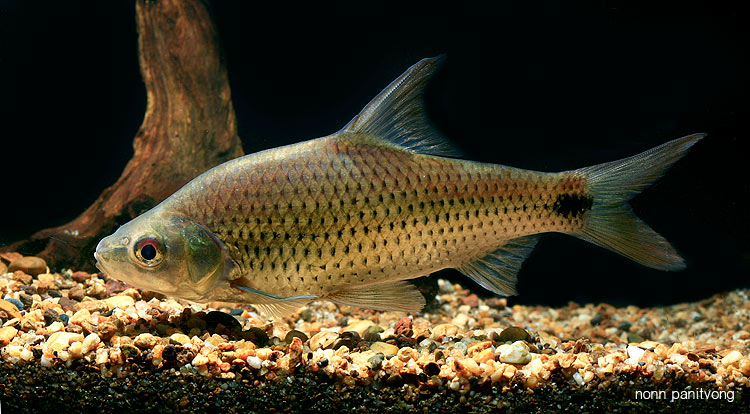
Cyclocheilichthys armatus
Valenciennes, 1842
Max length230mm SL9in SLTank180 × 60cm72 × 24inTemp20–26°C68–79°FpH6.0–8.0It can be distinguished from congeners by possessing one or two pairs of barbels, a black blotch at the base of the caudal-fin, and rows of dark spots along the lateral scale rows. Members of Cyclocheilichthys are characterised by possessing a serrated dorsal fin spine, 9 branched pelvic fin rays, a conical snout, small, subterminal...
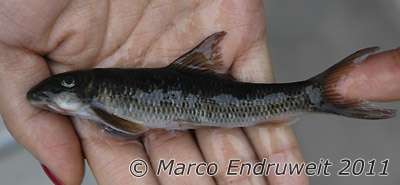
Garra imberba
Garman, 1912
Max length120mm SL5in SLTanknot recordedTempnot recordedpHnot recordedThis species can be distinguished from congeners inhabiting the Red River basin in Yunnan province, China, by the following combination of characters: no barbels; 46-52 lateral line scales; 16 circumpeduncular scales; pharyngeal teeth in 3 rows, 2.4.5-5.4.2; snout rounded, no secondary rostrum, no longitudinal...
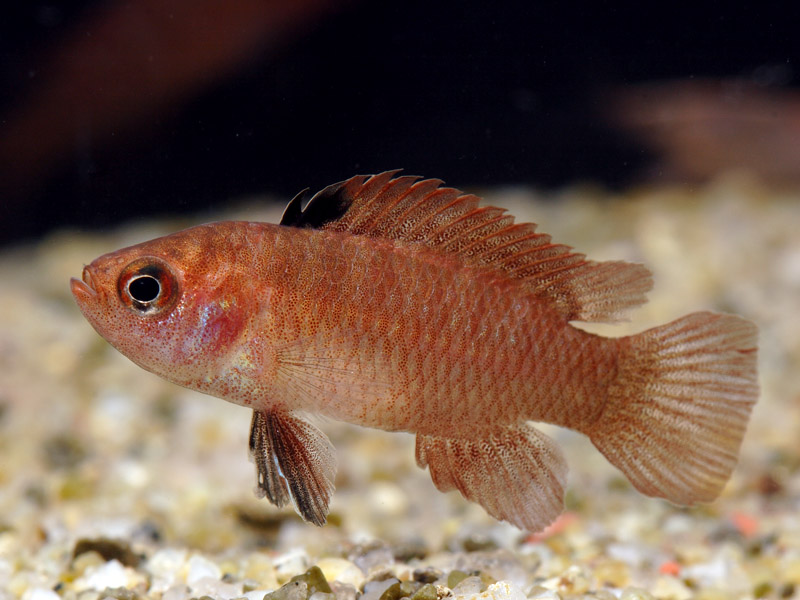
Dario hysginon
Kullander & Britz, 2002
Max length20mm SL0.8in SLTank45 × 30cm18 × 12inTemp20–24°C68–75°FpH6.5–7.5This species is traded under various names such as 'red melon Dario' or 'flame red Dario'. Among congeners D. dayingensis is most similar since it differs only in a few meristic counts and by its slightly larger adult size. D. hysginon can be told apart by possessing 22-24, usually 23, lateral scales (vs. 24-25 in D. dayingensis), 8½ (vs. 9½) scales in the transverse scale row, a...
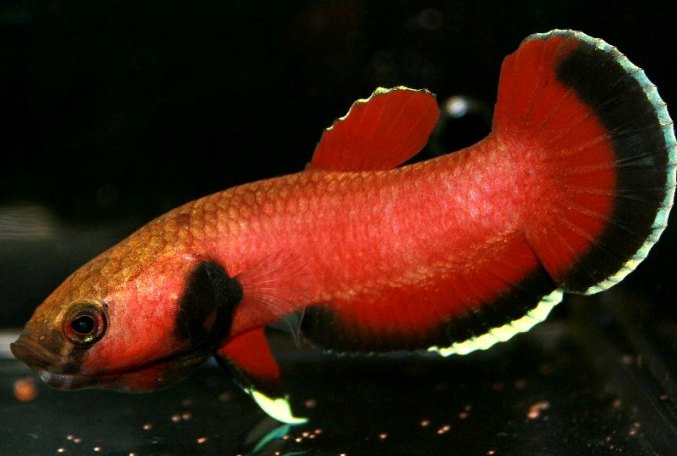
Betta channoidesSnakehead Betta
Kottelat & Ng, 1994
Max length40mm SL1.6in SLTank45 × 30cm18 × 12inTemp23–30°C73–86°FpH4.0–6.5B. channoides and B. albimarginata together comprise the Betta albimarginata group/complex of closely-related species within the genus, these differing from all other members of the genus in colour pattern and by possession of 9-12 anal-fin spines (vs. 0-4). They look very similar to one another but differ in the following characters: anal fin spines 9-11 in B. albimarginata vs. 12 in B. channoides; anal fin rays 21-23 vs. 23-25; lateral scale rows 26-27 vs. 27.5-28; trans...
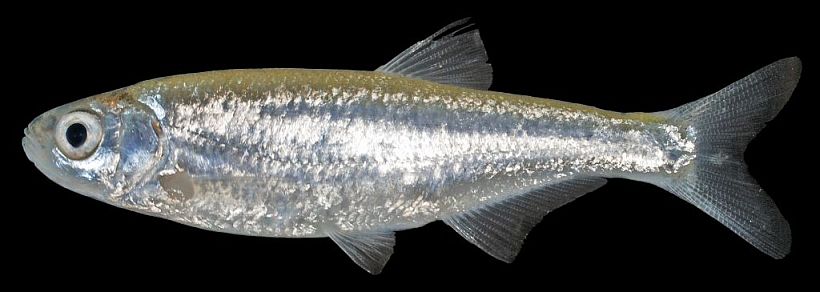
Metzia bounthobi
Shibukawa, Phousavanh, Phongsa & Iwata, 2012
Max length61mm SL2.4in SLTanknot recordedTempnot recordedpHnot recordedThis species can be distinguished from congeners by the following combination of characters: 18–20 (vs. 10-18) branched anal-fin rays; 49–55 (vs. 35-48) lateral-line scale rows; 33–36 (vs. 15-20) predorsal sca...
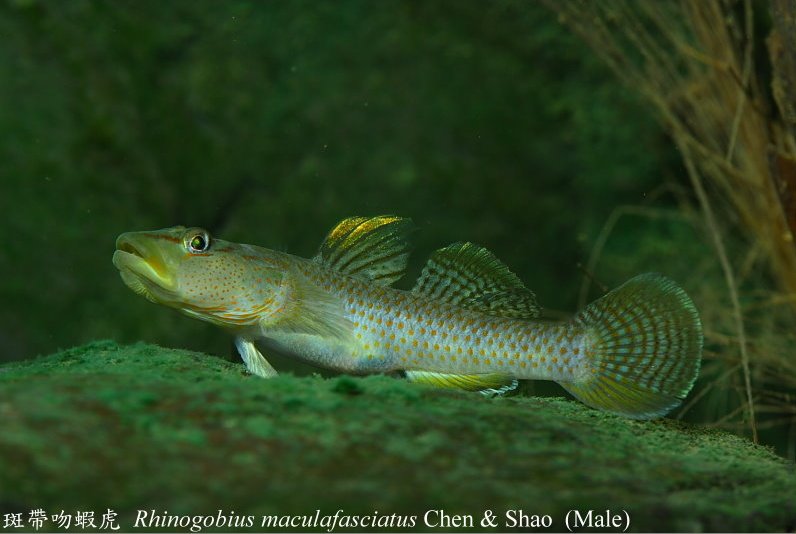
Rhinogobius maculafasciatus
Chen & Shao, 1996
Max length50mm SL2.0in SLTank60 × 30cm24 × 12inTemp18–24°C64–75°FpH6.0–8.0This species may not yet have appeared in the ornamental trade but it has been collected by a few individuals. It can be told apart from related species from Taiwan by possessing 30-32 longitudinal (lateral) scales vs. 32-39 in other species, and 6-8 scale rows between the origin of the first dorsal-fin and upper pectoral-fin base vs. 9-15 in other species.