Results for “livebearer”
Type a name: scientific, common, or one a species used to go by. Or narrow the catalogue with the filters.
Filters
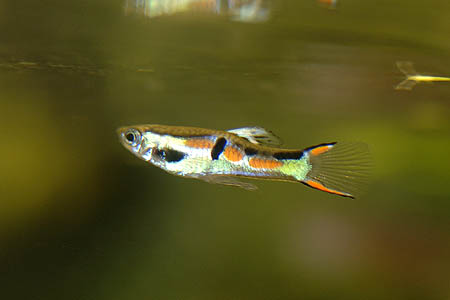
Poecilia wingeiEndler's Livebearer
Poeser, Kempkes & Isbrucker, 2005
Matched on the common name Endler's Livebearer
Max length25mm SL1.0in SLTank45 × 30cm18 × 12inTemp24–30°C75–86°FpH7.0–8.5Endler's Livebearer was actually discovered in 1937 by Franklyn F. Bond before being rediscovered by John Endler in 1975 in Laguna de Patos, Cumana, northeastern Venezuela. It was found coexisting, but not interbreeding with, a wild form of P. reticulata. Both species are native to this area of Venezuela, but P. reticulata was much less common in areas where P. wingei was thriving. This is thought to be partially related to habitat type, as guppies are usually found in colder, running water...
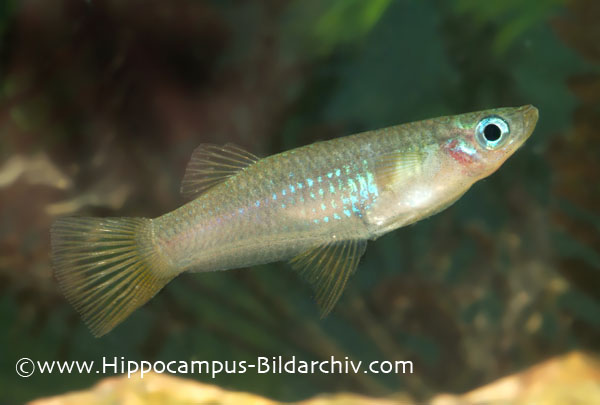
Alfaro cultratusKnife Livebearer
Regan, 1908
Matched on the common name Knife Livebearer
Max length75mm SL3.0in SLTanknot recordedTemp24–28°C75–82°FpH6.0–8.0This is an exceptionally hardy and adaptable species. It's not an especially common fish in stores, but is quite widely available in hobbyist circles. The common name arises from the row of modified, paired scales that form a keel running from the base of theto the caudal fin....
Ilyodon furcidensGoldbreast Goodeid
authority not recorded
Max length70mm SL2.8in SLTank75 × 30cm30 × 12inTemp18–24°C64–75°FpH7.0–8.0The species name 'furcidens' is derived from the interesting fork-shaped teeth of this fish. This species may develop a cervical hump as it matures. As with other goodeids, there is less of a size difference between the sexes than in many other livebearers. This is thought to be related to the relatively primitive structure of the andropodium, as the fish tend to choose mates that are of similar size so that the sex organs are synchronised. Goodeids are unique among livebearers in t...
Xenotoca eiseniRedtail Goodeid
authority not recorded
Max length60mm SL2.4in SLTank60 × 30cm24 × 12inTemp15–30°C59–86°FpH6.0–8.0An incredibly hardy and adaptable species that is not so popular in the hobby as it once was, probably due to its often aggressive nature. As with other goodeids, there is less of a size difference between the sexes than in many other livebearers. This is thought to be related to the relatively primitive structure of the andropodium, as the fish tend to choose mates that are of similar size so that the sex organs are synchronised. Goodeids are unique among livebearers in that the developi...
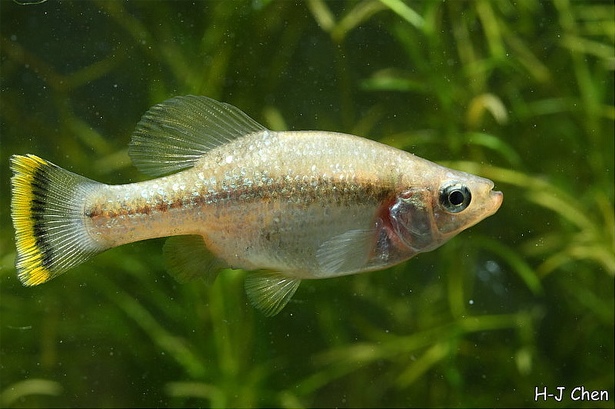
Ameca splendensButterfly Goodeid
Miller & Fitzsimons, 1971
Max length90mm SL3.5in SLTank90 × 30cm36 × 12inTemp24°C75°FpH7.0–8.0Despite often being referred to as extinct in the wild this monotypic species is still surviving at a few localities. It's not particularly scarce in the hobby with strong captive populations existing, some of which have been selectively bred to produce variations in colour and patterning. As with other goodeids, there is less of a size difference between the sexes than in many other livebearers. This is thought to be related to the relatively primitive...
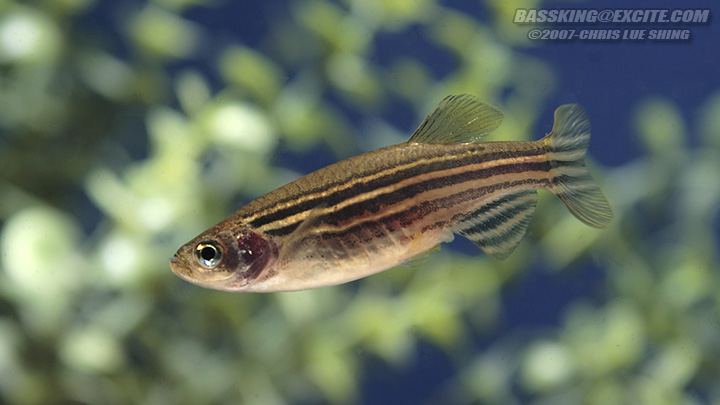
Brachydanio rerioZebra 'Danio'
Hamilton, 1822
Max length50mm SL2.0in SLTank90 × 30cm36 × 12inTemp18–25°C64–77°FpH6.0–8.0This species is very peaceful indeed and can be combined with many of the most popular fish in the hobby including other small cyprinids as well as tetras, livebearers, rainbowfishes, anabantoids, catfishes and loaches. As always when selecting a compatible community of...
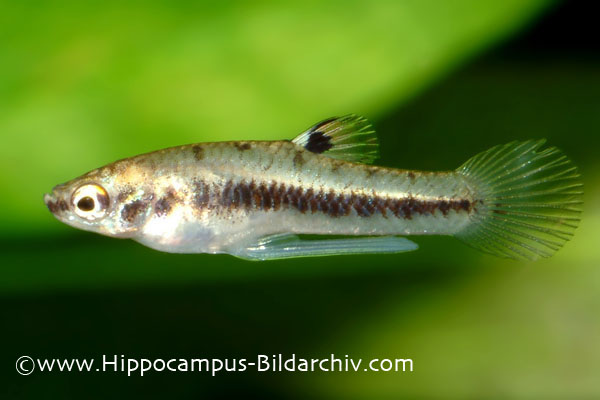
Heterandria formosaLeast Killifish
Girard, 1859
Max length20mm SL0.8in SLTanknot recordedTemp20–26°C68–79°FpH7.0–8.0Also known as the mosquito fish, least killifish or dwarf top minnow, H. formosa is the smallest known livebearing fish species, and one of the smallest overall fish species in the world. It's not often seen for sale these days, although it's quite widely available in hobbyist circles. When buying these, ensure they have been identified correctly as they're sometimes confused with the much more aggressive mosquito fish of the genus Gambusia....
Procatopus nototaeniaLarge-finned Lampeye
authority not recorded
Max length60mm SL2.4in SLTank60 × 30cm24 × 12inTemp20–25°C68–77°FpH5.8–7.5The genus Procatopus currently comprises half a dozen members (P. aberrans, P. lambertii, P. nimbaensis, P. nototaenia, P. schioetzi and P. similis), all of which are are non-annual species existing in permanent bodies of water. They are actually more closely related to the livebearing species of the subfamily Poeciliinae than the popular Aplocheilid killifish. None are particularly popular in the aquarium trade, although specialist dealers may have them available from time-to-time. Some such as...
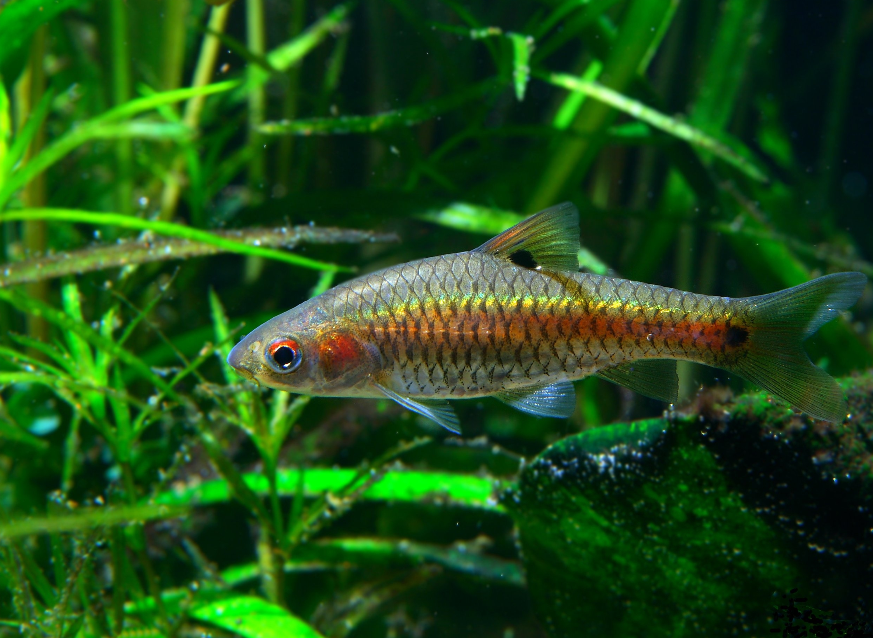
Puntius bimaculatusTwo-spotted Barb
Bleeker, 1863
Max length50mm SL2.0in SLTank60 × 30cm24 × 12inTemp18–24°C64–75°FpH6.0–7.5Generally very peaceful making it an ideal resident of the well-researched community tank. As it places no special demands in terms of water chemistry it can be combined with many of the most popular fish in the hobby including other small cyprinids as well as tetras, livebearers, rainbowfishes, anabantoids, catfishes and loaches. It's a schooling species by nature, and at least 6-10 specimens should be purchased. Maintaining it in such...
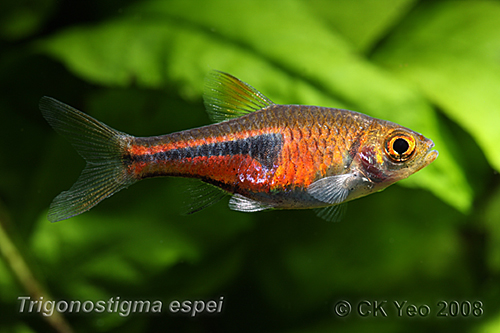
Trigonostigma espeiLambchop Rasbora
Meinken, 1967
Max length30mm SL1.2in SLTank60 × 30cm24 × 12inTemp23–28°C73–82°FpH5.5–7.5This species is very peaceful indeed making it an ideal resident of the well-maintained community tank. As it places no extreme demands in terms of water chemistry it can be combined with many of the most popular fish in the hobby including other small cyprinids as well as tetras, livebearers, dwarf cichlids, catfishes, and loaches. As always when selecting a compatible community of fish thorough research is essential and its small adult size must be a consideration, however.