Results for “territory”
Type a name: scientific, common, or one a species used to go by. Or narrow the catalogue with the filters.
Filters
Pseudotropheus elongatusElongate Mbuna
authority not recorded
Max length135mm SL5in SLTank120 × 38cm48 × 15inTemp24–28°C75–82°FpH7.6–8.8Over 30 different forms of this species occur in Lake Malawi. These should not be mixed in the aquarium as they will hybridise freely. P. elongatus differs morphologically from other mbuna, being relatively slender and elongate. In nature females protect territories which contain 'gardens' of algae which they leave to breed before returning once they are holding eggs. Juvenile fish from previous spawns also inhabit the territory, protecting it when the female is away. This species i...
Xenotilapia flavipinnisYellow Sand Cichlid
authority not recorded
Max length90mm SL3.5in SLTank75 × 30cm30 × 12inTemp23–27°C73–81°FpH8.0–9.5In nature, the pair bond formed by this species lasts only for the duration of the breeding season. However, in aquaria this bond can last much longer, with the pair remaining in their territory and defending it even when not spawning. It is thought that this is directly due to the fish being kept in the confines of the aquarium, where the territory is a permanent fixture. X. flavipinnis is very sensitive to deteriorating water conditions and regular water changes are essential to its good heal...
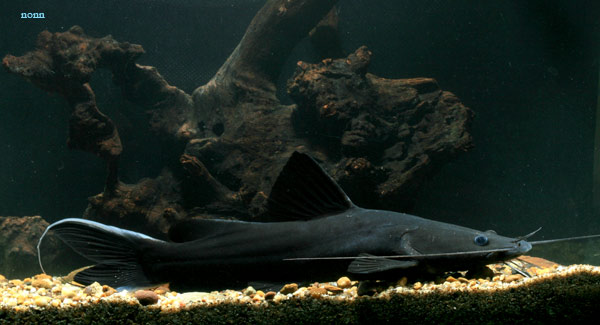
Hemibagrus wyckiiCrystal-eyed Catfish
Bleeker, 1858
Max length710mm SL28in SLTanknot recordedTemp20–27°C68–81°FpH6.0–8.0Aggressively territorial and incompatible with other fishes in all but the largest public installations and even then may attack its tankmates. It's also one of few freshwater fishes that appear unafraid of humans meaning care must be exercised when performing maintenance.
Lamprologus callipterus
authority not recorded
Max length150mm SL6in SLTank90 × 30cm36 × 12inTemp24–27°C75–81°FpH7.5–9.0In nature, the spawning nests of large male fish may measure several meters across and contain hundreds of snail shells. Interestingly, when they are protecting brooding females males do not eat and eventually become so weak that their territories are taken over by stronger fish. Immature and sub-dominant males can be seen over areas of open substrate where they feed voraciously in large shoals. Females are only ever found in areas containing the nests of dominant males. It appears that the ...
Lamprologus ocellatusOcellated Shell-dweller
authority not recorded
Max length60mm SL2.4in SLTanknot recordedTemp23–27°C73–81°FpH7.5–9.0A charming little cichlid with real character, L. ocellatus is a deservedly popular hobbyists' fish. It has an endearing habit of burying its shell and defending it against all-comers. Many an unsuspecting hobbyist has recieved a sharp nip from an ocellatus who feels its territory is being invaded. Neighbouring shells may also be buried to prevent other fish moving in. Koning has hypothesisesd that the burying of the shell and the resultant pile of sand around it not only provides additiona...
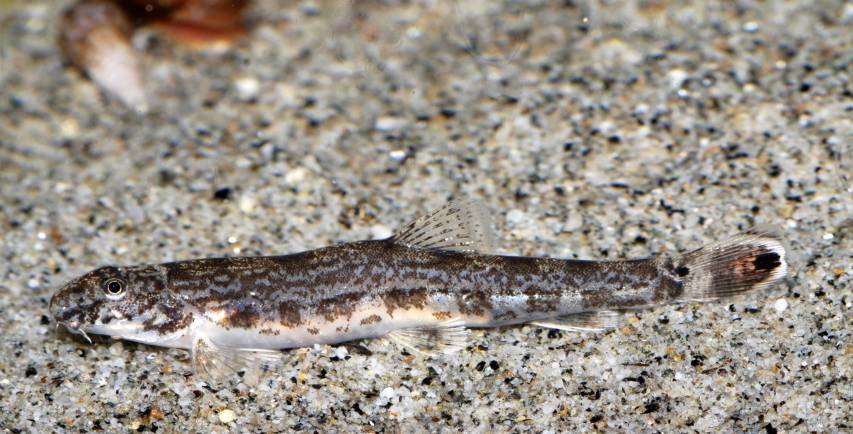
Lepidocephalichthys annandalei
Chaudhuri, 1912
Max length45mm SL1.8in SLTank45 × 30cm18 × 12inTemp22.5–26°C73–79°FpH5.5–7.5Sand-dwelling loaches from the families Botiidae, Cobitidae and Nemacheilidae are also suitable but proper research is essential as some can be excessively territorial or otherwise aggressive. A community based around fishes from its natural waters could include species such as Badis badis,...
Neolamprologus multifasciatus
authority not recorded
Max length45mm SL1.8in SLTanknot recordedTemp24–27°C75–81°FpH7.5–9.0This is probably the smallest known cichlid species and exhibits truly fascinating behaviour. The territories it establishes are very small, usually measuring no more than 6" across, but they are defended vigorously. The tiny fish will even bite hands or fingers that invade their 'personal space'! Highly recommended to anyone wishing to observe some unique behaviour on a small scale....
Neolamprologus similis
authority not recorded
Max length45mm SL1.8in SLTanknot recordedTemp24–27°C75–81°FpH7.5–9.0N. similis is one of the less frequently seen shelldwellers in the hobby but has no less personality than its cousins. The territories it establishes are very small, usually measuring no more than 6" across, but they are defended vigorously. The tiny fish will even bite hands or fingers that invade their 'personal space'! It can be distinguished from the similar N. multifasciatus by the presence of additional barring on the head and neck and also in this species the stripes appear...
Ophthalmotilapia ventralis
authority not recorded
Max length150mm SL6in SLTank135 × 45cm53 × 18inTemp23–27°C73–81°FpH7.5–9.0This is a truly stunning species that does well in a Tanganyikan community with well-chosen tankmates. It exists in well over 20 colour morphs, too many to list here. Obviously these should not be mixed in aquaria as they will hybridise freely. In nature, it is only the largest dominant males that build nests whilst the subdominant males and females shoal together. The territories of these dominant fish may measure several metres across....
Paracyprichromis brieni
authority not recorded
Max length110mm SL4in SLTank120 × 45cm48 × 18inTemp24–27°C75–81°FpH7.5–9.0Although P. brieni is better kept in a group, it tends to form much looser shoals than the similar Cyprichromis species. Male fish form territories under overhangs if they are available and can often be seen hanging upside down under these or vertically against rock walls. In the aquarium if it is not provided with such retreats, or if it is housed under bright lighting or with boisterous fish it will rapidly lose its best colouration. It is quite easily confused with P. nigripinnis, it'...
Paracyprichromis nigripinnis
authority not recorded
Max length110mm SL4in SLTank120 × 45cm48 × 18inTemp24–27°C75–81°FpH7.5–9.0Although P. nigripinnis is better kept in a group, it tends to form much looser shoals than the similar Cyprichromis species. Male fish form territories under overhangs if they are available and can often be seen hanging upside down under these or vertically against rock walls. In the aquarium, if it is not provided with such retreats, or if it is housed under bright lighting or with boisterous fish, it will rapidly lose it's best colouration. It is quite easily confused with P. brieni,...
Periophthalmus barbarusAtlantic Mudskipper
authority not recorded
Max length150mm SL6in SLTanknot recordedTemp25–30°C77–86°FpH7.0–8.5Due to its highly amphibious nature this must be one of the most interesting, endearing species that can be kept in aquaria. Some specimens rarely enter deep water, preferring to sit in the shallows with the body submerged and eyes protruding above the surface. Others seem to favour resting completely exposed on rocks, sand or bogwood, returning to the water periodically to wet themselves. Subdominant individuals (those that are unable to secure a favourable territory) tend to attach themselves ...
Periophthalmus novemradiatusDwarf Indian Mudskipper
authority not recorded
Max length100mm SL3.9in SLTanknot recordedTemp25–30°C77–86°FpH7.0–8.5Due to its highly amphibious nature this must be one of the most interesting, endearing species that can be kept in aquaria. Some specimens rarely enter deep water, preferring to sit in the shallows with the body submerged and eyes protruding above the surface. Others seem to favour resting completely exposed on rocks, sand or bogwood, returning to the water periodically to wet themselves. Subdominant individuals (those that are unable to secure a favourable territory) tend to attach themselves ...
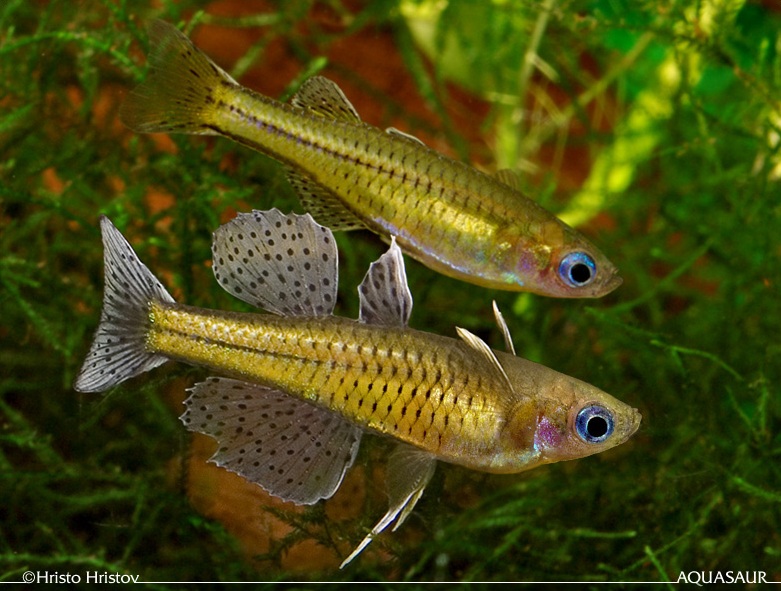
Pseudomugil gertrudaeSpotted Blue-eye
Weber, 1911
Max length38mm SL1.5in SLTank45 × 30cm18 × 12inTemp21–28°C70–82°FpH4.5–7.5Described from 'Rivulet in sago forest at Ngaiguli, Terangan, Aru Island, Aru Islands, Maluku, Indonesia', corresponding to the island now normally referred to as 'Trangan' in the Aru Islands group, eastern Indonesia. The islands are located in the Arafura Sea, with western New Guinea to the north and the Arnhem Land Region of Australia's Northern Territory to the south, and though they lie within Maluku province of eastern Indonesia, are part of the Australian continent in a geological sense.
Trichopodus pectoralisSnakeskin Gourami
authority not recorded
Max length300mm SL12in SLTank120 × 30cm48 × 12inTemp22–30°C72–86°FpH5.8–8.5This species is not often seen for sale but is a very good addition to the larger community tank. It is cultured commercially for food in it's native countries, and is used to make a particularly tasty fish soup! The snakeskin gourami can also produce 'cracking' noises, especially during breeding or territorial exchanges....