Basin
Doce basin
Only species with a profile on Seriously Fish are counted.
- Species
- 4
- Rivers
- 3
- Photographed
- 4 of 4
- Difficulty rated
- 4 of 4
Rivers in this basinspecies recorded from each
Runs through

Hyphessobrycon flammeusFlame Tetra
Characidae · Myers, 1924
The flame tetra, Hyphessobrycon flammeus, is a small characid from Rio de Janeiro and São Paulo states in Brazil. Popular in the hobby, it is bred commercially in several countries and also sold as 'red', 'fire', 'rio' and 'Von Rio' tetra. In nature it is now uncommon or even extinct across much of its range, and the São Paulo populations may have been introduced by aquarists or breeders.
Leporinus copelandii
Anostomidae · Steindachner, 1875
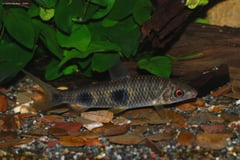
Leporinus copelandii is an anostomid from the Paraíba do Sul and Doce river systems of southeastern Brazil. It reaches at least 200 mm, and an aquarium with base dimensions of 180 by 60 cm should be the smallest considered.
Simpsonichthys myersi
Rivulidae · de Carvalho, 1971
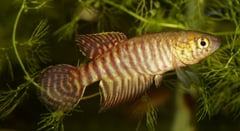
Simpsonichthys myersi is an annual killifish from minor coastal river basins in eastern Brazil, in Bahia and Espírito Santo states. Its range lies between the rio Jucuruçu and the rio Doce. It inhabits rain-fed pools and swamps that dry out each year, when the adults die and the eggs wait in diapause until the rains return. Whether it is conspecific with S. izecksohni remains unclear.
Scleromystax prionotos
Callichthyidae · Nijssen & Isbrücker, 1980
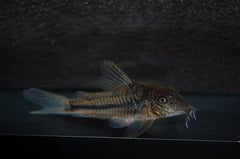
Scleromystax prionotos is an armoured catfish known only from coastal rivers in Minas Gerais, Espírito Santo, Rio de Janeiro and São Paulo, Brazil. Like its congeners it is a facultative air breather and occasionally rises to gulp air at the surface. Its stiffened pectoral-fin spines can pierce human skin, so care is needed when handling it.