Genus
Lepidocephalichthys
- Species
- 15
- Photographed
- 15 of 15
- Difficulty rated
- 15 of 15
Where the name comes fromEdit
from the Greek lepis, meaning 'scale, kephalos, meanig 'head', and ichthys, meaning 'fish'.
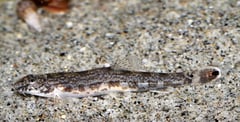
Lepidocephalichthys annandalei
Chaudhuri, 1912
Lepidocephalichthys annandalei is a cobitid loach from the mid-to-lower Ganges and Brahmaputra systems in Nepal, Bangladesh and north-east India. Rarely traded, it has been sold as L. sp. 'peacock', presumably for its caudal-fin pattern of two dark v-shaped markings, unique within the genus. Fish in the trade differ slightly from the original description, in particular lacking a notched caudal fin.
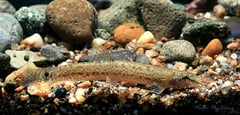
Lepidocephalichthys berdmorei
Blyth, 1860
Lepidocephalichthys berdmorei is a cobitid loach found across Myanmar, Thailand, Laos, north-eastern India and Bangladesh. One of the most frequently-traded members of the genus, it is an excellent choice for those new to keeping loaches. Unlike most congeners it shows a preference for headwaters and streams with clear, flowing water, and its larger adult size separates it from the similar L. thermalis.
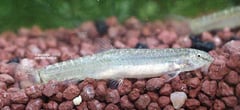
Lepidocephalichthys cf. irrorataLoktak Loach
Hora, 1921
The Loktak loach, Lepidocephalichthys irrorata, is a small cobitid from north-eastern India and Bangladesh. Hora described it as widely distributed in lakes and streams of the Manipur Valley, and some of his specimens came from Loktak Lake. It grows to only 29 mm SL, has large, exposed scales on top of the head, and is occasionally exported as bycatch among other species.
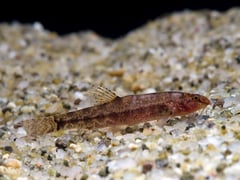
Lepidocephalichthys furcatus
de Beaufort, 1933
Lepidocephalichthys furcatus is a small cobitid loach from Peninsular Malaysia, southern Thailand and North Sumatra, Indonesia. Not traded often, it turns up occasionally as bycatch among shipments of other species. It is told apart from congeners most easily by the prominent, roughly semi-circular lamina circularis in males, a feature unique within the genus, and it has a forked caudal fin.
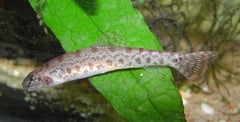
Lepidocephalichthys goalparensis
Pillai & Yazdani, 1976
Lepidocephalichthys goalparensis is a cobitid loach from the Brahmaputra, Ganges and upper Irrawaddy basins in India, Nepal, Bangladesh and Myanmar. Rarely seen in the hobby, it was imported into the UK in late 2011 as bycatch among mastacembelid eels from northern India, and the identification was confirmed by Justin Havird. The forked caudal fin normally carries four or five broad, dark V-shaped bars.
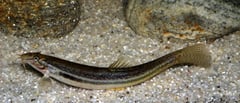
Lepidocephalichthys guntea
Hamilton, 1822
Lepidocephalichthys guntea is a cobitid loach from the Ganges and Brahmaputra systems of northern India, Nepal and Bangladesh, and much of Myanmar. One of the most frequently-traded members of the group, it is an excellent choice for those new to keeping loaches. Males carry a solid, dark lateral stripe and females spotted flanks, and patterning varies with origin. It is also used as a food fish, eaten fresh and dried.
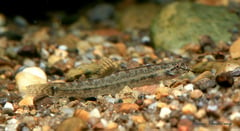
Lepidocephalichthys hasselti
Valenciennes, 1846
Lepidocephalichthys hasselti is a cobitid loach described from Java and recorded from Myanmar to Vietnam, Peninsular Malaysia, Sumatra and Borneo. Its wide distribution makes it relatively common in the aquarium hobby. Colour and pattern vary with locality and have led to problems with identification, and the flanks usually show a row of dark blotches or a solid stripe with a light, unpigmented stripe above.
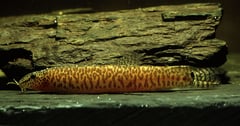
Lepidocephalichthys jonklaasi
Deraniyagala, 1956
Lepidocephalichthys jonklaasi is a cobitid loach endemic to the 'wet zone' of south-western Sri Lanka, known from at least five localities. Records exist from the Gin, Kalu, Nilwala and Bentota river basins plus a small blackwater creek near the Kottawa Forest Reserve. Its conservation status perhaps precludes its suitability for the hobby. Broad dark bars on the caudal fin and large, vertically elongated black spots on the flanks identify it.
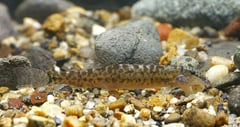
Lepidocephalichthys kranos
Havird & Page, 2010
Lepidocephalichthys kranos is a cobitid loach from the Chao Phraya system in Thailand and the Mekong in Thailand, Laos and Vietnam. Some private collectors have kept it. Its colour pattern tends to form a mosaic, unlike the irregular spotting of most congeners, and the body deepens steeply behind the snout to give a 'hunched' appearance. It can often be found living with L. hasselti.
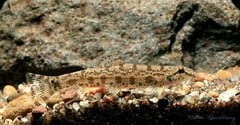
Lepidocephalichthys micropogon
Blyth, 1860
Lepidocephalichthys micropogon is a cobitid loach from Myanmar, western Thailand, Bangladesh and Assam, India. Known from the Salween, Sittaung, Irrawaddy and Brahmaputra drainages and occasionally exported as bycatch, it grows to 55 mm SL and has a strongly forked caudal fin with broad, dark V-shaped bars. Kottelat (2012) treats L. manipurensis as a synonym, though Havird and Page (2010) list the two separately.
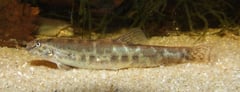
Lepidocephalichthys sp. 'LE1'Vietnamese Marbled Hog-faced Loach
authority not recorded
The Vietnamese marbled hog-faced loach, Lepidocephalichthys sp. 'LE1', is a cobitid loach from central Vietnam. Unconfirmed reports suggest it is collected in the coastal province of D'Nang. It has been traded only a handful of times and referred to as Lepidocephalichthys cf. hasselti and Lepidocephalus cf. thermalis, but appears to be an undescribed member of the former genus.
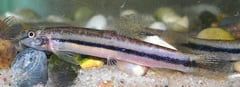
Lepidocephalichthys sp. 'LE2'
authority not recorded
Lepidocephalichthys sp. 'LE2' is a cobitid loach from northern West Bengal, India, and most likely an undescribed species. It was apparently collected in the Buxa Tiger Reserve alongside the dwarf snakehead traded as Channa sp. 'Assam' or 'Lal Cheng'. It shows characters of both L. alkaia and L. guntea, has been referred to as L. cf. guntea, and the specimens pictured reached the UK in 2007.
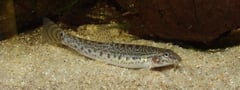
Lepidocephalichthys thermalis
Valenciennes, 1846
Lepidocephalichthys thermalis is a cobitid loach from Sri Lanka and Peninsular India, described from the hot waters of Cania, Sri Lanka. Available sporadically, it makes an excellent choice for those new to keeping loaches. Unlike most of the genus it shows a preference for headwaters and clear, flowing streams. It was for a number of years included in Lepidocephalus until Havird and Page (2010) placed it in Lepidocephalichthys.
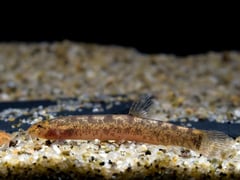
Lepidocephalichthys tomaculum
Kottelat & Lim, 1992
Lepidocephalichthys tomaculum is a small cobitid loach from Peninsular Malaysia, with a single tentative record from Lampung Province, Sumatra. It inhabits shallow, slow-moving streams, swamps, oxbows and backwaters over mud, silt or peat. Occasionally available as bycatch, it has a reddish brown body with thin dark bars across the back, and where it lives with L. hasselti identification can be difficult.
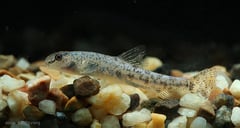
Lepidocephalichthys zeppelini
Havird & Tangjitjaroen, 2010
Lepidocephalichthys zeppelini is a tiny cobitid loach from the Mekong system in Thailand and Vietnam and the Chao Phraya drainage in central Thailand. Adults reach only 25.8 mm SL, and the lamina circularis of mature males forms a large, finely serrated flange. Many adults at the type locality were collected from remnant ephemeral pools in otherwise dry agricultural land.