Genus
Poecilia
- Species
- 5
- Photographed
- 5 of 5
- Difficulty rated
- 5 of 5
Where the name comes fromEdit
from the Greek poikilo, meaning ‘variable, variegated’.
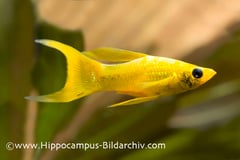
Poecilia latipinnaSailfin Molly
Lesueur, 1821
The sailfin molly, Poecilia latipinna, is a livebearer native to southern North America and Mexico, from Carolina to Veracruz. Bred into many colour morphs and crossed with P. sphenops, it can live perfectly well in fresh water provided it is not soft or acidic. Dark rectangular spots in the dorsal fin separate it from the similar P. velifera, and introduced populations in many countries often outcompete native species.
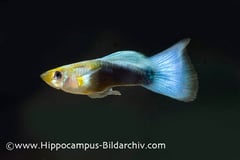
Poecilia reticulataGuppy
Peters, 1859
The guppy, Poecilia reticulata, is a livebearer native to northeastern South America and the southern Caribbean, including Venezuela and Trinidad. One of the most popular aquarium fish in the world, it is available in many aquarium-bred varieties with elongated finnage, while the wild form is seldom seen for sale. Many commercially bred guppies are weakened by inbreeding and over-production, and introduced or feral populations exist in around fifty other countries.
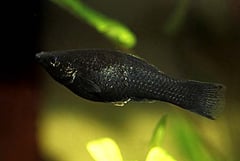
Poecilia sphenopsShort-finned Molly/Black Molly
Valenciennes, 1846
The short-finned molly, Poecilia sphenops, is a livebearer whose native range runs north from Venezuela and Colombia to Mexico. Many colour morphs exist, including the black molly, and years of inbreeding and over-production have left many of them weak and prone to disease. All the morphs do better in slightly brackish conditions and are much more prone to disease in fresh water that is not hard and alkaline.
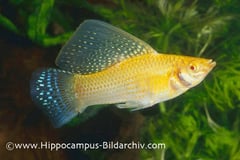
Poecilia veliferaGiant Sailfin Molly
Regan, 1914
The giant sailfin molly, Poecilia velifera, is a livebearer endemic to southeastern Mexico, with introduced populations in several other countries. Young fish are hard to tell from P. latipinna, and the only reliable method is to count the dorsal-fin rays: 18-19 in this species against 14. More difficult to maintain than others in the genus, it needs hard, alkaline water of high quality for males to develop the full sail-like dorsal fin.
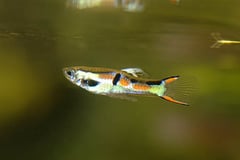
Poecilia wingeiEndler's Livebearer
Poeser, Kempkes & Isbrucker, 2005
Endler's livebearer, Poecilia wingei, is a small livebearer from the Campoma and Buena Vista lagoons in northeastern Venezuela. It hybridises with the guppy, P. reticulata, to produce fertile offspring, but Schories et al. (2009) confirmed it as a valid species. The fish are thought to be extinct at Laguna de Patos, the type locality, after the lake became polluted, and much of the species' natural variability has been lost through inbreeding in the hobby.