Hobbyist group · Siluriformes
Shark Catfishes
- Species
- 3
- Families
- 1
- Genera
- 2
- Photographed
- 3 of 3
- Difficulty rated
- 3 of 3
Families
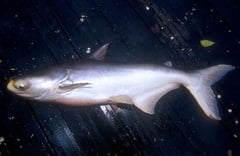
Pangasianodon gigasGiant Mekong Catfish
Pangasiidae · authority not recorded
The giant Mekong catfish, Pangasianodon gigas, is a pelagic shark catfish from the lower Mekong in China, Thailand, Laos, Cambodia and Vietnam. Perhaps the biggest freshwater fish in the world, it has been listed as critically endangered by the IUCN since 2003, after wild stocks fell by over 80% from 1990, and international trade is banned under CITES Appendix I. It should not be considered an aquarium subject under any circumstance.
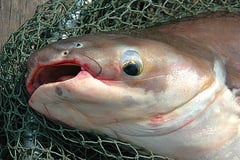
Pangasianodon hypophthalmusIridescent Shark Catfish
Pangasiidae · authority not recorded
The iridescent shark catfish, Pangasionodon hypophthalmus, is a pangasiid catfish from the lower Mekong in Thailand, Laos, Cambodia and Vietnam. It also occurs in the Chao Phraya. The commonest pangasiid in the trade, it is usually sold as a small silvery-blue juvenile with little said about its eventual size. It rarely reaches 130 cm in captivity but easily tops 90 cm and can live for 20 years or more, so it is debatable whether it should be considered an aquarium subject at all.
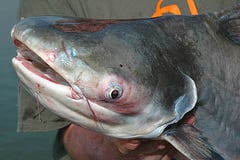
Pangasius sanitwongseiParoon Shark
Pangasiidae · authority not recorded
The paroon shark, Pangasius sanitwongsei, is a giant pangasiid catfish from the lower Mekong in China, Thailand, Laos, Cambodia and Vietnam. It is also found in the Chao Phraya in Thailand. Second only to Pangasianodon gigas in size within its family, it grows to 250 cm and easily tops 120 cm in captivity. Juveniles from commercial farms are exported in large numbers, but the species should not be considered an aquarium subject at all.