River · also known as Bénoué
Benue
Only species with a profile on Seriously Fish are counted.
- Species
- 4
- Families
- 3
- Photographed
- 4 of 4
- Difficulty rated
- 3 of 4
Basin
Also in the Niger basinspecies recorded from both
Shares fishes with rivers elsewherespecies recorded from both
Runs through
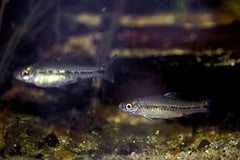
'Barbus' sublineatus
Cyprinidae · Daget, 1954
'Barbus' sublineatus is a widespread West African barb found in river basins from Senegal east to Cameroon, including the Niger and Volta. It is very variable in patterning and can be difficult to identify: Upper Niger fish show three elongate midlateral markings, Middle Niger fish a continuous band and Volta fish four spots. It may prove to be a complex of closely-related species. Little is known of its captive care.

Chromidotilapia guntheri
Cichlidae · Sauvage, 1882
Chromidotilapia guntheri is a mouthbrooding cichlid from coastal drainages of western Africa between Liberia and Cameroon, plus the Niger and Benue. It occurs in a number of geographic forms, with fish from Cameroon tending to show dark blotches on the dorsal fin. A benthophagous omnivore, it sifts mouthfuls of substrate for food, and the male broods the eggs while the female defends the surrounding territory.
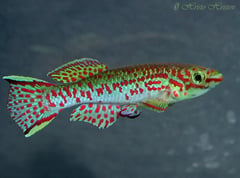
Fundulopanchax gardneriSteel-blue Killifish
Nothobranchiidae · Boulenger, 1911
The steel-blue killifish, Fundulopanchax gardneri, is native to the Cross River system in Nigeria and Cameroon and the Benue River drainage. Also known as Gardner's killi or blue lyretail, the common aquarium forms are among the best choices for those new to killifishes. Wild populations come in numerous colour forms, three of them described as subspecies. Its eggs can withstand a period of drying but will also hatch when kept submerged.
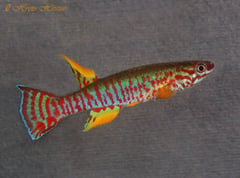
Aphyosemion bualanumBouala Lyretail
Nothobranchiidae · Ahl, 1924
The Bouala lyretail, Aphyosemion bualanum, is a killifish from the upper Benue and Mayo Kébbi systems in Cameroon, Central African Republic and Chad. It is listed as endangered by the IUCN. Before 1990 the name was misused for various populations of A. elberti.