Search the catalogue
Type a name: scientific, common, or one a species used to go by. Or narrow the catalogue with the filters.
Filters1
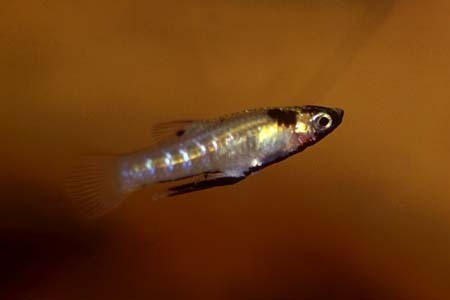
Girardinus metallicusMetallic Girardinus
authority not recorded
Max length60mm SL2.4in SLTank45 × 30cm18 × 12inTemp22–27°C72–81°FpH6.5–8.0This species was introduced into the aquarium trade in the early 20th century but disappeared soon after. It subsequently reappeared in a Berlin zoo in 1965 and has been available from specialist breeders ever since. It occasionally appears for sale in aquatic shops....
Hara jerdoniAsian Stone Catfish
authority not recorded
Max length30mm SL1.2in SLTank30 × 20cm12 × 8inTemp18–24°C64–75°FpH5.6–7.6This delightful little species can be distinguished from others in the genus by its elongated pectoral spines. It, and others in the genus (and also the closely related genus Erithistes), also go by the common name of moth catfish due to their patterning and shape when viewed from above....
Hasemania nanaSilvertip Tetra
authority not recorded
Max length50mm SL2.0in SLTank60 × 38cm24 × 15inTemp23–28°C73–82°FpH6.0–8.0The genus Hasemania is one of the few in the family Characidae in which members do not possess an adipose fin. This species is ubiquitous in most dealers' tanks and is one of the best choices for the newcomer to fishkeeping. All the fish sold in the trade have been captive bred and as such are unfussy with regard to both water chemistry and diet. It is sometimes seen for sale with the common name 'copper tetra'....
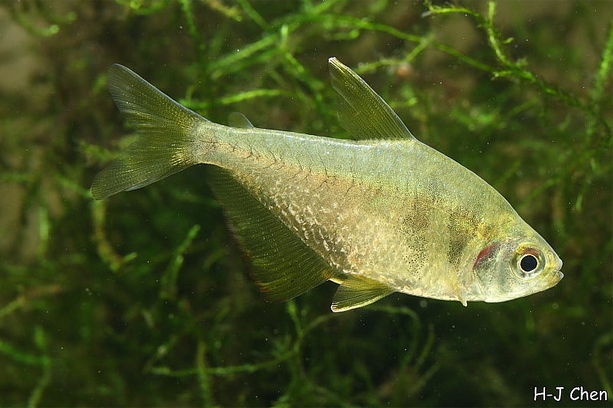
Hyphessobrycon bifasciatusYellow Tetra
Ellis, 1911
Max length45mm SL1.8in SLTanknot recordedTemp20–25°C68–77°FpH5.0–7.5Generally peaceful making it an ideal resident of the well-researched community aquarium. It is perhaps best-maintained alongside similarly-sized characids, gasteropelecids, lebiasinids, smaller callichthyid or loricariid catfishes and non-predatory, medium-sized cichlids. Try to buy a mixed-sex group of at least 8-10 specimens, incl...
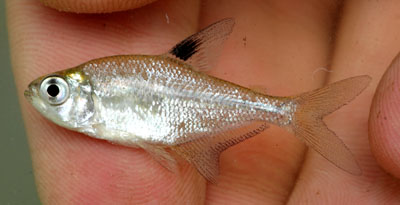
Hyphessobrycon compressusMayan Tetra
Meek, 1904
Max length45mm SL1.8in SLTanknot recordedTemp20–26°C68–79°FpH6.5–8.0H. compressus is the type species of the genus Hyphessobrycon but is not well-known in the ornamental trade. Hyphessobrycon was raised by Durbin in Eigenmann (1908) as a subgenus of Hemigrammus, differing from the latter by the absence of scales on the caudal-fin.
Hypostomus mutucaeLDA10
authority not recorded
Max length75mm SL3.0in SLTank60 × 30cm24 × 12inTemp23–28°C73–82°FpH6.2–7.6It's suprising that this relatively unknown species is not more popular in the hobby, given its small adult size and peaceable nature. It's often confused with LDA09, but can be distinguished by the pattern of small spots on its head, as in LDA09 the spots are larger and uniform in size over the whole body.
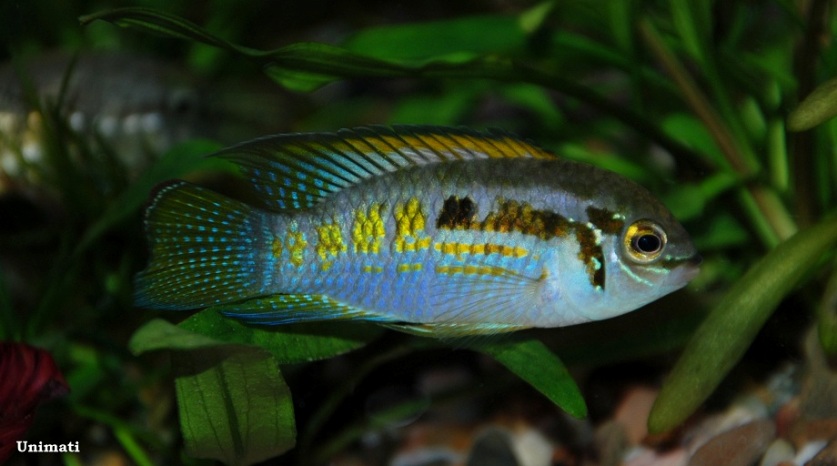
Laetacara araguaiae
Ottoni & Costa, 2009
Max length35mm SL1.4in SLTanknot recordedTempnot recordedpHnot recordedThis species was known as L. sp. 'Buckelkopf' in the aquarium hobby prior to publication of its official description. It's distinguished from all congeners by possessing 7-8 dorsal-fin rays (vs. 9–10 in L. dorsigera, L. fulvipinnis and L. thayeri, 8–9 in L. curviceps and L. flamannellus, and 9–11 in L. flavilabris).
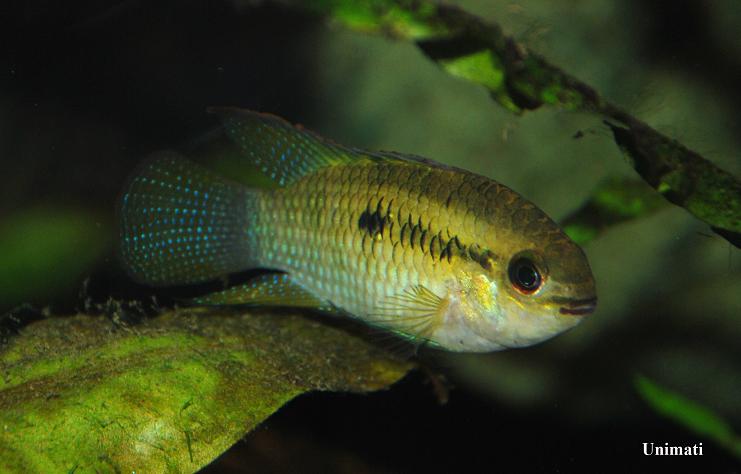
Laetacara curvicepsDwarf Flag Cichlid
Ahl, 1924
Max length50mm SL2.0in SLTanknot recordedTemp20–28°C68–82°FpH4.5–7.5Native to the lower Amazon river basin in Brazil with some populations exhibiting differences in colour pattern to one another, particularly in respect of the degree of red and blue pigmentation on the body and fins. Type locality is given simply as 'Amazon River, Brazil'. Field observations suggest it to display a pref...
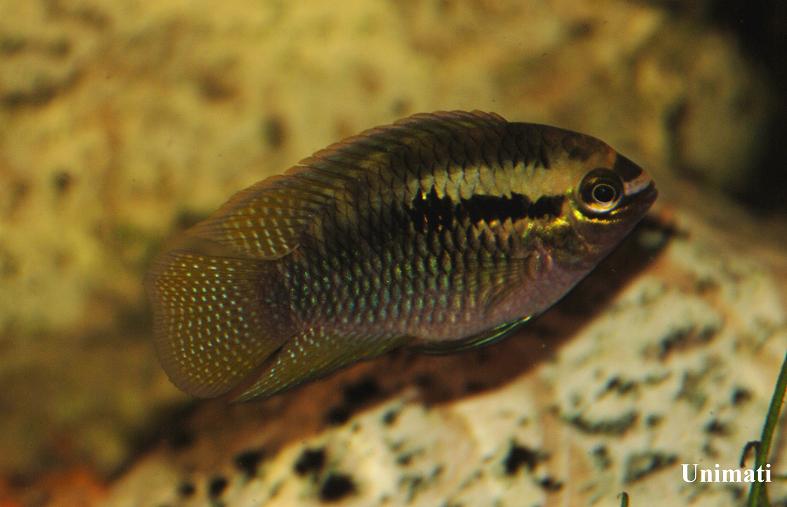
Laetacara dorsigeraRedbreast Acara
Heckel, 1840
Max length37mm SL1.5in SLTanknot recordedTemp20–28°C68–82°FpH5.0–7.5Wild fish are probably foragers feeding on algae, organic detritus, small insects, worms, crustaceans, and other zooplankton. In the aquarium it's easily-fed but the best condition and colours offer regular meals of small live and frozen foods such as bloodworm, Daphnia, and Artemia, alongside good quality dried flakes and granules, at least some of which should include additional plant or algal content.
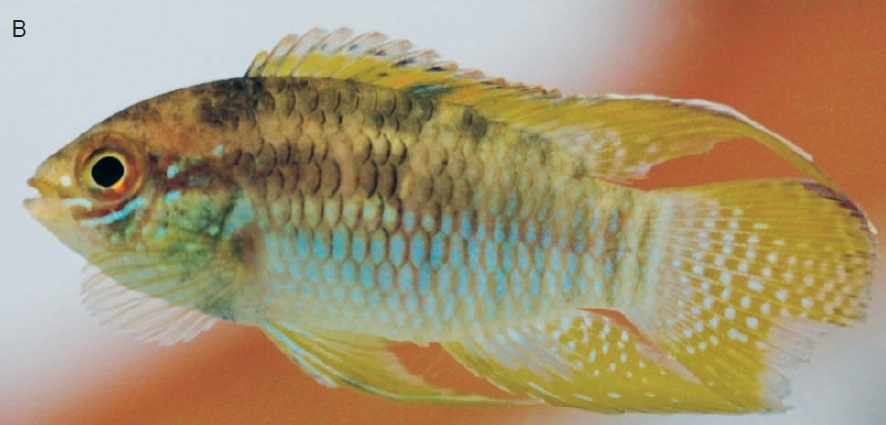
Laetacara flamannellus
Ottoni, Bragança, Amorim & Gama, 2012
Max length40mm SL1.6in SLTanknot recordedTempnot recordedpHnot recordedSympatric fish species in the grasslands include Rivulus schuncki, juveniles of Hoplerythrinus unitaeniatus and an unidentified Nannostomus sp. One contrasting locality was a flowing igarapé with the fish collected from shallow water alongside Apistogramma gossei, Crenicichla inpa,unidentified...
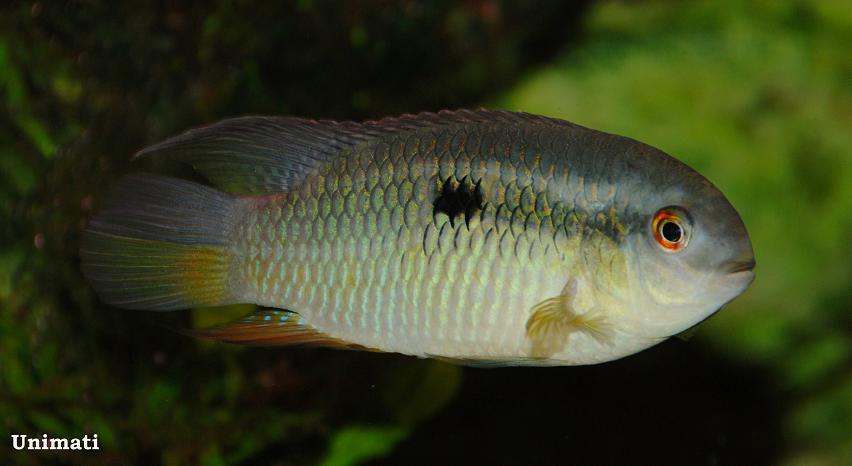
Laetacara fulvipinnis
Staeck & Schindler, 2007
Max length75mm SL3.0in SLTanknot recordedTemp20–28°C68–82°FpH4.0–7.0Has been collected from habitats containing clear, soft, acidic, tea-coloured blackwater, most typically among leaf litter or submerged vegetation in very shallow (10-50 cm depth) water along the margins of streams and other minor tributaries. At a village called El Niñal close to the mouth of the rio Pasimoni in the Casiquiare drainage pH was...
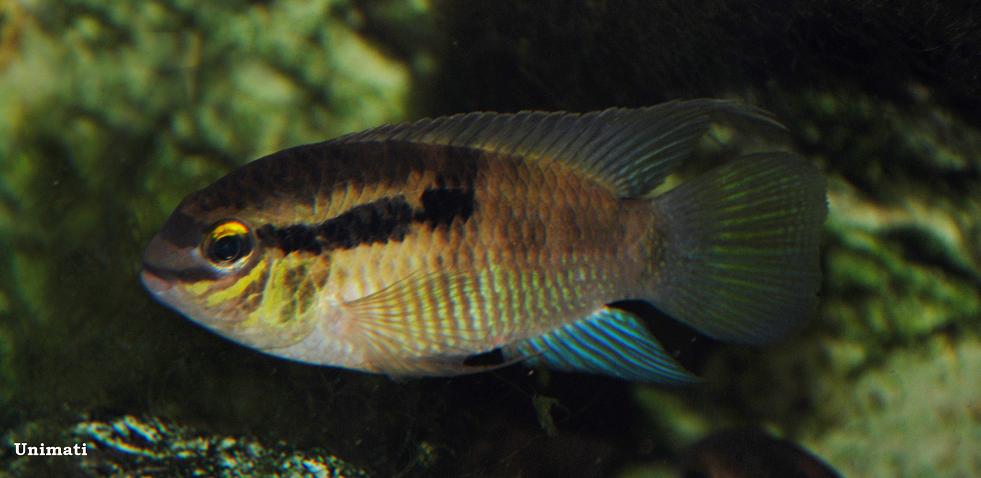
Laetacara thayeri
Steindachner, 1875
Max length65mm SL2.6in SLTanknot recordedTemp20–28°C68–82°FpH4.5–7.5This species is relatively rare in the aquarium trade. It can be differentiated from all congeners by a combination of possessing ctenoid (vs. cycloid) scales on the sides of the head plus lacking a dark spot at the caudal-fin base.
Monocirrhus polyacanthusSouth American Leaf Fish
authority not recorded
Max length100mm SL3.9in SLTank75 × 30cm30 × 12inTemp23–29°C73–84°FpH5.0–6.8An incredibly-adapted species, this fish is camouflaged to mimic a dead leaf, both in body shape and pattern. It can change colour to match its surroundings and has a projection from its bottom lip that resembles a leaf stalk. When hunting, it stalks its prey in a head-down stance, appearing to drift towards it like a dead leaf drifting in a current. In reality, the fish is propelled by tiny movements of its transparent fins. When it strikes at an item of prey the entire mouth protrudes outwards...
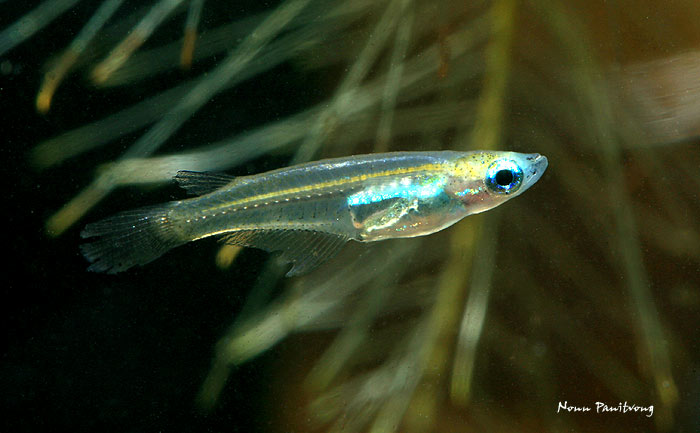
Oryzias minutillusDwarf Medaka
Smith, 1945
Max length17mm SL0.7in SLTank40 × 20cm16 × 8inTemp23–32°C73–90°FpH6.0–7.5Best maintained in a heavily planted set-up, ideally with a dark substrate, patches of dense vegetation, and some open areas. Other décor can consist of twisted roots and pieces of bogwood, while surface vegetation is also appreciated by the fish. When maintained under such conditions they're more likely to display their best colours, and planted aquaria also offer fry a more favourable chance of survival alongside the adults.
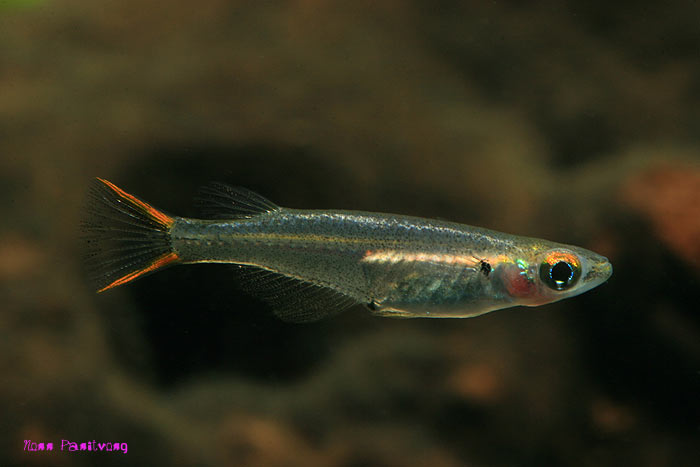
Oryzias songkhramensis
Magtoon, 2010
Max length20mm SL0.8in SLTank40 × 20cm16 × 8inTemp23–30°C73–86°FpH6.0–7.5An exclusive inhabitant of fresh, normally standing, waters including shallow pools, ditches, rice paddies and clear water swamps. The type locality is a small ditch measuring just 3 - 6 metres in width and 0.5 - 2 metres deep. The water was clear and the substrate composed of sand, detritus and mud with growths of the macrophytes Nymphaea lotus, Jussiaea repens and Hydrilla verticillata.
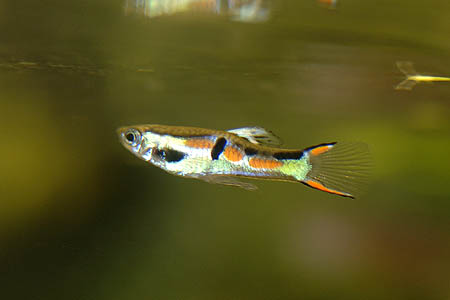
Poecilia wingeiEndler's Livebearer
Poeser, Kempkes & Isbrucker, 2005
Max length25mm SL1.0in SLTank45 × 30cm18 × 12inTemp24–30°C75–86°FpH7.0–8.5Endler's Livebearer was actually discovered in 1937 by Franklyn F. Bond before being rediscovered by John Endler in 1975 in Laguna de Patos, Cumana, northeastern Venezuela. It was found coexisting, but not interbreeding with, a wild form of P. reticulata. Both species are native to this area of Venezuela, but P. reticulata was much less common in areas where P. wingei was thriving. This is thought to be partially related to habitat type, as guppies are usually found in colder, running water...
Rineloricaria parvaWhiptail Catfish
authority not recorded
Max length110mm SL4in SLTank75 × 30cm30 × 12inTemp20–25°C68–77°FpH6.0–7.5One of the most common of the numerous species sold as 'whiptail catfish', R. parva is an excellent species for the newcomer to Loricariids or catfish breeding. It's certainly not the most active species, but when settled and housed with the correct kind of tankmates is by no means shy either. In 2002, it was briefly placed in the resurrected genus Hemiloricaria, but this lasted less than twelve months, at which point it was transferred back to Rineloricaria. Currently only Rin...
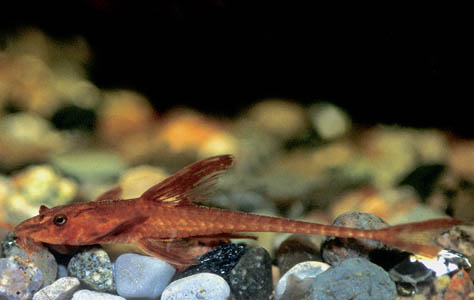
Rineloricaria sp.Red Lizard Catfish
authority not recorded
Max length110mm SL4in SLTank75 × 30cm30 × 12inTemp24–29°C75–84°FpH6.0–7.5As mentioned above, this fish may or may not be a man-made, or even hybrid, species. There are a few theories regarding this currently in circulation. Some believe that the fish are derived from a true wild caught fish, possibly of Paraguayan origin. These wild-caught red whiptails are supposed to breed true, producing all red fry, although there is no concrete evidence that they actually exist. The second possibility is that it's a selectively-bred form of Rineloricaria lanceolata, but thi...
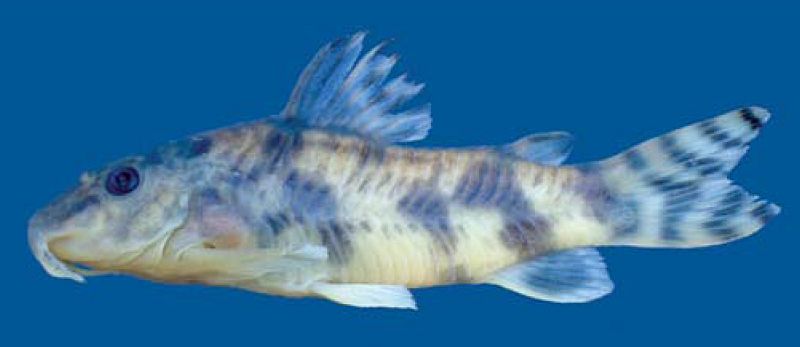
Scleromystax salmacis
Britto & Reis, 2005
Max length48mm SL1.9in SLTanknot recordedTempnot recordedpHnot recordedIt is most similar to S. macropterus, but differs in absence (vs. presence) of a black spot on the base of the median caudal-fin rays, a higher number of pectoral-fin rays (I,8,i vs. I,7,i), males with somewhat more slender bodies (25.7- 30.5% in SL [range 26.3-28.8% in type series] vs. 30.4-34.6% in SL), an...
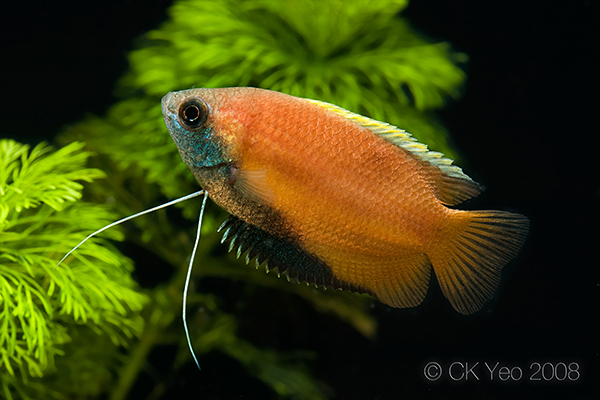
Trichogaster chunaHoney Gourami
Hamilton, 1822
Max length55mm SL2.2in SLTank60 × 30cm24 × 12inTemp22–27°C72–81°FpH6.0–7.5This species is readily available in the aquarium trade and is a good subject for those new to the hobby given its peaceable nature and relative adaptability in terms of water chemistry. It's sold under various names including A number of selectively-bred ornamental strains have also been produced including 'red', 'sunset', and 'golden', for which care is identical to the natural form.