Results for “genus”
Type a name: scientific, common, or one a species used to go by. Or narrow the catalogue with the filters.
Filters
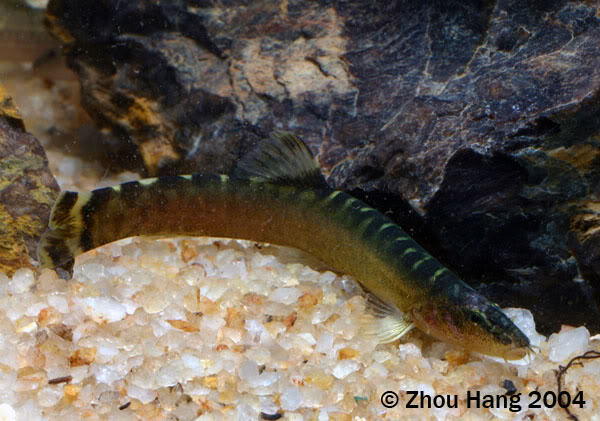
Leptobotia guilinensis
Chen, 1980
Max length100mm SL3.9in SLTank120 × 30cm48 × 12inTemp15.5–21°C60–70°FpH6.5–7.5L. elongata is the type species of the genus but according to current knowledge there exist 13 members in total, all of which are endemic to China and northern Vietnam. They're diagnosable by the following shared characters: possession of a simple (non-bifurcated), short sub-ocular spine not extending beyond the posterior edge of the eye; a laterally-compressed body; relatively deep caudal peduncle; pelvic fins reaching origin of anal-fin; anus below base of dorsal-fin and equidistant between pelvic and anal-fin origins.
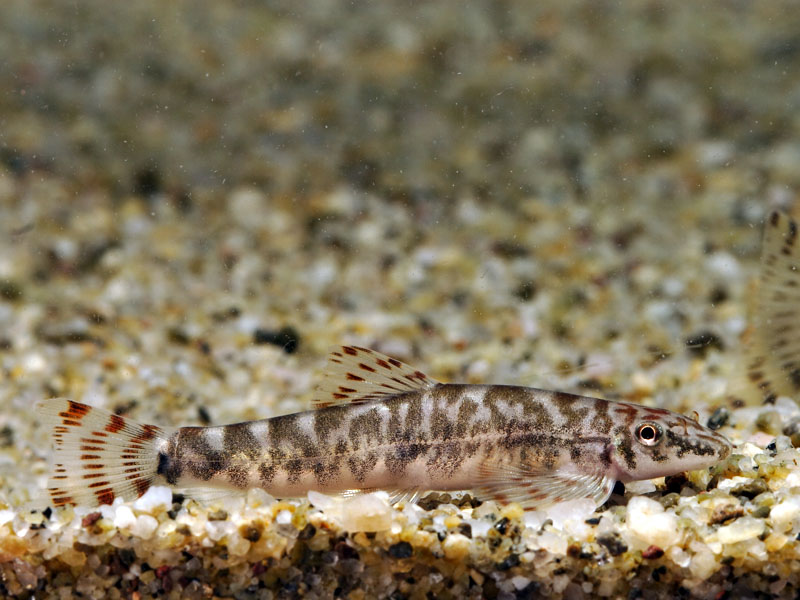
Liniparhomaloptera disparisBroken-band Hillstream Loach
Lin, 1934
Max length80mm SL3.1in SLTank80 × 30cm31 × 12inTemp20–24°C68–75°FpH6.5–8.0L. disparis is sometimes available as bycatch among shipments of other species such as Rhinogobius duospilus but also appears on trade lists under the fictitious scientific name 'Homaloptera hoffmani'. It can be told apart from similar-looking members of the genus Formosania by its noticeably shorter barbels and from Vanmanenia spp. by the fact that the rostral fold is not lobed and the mouth is relatively small (25% head width. In addition the lower lip in Liniparhomaloptera is not divided and has a flat, papillated edge.
Macrognathus zebrinusZebra Spiny Eel
authority not recorded
Max length460mm SL18in SLTank120 × 45cm48 × 18inTemp23–26°C73–79°FpH6.5–7.5One of the newer and prettier spiny eels in the hobby, M. zebrinus was previously considered a member of the closely related Mastacembelus genus. Care should be exercised when handling spiny eels, as the common name is derived from the sharp dorsal rays that can easily puncture the skin of a human....
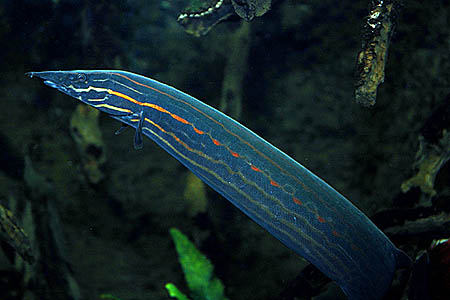
Mastacembelus erythrotaeniaFire Eel
authority not recorded
Max length1000mm SL39in SLTank120 × 60cm48 × 24inTemp24–28°C75–82°FpH6.0–7.0A member of the spiny eel family, which range across tropical Asia and Africa, Mastacembelus erythrotaenia is one of the more common species available to the hobby, along with the peacock eel (Macrognathus siamensis)and the tyre-track eel (Mastacembelus favus). These species are all from Asia but there are some members of the family from Africa that are occasionally seen for sale. These majority of these species are from the Afromastacembelus genus, with the most common representative being the...
Maylandia callainosCobalt Blue Zebra
authority not recorded
Max length135mm SL5in SLTank120 × 30cm48 × 12inTemp24–28°C75–82°FpH7.6–8.8This species was formerly classified as Pseudotropheus callainos and Metriaclima callainos and is still named as one of these by many sources. It has also been seen for sale as Pseudotropheus zebra "pearly". The genus name Maylandia is now used to describe all former members of the 'zebra' group of Pseudotropheus. It exists in three main colour forms, namely "cobalt blue", "orange blotch" and "pearl zebra". It is very easily confused with similar...
Maylandia greshakeiRed Top Ice Blue Zebra
authority not recorded
Max length135mm SL5in SLTank90 × 45cm36 × 18inTemp24–28°C75–82°FpH7.6–8.8This species was formerly classified as Pseudotropheus greshakei and Metriaclima greshakei and is still named as either of these by many sources. The genus name Maylandia is now used to describe all former members of the 'zebra' group of Pseudotropheus. An albino form of this species exists in aquaria and is occasionally available....
Mchenga flavimanus
authority not recorded
Max length120mm SL5in SLTank120 × 45cm48 × 18inTemp25–29°C77–84°FpH7.5–8.5The genus Mchenga was erected in 2006 by Stauffer and Konings and currently numbers half a dozen species, all of which are previous members of Copadichromis. The reclassification was based on various morphological and behavioural traits, including habitat preference and breeding strategy. Together with Copadichromis, Mchenga spp. form an exclusive group of Malawian cichlids commonly referred to as "Utaka" (prounounced "ooh-taw-kuh"). They're specialised to a pelagic l...
Megalodoras uranoscopusGiant Raphael Catfish
authority not recorded
Max length700mm SL28in SLTank240 × 120cm96 × 48inTemp21.1–25°C70–77°FpHnot recordedThis species is also known by the vernacular name "ripsaw catfish" (U.S.) and was often referred to by the scientific name M. irwini, now considered a junior synonym of M. uranoscopus, in older literature. Within the family Doradidae the genus Megalodoras is considered most closely-related to Lithodoras, Centrodoras and Platydoras, respectively. Members of the family Doradidae can be distinguished from all other Siluriformes by possession of a unique infranuchal scute, a dermal bon...
Melanotaenia australisWestern rainbowfish
authority not recorded
Max length120mm SL5in SLTank120 × 30cm48 × 12inTemp22–27°C72–81°FpH6.5–8.0This species was formerly classified as part of the Melanotaenia splendida complex, but more recent research into the genetics of the species has shown that not only is M. australis genetically dissimilar to the splendida group, but also that there are 2 clear lineages within australis This may yet result in another official member of the genus. M. australis exhibits a wide variation in colour and patterning depending on locality, and is probably the commonest rainbowfish species in Australi...
Melanotaenia irianjayaIrian Jaya Rainbowfish
authority not recorded
Max length120mm SL5in SLTank90 × 30cm36 × 12inTemp23–26°C73–79°FpH6.5–8.0This beautiful rainbow is not often seen in the hobby. It can be identified by the fact that the middle rays in the dorsal and anal fins are longer than the other fin rays. This feature is usually associated with the closely-realated Glossolepis genus of rainbowfish....
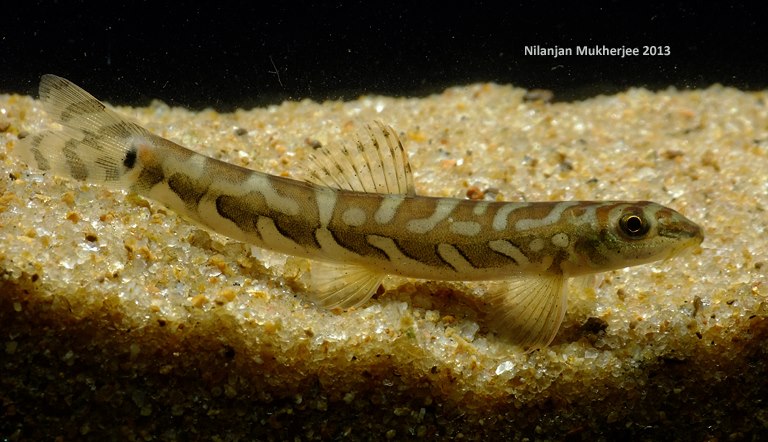
Mesonoemacheilus triangularisZodiac Loach
Day, 1865
Max length60mm SL2.4in SLTank75 × 30cm30 × 12inTemp18–25.5°C64–78°FpH6.0–7.5This species is also referred to by the alternative vernacular name 'Batik loach' and is the most-commonly traded member of the genus at present. It's easily-distinguished from congeners by body patterning which comprises a series of pale, oblique saddle-like markings edged in black and running along the dorsal surface, plus a similar set of bars originating from the otherwise plain ventral surface.
Metynnis argenteus
authority not recorded
Max length150mm SL6in SLTank180 × 38cm72 × 15inTemp24–28°C75–82°FpH6.0–7.0Metynnis argenteus is very similar to another member of the genus, Metynnis hypsauchen and both fish are sold in the hobby under the name "Silver Dollar". The latter species is sometimes referred to as the Plain Metynnis in an effort to distinguish it from its close relation. They are virtually indentical in terms of appearance and care requirements. The two species can be told apart as m. hypsauchen has a black blotch located slightly above and behind each eye. In addition to these tw...
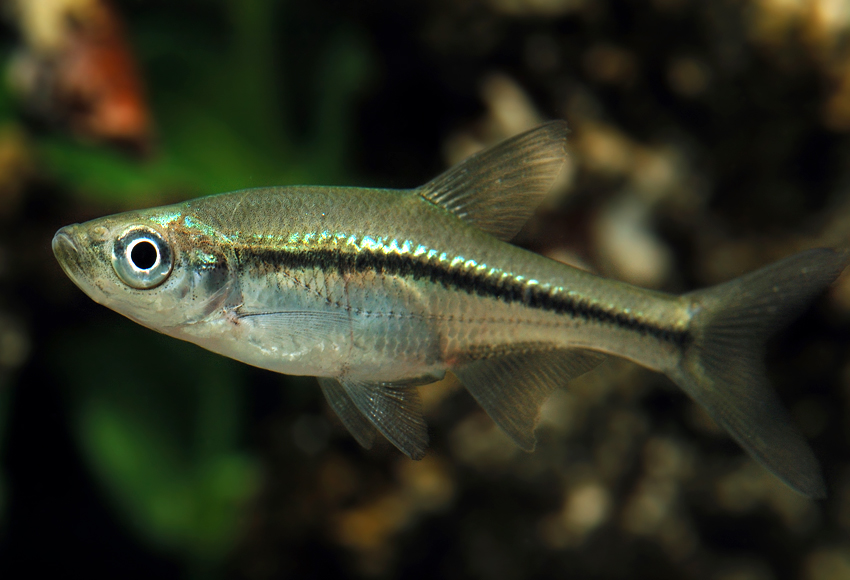
Metzia formosae
Oshima, 1920
Max length75mm SL3.0in SLTanknot recordedTempnot recordedpHnot recordedAlthough it is included in the genus Metzia this grouping remains somewhat unresolved in terms of taxonomy and it may contain more than a single genetic lineage. For example, members share a number of characters with the genera Ischikauia Jordan and Snyder 1900, Hemiculterella Warpachowski 1887, and several species of Anabarilius Cockerell 1923, including a bipartite gas bladder, a non-spinous dorsal-fin ray, and a sharp ventral keel between the pelvic-fin insertion and anus.
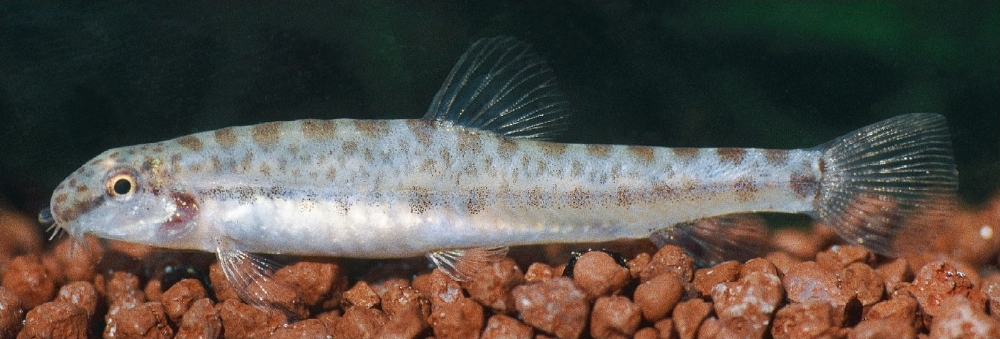
Microcobitis misgurnoides
Rendahl, 1944
Max length41mm SL1.6in SLTank45 × 30cm18 × 12inTemp20–24°C68–75°FpH5.5–7.0This species was initially described as a member of Cobitis and remained as such for over 60 years until being redescribed in the new genus Microcobitis by Bohlen and Harant (2011). It can be separated from Cobitis species by a number of char...
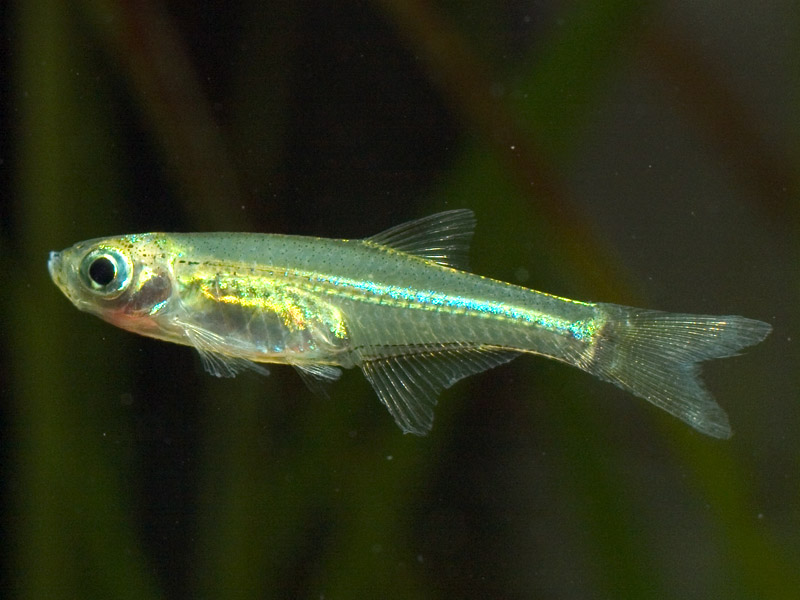
Microdevario gatesi
Herre, 1939
Max length23mm SL0.9in SLTank45 × 30cm18 × 12inTemp20–27°C68–81°FpH6.0–7.5The genus Microdevario was raised by Fang et al. (2009) after phylogenetic analyses revealed that some species formerly included in Microrasbora to be more closely allied with Devario and in need of reclassification. Microdevario is largely separated from Devario and other closely related genera such as Chela and Laubuca by virtue of internal characters but also the following: small adult size; anal and dorsal fins with concave-shaped distal margin; absence of barbels; absence of perforated scales; 9-10 branched anal-fin rays; 7 branched dorsal-fin rays; less abdominal than caudal vertebrae.
Mylochromis melanonotusHaplochromis Yellow-black Line
authority not recorded
Max length260mm SL10in SLTank150 × 60cm60 × 24inTemp24–28°C75–82°FpH7.6–8.8M. melanonotus is rarely imported and little information is available regarding its captive care. The shovel-like lower jaw possessed by some individuals of this species has been the cause of some confusion regarding the fishes' true identity. It was originally placed in the genus Platygnathochromis, in which it was the only species. However, Ad Konings observed that amongst wild breeding populations there existed individuals both with and without the modified lower jaw. The specimens witho...
Mystus leucophasisAsian Upside Down Catfish
authority not recorded
Max length300mm SL12in SLTank120 × 60cm48 × 24inTemp23–27°C73–81°FpH6.0–8.0Like some members of the African catfish genus Synodontis, this species spends the vast majority of it's time swimming in an inverted position. It is often seen for sale at only a couple of inches in length and may be confused with the popular (and much smaller) Synodontis nigriventris. It can easily be distinguished from this species by its patterning. It does not exhibit the or brown colours of the Synodontis and is a uniform black colour all over. Larger specimens may have some lighter c...
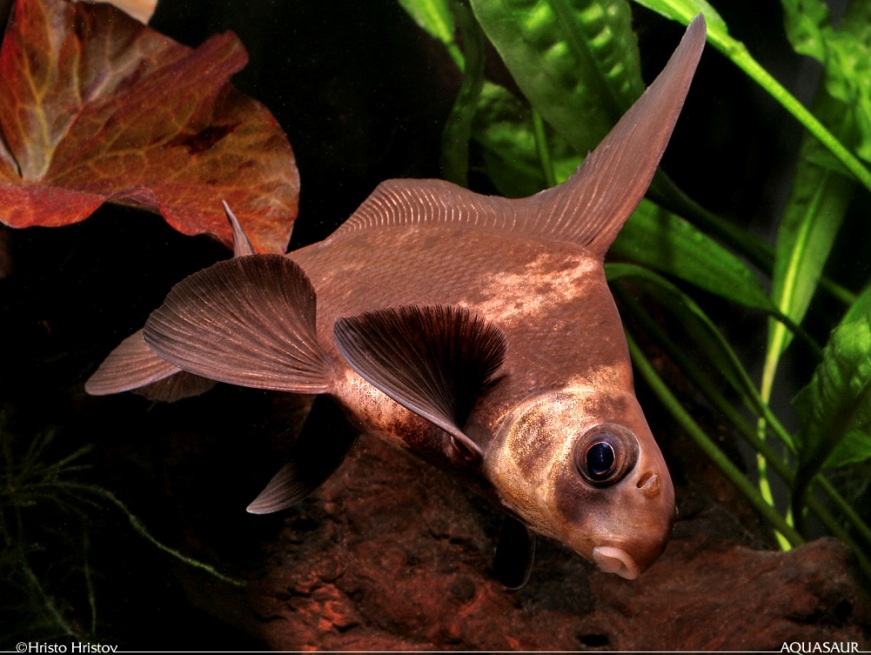
Myxocyprinus asiaticusChinese Sailfin Sucker
Bleeker, 1864
Max length900mm SL35in SLTanknot recordedTemp15.5–21°C60–70°FpH6.0–8.0This species is traded under various names including 'Chinese banded shark', 'Chinese sucker', 'freshwater batfish', 'high-fin banded loach', etc. It's currently illegal to import or own privately in several countries, including the UK, but continues to be available with only the attractive juvenile form traded, and almost always without information regarding adult size of almost a metre or potential lifepan of 25 years+. Myxocyprinus is a monotypic genus and the only Asian representative of the family Cato...
Nannacara anomalaGolden Dwarf Cichlid
authority not recorded
Max length76mm SL3.0in SLTank46 × 38cm18 × 15inTemp22–25°C72–77°FpHnot recordedNannacara Anomala are widely available in the trade, and are generally regarded as an excellent beginner's fish. If a beginner is interested in keeping Cichlids and learning about breeding, then these fish are absolutely ideal. Anomala are attractive, hardy and usually quite cheap to purchase. Like some species of the Apistogramma genus, the mother may use fascinating body language to communicate with her fry when she is caring for them. If there is more than one male in a tank smalle...
Nannaethiops unitaeniatusOne-lined African Characin
authority not recorded
Max length65mm SL2.6in SLTank60 × 30cm24 × 12inTemp22–26°C72–79°FpH6.5–7.5Not often seen for sale this is a pretty, peaceful little fish that deserves more popularity in the hobby. It is often confused with similar-looking members of the genus Neolebias.