Results for “Maracyn-2”
Type a name: scientific, common, or one a species used to go by. Or narrow the catalogue with the filters.
Filters
Synodontis flavitaeniataPyjama Synodontis
authority not recorded
Max length195mm SL8in SLTank90 × 30cm36 × 12inTemp23–28°C73–82°FpH6.5–8.0Also known as the Orange Striped Squeaker, in our opinion this fish is one of the most attractively patterned Synos. S. flavitaeniata can vary considerably in patterning and colouration but is difficult to misidentify. This fish is more sensitive to deteriorating water quality than many Syno species so aquarium maintenance must be rigorous. When it was first imported 25 or so years ago it commanded an extortionate price but thankfully is affordable today. Its flexibility with regards to w...
Taenioides cirratusBearded Worm Goby
authority not recorded
Max length300mm SL12in SLTanknot recordedTemp22–27°C72–81°FpH7.5–8.5Something for the true oddball enthusiast, this bizarre looking goby has been imported at least once over the last few years. It's a mud-burrowing species that digs networks of sloping tunnels in the substrate in nature. Apparently each series of burrows has several openings, one of which has a mound outside. According to Itani and Uchino (2003), this mound suggests that the fish "actively process sediment". Even more odd is its appearance (see picture). It has greatly reduced eye...
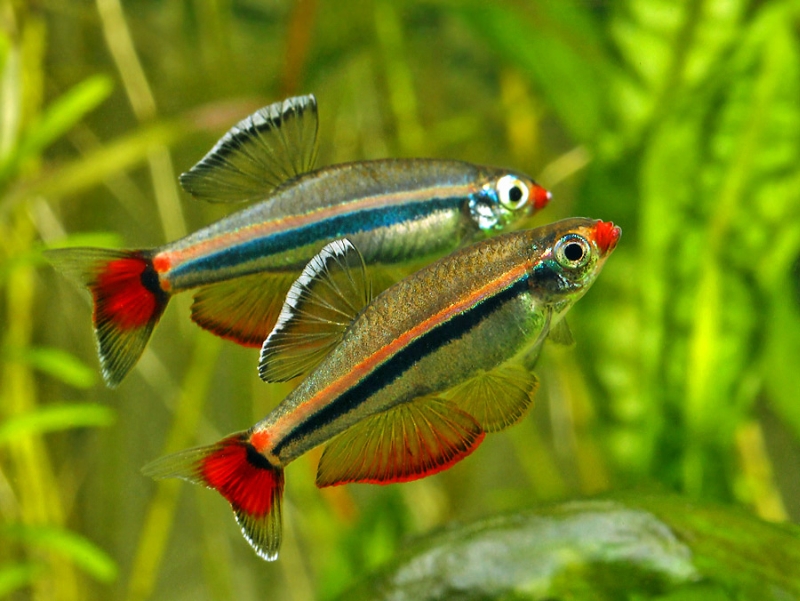
Tanichthys micagemmae
Freyhof & Herder, 2001
Max length30mm SL1.2in SLTank45 × 30cm18 × 12inTemp18–23°C64–73°FpH6.5–7.5This species only became available in the aquarium hobby during the early 21st century but has already achieved a measure of popularity since it's attractive, easy to maintain and usually quite cheaply-priced. You may see it on sale under various trade names including 'Vietnamese minnow', 'cardinal minnow', 'royal white cloud', 'dwarf cardinal' and others. We've obtained images of what is said to be a naturally-occurring form with extremely elong...
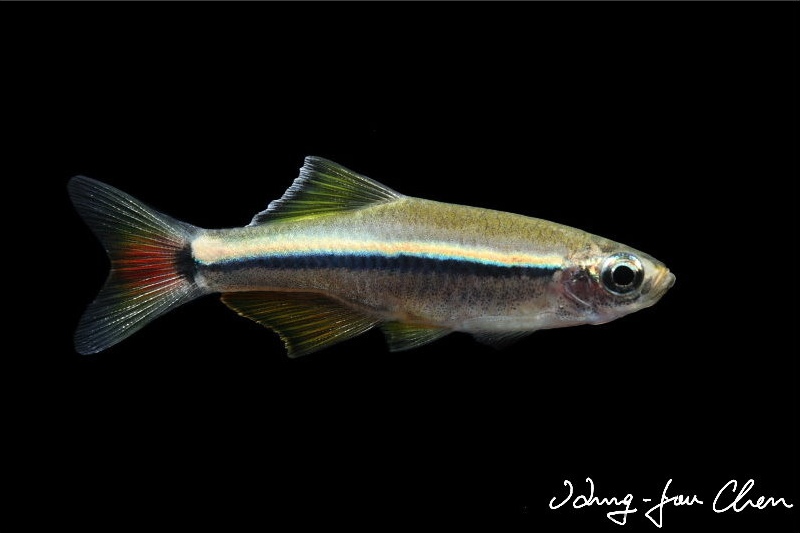
Tanichthys sp. 'Vietnam'
authority not recorded
Max length30mm SL1.2in SLTank45 × 30cm18 × 12inTemp18–25°C64–77°FpH6.0–7.5This fish was first collected in 2009 and limited numbers have been available in the aquarium trade. Though additional exports may be unlikely it's proven easy to breed in captivity and there's a fair chance it will become established in the hobby. It's sold under several names including T. sp. 'lemon' or 'yellow white cloud', and has also been misidentified as the congener T. thacbaensis, a valid species occurring much further north in Vietnam.
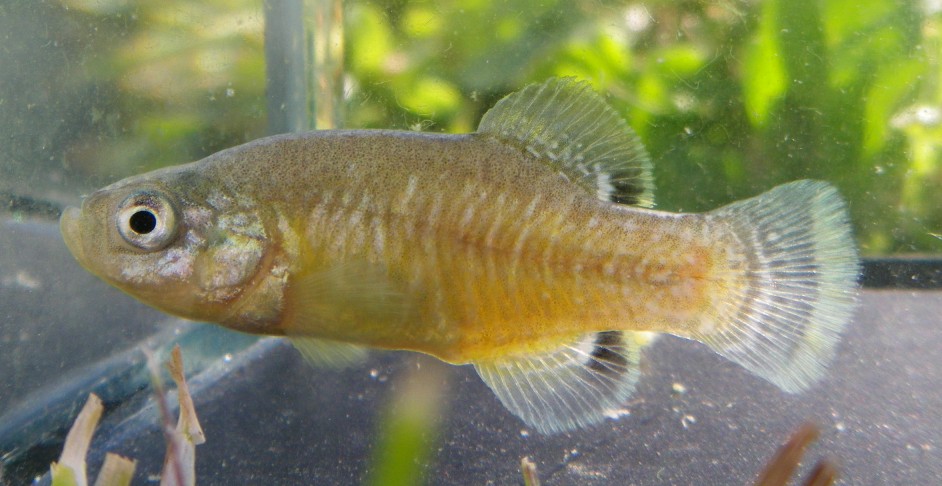
Tellia apodaFootless Toothcarp
Gervais, 1853
Max length45mm SL1.8in SLTank120 × 30cm48 × 12inTemp16–30°C61–86°FpH7.0–9.0The genus Aphanius currently contains 22 species and subspecies which are thought to have derived from a common ancestor originally distributed around the periphery of the former Tethys Sea. These can be separated into two main phylogenetic groups usually referred to as the 'eastern' and 'western' clades by scientists and aquarists because they broadly correspond to those coastlines of the Tethys. The eastern clade comprises the species now found in the Arabian Peninsula and ...
Tetraodon baileyiHairy Puffer
authority not recorded
Max length120mm SL5in SLTank75 × 30cm30 × 12inTemp23–27°C73–81°FpHnot recordedPuffer fish are so called as they have the ability to inflate their elastic stomachs with water or air. This is usually a response to some kind of threat, although in the aquarium many specimens appear to inflate themselves for no apparent reason. The fish becomes 2 or 3 times it's normal size, which makes the fish both big enough to scare away many potential predators, and difficult to swallow. Many parts of the body of puffers contain the deadly neurotoxin tetrodoxin. This is the same ...
Tetraodon biocellatusFigure Eight Puffer
authority not recorded
Max length80mm SL3.1in SLTank75 × 30cm30 × 12inTemp22–26°C72–79°FpH6.5–7.5Puffer fish are so called as they have the ability to inflate their elastic stomachs with water or air. This is usually a response to some kind of threat, although in the aquarium many specimens appear to inflate themselves for no apparent reason. The fish becomes 2 or 3 times its normal size, big enough to scare away many potential predators, or difficult to swallow. Puffers also have several other interesting adaptations. They are one of the few fish that can actually blink or close their ...
Tetraodon cochinchinensisFang's Puffer
authority not recorded
Max length70mm SL2.8in SLTank45 × 30cm18 × 12inTemp24–28°C75–82°FpH6.5–7.8Puffer fish are so called as they have the ability to inflate their elastic stomachs with water or air. This is usually a response to some kind of threat, although in the aquarium many specimens appear to inflate themselves for no apparent reason. The fish becomes 2 or 3 times it's normal size, which makes the fish both big enough to scare away many potential predators, and difficult to swallow. Many parts of the body of puffers contain the deadly neurotoxin tetrodoxin. This is the same ...
Tetraodon fluviatilisGreen Puffer
authority not recorded
Max length170mm SL7in SLTank120 × 30cm48 × 12inTemp24–28°C75–82°FpH7.8–9.0Puffer fish are so called as they have the ability to inflate their elastic stomachs with water or air. This is usually a response to some kind of threat, although in the aquarium many specimens appear to inflate themselves for no apparent reason. The fish becomes 2 or 3 times its normal size, big enough to scare away many potential predators, or difficult to swallow. Puffers also have several other interesting adaptations. They are one of the few fish that can actually blink or close their ...
Tetraodon lineatusFahaka Puffer
authority not recorded
Max length430mm SL17in SLTanknot recordedTemp24–26°C75–79°FpH6.5–7.5Puffer fish are so called as they have the ability to inflate their elastic stomachs with water or air. This is usually a response to some kind of threat, although in the aquarium many specimens appear to inflate themselves for no apparent reason. The fish becomes 2 or 3 times it's normal size, big enough to scare away many potential predators, or difficult to swallow. Puffers are also one of the few fish that can actually blink or close their eyes. Many parts of the body of puffers cont...
Tetraodon mbuGiant Puffer
authority not recorded
Max length750mm SL30in SLTank240 × 90cm96 × 36inTemp24–26°C75–79°FpH7.0–8.0Puffer fish are so called as they have the ability to inflate their elastic stomachs with water or air. This is usually a response to some kind of threat, although in the aquarium many specimens appear to inflate themselves for no apparent reason. The fish becomes 2 or 3 times its normal size, big enough to scare away many potential predators, or difficult to swallow. Puffers also have several other interesting adaptations. They are one of the few fish that can actually blink or close their ...
Tetraodon miurusCongo Puffer
authority not recorded
Max length150mm SL6in SLTank75 × 30cm30 × 12inTemp24–28°C75–82°FpH6.8–7.5Puffer fish are so called as they have the ability to inflate their elastic stomachs with water or air. This is usually a response to some kind of threat, although in the aquarium many specimens appear to inflate themselves for no apparent reason. The fish becomes 2 or 3 times its normal size, big enough to scare away many potential predators, or difficult to swallow. Puffers also have several other interesting adaptations. They are one of the few fish that can actually blink or close their ...
Tetraodon nigroviridisGreen Spotted Puffer
authority not recorded
Max length170mm SL7in SLTank120 × 30cm48 × 12inTemp24–28°C75–82°FpH7.5–8.5Puffer fish are so called as they have the ability to inflate their elastic stomachs with water or air. This is usually a response to some kind of threat, although in the aquarium many specimens appear to inflate themselves for no apparent reason. The fish becomes 2 or 3 times it's normal size, which makes the fish both big enough to scare away many potential predators, and difficult to swallow. Many parts of the body of puffers contain the deadly neurotoxin tetrodoxin. This is the same ...
Tetraodon palembangensisHumpback Puffer
authority not recorded
Max length195mm SL8in SLTank120 × 30cm48 × 12inTemp24–28°C75–82°FpH6.8–7.6Puffer fish are so called as they have the ability to inflate their elastic stomachs with water or air. This is usually a response to some kind of threat, although in the aquarium many specimens appear to inflate themselves for no apparent reason. The fish becomes 2 or 3 times it's normal size, which makes the fish both big enough to scare away many potential predators, and difficult to swallow. Many parts of the body of puffers contain the deadly neurotoxin tetrodoxin. This is the same ...
Tetraodon suvattiiArrowhead Puffer
authority not recorded
Max length150mm SL6in SLTanknot recordedTemp22–26°C72–79°FpH6.5–7.5Puffer fish are so called as they have the ability to inflate their elastic stomachs with water or air. This is usually a response to some kind of threat, although in the aquarium many specimens appear to inflate themselves for no apparent reason. The fish becomes 2 or 3 times its normal size, big enough to scare away many potential predators, or difficult to swallow. Puffers also have several other interesting adaptations. They are one of the few fish that can actually blink or close their ...
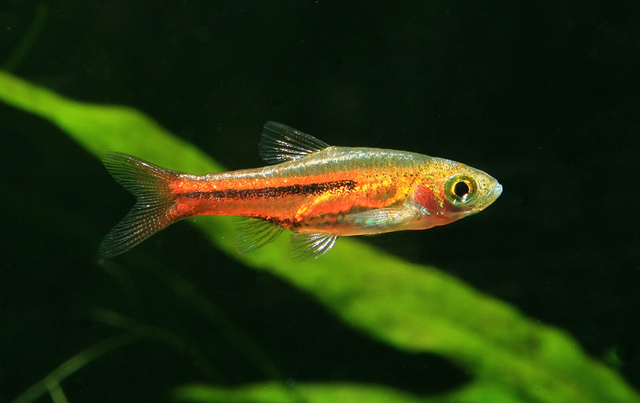
Trigonostigma somphongsi
Meinken, 1958
Max length30mm SL1.2in SLTank60 × 30cm24 × 12inTemp22–26°C72–79°FpH5.0–7.0T. somphongsi is exceptionally rare both in nature and the hobby and was considered potentially extinct for around a dozen years before a trio were imported to Germany as contaminants among a batch of Boraras urophthalmoides in 2006. Since then it has been successfully bred and distributed to various experts, mostly in Thailand and Germany, in the hope of establishing a sustainable captive population. The possibility of a...
Vieja maculicaudaBlackbelt Cichlid
authority not recorded
Max length254mm SL10in SLTank120 × 38cm48 × 15inTemp22–27°C72–81°FpH6.0–8.0The Blackbelt Cichlid gets its name from two things: firstly the vertical black stripe around its flank, and secondly its toughness. Vieja maculicauda is a tough, aggressive fish and should be respected as such. Maculicauda is a relatively easy fish to keep. They are not impossible to breed, but not the easiest fish either. If you seriously intend to breed this fish, it is a wise decision to house 6 juvenile fish in a large tank (212 litres at least), and let them pair off. When a pair has be...
Wallago leeriiStriped Wallago Catfish
authority not recorded
Max length2032mm SL80in SLTanknot recordedTemp22–26°C72–79°FpH6.0–7.0Wallago are fearsome predatory catfish that are fairly widespread in southeast Asia. There are currently five recognised species, W. attu, W. leerii, W. hexanema, W. maculatus and W. micropogon. The latter was described to science in 2004 by renowned catfish expert Heok Hee Ng and was previously considered to be a geographic variant of W. leerii. All members of the genus possess an enormous mouth full of backward pointing teeth, which are used to rip chunks from their prey. Smaller fish or amphi...
Xenopterus naritusGolden Puffer
authority not recorded
Max length285mm SL11in SLTank120 × 45cm48 × 18inTemp24–28°C75–82°FpH6.5–7.5Puffer fish are so called as they have the ability to inflate their elastic stomachs with water or air. This is usually a response to some kind of threat though in the aquarium many specimens appear to inflate themselves for no apparent reason. The fish becomes 2 or 3 times its normal size, big enough to scare away many potential predators, or become difficult to swallow. Puffers are also one of the few fish that can actually blink or close their eyes. Many parts of the body of puffers contai...
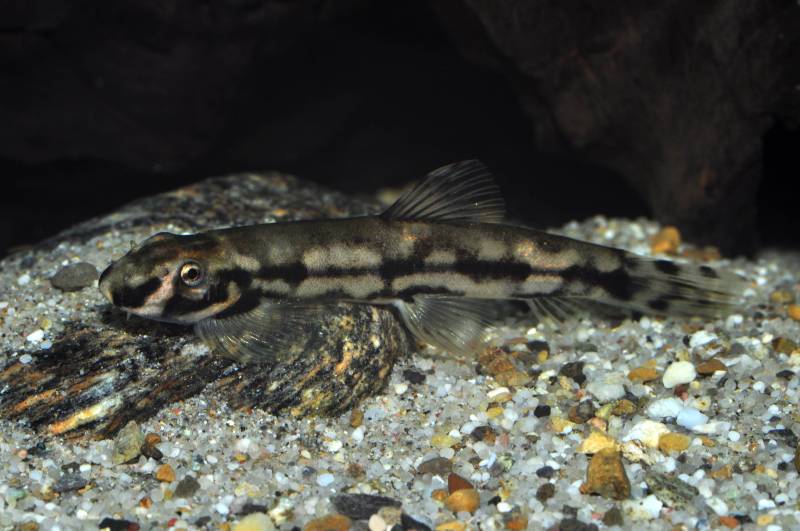
Yaoshania pachychilusPanda Loach
Chen, 1980
Max length60mm SL2.4in SLTank60 × 30cm24 × 12inTemp15.5–24°C60–75°FpH6.5–7.5Juvenile specimens were first exported for the aquarium hobby during 2009 and have since been available on a sporadic basis with prices generally reflecting its rarity and, hopefully, number of specimens being collected. The striking black-and-white-striped juvenile colour pattern inspired the vernacular name although it's sometimes labelled as 'panda goby' rather than 'panda loach'.