Results for “genus”
Type a name: scientific, common, or one a species used to go by. Or narrow the catalogue with the filters.
Filters
Dicrossus filamentosusLyretail Checkerboard Cichlid
authority not recorded
Max length102mm SL4in SLTank60 × 30cm24 × 12inTemp27–30°C81–86°FpHnot recordedDicrossus Filamentosa were once part of the Crenicara genus, but now share the Dicrossus genus with Dicrossus Maculata. The two species look similar, but the Maculata lack the lyretailed of the Filamentosa. Some say however, that the Maculata has even more striking body colouration than the already impressive Filamentosa. These fish aren't impossible to find, but aren't readily available in local fish shops either. They are seen as a challenge to breed, but plenty of breeders have h...
Erpetoichthys calabaricusRopefish
authority not recorded
Max length900mm SL35in SLTank150 × 60cm60 × 24inTemp23–30°C73–86°FpH6.0–7.5This is the only species in the genus Erpetoichthys, and is an incredibly hardy, nocturnal species. Due to its poor vision, the Ropefish relies on its excellent sense of smell to locate food. It's closely related to the Polypterus genus and both these are some of the last surviving relatives of very ancient species. Fossils of earlier relatives have been found that date back to the Triassic Period, which occured during the early development of the dinosaurs, more than 200 million years ago....
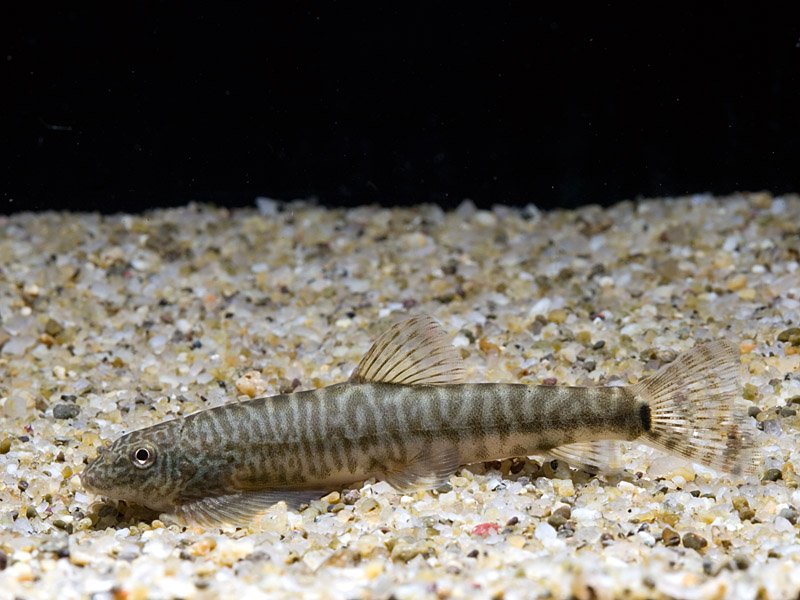
Erromyzon sinensis
Chen, 1980
Max length55mm SL2.2in SLTank75 × 30cm30 × 12inTemp18–24°C64–75°FpH6.0–7.5E. sinensis was initially included in the genus Protomyzon where it remained until 2004 when Kottelat found sufficient geographical and morphological differences between members of the group inhabiting the island of Borneo and those from mainland East/South East Asia to warrant their separation. The genus Erromyzon was erected to accommodate the mainland fishes and there are currently three...
Gymnotus carapoBanded Knifefish
authority not recorded
Max length600mm SL24in SLTank180 × 60cm72 × 24inTemp22–28°C72–82°FpH6.0–7.5Not a good beginner's species, due to its very respectable adult size, but it makes a stunning oddball addition to communities of larger fish. It's sensitive to many aquarium medications, particularly those containing copper. The genus Gymnotus has undergone considerable taxonomic revision in recent years, with over 20 new species being described since 1994, including several that were originally considered to be G. carapo. The systematics of the genus are still not fully understood...
Hemiodontichthys acipenserinusPinocchio Whiptail Catfish
authority not recorded
Max length135mm SL5in SLTank75 × 30cm30 × 12inTemp24–28°C75–82°FpH6.0–7.0Also known as the knob nosed whiptail, this species is difficult to confuse with any other Loricariid due to its distinctive 'diamond' shape when viewed from above, and peculiarly shaped rostrum (nose), which is enlarged at the tip. It also lacks discernible odontotes on the head and pectoral fins. So distinctive is it, in fact, that it is currently monotypic (the only species in its genus). The species name is derived from its superficial resemblance to the sturgeons of the genus Acip...
Hypostomus cf. cochliodonSpotted Cochliodon
authority not recorded
Max length230mm SL9in SLTank120 × 45cm48 × 18inTemp21–24°C70–75°FpH6.3–7.2This undescribed species is part of the Hypostomus cochliodon complex, all of which were previously included in the genus Cochliodon. This is now considered a synonym of Hypostomus. Members of this group can be distinguished from congeners by several differences in morphology, most notably the hump-backed profile of mature fish and spoon-shaped dentition. These features, along with the fishes tendency to eat wood, are shared with the Panaque genus of the Ancistrinae subfamily, but the two genera...
Hypostomus plecostomoidesLDA42
authority not recorded
Max length250mm SL10in SLTank120 × 45cm48 × 18inTemp21–27°C70–81°FpH6.5–8.0This species is part of the Hypostomus cochliodon complex, all of which were previously included in the genus Cochliodon, which is now considered a synonym of Hypostomus. Members of this group can be distinguished from congeners by several differences in morphology, most notably the hump-backed profile of mature fish and spoon-shaped dentition. These features, along with the fishes tendency to eat wood, are shared with the Panaque genus of the Ancistrinae subfamily, but the two genera are known ...
Hypostomus sp.L229
authority not recorded
Max length250mm SL10in SLTank120 × 45cm48 × 18inTemp21–27°C70–81°FpH6.0–7.5This undescribed species is part of the Hypostomus cochliodon complex, all of which were previously included in the genus Cochliodon, which is now considered a synonym of Hypostomus. Members of this group can be distinguished from congeners by several differences in morphology, most notably the hump-backed profile of mature fish and spoon-shaped dentition. These features, along with the fishes tendency to eat wood, are shared with the Panaque genus of the Ancistrinae subfamily, but the two gener...
Hypostomus sp.
authority not recorded
Max length200mm SL8in SLTanknot recordedTemp23–27°C73–81°FpH6.0–7.5This undescribed species is part of the Hypostomus cochliodon species complex, all members of which were previously included in the genus Cochliodon, now considered a synonym of Hypostomus. Members of this group can be distinguished from congeners by several differences in morphology, most notably the hump-backed profile of mature fish and spoon-shaped dentition. These features, along with the fishes tendency to eat wood, are shared with the Panaque genus of the Ancistrinae subfamily, but the tw...
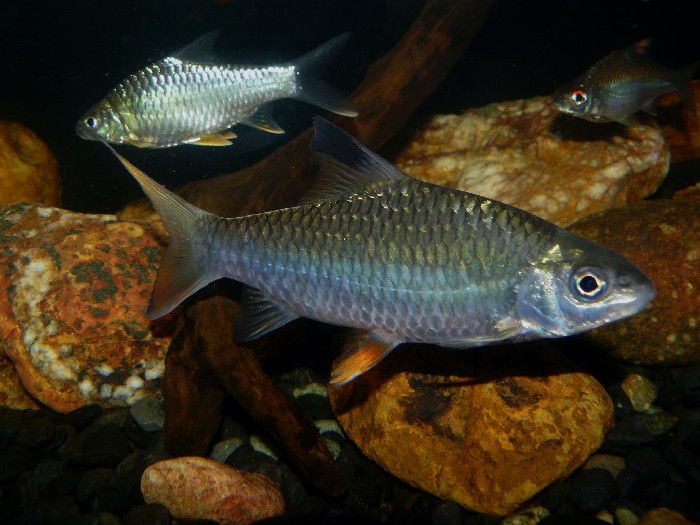
Hypselobarbus jerdoniJerdon's Carp
authority not recorded
Max length460mm SL18in SLTank240 × 120cm96 × 48inTemp20–26°C68–79°FpH6.5–7.5There are currently eleven species in the genus most of which have previously been included in Puntius, Barbus and the now defunct genus Gonoproktopterus. Of these the only ones we've seen in the trade are H. jerdoni and H. curmuca although it's possible that others have been exported in small numbers or as contaminants among shipments of other species. Even these two are very rarely encountered and little has been written about the group as a whole....
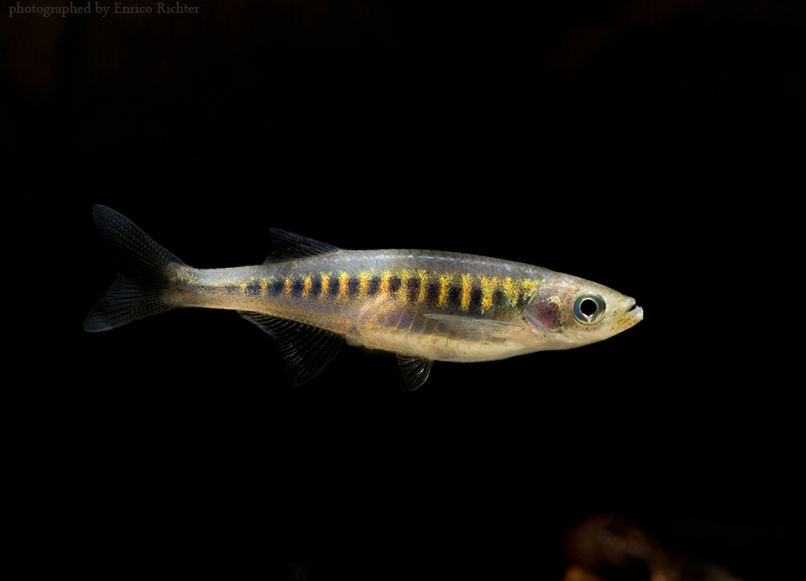
Inlecypris auropurpurea
Annandale, 1918
Max length80mm SL3.1in SLTank90 × 30cm36 × 12inTemp20–24°C68–75°FpH6.0–8.0Originally described as a member of Barilius (Annandale, 1918) but Howes (1980a) considered it more closely related to cheline cyprinids (Chela and Laubuca spp.) based on morphological characters and erected the genus Inlecypris for it (Howes, 1980b). Fang (2003) supported Howes' conclusions in her 2003 phylogenetic study of the genus Danio, hypothesising that Inlecypris and Chela together form a sister group to Devario.
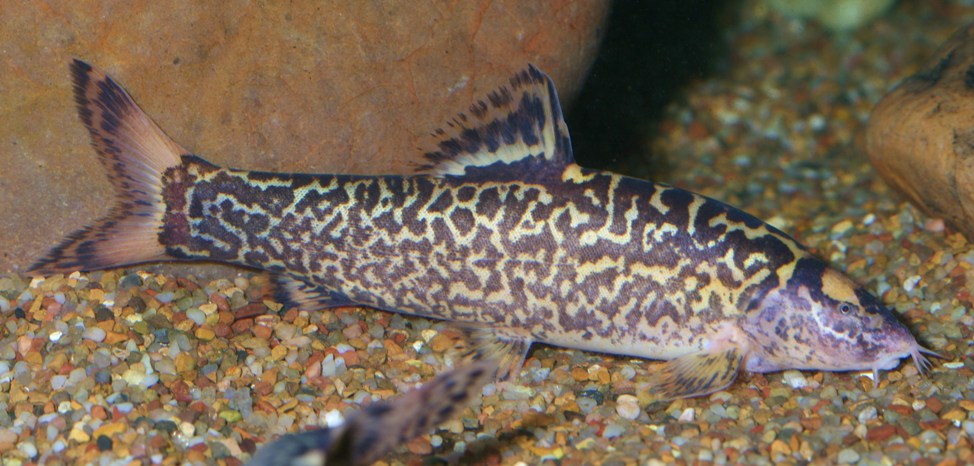
Leptobotia taeniops
Sauvage, 1878
Max length150mm SL6in SLTank120 × 45cm48 × 18inTemp15.5–21°C60–70°FpH6.5–7.5L. taeniops is almost unheard of in the aquarium trade although we know of one or two private collectors maintaining it. It was previously included in the related genus Parabotia. L. elongata is the type species of the genus but according to current thinking there exi...
Limia melanogasterBlack-bellied Limia
authority not recorded
Max length40mm SL1.6in SLTank60 × 30cm24 × 12inTemp22–28°C72–82°FpH7.5–8.5This species was originally classified in the genus Limia before this was made a sub-genus of Poecilia. Confusingly they have been reclassified once more into Limia, but are still referred to as members of Poecilia in much of the available literature. L. melanogaster is endemic to Jamaica. It is not often seen for sale in the hobby....
Marosatherina ladigesiCelebes Rainbowfish
authority not recorded
Max length80mm SL3.1in SLTank76 × 30cm30 × 12inTemp22–28°C72–82°FpH7.0–8.0For many years, this species was included in the genus Telmatherina, and is still listed as such in much of the avilable literature. In fact it's now the only species in the recently erected genus Marosatherina. Unfortunately, it has been overfished for the aquarium trade in its native waters and is listed as 'vulnerable' on the IUCN red list of threatened species. Thankfully, it's now being mass-produced on fish farms in both the Far East and Eastern Europe, meaning that few...
Moenkhausia cerosCeros Tetra
authority not recorded
Max length50mm SL2.0in SLTank60 × 38cm24 × 15inTemp24–26°C75–79°FpH5.5–7.0A rather rare fish in the UK hobby. It occasionally shows up as a contaminant among imports of more popular species. The taxonomic status of all species in the genus Moenkhausia is currently Incertae Sedis, meaning uncertain. The genus is currently used as something of a catch-all for a large number of small characin species. Most experts agree that a full revision is required, with the likely outcome that many of these will be placed into new or different genera....
Moenkhausia oligolepisGlass Tetra
authority not recorded
Max length50mm SL2.0in SLTank60 × 38cm24 × 15inTemp24–28°C75–82°FpH5.5–7.2This species is one of a handful that closely resemble the popular red-eyed tetra, M. sanctaefilomenae. This species is seen much less often in the hobby than its relative however and is also known as the glassy tetra. The taxonomic status of all species in the genus Moenkhausia is currently Incertae Sedis, meaning uncertain. The genus is currently used as something of a catch-all for a large number of small characin species. Most experts agree that a full revision is required, with the likel...
Moenkhausia pittieriDiamond Tetra
authority not recorded
Max length60mm SL2.4in SLTank60 × 38cm24 × 15inTemp24–28°C75–82°FpH5.5–7.0This species is something of an "ugly duckling", as it's usually sold as a fairly bland looking, silvery juvenile. Given time and a good diet it develops into a magnificent fish as an adult, that really does sparkle like a diamond. A big shoal of these in a planted tank looks stunning. The taxonomic status of all species in the genus Moenkhausia is currently Incertae Sedis, meaning uncertain. The genus is currently used as something of a catch-all for a large number of small ch...
Moenkhausia sanctaefilomenaeRed-eye Tetra
authority not recorded
Max length70mm SL2.8in SLTank90 × 38cm36 × 15inTemp22–26°C72–79°FpH6.0–8.0This species can be found swimming in most dealers' tanks and is one of the best choices for the newcomer to fishkeeping. All the fish sold in the trade have been captive bred and as such are unfussy regarding water chemistry and diet. The taxonomic status of all species in the genus Moenkhausia is currently Incertae Sedis, meaning uncertain. The genus is currently used as something of a catch-all for a large number of small characin species. Most experts agree that a full revision is re...
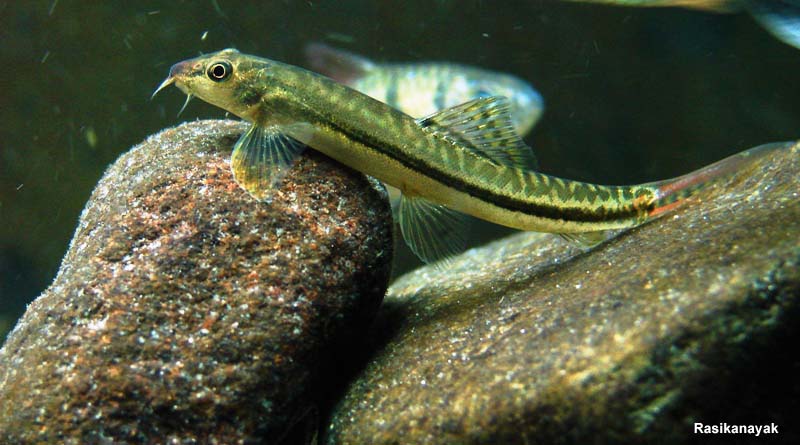
'Nemacheilus' anguilla
Annandale, 1919
Max length50mm SL2.0in SLTank60 × 30cm24 × 12inTemp20–25°C68–77°FpH6.0–7.5'N.' anguilla can be told apart from other Indian members of the genus by possessing dark flank markings which are partially or completely merged to form a lateral stripe, and an almost-complete lateral line extending to the anal-fin. Kottelat (2012) states that its generic placement requires additional study hence the genus name i...
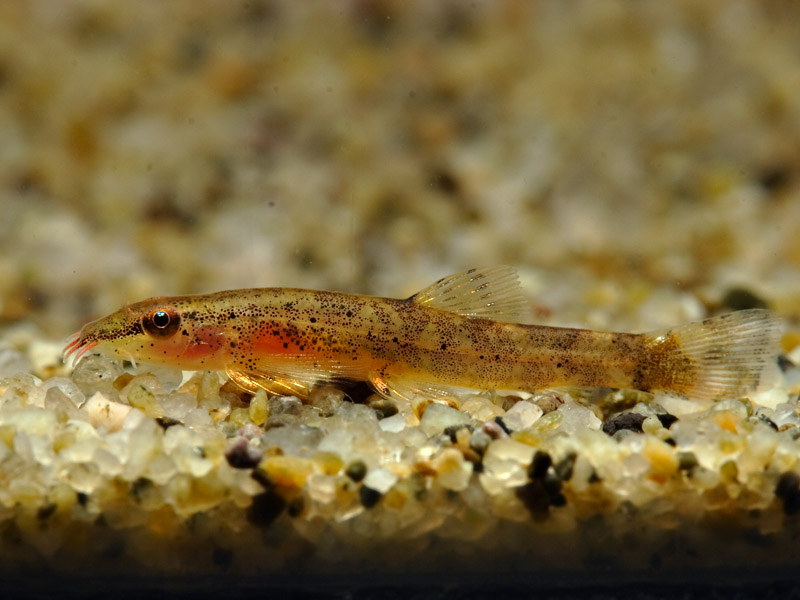
Neohomaloptera johorensis
Herre, 1944
Max length25mm SL1.0in SLTank45 × 30cm18 × 12inTemp23–26°C73–79°FpH3.5–6.5We're unsure if this species has ever been traded on a commercial basis though we know of several private collectors who've maintained it. It's difficult to confuse with any other balitorid due to the small adult size and distinctive orange to reddish-brown body colouration, and was originally described as a subgenus by Herre (1944) before Silas (1953) raised it to full genus status. It was later syonymised with Homaloptera by Alfred (1969) but has been generally accepted as a distinct, valid genus since Roberts (1989).