Results for “sp.”
Type a name: scientific, common, or one a species used to go by. Or narrow the catalogue with the filters.
Filters
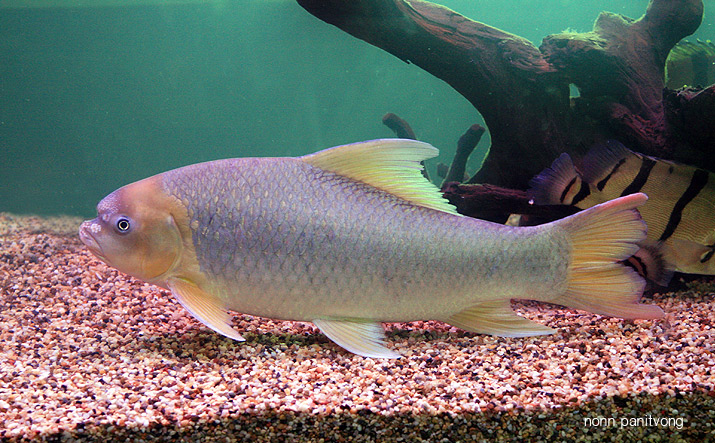
Incisilabeo behri
Fowler, 1937
Max length550mm SL22in SLTanknot recordedTemp20–26°C68–79°FpH6.0–8.0The monotypic genus Incisilabeo is separated from the closely-related taxon Bangana by presence of a unique and conspicuous transverse notch across the top of the head, comparable in position to the ethmoid furrow in Bangana species. This notch approaches the eye, and the top of the head bulges forward, with the nostrils located partially beneath this projection and immediately anterior to the eyes. Tubercles cover the upper portion of the rostral fold, lower part of the notch, and upper surface of the forehead projection...
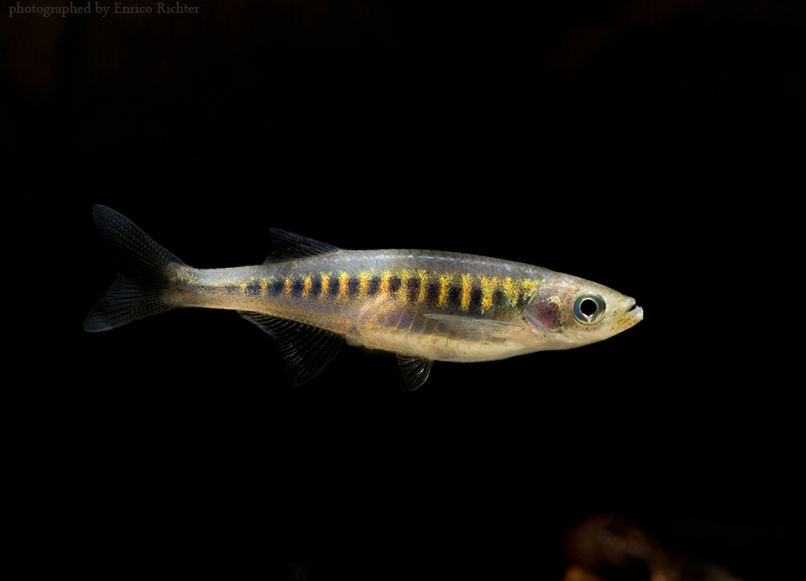
Inlecypris auropurpurea
Annandale, 1918
Max length80mm SL3.1in SLTank90 × 30cm36 × 12inTemp20–24°C68–75°FpH6.0–8.0Originally described as a member of Barilius (Annandale, 1918) but Howes (1980a) considered it more closely related to cheline cyprinids (Chela and Laubuca spp.) based on morphological characters and erected the genus Inlecypris for it (Howes, 1980b). Fang (2003) supported Howes' conclusions in her 2003 phylogenetic study of the genus Danio, hypothesising that Inlecypris and Chela together form a sister group to Devario.
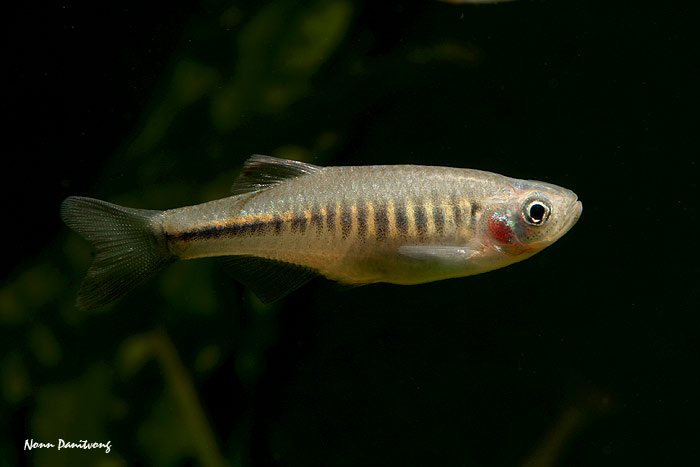
'Inlecypris' maetaengensisFire Bar 'Danio'
Fang, 1997
Max length50mm SL2.0in SLTank75 × 30cm30 × 12inTemp20–26°C68–79°FpH6.0–8.0A peaceful species suited to a well-chosen community aquarium. There are plenty of potential tankmates including many cyprinids, loaches, cichlids, catfishes and characins, although as always proper research is essential in order to avoid problems.
Ivanacara adoketaZebra Acara
authority not recorded
Max length130mm SL5in SLTanknot recordedTemp22.2–28.9°C72–84°FpHnot recordedThis species was previously included in the genus Nannacara before being moved to the newly-erected taxon Ivanacara by Römer and Hahn (2006)....
Julidochromis reganiRegan's Julie
authority not recorded
Max length300mm SL12in SLTank120 × 30cm48 × 12inTemp23–27°C73–81°FpH7.5–9.0Julidochromis are commonly known as "Julies" in the hobby. Despite being the largest species of Julie this is actually the least aggressive member of the genus. As with other Julies, large water changes should be avoided as it can cause mated pairs to turn on one another. J.regani may also be seen for sale labelled as Striped Julie or Convict Julie. Several geographical morphs are available. Apparently, the yellower of these are found in shallower water with the darker forms inhabit...
Knodus borkiBlue Tetra
authority not recorded
Max length50mm SL2.0in SLTank75 × 38cm30 × 15inTemp22–26°C72–79°FpH5.5–7.0The colour of this species is often so intense that many who first see it for sale assume it to be artificially coloured. It is currently the only representative of the genus known.
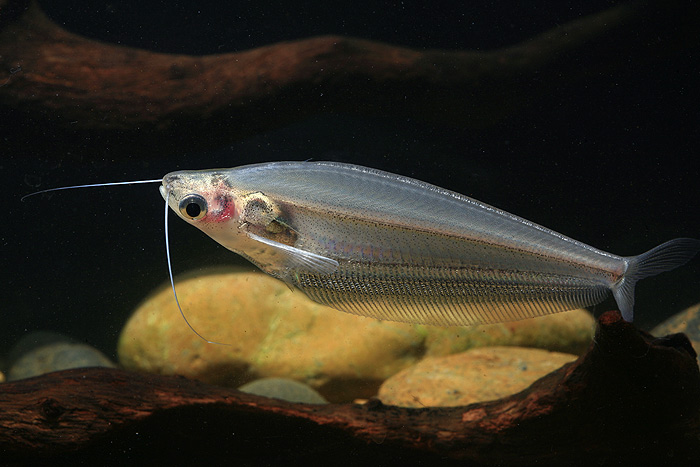
Kryptopterus bicirrhis
Valenciennes, 1840
Max length150mm SL6in SLTank120 × 45cm48 × 18inTemp20–28°C68–82°FpH6.0–7.5Generally peaceful though it may predate on smaller fishes and is somewhat timid so does not compete well with much larger, robust or otherwise boisterous species. Peaceful, comparably-sized cyprinids, loaches and other catfishes perhaps constitute the best options but be sure to research your choices thoroughly prior to purchase.
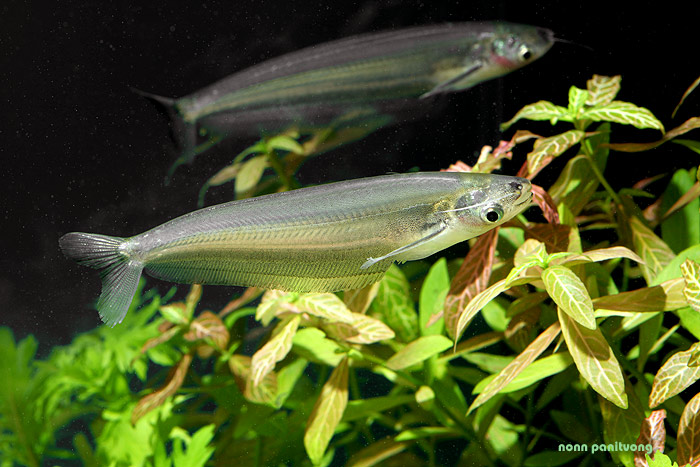
Kryptopterus geminus
Ng, 2003
Max length171mm SL7in SLTank150 × 45cm60 × 18inTemp20–28°C68–82°FpH6.0–7.5This species is likely to be traded for aquaria but probably misidentified as the very similar-looking K. cyrptopterus with which wild populations were formerly considered conspecific. These two are closely-related and can be distinguished from congeners by the dorsal profile lacking a nuchal concavity (vs. possessing a nuchal concavity) and possessing short maxillary barbels (extending to the pectoral-fin base vs. ext...
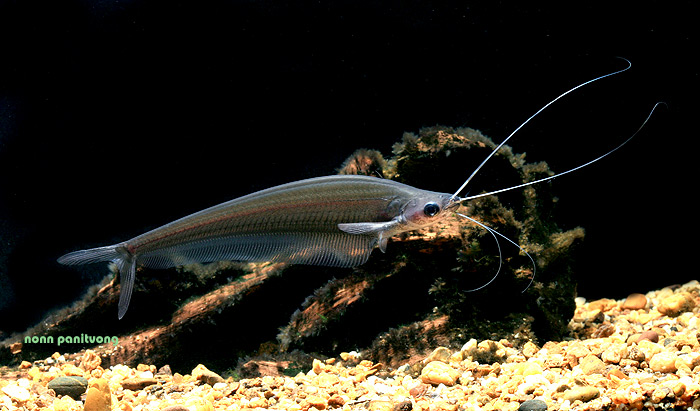
Kryptopterus limpok
Bleeker, 1852
Max length260mm SL10in SLTank240 × 60cm96 × 24inTemp20–28°C68–82°FpH6.0–7.5Type locality is 'Palembang, Sumatra, Indonesia', but this species is widely-distributed throughout much of Southeast Asia including major river systems in Thailand, Laos, Cambodia, Vietnam and Peninsular Malaysia plus the Greater Sunda Islands of Sumatra, Borneo and Java. It's been extensively recorded from the Mekong, Cha...
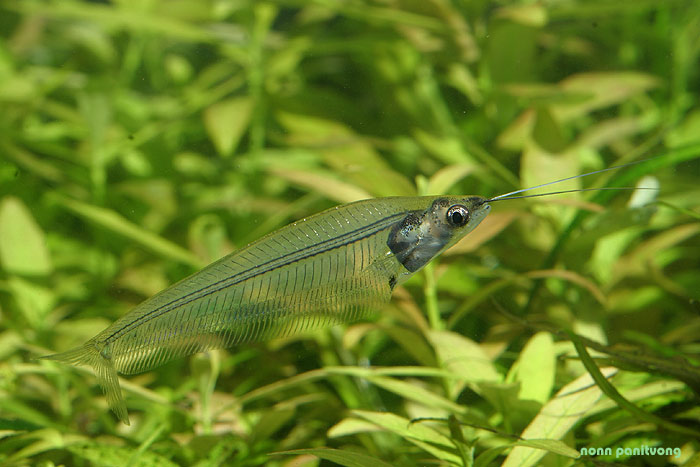
Kryptopterus vitreolusGlass Catfish
Ng & Kottelat, 2013
Max length65mm SL2.6in SLTank90 × 30cm36 × 12inTemp20–26°C68–79°FpH4.0–7.0This species has been available in the trade for decades during which time it's been widely misidentified as the valid congeners K. bicirrhis or, more recently, K. minor. Its identity was not resolved until early 2013 meaning you will find it under one of these two names in the majority of literature published prior to that date. Other trade names include 'Asia...
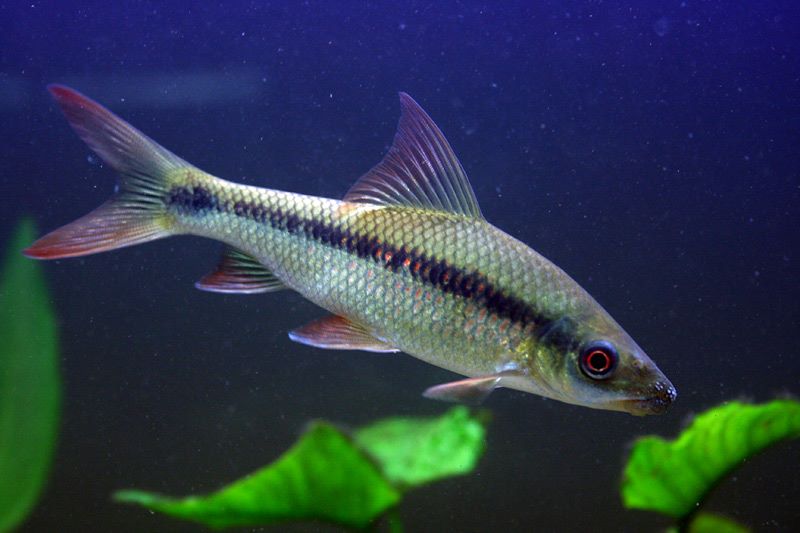
Labeo angra
Hamilton, 1822
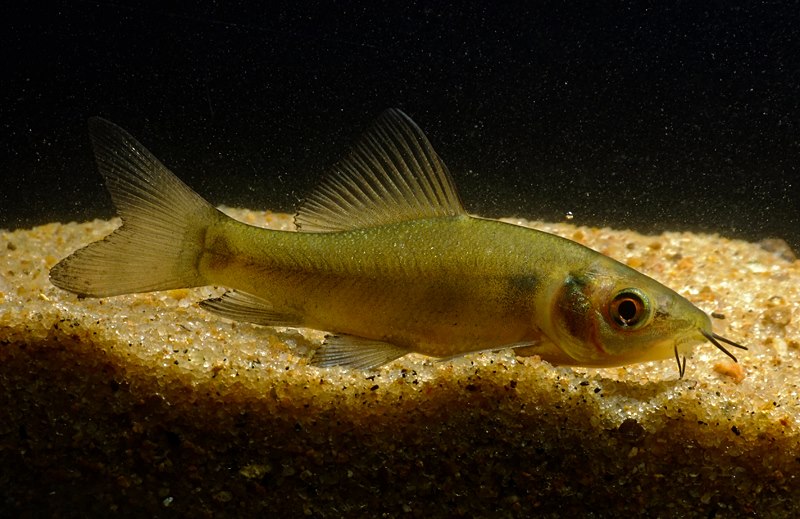
Max length200mm SL8in SLTanknot recordedTempnot recordedpHnot recordedThis species can be identified by colour pattern comprising a brownish dorsal surface, yellowish flanks and abdomen, and a black to bluish lateral stripe extending from the eye to the caudal-fin base.
Labeo calbasuOrangefin Labeo
Hamilton, 1822
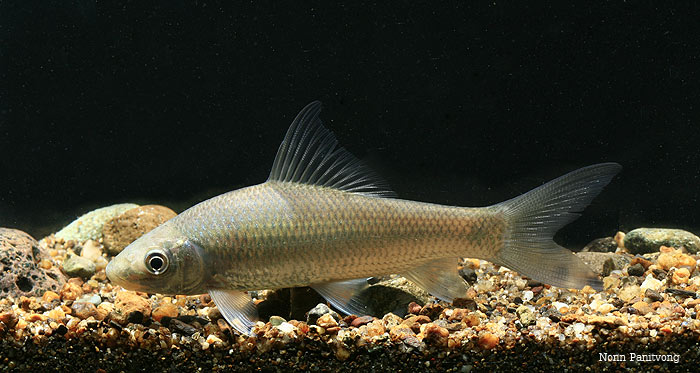
Max length800mm SL31in SLTanknot recordedTempnot recordedpHnot recordedThis species is extremely widespread and has been recorded from Pakistan, Nepal, most of India, Bangladesh, Myanmar and southern China. Type locality is 'Bengal and western provinces, India'.
Labeo pierrei
Sauvage, 1880
Max length800mm SL31in SLTanknot recordedTempnot recordedpHnot recordedThis species can be distinguished by the following characters: juveniles with brown body and dark marking at base of caudal-fin; 37-42 + 3-4 lateral line scales; 11½ branched dorsal-fin rays; 7½ scale rows between lateral line and dorsal-fin origin; 20-25 predorsal scales; dorsal-fin relatively small with anterior branched rays shorter than head in juveniles, slightly longer than head in adults.
Laemolyta taeniataStriped Headstander
Kner, 1858
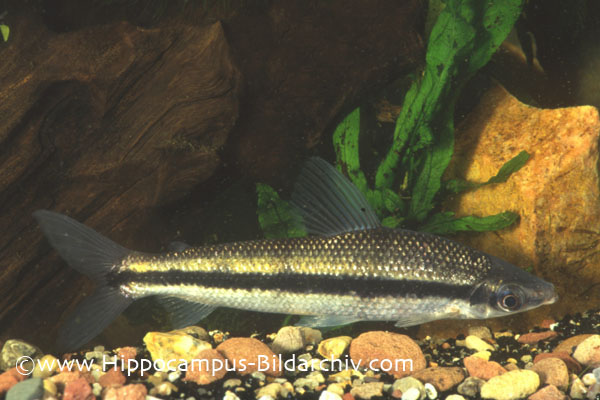
Max length288mm SL11in SLTank120 × 60cm48 × 24inTemp20–28°C68–82°FpH4.0–7.5L. taeniata is the largest-growing and second most widely-distributed member of the genus although it's a rarely-seen in the aquarium trade. It can be distinguished from all congeners since it uniquely possesses 5 lateral scale rows between the lateral line and dorsal-fin origin (vs. 4 or 6–8 in the remaining species).
Lamontichthys llanero
authority not recorded
Max length200mm SL8in SLTank120 × 30cm48 × 12inTemp24–27°C75–81°FpH6.0–7.0A rarely seen species in the hobby.
Lamprologus callipterus
authority not recorded
Max length150mm SL6in SLTank90 × 30cm36 × 12inTemp24–27°C75–81°FpH7.5–9.0In nature, the spawning nests of large male fish may measure several meters across and contain hundreds of snail shells. Interestingly, when they are protecting brooding females males do not eat and eventually become so weak that their territories are taken over by stronger fish. Immature and sub-dominant males can be seen over areas of open substrate where they feed voraciously in large shoals. Females are only ever found in areas containing the nests of dominant males. It appears that the ...
Lamprologus stappersi
authority not recorded
Max length63mm SL2.5in SLTanknot recordedTemp23–27°C73–81°FpH7.5–9.0This fish was originally thought to be a morph of L. ocellatus but has now been described as a distinct species. It is still occasionally offered for sale as "pearly ocellatus" and may also be seen under the invalid name L. meleagris....
Laubuka dadiburjoriDadio
Menon, 1952
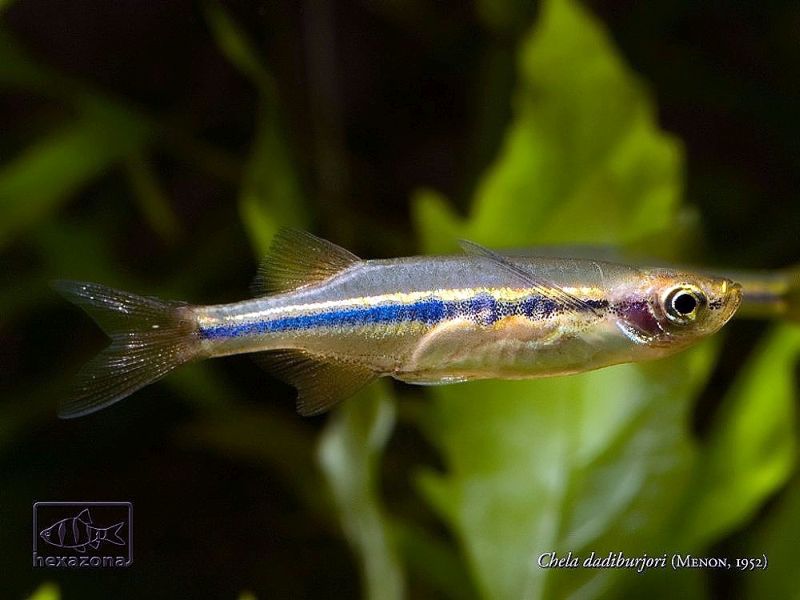
Max length30mm SL1.2in SLTank90 × 30cm36 × 12inTemp20–24°C68–75°FpH6.0–7.5It can be distinguished from other members of the genus by the following characters: lateral line absent or perforating only 2-5 scales; pharyngeal teeth hooked; body size small, not exceeding 30 mm SL; body depth less than 25 % SL; colour pattern comprising a dark bluish lateral stripe extending from the eye to the caudal peduncle, typically, but not always, forming 2-5 circular spots along its length.
Leiarius pictusSailfin Pim
authority not recorded
Max length600mm SL24in SLTank240 × 90cm96 × 36inTemp22–26°C72–79°FpH6.2–7.6Also known as the painted, saddle or marbled sailfin catfish, it's debatable as to whether this species should be considered an aquarium subject at all given its eventual size. All too often, juveniles are sold without adequate information regarding their long term care. These cats can and will attain something close to their maximum size in captivity, and will do so quite quickly. The myth that they will only grow to match the size of the tank they're kept in is just that. It's a...
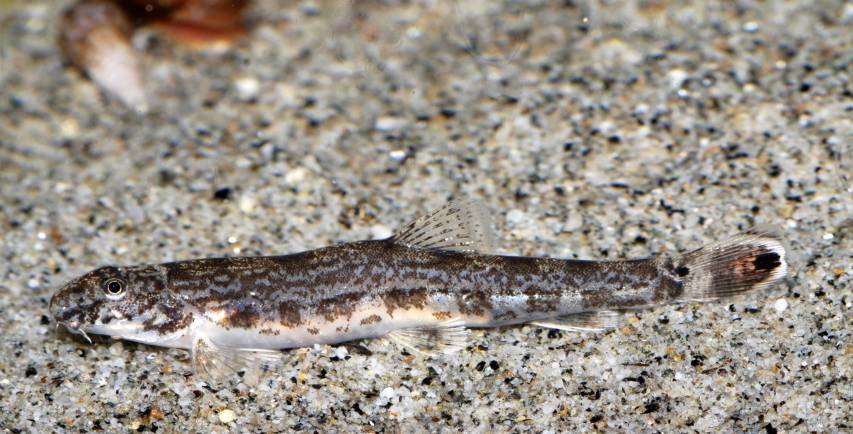
Lepidocephalichthys annandalei
Chaudhuri, 1912
Max length45mm SL1.8in SLTank45 × 30cm18 × 12inTemp22.5–26°C73–79°FpH5.5–7.5Sand-dwelling loaches from the families Botiidae, Cobitidae and Nemacheilidae are also suitable but proper research is essential as some can be excessively territorial or otherwise aggressive. A community based around fishes from its natural waters could include species such as Badis badis,...