Craterocephalus stercusmuscarum
Fly-specked Hardyhead
Formerly Craterocephalus stercusmuscarum stercusmuscarum
Last revised 2026Edit this page
On this page11 sections
Quick factsEdit
Difficulty4 of 8 measures
- Space
- medium tank
- Water
- flexible
- Temp
- unknown
- Diet
- unknown
- Temperament
- peaceful
- Social
- needs to be in a group
- Compatibility
- unknown
Other demands
Each of these can raise the rating on its own, whatever the measures above say.
- Hardiness
- unknown
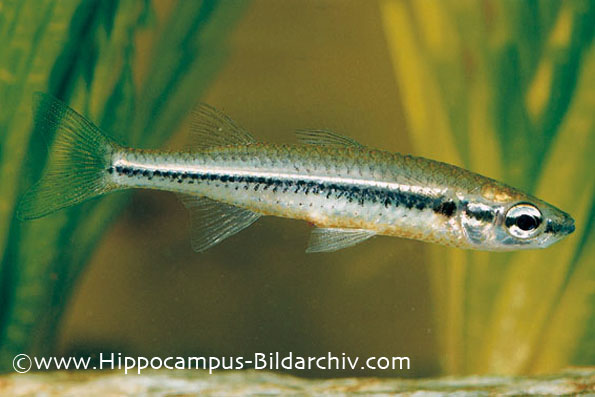
The fly-specked hardyhead, Craterocephalus stercusmuscarum, is an atherinid endemic to Australia. It ranges from the Northern Territory to southern Queensland and forms large shoals over barren sand, mud or clay in streams, rivers, lakes and ponds. Skittish and rarely seen in the trade outside Australia, it does far better in a shoal of at least 8-10. Genetic differences between neighbouring populations are in some cases large enough to suggest several distinct species.
Distribution
EditEndemic to Australia, from the Northern Territory to Southern Queensland.
Habitat
Write a noteEditInhabits a range of biotopes, including streams, rivers, lakes and ponds. Unlike many Australian freshwater species, its range penetrates quite far inland, including areas above major waterfalls. It is most often seen in relatively sparse habitats, swimming in large shoals over barren substrates of sand, mud or clay.
Aquarium size
Write a noteEditAn active species. A 76 ∗ 30 ∗ 30 cm30 ∗ 12 ∗ 12 in - ~68 litres~18 US gal tank is big enough to house a small group.
Maintenance
Write a noteEditProivide as much swimming space as possible. Decor can be quite sparse, although you can keep it in a planted setup if you prefer. High water quality is essential to the well-being of this species, so regular partial water changes are essential.
Water conditions
EditTemperature: In nature, the species has been recorded over an incredible range of temperatures, from 48-109°F (9-43°C)! Somewhere between 75-86°C (24-30°C) is probably best in the aquarium.
pH: Has been collected in waters with pH over the range 4.0-8.1 in nature. Somewhere around 6.0-6.5 is recommended in captivity. It tends to lose colour if kept in alkaline water.
Hardness: 5-10°H
These recommendations come from this profile’s own figures. They contain affiliate links, so we may earn a commission.
Diet
Write a noteEditThe guts of wild specimens have been found to contain a mixture of both aquatic and terrestrial insects, zooplankton and plant matter. In the aquarium, it proves unfussy, although it should be offered small live and frozen foods regularly.
Behaviour and compatibility
Write a noteEditVery peaceful and suitable for many community setups, given its relatively small size. It makes an ideal tankmate for other Australian species such as rainbowfish and freshwater gobies. It can be quite skittish and does far better when kept in a shoal of at least 8-10. The males will also be encouraged to display their best colours in the company of conspecifics. Try to provide 2-3 females per male.
Sexual dimorphism
Write a noteEditFemales are rounder-bellied than males when full of eggs. Males exhibit a more intense yellow colouration below the lateral line, especially when inbreeding condition.
Reproduction
Write a noteEditHas been achieved, albeit rarely. In truth this is probably more to do with the frequency with which it is kept, rather than it being a particularly difficult species to spawn.
Spawning occurs among aquatic plants, so a setup with no substrate and a few clumps of fine-leaved plants such as java moss is a good place to start. Set the temperature to around 26 °C79 °F. An air-powered sponge filter gently bubbling away is the only other thing required.
The adult fish are best conditioned as a group in a separate aquarium with plenty of live and frozen foods. As the fish come into condition, the females will appear noticeably plumper, and the males intensify in colour. Select the fattest, best-coloured pair for breeding and introduce them to the spawning tank.
No precise details of the spawning process are available. The species has an extended breeding season in nature, so expect the pair to spawn daily for a period of several days. The female apparently deposits around 20 eggs per spawning. Like the eggs of some rainbowfish, these are attached to the plants by a thin filament. They hatch in around a week. Remove the parents after a few days, to allow the female to recover and prevent them eating the eggs. The fry should be large enough to accept microworm or brine shrimp nauplii when they have used up their yolk sacs.
Notes
EditA rarely seen species in the trade, although it's kept quite often by Australian hobbyists. Members of this genus are thought to have a more ancient association with Australian freshwaters than most others found in these habitats. Craterocephalus also contains the most species of any Australian freshwater fish genus.
It has been shown that there are quite large genetic differences between groups of the species living in close proximity to each other, and even sharing the same waters. In some cases, these are big enough to suggest that we may actually be dealing with several distinct species. Populations in the Johnstone River in Northern Queensland, for example, differ in both reproductive strategy and growth. Other similarly intriguing anomalies are seen elsewhere. This may also help to explain why depending on collection locality, the species can be found thriving over a very large range of water parameters. Currently only a single subspecies, C. stercusmuscarum fulvus is considered valid. Further taxonomic revision is likely in the future.
Species images · 2
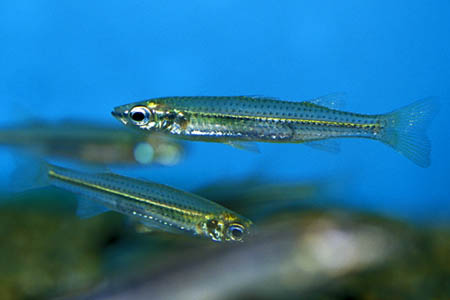
These photographs are used with each photographer's permission.
Send a photographHow the name has changed
Renamed from Craterocephalus stercusmuscarum stercusmuscarum to Craterocephalus stercusmuscarum.
2026Eschmeyer's Catalog of Fishes: genera, species, references
Distribution
Profile completeness20 of 24
83% complete
Also missing: etymology.
Community
Questions about Craterocephalus stercusmuscarum?
Ask on Discord