Dekeyseria picta
Butterfly Plec · L168 · L052
Formerly Dekeyseria brachyura
On this page11 sections
Quick facts
Difficulty3 of 8 measures
- Space
- large tank
- Water
- flexible
- Temp
- needs a steady temperature
- Diet
- unknown
- Temperament
- unknown
- Social
- unknown
- Compatibility
- unknown
Other demands
Each of these can raise the rating on its own, whatever the measures above say.
- Hardiness
- unknown
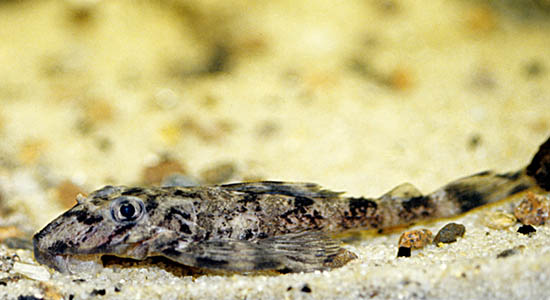
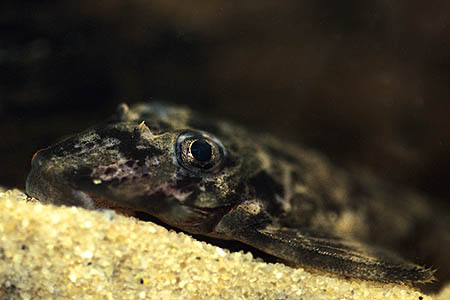
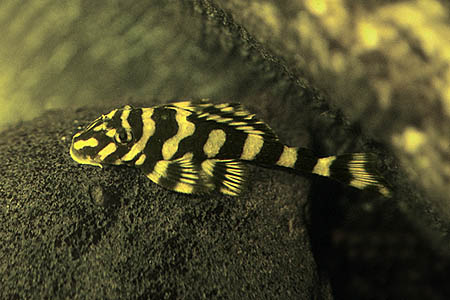
The butterfly plec, Dekeyseria picta (L168), is a flattened loricariid catfish from the Rio Negro in Brazil. The Rio Orinoco fish traded as L052 is now included in the same species. Also called the chameleon plec, it changes colour to match the substrate and other surfaces and has a distinctive night-time colouration. It needs well-oxygenated water with plenty of movement.
Distribution
Habitat
Aquarium size
120 ∗ 30 ∗ 30 cm48 ∗ 12 ∗ 12 in - ~108 litres~29 US gal.
Maintenance
This species needs well-oxygenated water, preferably with a high degree of movement. Provide lots of cover in the form of driftwood roots and branches, and if you wish, smooth rocks and plants. If kept in a more general setup, it won't thrive in cool or poorly-oxygenated water.
Water conditions
Temperature: 25 – 28 °C77 – 82 °F.
pH: 5.6-7.0
Hardness: 2-12°
These recommendations come from this profile’s own figures. They contain affiliate links, so we may earn a commission.
Diet
Primarily vegetarian, so the bulk of the diet should be composed of vegetable matter in both fresh (cucumber slices, blanched spinach etc.) and dried (algae wafers, spirulina tablets etc.) forms. It will accept small live and frozen foods such as bloodworm or daphnia and these can also be offered regularly.
Behaviour and compatibility
A decent choice for the community tank. In a biotope setup good tankmates include many characins, reophilic cichlids such as Retroculus or the African Steatocranus and other Loricariids requiring similar conditions. It can also be kept in a more general community, if you wish, provided the water is well-aerated.
Sexual dimorphism
Mature males develop longer odontotes along the nose and pectoral spines than females.
Reproduction
Not often achieved in the hobby, but by no means impossible. Use soft, acidic water and arrange the tank so there are as many caves and hiding places as possible. The eggs are laid within a cave selected by the male. He tends them until they hatch, fanning them with his fins and defending against intruders.
They hatch in 7-10 days, and the fry use up their small yolk sacs very quickly. After this, they will quite happily graze on the same foods as the parents, but these must be provided constantly for the initial period. Small, daily water changes are also required, as the fry are very sensitive to water quality.
If you're having trouble spawning these fish, try conducting a large (50-70%) water change with cool water, simulating the infux of colder water the rainy season brings in nature. Repeat every few days and this can often induce spawning.
Notes
Formerly known as Peckoltia brachyura or P. picta, this species is also known as the pretty peckoltia, flounder plec (in reference to its flattened shape) or chameleon plec. This latter name is quite appropriate, as the fish will change colour depending on the colour of the substrate and other surfaces. It also has a distinctive night time colouration.
The Rio Orinoco fish traded as L052 is now included in the same species, and the two regions' waters become connected during the wet season. Fish from the Rio Negro tend to have more clearly defined striped patterning. To add to the confusion, some sources list it as a member of the invalid genus Zonancistrus.
When buying Loricariids always check that the fish has a rounded belly and that its eyes aren't sunken, as these are classic signs of emaciation in newly imported specimens. One final point to note is that extreme care should be taken when netting these as the odontotes on the snout and pectoral spines can easily become entangled in the mesh of aquarium nets.
Species images · 3
Used with the photographer’s permission. Not licensed for reuse.
How the name has changed
Dekeyseria brachyura is a synonym of D. picta (Silva and Rapp Py-Daniel 2018)
Profile completeness18 of 24
75% complete
Also missing: a recorded distribution, etymology.
Community
Questions about Dekeyseria picta?
Ask on Discord