Vieja zonata
Oaxaca Cichlid
Last revised 2026Edit this page
On this page11 sections
Quick factsEdit
Difficulty4 of 8 measures
- Space
- very large tank
- Water
- needs a steady pH
- Temp
- flexible
- Diet
- unknown
- Temperament
- unknown
- Social
- unknown
- Compatibility
- unknown
Other demands
Each of these can raise the rating on its own, whatever the measures above say.
- Hardiness
- hardy
- Needs a very large tank
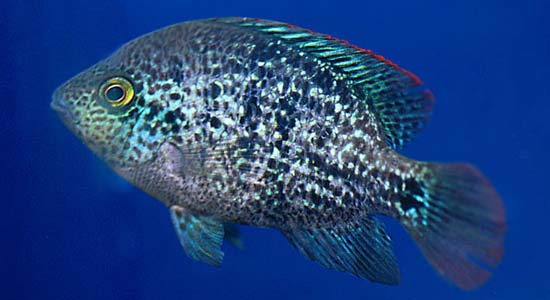
The Oaxaca cichlid, Vieja zonata, is a large cichlid that appears to be endemic to the River Tehuantepec drainage in Mexico. Hardy and easy to keep, though moderately aggressive, it is only occasionally available through specialist cichlid dealers. It can be kept with similarly sized cichlids in a large enough aquarium, and will eat any fish small enough to fit into its mouth.
Distribution
EditHabitat
Write a noteEditAppears to be endemic to the River Tehuantepec drainage in Mexico.
Aquarium size
Write a noteEdit48" x 24" x 24" (120cm x 60cm x 60cm) - 500 litres. For a pair of adult fish.
Maintenance
Write a noteEditTank setup is not critical as the fish will arrange the decor to suit itself. Rocks, bogwood and branches can be used but ensure they are securely positioned to prevent the aquarium glass being broken, should the fish dislodge them. Sand or fine gravel substrate is recommended. Lighting levels are not critical and decent filtration should be provided.
Water conditions
EditTemperature: 23 – 30 °C73 – 86 °F
pH: 7.0 - 7.5
Hardness: Up to 20°H
Diet
Write a noteEditVegetable matter in the form of spirulina or algae wafers should form an important part of the diet, as this fish is primarily herbivorous in nature. Will also accept cichlid pellets, live foods such as bloodworm and brineshrimp and meaty treats such as prawn and mussel.
These recommendations come from this profile’s own figures. They contain affiliate links, so we may earn a commission.
Behaviour and compatibility
Write a noteEditIn a large enough aquarium, with sufficient space for territories, it is possible to keep this fish in groups with other similarly-sized cichlids and robust species. Succes rates are likely to be increased if all the fish are added as juveniles and grown on together. Is likely to eat any fish small enough to fit into its mouth.
Sexual dimorphism
Write a noteEditMales are larger and more colourful. In common with many Central Americans, the male also develops dorsal and anal fin extensions and a nuchal hump.
Reproduction
Write a noteEditThe main challenge inbreeding this species is getting the pair to co-exist in the same tank! If this can be achieved, then the fish should spawn readily. The pair will prepare a site for spawning - usually a large stone or sometimes inside a cave. The site will be cleaned and any detritus or other obstructions removed. Spawning will then begin on the prepared site and during spawning the male can be aggressive towards the female. This is normal but the female should be removed if the violence becomes excessive. Eggs hatch in 2 - 3 days and fry are free swimming approximately 4 days thereafter. Fry should be offered newly-hatched brineshrimp as an initial food and from there progressed to microworm, fry foods and crushed adult flake / pellets. The adults make excellent parents but may begin to grow aggressive towards their brood if they are ready to breed once again. Fry should be removed at this point.
Notes
EditA hardy and easy to keep cichlid, albeit a moderately aggressive one.
Rarely available in aquatic stores, this fish is occasionally available through specialist cichlid dealers.
Species images · 1
These photographs are used with each photographer's permission.
Send a photographProfile completeness16 of 24
Community
Questions about Vieja zonata?
Ask on Discord