Every species
Filters
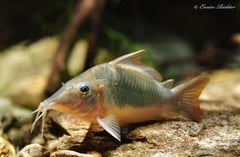
Brochis multiradiataHognose 'Brochis'
(Orcés V., 1960)
Max length100mm SL3.9in SLTank120 × 45cm48 × 18inTemp20–26°C68–79°FpH6.0–7.5Known in the hobby as the hognose 'Brochis', Brochis multiradiata, long known as Corydoras multiradiatus, is an armoured catfish from the northwestern Amazon basin in Ecuador and Peru. Formerly placed in Brochis, it has an extended snout and 17-18 dorsal-fin rays, against 6-8 in other Corydoras. Little is known of its habitat, but it is likely to live in smaller tributaries and still waters such as backwaters and oxbows, as closely related species do.
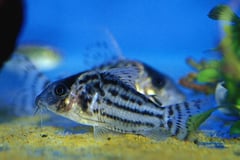
Brochis ornata
authority not recorded
Max length70mm SL2.8in SLTank60 × 38cm24 × 15inTemp22–26°C72–79°FpH6.0–7.2Brochis ornata, long known as Corydoras ornatus, is a larger armoured catfish from the lower Rio Tapajós basin in Brazil, growing to around 70 mm SL. Its habitat is not recorded and no captive breeding information is available. Very peaceful, it should be kept in a group over fine sand, with plenty of cover and well-oxygenated water.
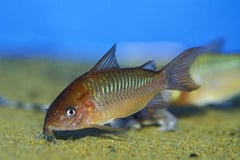
Brochis pantanalensis
authority not recorded
Max length80mm SL3.1in SLTank75 × 30cm30 × 12inTemp22–26°C72–79°FpH6.5–7.5Brochis pantanalensis, long known as Corydoras pantanalensis, is an armoured catfish from the Bolivian part of the Pantanal wetland, also referred to by its C-number, C005. Its habitat is typified by crystal clear waters and an abundance of aquatic vegetation. Like other corys it is sensitive to dirty substrates and can lose its barbels in substandard conditions, and it should be kept in a group of at least six.
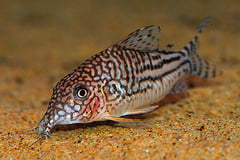
Brochis pinheiroi
authority not recorded
Max length65mm SL2.6in SLTank60 × 38cm24 × 15inTemp25–28°C77–82°FpH6.0–7.2Brochis pinheiroi, long known as Corydoras pinheiroi, is an armoured catfish from Rondônia, Brazil, with a pattern similar to that of Hoplisoma sterbai. It lacks the orange pectoral spines of that species and is rare in the hobby. Like other corys it is peaceful, should be kept in a group of at least six, and needs well-oxygenated water and a clean substrate.
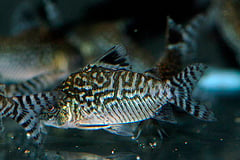
Brochis reticulataReticulated Cory
authority not recorded
Max length60mm SL2.4in SLTank60 × 38cm24 × 15inTemp22–26°C72–79°FpH6.0–7.2The reticulated cory, Brochis reticulata, long known as Corydoras reticulatus, is an armoured catfish from the lower Amazon basin in Brazil, also known as the network cory. One of the commoner species seen in dealers' tanks, it is a good cory for the beginner. Very peaceful, it should be kept in a group of at least six, and like other corys it is sensitive to dirty substrates.
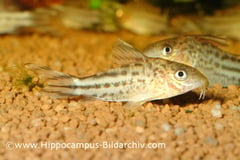
Brochis robineaeFlagtail Cory
authority not recorded
Max length70mm SL2.8in SLTank60 × 38cm24 × 15inTemp21–26°C70–79°FpH6.5–7.5The flagtail cory, Brochis robineae, long known as Corydoras robineae, is an armoured catfish from the upper Rio Negro in Brazil, also known as the bannertail cory. It is found in the main river and its tributaries. Not the easiest Corydoras to induce to spawn, it can still be bred in a similar way to many other species in the genus. Very peaceful, it should be kept in a group of at least six.
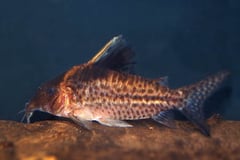
Brochis robustaRobust Cory
authority not recorded
Max length95mm SL3.7in SLTank75 × 30cm30 × 12inTemp22–26°C72–79°FpH6.0–7.0Brochis robusta, long known as Corydoras robustus, is an armoured catfish endemic to the Rio Purus drainage in Brazil. It grows to around 95 mm SL, and as they mature males in particular develop an extended first dorsal-fin ray. It is not seen all that often in the trade, and in nature it inhabits small tributaries, creeks, areas of flooded forest and sand banks.
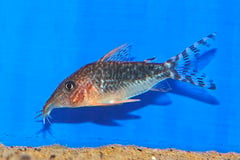
Brochis seussi
authority not recorded
Max length70mm SL2.8in SLTank60 × 38cm24 × 15inTemp22–26°C72–79°FpH6.0–7.2Brochis seussi, long known as Corydoras seussi, is an armoured catfish from the Rio Mamoré basin and Rio Poranga in Brazil, also referred to by its C-number, C027. Very similar in appearance to Hoplisoma gossei, it can be distinguished by its less rounded snout. Very peaceful, it should be kept in a group of at least six.
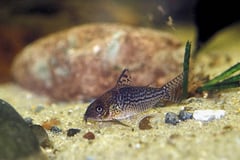
Brochis sodalisFalse Network Cory
authority not recorded
Max length60mm SL2.4in SLTank45 × 30cm18 × 12inTemp22–26°C72–79°FpH6.0–7.0The false network cory, Brochis sodalis, long known as Corydoras sodalis, is an armoured catfish from the upper Amazon in Loreto, Peru, and Amazonas state, Brazil. It inhabits small tributaries, creeks, pools and areas of flooded forest. Very peaceful, it is best kept in a group of at least six, and it can be spawned in a similar way to other Corydoras.
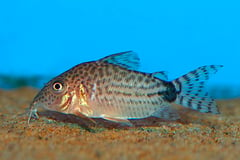
Brochis spectabilisMillenium Cory
authority not recorded
Max length70mm SL2.8in SLTank60 × 38cm24 × 15inTemp23–27°C73–81°FpH6.5–7.2The millennium cory, Brochis spectabilis, long known as Corydoras spectabilis, is an armoured catfish from the Guaporé River basin in Brazil. The name comes from its being the first catfish species described in 2000, although the description appeared in late 1999 in a journal dated January 2000. Gastrodermus guapore, C. ourastigma, Hoplisoma simile and H. caudimaculatum can be confused with it, but B. spectabilis has spotted patterning on the body and a caudal spot with a well-defined edge.
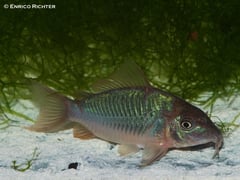
Brochis splendensEmerald 'Brochis'
(Castelnau, 1855)
Max length80mm SL3.1in SLTank120 × 45cm48 × 18inTemp20–28°C68–82°FpH5.0–8.0The emerald 'brochis', Brochis splendens, long known as Corydoras splendens, is an armoured catfish recorded throughout much of the Amazon basin in Brazil, Peru, Ecuador and Colombia. It is sometimes called the 'common brochis', and juveniles are sometimes traded as 'hi-fin cory' for their enlarged dorsal fin. Its 10 to 12 dorsal-fin rays separate it from B. britskii and B. multiradiata, the other two species long kept in Brochis, and certain populations are thought likely to represent distinct species.
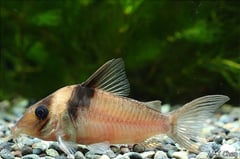
Brochis virginiaeMiguelito Cory
(Burgess, 1993)
Max length60mm SL2.4in SLTanknot recordedTemp22–28°C72–82°FpH6.0–7.5The Miguelito cory, Brochis virginiae, long known as Corydoras virginiae, is an armoured catfish considered endemic to the río Ucayali drainage in Peru. It is sometimes referred to as 'Virginia's catfish', Corydoras sp. 'Sangama' or 'Zangama', and prior to description it was misidentified as both Corydoras bicolor and C. delphax. Peaceful and gregarious, it should be kept in a group of at least four to six.

Brycon cephalusRed-tailed Brycon
authority not recorded
Max length220mm SL9in SLTank210 × 60cm84 × 24inTemp22–26°C72–79°FpH5.5–7.5The red-tailed brycon, Brycon cephalus, is a large characid from the upper Amazon basin in Peru, Bolivia and Brazil, known in Brazil as the matrinxã. It migrates twice a year over large distances between nutrient-poor tributaries and silt-laden white water rivers, where it spawns. B. rubricauda and B. orbignyanus resemble it closely. An active, pelagic shoaling fish with sharp teeth, it grows to 220 mm SL and needs a very large, well-covered tank as it jumps.
Bryconaethiops boulengeriBoulenger's Featherfin Tetra
authority not recorded
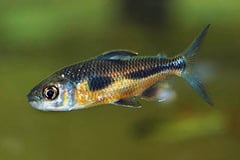
Max length250mm SL10in SLTank120 × 45cm48 × 18inTemp22–26°C72–79°FpH6.0–8.0Boulenger's featherfin tetra, Bryconaethiops boulengeri, is a large alestid characin from the Congo river basin and Lake Tanganyika. Rarely imported, it is a peaceful shoaling species for a community of larger fish, and is farmed commercially for food in its native countries. It grows to 250 mm SL.

Bryconalestes longipinnisLong-finned Tetra
(Günther, 1864)
Max length125mm SL5in SLTank120 × 38cm48 × 15inTemp22–26°C72–79°FpH6.0–7.5The long-finned tetra, Brycinus longipinnis, is an alestid characin from West Africa, found from Gambia to the Democratic Republic of Congo and Gabon. It inhabits large rivers and, unusually for the genus, also moves into smaller streams and lightly brackish estuaries. Not imported often, it ships poorly but usually proves hardy once acclimatised, though it is very sensitive to deteriorating water conditions.

Buccochromis lepturusSlender Tail Hap
authority not recorded
Max length400mm SL16in SLTank150 × 45cm60 × 18inTemp24–27°C75–81°FpH7.5–8.8The slender tail hap, Buccochromis lepturus, is a large cichlid endemic to Lake Malawi, also known as the green lepturus. Adults live in deeper water throughout the lake, though juveniles can be seen in quite shallow water around the shorelines. Its pelagic nature makes it difficult to catch for export, so it is rarely seen for sale. It grows to 400 mm SL, and small fish will end up on the menu.

Buccochromis nototaeniaStripeback Hap
authority not recorded
Max length225mm SL9in SLTank120 × 45cm48 × 18inTemp24–27°C75–81°FpH7.5–8.8The stripeback hap, Buccochromis nototaenia, is a predatory cichlid endemic to Lake Malawi. It hunts juveniles of other species over sandy substrates just off the shoreline, often driving them into shallower water. It is rarely seen in the trade because it retreats at great speed into deeper water at the first sign of threat, which makes it hard to collect.
Bunocephalus coracoideusBanjo Catfish
authority not recorded
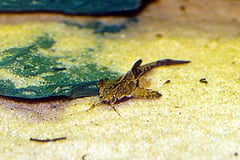
Max length150mm SL6in SLTank60 × 38cm24 × 15inTemp20–27°C68–81°FpH5.8–7.8The banjo catfish, Bunocephalus coracoideus, is an aspredinid catfish from Bolivia, Peru and Brazil. The most common member of its genus in dealers' tanks, it inhabits forest streams, lakes and ponds with a lot of leaf litter and is camouflaged to resemble a dead leaf. Largely inactive and secretive, it becomes active only after dark, and like other aspredinids it occasionally sheds its skin.

Butis amboinensisOlive Flathead Gudgeon
(Bleeker, 1854)
Max length140mm SL6in SLTank75 × 30cm30 × 12inTemp22–28°C72–82°FpH7.0–8.5The olive flathead gudgeon, Butis amboinensis, is a nocturnal ambush predator from the eastern Indian Ocean to the West Central Pacific. It inhabits brackish estuaries, lagoons and mangroves, entering tidal freshwater rivers to an extent, and often aligns itself with solid surfaces or swims upside-down. It is occasionally exported as bycatch and differs from congeners in lacking enlarged outer teeth and scales on the cheek. It is territorial and should probably be kept singly.

Butis butisCrazy Fish
(Hamilton, 1822)
Max length120mm SL5in SLTank75 × 30cm30 × 12inTemp22–27°C72–81°FpH7.0–8.5The crazy fish, Butis butis, is a flathead gudgeon of coastal and brackish waters across the Indo-Pacific, from eastern Africa to Fiji. The most commonly traded member of the genus, it has many other names, including crocodile fish, duckbill sleeper and upside-down sleeper. A nocturnal ambush predator, it often swims upside-down, and it is territorial and not sociable with conspecifics, so is best kept singly.