Country · Africa · also recorded as Ivory Coast
Côte d'Ivoire
Only species with a profile on Seriously Fish are counted, whether native or introduced.
- Species
- 4
- Families
- 3
- Genera
- 4
- Found only here
- 0
- Photographed
- 4 of 4
Shares its fishes withspecies recorded in both
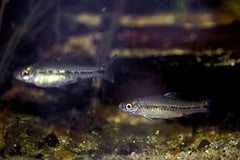
'Barbus' sublineatus
Cyprinidae · Daget, 1954
'Barbus' sublineatus is a widespread West African barb found in river basins from Senegal east to Cameroon, including the Niger and Volta. It is very variable in patterning and can be difficult to identify: Upper Niger fish show three elongate midlateral markings, Middle Niger fish a continuous band and Volta fish four spots. It may prove to be a complex of closely-related species. Little is known of its captive care.

Chromidotilapia guntheri
Cichlidae · Sauvage, 1882
Chromidotilapia guntheri is a mouthbrooding cichlid from coastal drainages of western Africa between Liberia and Cameroon, plus the Niger and Benue. It occurs in a number of geographic forms, with fish from Cameroon tending to show dark blotches on the dorsal fin. A benthophagous omnivore, it sifts mouthfuls of substrate for food, and the male broods the eggs while the female defends the surrounding territory.
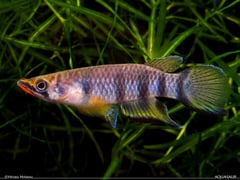
Epiplatys dagetiRed-chinned Panchax
Nothobranchiidae · Poll, 1953
The red-chinned panchax, Epiplatys dageti, is a killifish from coastal savanna in southwestern Ghana, southern Côte d'Ivoire and southern Liberia. An aquarium stalwart since the red-throated form was first exported from Monrovia in 1908, it is relatively hardy and easy to breed, and a good choice for those new to killifishes. The Monrovia fish is often labelled E. dageti monroviae in aquarium literature.

Ctenopharyngodon idellaGrass Carp
Cyprinidae · Valenciennes, 1844
The grass carp, Ctenopharyngodon idella, is a large cyprinid native to the Amur River system in eastern Russia and northeastern China. Adults typically reach 800 to 1200 mm, making it a wholly unsuitable aquarium subject, though an albino form is traded. Widely introduced for aquaculture and weed control, it has caused serious damage to natural waters, and unwanted fish should never be released.