River
Kallar
Only species with a profile on Seriously Fish are counted.
- Species
- 3
- Families
- 2
- Photographed
- 3 of 3
- Difficulty rated
- 3 of 3
Shares fishes withspecies recorded from both
Runs through
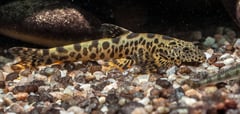
Bhavania australis
Balitoridae · (Jerdon, 1849)
Bhavania australis is a balitorid loach endemic to the Western Ghats mountains of southern India, recorded from Kerala, Tamil Nadu and Karnataka. An obligate dweller of shallow, fast-flowing, highly-oxygenated headwaters and minor tributaries, it has a flattened head and body and horizontally extended paired fins that form a powerful sucking cup for clinging to rocks. It is very rarely seen in the international aquarium trade but is maintained by a number of Indian aquarists.

Haludaria fasciataMelon Barb
Cyprinidae · (Jerdon, 1849)
The melon barb, Haludaria fasciata, is a small cyprinid endemic to the Western Ghats of southern India, in Goa, Karnataka, Kerala and Tamil Nadu. It exists in a number of colour forms, and it is undecided whether they are geographical variants or a complex of closely-related species. Also traded as the 'ember barb', 'banded barb' and 'black spot barb', it is relatively peaceful and hardy, but a vigorous feeder that may outcompete slower or more timid fishes.

Sahyadria denisoniiRed-line Torpedo Barb
Cyprinidae · (Day, 1865)
The red-line torpedo barb, Sahyadria denisonii, is a cyprinid endemic to Kerala and Karnataka in southern India. Extremely popular since it appeared in the trade in the late 1990s, it is listed as Endangered by the IUCN, and collection for the aquarium trade has been held largely responsible for its decline. Large numbers are produced in Southeast Asia and Eastern Europe. The similar S. chalakkudiensis is occasionally traded as this species and is more belligerent.