River
Min
Only species with a profile on Seriously Fish are counted.
- Species
- 6
- Families
- 4
- Photographed
- 6 of 6
- Difficulty rated
- 5 of 6
Basin
Also in the Yangtze basinspecies recorded from both
Shares fishes with rivers elsewherespecies recorded from both
Runs through
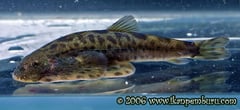
Beaufortia szechuanensis
Gastromyzontidae · Fang, 1930
Beaufortia szechuanensis is a hillstream loach from the upper Yangtze River basin in Sichuan province, southwestern China. It has been recorded from several tributary systems including the Qing, Wu and Da Ning He. Its flattened head and body and horizontal paired fins form a sucking cup that lets it cling to rocks in shallow, fast-flowing, highly-oxygenated headwaters.
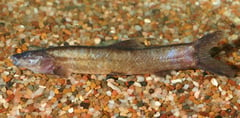
Leptobotia microphthalma
Botiidae · Fu & Ye, 1983
Leptobotia microphthalma is a botiid loach from the upper Yangtze basin in southwestern China, known from the Min and Jialing rivers. Its near-vestigial eyes and the variable hypopigmentation seen in many individuals suggest a deep water or even subterranean existence. Poorly known in the hobby, it is superficially similar to L. tientainensis and differs in a more deeply forked caudal-fin and a smaller eye, although eye size varies considerably between individuals.
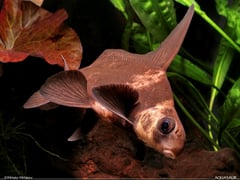
Myxocyprinus asiaticusChinese Sailfin Sucker
Catostomidae · Bleeker, 1864
The Chinese sailfin sucker, Myxocyprinus asiaticus, is a catostomid endemic to the upper and middle Yangtze River system in China, including the Min. The only Asian member of its family, it is traded as juveniles under names such as 'Chinese banded shark', almost always without mention of an adult size of almost a metre or a lifespan of 25 years or more. Wild populations are threatened by dams, pollution, overfishing and introduced species.

Garra imberba
Cyprinidae · Garman, 1912
Garra imberba is a cyprinid without barbels from the upper Yangtze, Mekong and Red River basins in southern China, and the upper Red in Vietnam. Records from the Salween system result from confusion with the similarly-named G. imberbis. With G. micropulvinus it is placed in the Semilabeoina, for which the name Ageneiogarra has been suggested. It tends to inhabit swiftly-flowing headwaters and tributaries.
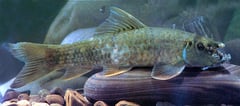
Garra orientalis
Cyprinidae · Nichols, 1925
Garra orientalis is a cyprinid widely distributed in southern China, with records from the Pearl River (Zhu Jiang) and Min Jiang watersheds. Earlier records from the Salween and upper Irrawaddy are now known to represent other species. It shares a forward-projecting, trilobed proboscis with G. salweenica and G. fuliginosa but lacks their dark blotch on the caudal peduncle. It tends to inhabit rocky, swiftly-flowing headwaters.
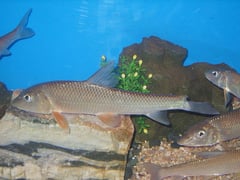
Hemibarbus labeoBarbel Steed
Cyprinidae · Pallas, 1776
The barbel steed, Hemibarbus labeo, is a cyprinid widespread in eastern Asia between the Yangtze and Amur river basins. A predominantly riverine fish of clear, well-oxygenated running water, it forms schools just above the substrate as an adult, and some populations make annual spawning migrations. Adults lack dark spots on the body and have a long snout and well-developed lips.