Results for “mature”
Type a name: scientific, common, or one a species used to go by. Or narrow the catalogue with the filters.
Filters
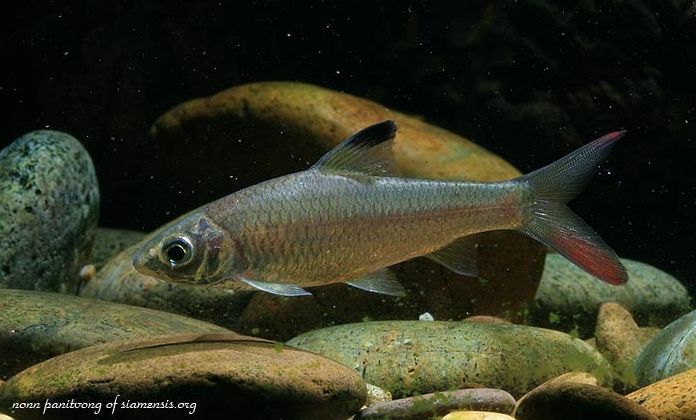
Discherodontus ashmeadi
Fowler, 1937
Max length135mm SL5in SLTank120 × 45cm48 × 18inTemp23–26°C73–79°FpH6.0–7.5D. ashmeadi is the type species and exhibits differences in dental morphology compared with other members of the genus. It can also be told apart from D. halei by the red/pink (vs. orange) colouration in the dorsal and anal fins and serrated (vs. smooth) dorsal spine. D. schroederi is also similar-looking but as it matures the prominent dark dorsal blotch fades to a thin dark distal band whereas in D. ashmeadi it is retained throughout life.
Distichodus affinisSilver Distichodus
authority not recorded
Max length200mm SL8in SLTank120 × 30cm48 × 12inTemp23–27°C73–81°FpH6.0–8.0This species has become more common in the trade in recent years, and makes an interesting addition to larger communities. It develops bright red fins as it matures. Some specimens develop a pink sheen on the underside. These variations may indicate different species, as there are several in the genus that superficially resemble D. affinis....
Distichodus lusossoLong-nosed Distichodus
authority not recorded
Max length375mm SL15in SLTanknot recordedTemp22–26°C72–79°FpH6.5–7.5One of only a handful of Distichodus seen with any regularity in the hobby. This species is undeniable attractive when juvenile, but unfortunately loses much of its colour and patterning as it matures. It is superficially similar to the more commonly seen D. sexfasciatus but has a much smaller adult size and a narrow, pointed head....
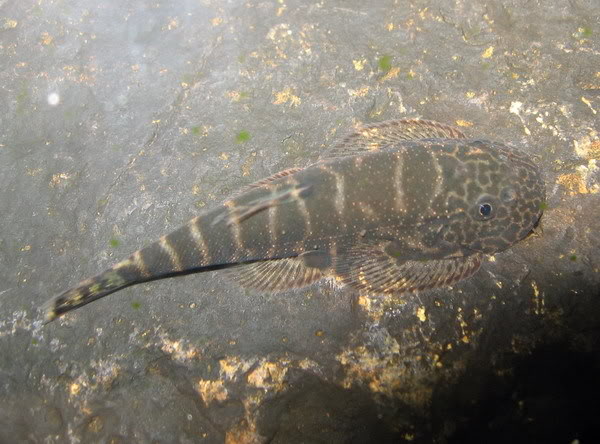
Gastromyzon sp. 'SK04'
authority not recorded
Max length65mm SL2.6in SLTank75 × 30cm30 × 12inTemp20–24°C68–75°FpH6.5–8.0For long-term success it's best to provide a mature aquarium with a plentiful supply of algae-covered rocks and other surfaces. If unable to grow sufficient algae in the main tank or you have a community containing numerous herbivorous fishes which consume what's available quickly it may be necessary to maintain a separate tank in which to grow algae on rocks and switch them with those in the main tank on a cyclical basis.
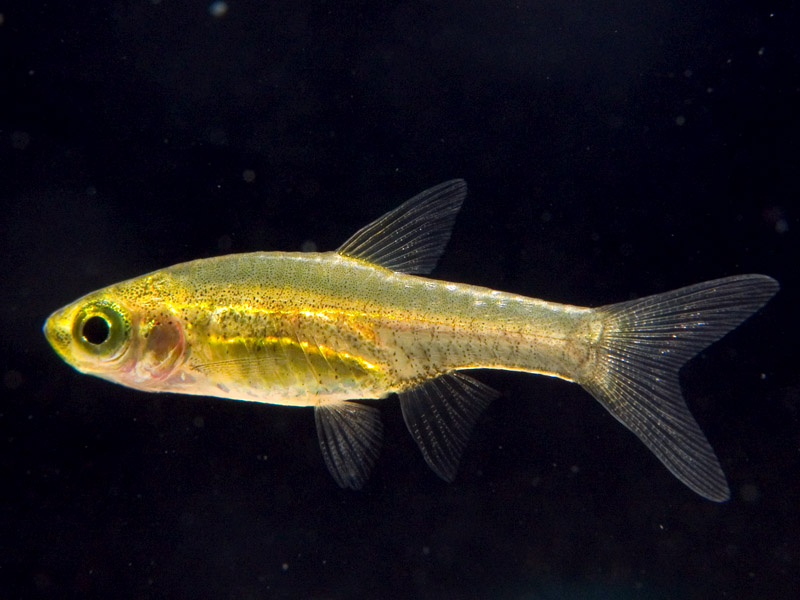
Horadandia atukorali
Deraniyagala, 1943
Max length30mm SL1.2in SLTank45 × 30cm18 × 12inTemp20–26°C68–79°FpH5.5–7.5The genus is monotypic and distinguished from other cyprinid taxa by a combination of a moderately compressed, elongated body with two rows of teeth on the lower pharyngeal (throat) bone and lacking barbles, visible lateral line and a symphyseal knob on the lower jaw (Talwar & Jhingran, 1991). Its small adult size evolved via a process known as miniaturisation characterised by sexually mature adults with a significantly reduced size of less than 20 mm SL. Among bony fishes cyprinids are one of the few groups in which this phenomenon occurs repeatedly...
Hyphessobrycon metaePurple Tetra
Eigenmann & Henn, 1914
Max length40mm SL1.6in SLTank80 × 30cm31 × 12inTemp20–28°C68–82°FpH4.0–7.0A beautiful species that's not often seen for sale in the hobby, and is usually a little more expensive than other tetras when available. This is mainly due to the wild caught nature of most specimens entering the trade. It can be a little delicate when initially imported, and is sensitive to deteriorating water conditions in general. As a result, it's not a good choice for the beginner, and should only be added to well-matured tanks. As with the closely related Hemigrammus, the ta...
Hypostomus cf. cochliodonSpotted Cochliodon
authority not recorded
Max length230mm SL9in SLTank120 × 45cm48 × 18inTemp21–24°C70–75°FpH6.3–7.2This undescribed species is part of the Hypostomus cochliodon complex, all of which were previously included in the genus Cochliodon. This is now considered a synonym of Hypostomus. Members of this group can be distinguished from congeners by several differences in morphology, most notably the hump-backed profile of mature fish and spoon-shaped dentition. These features, along with the fishes tendency to eat wood, are shared with the Panaque genus of the Ancistrinae subfamily, but the two genera...
Hypostomus plecostomoidesLDA42
authority not recorded
Max length250mm SL10in SLTank120 × 45cm48 × 18inTemp21–27°C70–81°FpH6.5–8.0This species is part of the Hypostomus cochliodon complex, all of which were previously included in the genus Cochliodon, which is now considered a synonym of Hypostomus. Members of this group can be distinguished from congeners by several differences in morphology, most notably the hump-backed profile of mature fish and spoon-shaped dentition. These features, along with the fishes tendency to eat wood, are shared with the Panaque genus of the Ancistrinae subfamily, but the two genera are known ...
Hypostomus sp.
authority not recorded
Max length200mm SL8in SLTanknot recordedTemp23–27°C73–81°FpH6.0–7.5This undescribed species is part of the Hypostomus cochliodon species complex, all members of which were previously included in the genus Cochliodon, now considered a synonym of Hypostomus. Members of this group can be distinguished from congeners by several differences in morphology, most notably the hump-backed profile of mature fish and spoon-shaped dentition. These features, along with the fishes tendency to eat wood, are shared with the Panaque genus of the Ancistrinae subfamily, but the tw...
Hypostomus sp.L229
authority not recorded
Max length250mm SL10in SLTank120 × 45cm48 × 18inTemp21–27°C70–81°FpH6.0–7.5This undescribed species is part of the Hypostomus cochliodon complex, all of which were previously included in the genus Cochliodon, which is now considered a synonym of Hypostomus. Members of this group can be distinguished from congeners by several differences in morphology, most notably the hump-backed profile of mature fish and spoon-shaped dentition. These features, along with the fishes tendency to eat wood, are shared with the Panaque genus of the Ancistrinae subfamily, but the two gener...
Ilyodon furcidensGoldbreast Goodeid
authority not recorded
Max length70mm SL2.8in SLTank75 × 30cm30 × 12inTemp18–24°C64–75°FpH7.0–8.0The species name 'furcidens' is derived from the interesting fork-shaped teeth of this fish. This species may develop a cervical hump as it matures. As with other goodeids, there is less of a size difference between the sexes than in many other livebearers. This is thought to be related to the relatively primitive structure of the andropodium, as the fish tend to choose mates that are of similar size so that the sex organs are synchronised. Goodeids are unique among livebearers in t...
Melanotaenia herbertaxelrodiLake Tebera Rainbowfish
authority not recorded
Max length90mm SL3.5in SLTank90 × 30cm36 × 12inTemp20–26°C68–79°FpH7.0–8.0One of the more beautifull-coloured rainbowfish available when mature, M. herbertaxelrodi is probably at risk from overfishing, but not enough data is available to consider it an endangered species as yet....
Parachanna obscuraAfrican snakehead
authority not recorded
Max length406mm SL16in SLTank38 × 38cm15 × 15inTemp26–30°C79–86°FpH6.0–7.5This fish is spawned very infrequently in captivity but some reports have been made. Fish are sexually mature from 4" and a pair should be obtained by growing on a group of youngsters and allowing a pair to form naturally. Once this occurs the other fish will most likely be eliminated so it is wise to be vigilant in order to avoid uneccessary losses. Apparently courtship occurs in an open section of water surrounded by floating plant material. The courtship consists of the fish circling ...
Peckoltia sp.Big Spot Peckoltia
authority not recorded
Max length110mm SL4in SLTank75 × 30cm30 × 12inTemp23–26°C73–79°FpH6.5–7.2Commonly known as the big spot peckoltia, there is ongoing argument that this species should be included in the genus Hemiancistrus. As things stand, there has not yet been any scientific confirmation of this and the species remains undescribed. It's also often confused with the very similar-looking L013, another undescribed fish. These two species can only easily be distinguished as they mature, as L163 retains its spotted patterning, while L013 tends to become somewhat duller. When b...
Phenacogrammus interruptusCongo Tetra
authority not recorded
Max length80mm SL3.1in SLTank120 × 30cm48 × 12inTemp23–28°C73–82°FpH6.0–7.5P. interruptus are quite sensitive to water quality and if a high standard is not maintained the development of the males' fins may be impaired and the fish will lose colour. They are also quite an easily frightened fish, particularly if they are not maintained in numbers. This species is most often seen for sale as a fairly drab, greyish 1 1/2" fish and is often overlooked. However once they are settled into the aquarium and have begun to mature they develop spectacular colouration. ...
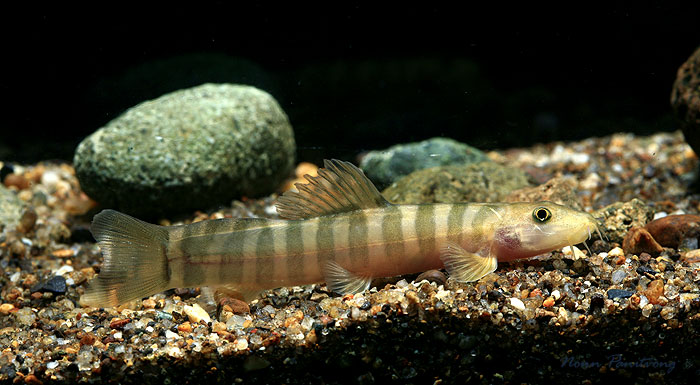
Schistura alticrista
Kottelat, 1990
Max length75mm SL3.0in SLTank90 × 30cm36 × 12inTemp21–26°C70–79°FpH6.0–7.5This species is very rare in the aquarium trade but available on occasion. It has 8-9 darkish body bars which usually split vertically as the fish mature, and like some conspecifics possesses a prominent dorsal adipose crest on the caudal peduncle. Schistura is the most species-rich genus among...
Synodontis dhonti
authority not recorded
Max length400mm SL16in SLTank120 × 45cm48 × 18inTemp24–28°C75–82°FpH7.5–8.5S. dhonti's natural deep water habitat and solitary lifestyle make collection for the hobby difficult and so it is rarely seen for sale. When juvenile it may be confused with other Tanganyikan Synos but it loses its spotted patterning as it matures....
Synodontis eupteraFeatherfin Synodontis
authority not recorded
Max length300mm SL12in SLTank120 × 30cm48 × 12inTemp22–27°C72–81°FpH6.0–7.5One of the most popular and commonly seen Synos in the hobby, S. eupterus is usually offered for sale as a small (1-3") juvenile with no information regarding its potential size. These young fish are often sold as Synodontis "Network" due to their attractive reticulated patterning. This patterning breaks up as the fish mature and adult specimens have a simple spotted colouration. The characteristic 'feathered' dorsal also develops with age, with the first few rays develo...
Variabilichromis moorii
authority not recorded
Max length100mm SL3.9in SLTanknot recordedTemp23–27°C73–81°FpH7.5–9.0V. moorii exists in several geographical morphs but interestingly the only variation in colour occurs in juvenile fish. All adults exhibit a dark patterning but depending on locality the fry may be dark (like adults), yellow or orange with the yellow and orange juveniles taking on the adult colouration as they mature. It is has been observed that the forms which undergo this colour change may 'plant' broods among fry of other species with similarly coloured young, leaving them to be gu...