Phenacogrammus interruptus
Congo Tetra
Last revised 2026Edit this page
On this page11 sections
Quick factsEdit
Difficulty6 of 8 measures
- Space
- large tank
- Water
- flexible
- Temp
- flexible
- Diet
- unknown
- Temperament
- peaceful
- Social
- needs to be in a group
- Compatibility
- fine with others
Other demands
Each of these can raise the rating on its own, whatever the measures above say.
- Hardiness
- unknown
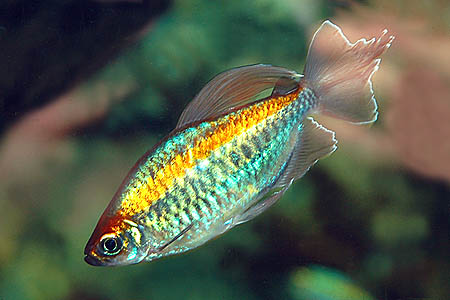
The Congo tetra, Phenacogrammus interruptus, is a tetra from parts of the River Congo drainage in the Democratic Republic of Congo. Wild populations are endemic there, but most fish in the trade are bred commercially in the Far East and Eastern Europe. Usually sold as a drab, greyish juvenile, it colours up as it matures, and males develop extended caudal filaments and a greatly extended dorsal fin. It is sensitive to water quality and easily frightened when not kept in numbers.
Distribution
EditHabitat
Write a noteEditWild populations are endemic to parts of the River Congo drainage in the Democratic Republic of Congo. Most of the fish available in the trade are bred commercially in the Far East and Eastern Europe.
Aquarium size
Write a noteEdit120 ∗ 30 ∗ 30 cm48 ∗ 12 ∗ 12 in for adult fish though young specimens can be kept in smaller tanks.
Maintenance
Write a noteEditWater conditions
EditTemperature: 23 – 28 °C73 – 82 °F
pH: 6.0-7.5
Hardness: 3-18 dH
These recommendations come from this profile’s own figures. They contain affiliate links, so we may earn a commission.
Diet
Write a noteEditAn omnivore feeding on small worms, insects, crustaceans, algae and other zooplankton in nature. Relatively unfussy and will accept most foods but live and frozen food should compose a good proportion of the diet in order for the fish to show their best colouration.
Behaviour and compatibility
Write a noteEditPeaceful but may scare shy species with its active swimming and large adult size. Recommended for most community tanks however. Ideal tankmates include other tetras, rainbowfish, Corydoras, Loricariids, Synodontis and various peaceful cichlids such as Pelvicachromis sp. or Cleithracara. Do not keep congo tetras with fin-nipping species as the spectacular fins of the males will be destroyed. Similarly they should not be kept with boisterous tankmates due to their shy nature. P. interruptus should be kept in a mixed-sex shoal for the best effect.
Sexual dimorphism
Write a noteEditThe male fish are larger and much more colourful. They also develop extended filaments in the caudal fin and a greatly extended dorsal fin.
Reproduction
Write a noteEditNot easy but possible. Egg-scatterer. The fish should be conditioned using live and frozen foods and the best coloured male and fattest female selected. These should be placed in a small aquarium with a mesh base. The eggs will fall through this minimising the risk of predation by the parents. Lighting should be subdued and some clumps of plants added to induce spawning, as the eggs would be scattered amongst vegetation in nature. The water should be of below neutral pH and soft. Following chasing by the male the fish spawn side by side with a quivering motion. Up to 300 large eggs may be deposited by a single female over a period of several days spawning activity, though 100-200 is more common. During the first 24-48 hours of incubation it is common for many of the eggs to become fungussed. These should be removed with a long pipettes. The eggs hatch in around 6 days and the fry should be offered infusoria after the yolk sacs have been absorbed (around 24 hours) followed after 2-3 days by brine shrimp nauplii or microworm.
Notes
EditP. interruptus are quite sensitive to water quality and if a high standard is not maintained the development of the males' fins may be impaired and the fish will lose colour. They are also quite an easily frightened fish, particularly if they are not maintained in numbers.
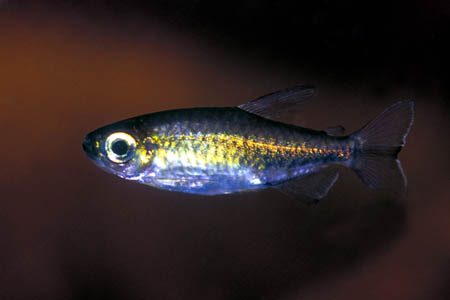
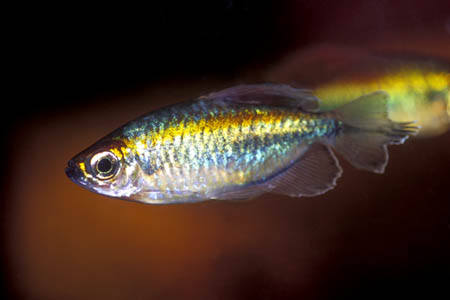
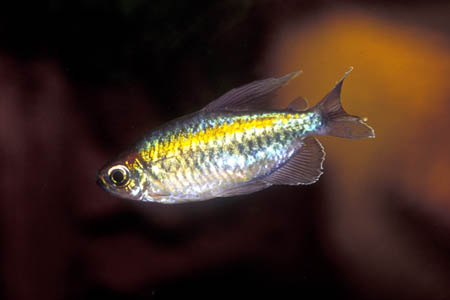
This species is most often seen for sale as a fairly drab, greyish 1 1/2" fish and is often overlooked. However once they are settled into the aquarium and have begun to mature they develop spectacular colouration. Lit from the front and above, especially in natural light, a large shoal of Congos is a sight to behold.
Species images · 5
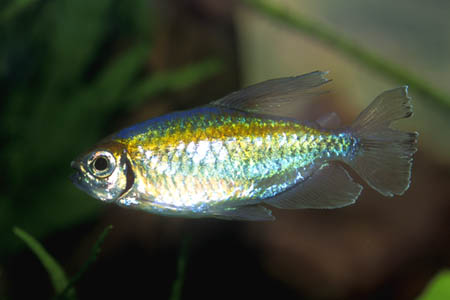
These photographs are used with each photographer’s permission.
Send a photographProfile completeness20 of 24
83% complete
Also missing: a recorded distribution, taxonomic authority, etymology.
Community
Questions about Phenacogrammus interruptus?
Ask on Discord