Results for “species”
Type a name: scientific, common, or one a species used to go by. Or narrow the catalogue with the filters.
Filters
Hasemania nanaSilvertip Tetra
authority not recorded
Max length50mm SL2.0in SLTank60 × 38cm24 × 15inTemp23–28°C73–82°FpH6.0–8.0The genus Hasemania is one of the few in the family Characidae in which members do not possess an adipose fin. This species is ubiquitous in most dealers' tanks and is one of the best choices for the newcomer to fishkeeping. All the fish sold in the trade have been captive bred and as such are unfussy with regard to both water chemistry and diet. It is sometimes seen for sale with the common name 'copper tetra'....
Hemiancistrus sp.Blue Phantom Plec
authority not recorded
Max length180mm SL7in SLTank120 × 30cm48 × 12inTemp22–25°C72–77°FpH6.0–7.0This stunning species must surely rank among the most attractive Loricariids available in the hobby. There are several colour forms available, depending on collection locality. These vary in base colour and in the number, size and positioning of the spots on the body. The true identity of this fish is shrouded in confusion. It may or may not be Hemiancistrus subviridis, also known as the green phantom plec (L200), which it resembles very closely in morphology. The two are also found in diffe...
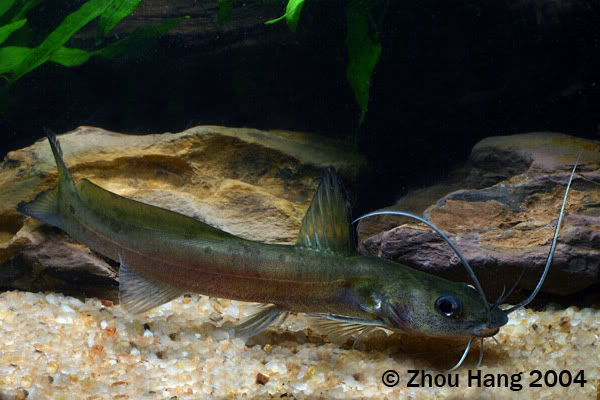
Hemibagrus macropterus
Bleeker, 1870
Max length408mm SL16in SLTanknot recordedTempnot recordedpHnot recordedThis species has been recorded from the Zhujiang (Pearl River), Changjiang (Yangtze River) and Qiantang Jiang in central and southern China. Type locality is 'Chang Jiang, China', referring to the Yangtze. It's been adversely affected by dam construction and pollution across certain parts of its range and may be locally extirpated in some cases.
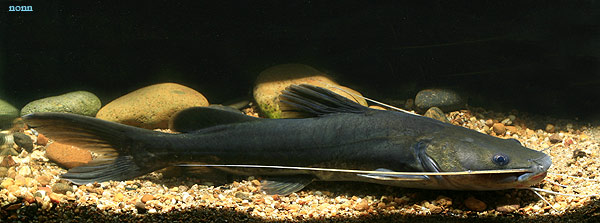
Hemibagrus microphthalmus
Day, 1877
Max length1500mm SL59in SLTanknot recordedTempnot recordedpHnot recordedThis species cannot be considered a suitable home aquarium subject given its eventual size plus the fact it can live for several decades. It can be told apart from most oth...
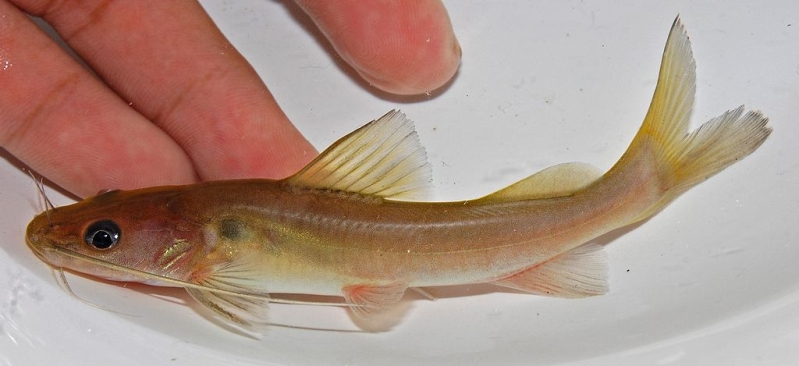
Hemibagrus planiceps
Valenciennes, 1840
Max length263mm SL10in SLTanknot recordedTempnot recordedpHnot recordedThis species is now considered endemic to Java but has been confused with the congeners H. gracilis (from eastern Peninsular Malaysia), H. velox (Sumatra) and H. bongan (Borneo) in the past, while the population formerly considered to inhabit northwestern Peninsular Malaysia has been described as H. divaricatus (Ng and Kottelat, 2013).
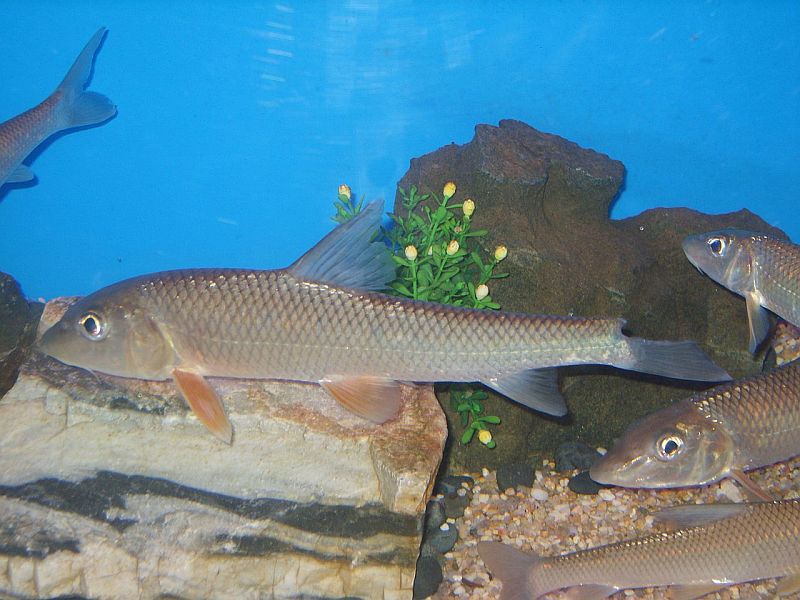
Hemibarbus labeoBarbel Steed
Pallas, 1776
Max length450mm SL18in SLTanknot recordedTempnot recordedpHnot recordedThis species can be distinguished from other members of the genus by the following combination of characters: absence of dark spots on body in adults; body elongate with slightly convex dorsal profile; head longer than body is deep; snout much longer than postorbital head length; lips well developed, lateral lobes of lower lip broad and thick with folds, median process small; barbel thickness shorter or equal to eye diameter; dorsal spine strong, ⅔ of HL; dorsal-fin origin closer to tip of snout than caudal-fin base base; 15+ gill rakers; 6½ branched anal-fin rays; posterior simple dorsal-fin rays ossified and spinous.
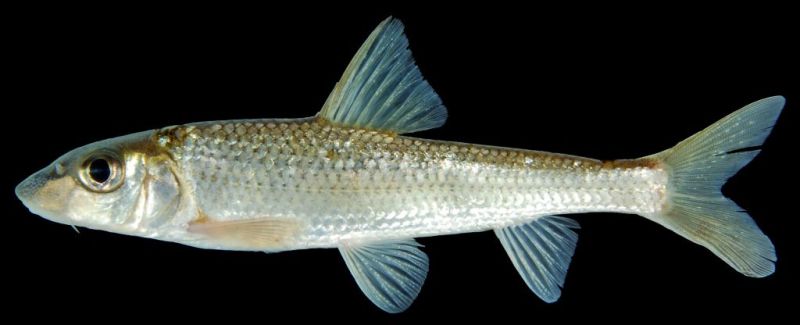
Hemibarbus maculatusSpotted Steed
Bleeker, 1871
Max length400mm SL16in SLTanknot recordedTempnot recordedpHnot recordedWidepread in eastern Asia between the Yangtze and Amur river basins, including China (mainland and islands of Taiwan and Hainan), Korea, Mongolia, Russia, and Japan. It probably been introduced to Vietnam and Laos, or records from these countries represent another species.
Hemichromis bimaculatusJewel Cichlid
authority not recorded
Max length150mm SL6in SLTank120 × 30cm48 × 12inTemp22–28°C72–82°FpH6.0–7.8Not recommended for the beginner or for the general community tank, despite often being sold as such. The Jewel Cichlid is regularly seen in the trade. Recently, Hemichromis lifalili has become the more popular fish. These species can be easily distinguished as H. lifalili have only 2 black spots on the flanks whereas H. bimaculatus has 3, having an extra spot on the caudal peduncle....
Hemichromis lifaliliBlood-Red Jewel Cichlid
authority not recorded
Max length100mm SL3.9in SLTank75 × 30cm30 × 12inTemp23–26°C73–79°FpH6.0–7.8Often confused with Hemichromis bimaculatus. These species can be easily distinguished as H. lifalili have only two black spots on the flanks whereas H. bimaculatus has three, having an extra spot on the caudal peduncle. It can also be told apart from the similar red form of H. guttatus by comparing the midlateral markings of the two. In lifalli the marking is round and is situated above the lateral line. In guttatus the marking is oval in shape and some of it extends below the lateral line. ...
Hemigrammus ocelliferHead-and-tail light Tetra
authority not recorded
Max length45mm SL1.8in SLTank60 × 38cm24 × 15inTemp24–28°C75–82°FpH5.5–7.5Also known as the beacon tetra, this species is ubiquitous in most dealers' tanks and is one of the best choices for the newcomer to fishkeeping. It's both hardy and inexpensive. It has been popular in the hobby for several decades. There is a selectively bred albino form that has become popular in recent years, for which care is identical to the standard fish. There is possibly also a subspecies, H. ocellifer falsus that lacks the red spot at the caudal peduncle (the gold-coloured tai...
Hemiodus argenteus
authority not recorded
Max length235mm SL9in SLTank120 × 45cm48 × 18inTemp23–27°C73–81°FpH6.0–7.0Hemiodus species can be a very skittish when first introduced to the aquarium, but usually settle down over time, especially if a large number are being kept together. All of them look superficially similar, but can be distinguished by differences in patterning. None are particularly common in the hobby....
Hemiodus atranalis
authority not recorded
Max length90mm SL3.5in SLTank120 × 30cm48 × 12inTemp23–27°C73–81°FpH6.0–7.0Hemiodus species can be a very skittish when first introduced to the aquarium, but usually settle down over time, especially if a large number are being kept together. All of them look superficially similar, but can be distinguished by differences in patterning. None are particularly common in the hobby....
Hemiodus gracilisSlender Hemiodus
authority not recorded
Max length160mm SL6in SLTank120 × 45cm48 × 18inTemp23–27°C73–81°FpH5.8–7.2Hemiodus species can be very nervous when first introduced to the aquarium but usually settle down over time, especially if a large number are being kept together. All of them look superficially similar, but can be distinguished by differences in patterning. None are particularly common in the hobby, but H. gracilis is probably the most often seen. It is sometimes sold as the red or red-tailed hemiodus and was previously considered a member of the now defunct genus Hemiodopsis....
Hemiodus orthonops
authority not recorded
Max length250mm SL10in SLTank120 × 45cm48 × 18inTemp22–26°C72–79°FpH6.5–7.5Hemiodus species can be very nervous when first introduced to the aquarium, but usually settle down over time, especially if a large number are being kept together. All of them look superficially similar, but can be distinguished by differences in patterning. None are particularly common in the hobby....
Hemiodus ternetzi
authority not recorded
Max length105mm SL4in SLTank120 × 30cm48 × 12inTemp23–27°C73–81°FpH6.0–7.0Hemiodus species can be a very skittish when first introduced to the aquarium, but usually settle down over time, especially if a large number are being kept together. All of them look superficially similar, but can be distinguished by differences in patterning. None are particularly common in the hobby. H. ternetzi can be identified by the fact that the black lateral stripe extends to behind the eye, and thehas no pigmentation....
Hemiodus unimaculatus
authority not recorded
Max length215mm SL8in SLTank120 × 45cm48 × 18inTemp22–26°C72–79°FpH5.5–7.5Hemiodus species can be a very skittish when first introduced to the aquarium, but usually settle down over time, especially if a large number are being kept together. All of them look superficially similar, but can be distinguished by differences in patterning. None are particularly common in the hobby....
Herotilapia multispinosaRainbow Cichlid
authority not recorded
Max length175mm SL7in SLTank90 × 38cm36 × 15inTempnot recordedpH7.0–8.0Relatively common in the hobby, the Rainbow Cichlid makes an ideal CA cichlid for those who do not wish to manage the challenge of the more aggressive CA species.
Heterobranchus longifilisVundu
authority not recorded
Max length1500mm SL59in SLTank180 × 60cm72 × 24inTemp20–27°C68–81°FpH5.5–7.5One of the largest freshwater fish species found in Africa, this is not a very good aquarium inhabitant. It is suitable only for the truly dedicated hobbyist able to house it properly or for public aquaria. It can be distinguished from similar members of the genus by its very long adipose fin....
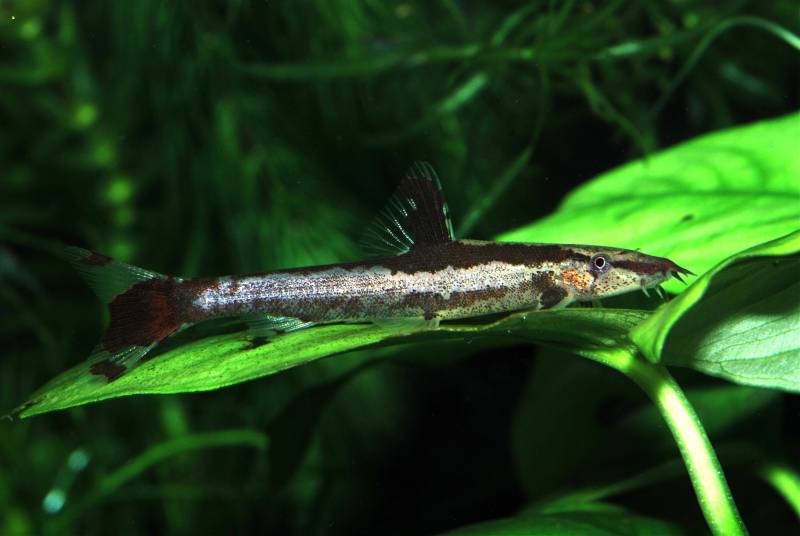
Homaloptera bilineata
Blyth, 1860
Max length100mm SL3.9in SLTank120 × 30cm48 × 12inTemp20–25.5°C68–78°FpH6.0–7.5This rarely-traded species is a member of the H. ocellata 'group' of closely-related congeners, an assemblage which currently comprises H. ocellata, H. bilineata, H. confuzona, H. orthogoniata, H. ogilviei and H. parclitella. Following Tan and Ng (2005) these share possession of a colour pattern with reddish tints and dark brown head markings, elongate head, slightly compressed body, 61-77 lateral line scales and dorsal-fin origin placed in advance of pelvic-fin origin.
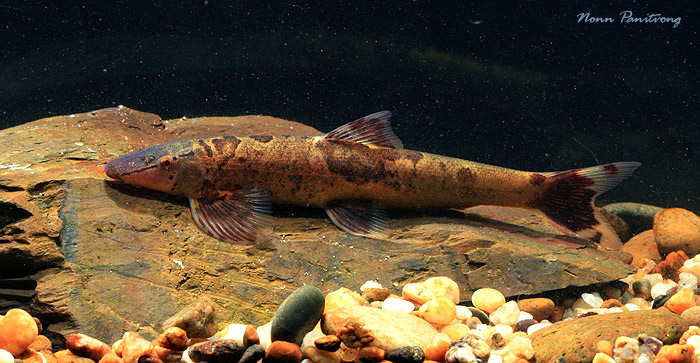
Homaloptera confuzona
Kottelat, 2000
Max length85mm SL3.3in SLTank120 × 30cm48 × 12inTemp20–25.5°C68–78°FpH6.0–7.5Most records pertain to the Mekong River basin downstream of the Khone waterfalls in Laos and Cambodia, but this species is also known from some smaller river drainages in southern Thailand, including parts of the Mae Klong system. Type locality is 'Khlong Fit at Ban Kraduk Chang, road 3157 from Trat to borai, about 2-3 kilometers after junction w...