Herotilapia multispinosa
Rainbow Cichlid
On this page11 sections
Quick facts
Difficulty3 of 8 measures
More bars, more demanding. Hardiness is not averaged with the rest.
- Space
- large tank
- Water
- mild adjustment
- Temp
- unknown
- Diet
- unknown
- Temperament
- peaceful
- Social
- unknown
- Compatibility
- unknown
Hardiness on its own can raise the rating, whatever the measures above say.
- Hardiness
- unknown
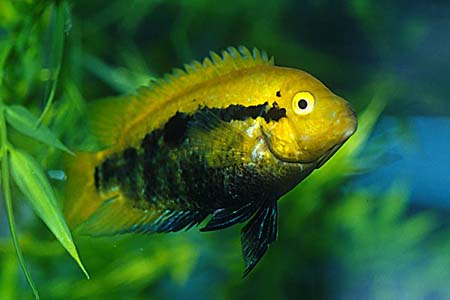
The rainbow cichlid, Herotilapia multispinosa, is a Central American cichlid from eastern Honduras and throughout Nicaragua and Costa Rica. Peaceful by Central American standards, it suits fishkeepers who do not want the more aggressive species, and can live with tetras, barbs and smaller peaceful cichlids. In nature it inhabits turbid lakes, swamps and marshes with soft, muddy substrates, and in the aquarium it typically reaches around 10 cm.
Distribution
Occurs in eastern Honduras and throughout Nicaragua and Costa Rica. It's Atlantic (eastern) range extends south from the River Patuca in Honduras to the River Matina in Costa Rica. In the west it can be found from the River Guasaule in Nicaragua to the Costa Rican Rivers of Tempisque and Bebedero.
Habitat
Aquarium size
90 ∗ 38 ∗ 30 cm36 ∗ 15 ∗ 12 in - ~103 litres~27 US gal
Maintenance
Sand subtrate should be used, although this fish would actually prefer a muddy bottom which would pose a challenge to the aquarist. Other tank decor is not critical, although the Rainbow cichlid will appreciate areas of planting in which it can take cover. Water flow should be slow to moderate and lighting not overly strong.
Water conditions
Temperature: Occurs in waters as warm as 91°F (33°C) in the wild! However 72 - 82°F (22 - 28°C) is suggested in the aquarium.
pH: 7.0 - 8.0
Hardness: Up to 20°H
These recommendations come from this profile’s own figures. They contain affiliate links, so we may earn a commission.
Diet
Feeds mainly on detritus in nature, including a great deal of algae and other plant matter. Not a fussy eater in captivity. Feed a high quality cichlid pellet as staple and vary often with frozen and livefoods. Will especially appreciate brineshrimp. Vegetable/spirulina flakes or similar will also be accepted.
Behaviour and compatibility
Sexual dimorphism
Reproduction
Best spawned is a separate breeding tank.
A spawning site will be cleaned, usually a bit of smooth-surfaced rock. Slate is ideal for this purpose. The female will lay the eggs, then the male will move in to fertilise them. Both parents will then fan the eggs with their pelvic fins to provide oxygenated water to the eggs. Eggs can take upto 2 days to hatch (at this point they may be moved into other designated spawning pits), and up to a week later the fry will be free swimming.
Notes
Relatively common in the hobby, the Rainbow Cichlid makes an ideal CA cichlid for those who do not wish to manage the challenge of the more aggressive CA species.
Species images · 3
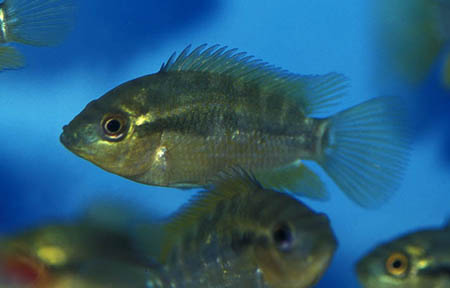
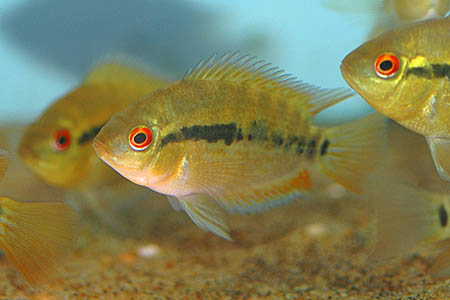
Used with the photographer’s permission. Not licensed for reuse.
Profile completeness17 of 24
71% complete
Also missing: a recorded distribution, taxonomic authority, etymology.
Community
Questions about Herotilapia multispinosa?
Ask on Discord