Results for “sp.”
Type a name: scientific, common, or one a species used to go by. Or narrow the catalogue with the filters.
Filters
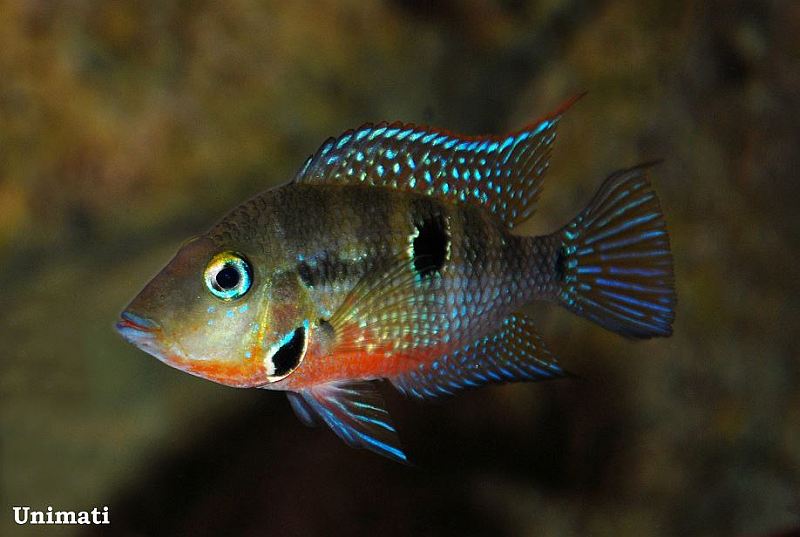
Thorichthys meekiFiremouth Cichlid
Brind, 1918
Max length120mm SL5in SLTank120 × 30cm48 × 12inTemp20–32°C68–90°FpH6.5–8.5This species has been a popular aquarium fish for a considerable period and virtually all fish traded are now raised commercially for the purpose. It is easily identified by the characteristic bright red or orange underside of the head, which is more pronounced in adults. Following Miller and Taylor (1984), the genus Thorichthys is identified...
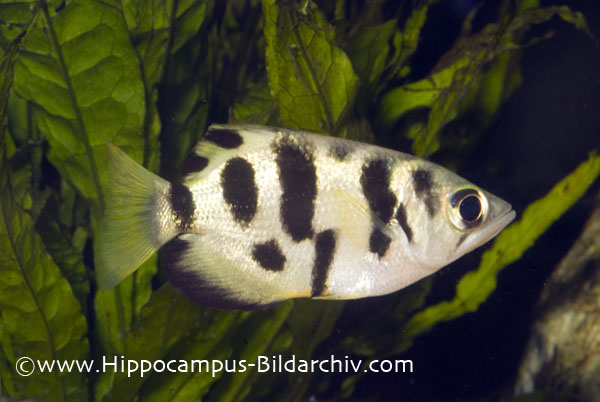
Toxotes chatareusLargescale Archerfish
authority not recorded
Max length400mm SL16in SLTank120 × 60cm48 × 24inTemp25–30°C77–86°FpH7.0–8.0The Largescale Archerfish is one of a fascinating group of fish that have evolved this very distinctive feeding pattern. The family contains six species, of which toxotes jaculatrix is the most commonly available (sometimes sold incorrectly as t. jaculator). Toxotes chatareus is offered for sale in the UK although much less frequently. There are reports that juvenile archers can be kept in fresh water but it is recommended that a brackish setup is always used. Eaten as a food fish in many...
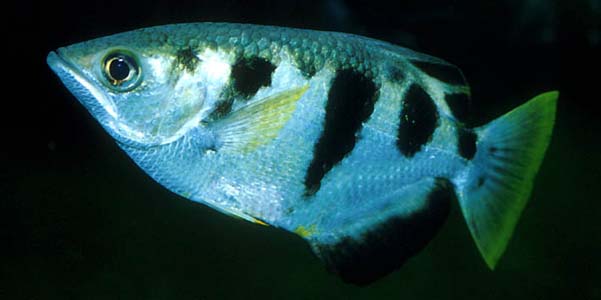
Toxotes jaculatrixBanded Archerfish
authority not recorded
Max length300mm SL12in SLTank120 × 60cm48 × 24inTemp25–30°C77–86°FpH7.0–8.0The Banded Archer fish is one of a fascinating group of fish that have evolved this very distinctive feeding pattern. The family contains six species, of which toxotes jaculatrix is the most commonly available (sometimes sold incorrectly as t. jaculator). Occasionally, the similarly marked toxotes chatareus is offered for sale in the UK although much less frequently. There are reports that juvenile archers can be kept in fresh water but it is recommended that a brackish setup is always used. ...
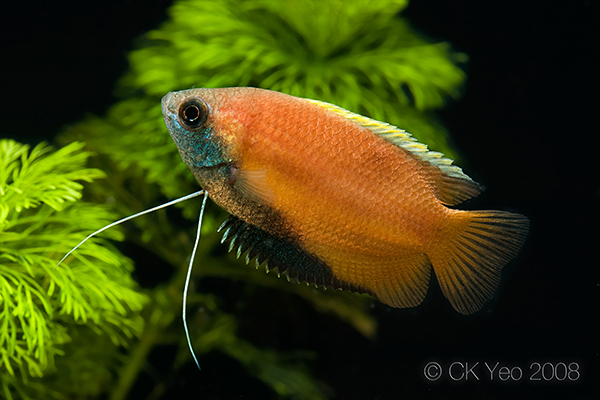
Trichogaster chunaHoney Gourami
Hamilton, 1822
Max length55mm SL2.2in SLTank60 × 30cm24 × 12inTemp22–27°C72–81°FpH6.0–7.5This species is readily available in the aquarium trade and is a good subject for those new to the hobby given its peaceable nature and relative adaptability in terms of water chemistry. It's sold under various names including A number of selectively-bred ornamental strains have also been produced including 'red', 'sunset', and 'golden', for which care is identical to the natural form.
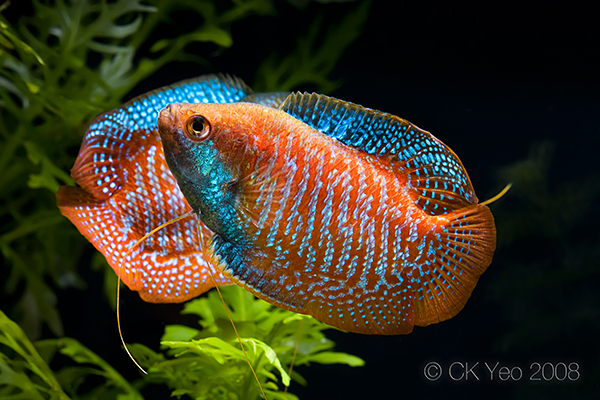
Trichogaster laliusDwarf Gourami
authority not recorded
Max length88mm SL3.5in SLTanknot recordedTemp22–27°C72–81°FpH6.0–7.5The Dwarf Gourami is one of the most ubiquitous freshwater species in the aquarium hobby, and is unarguably a beautiful fish. Several colour forms have been line-bred for the trade and have also proved popular. These include "Sunset" (also sold as "Red" or "Robin") and "Neon" varieties, although it's highly debatable whether these come close to matching the brilliance of the natural form. Unfortunately the general quality of dwarf gouramis availab...
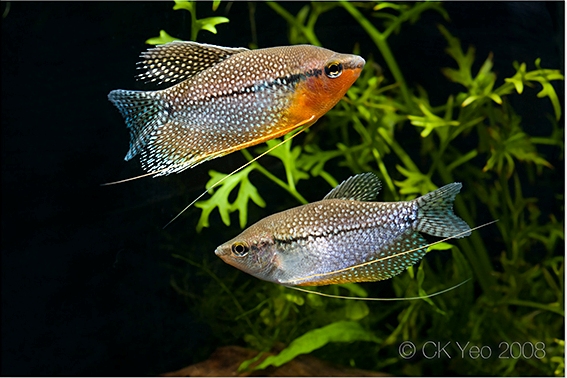
Trichopodus leeriiPearl Gourami
authority not recorded
Max length120mm SL5in SLTank90 × 30cm36 × 12inTemp24–30°C75–86°FpH5.5–8.0A very hardy, beautiful species which is highly recommended to the beginner. A male in full breeding dress is one of the most stunning fish available in the hobby. T. leerii is alo fairly long-lived and may survive for 8 years or more in the aquarium. These fish will also consume the aquarium pest hydra....
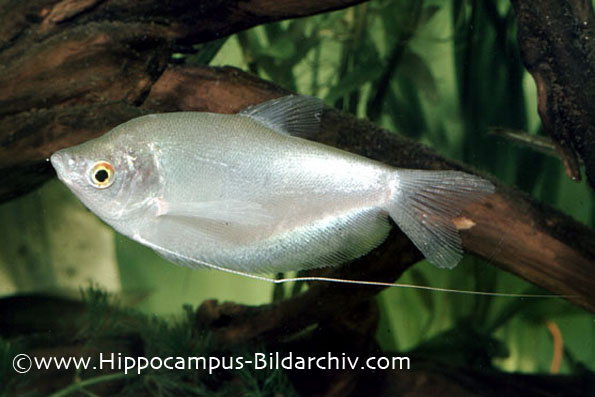
Trichopodus microlepisMoonlight Gourami
authority not recorded
Max length150mm SL6in SLTank90 × 30cm36 × 12inTemp25–30°C77–86°FpH6.0–7.5T. microlepis is not as colourful as some other gouramis but can make a striking addition to the community tank. The modified ventral fins are considerably longer than in other gourami species. It is often used as a food fish in its native countries....
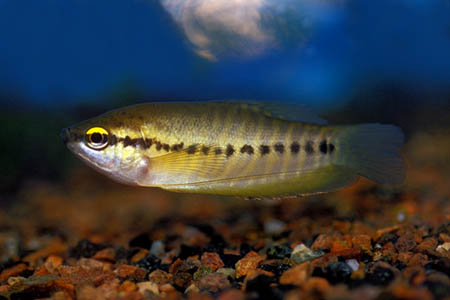
Trichopodus pectoralisSnakeskin Gourami
authority not recorded
Max length300mm SL12in SLTank120 × 30cm48 × 12inTemp22–30°C72–86°FpH5.8–8.5This species is not often seen for sale but is a very good addition to the larger community tank. It is cultured commercially for food in it's native countries, and is used to make a particularly tasty fish soup! The snakeskin gourami can also produce 'cracking' noises, especially during breeding or territorial exchanges....
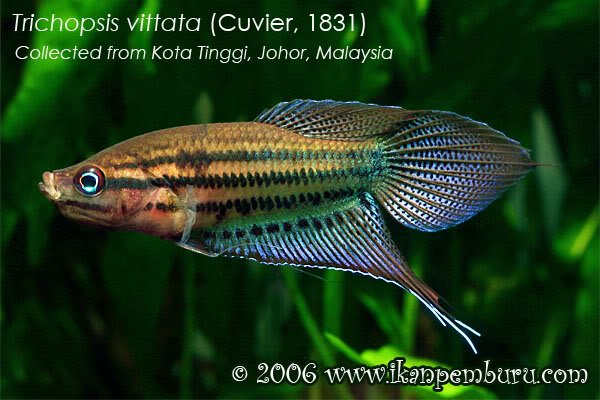
Trichopsis vittataCroaking gourami
Cuvier, in Cuvier & Valenciennes, 1831
Max length70mm SL2.8in SLTank60 × 30cm24 × 12inTemp22–28°C72–82°FpH5.0–7.5The common name is derived from the ability of genus members to produce audible sounds via a specialised pectoral mechanism which is unique within the family Osphronemidae. The structure comprises modified pectoral-fin tendons and muscles which are stretched and plucked by basal elevations of two fin rays in a similar way to guitar strings via rapid beating of the fins. The pectoral-fins beat alternately, each able to generate short or long bursts of sound. These sounds are produced by both sexes, predom...
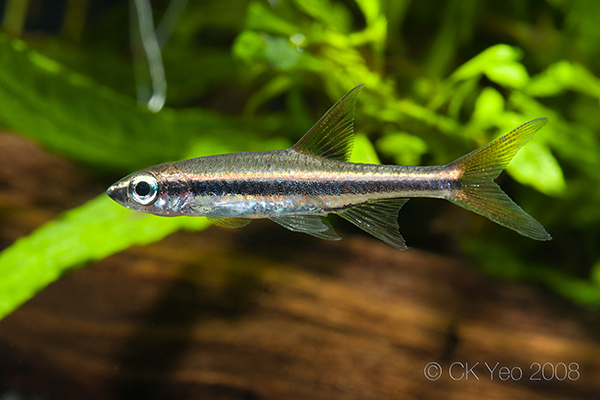
Trigonopoma gracile
Kottelat, 1991
Max length55mm SL2.2in SLTank75 × 30cm30 × 12inTemp21–26°C70–79°FpH4.0–7.0This species occurs in several colour forms depending on collection locality with some exhibiting more intense pigmentation in the fins or an additional reddish lateral stripe, for example. It's sometimes said to closely resemble and occur sympatrically with Rasbora agilis, but that name is currently considered a junior synonym of the congener Trigonopoma pauciperforatum. R. agilis had previously been us...
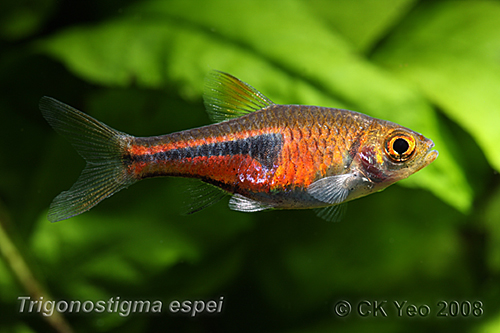
Trigonostigma espeiLambchop Rasbora
Meinken, 1967
Max length30mm SL1.2in SLTank60 × 30cm24 × 12inTemp23–28°C73–82°FpH5.5–7.5This species is very peaceful indeed making it an ideal resident of the well-maintained community tank. As it places no extreme demands in terms of water chemistry it can be combined with many of the most popular fish in the hobby including other small cyprinids as well as tetras, livebearers, dwarf cichlids, catfishes, and loaches. As always when selecting a compatible community of fish thorough research is essential and its small adult size must be a consideration, however.
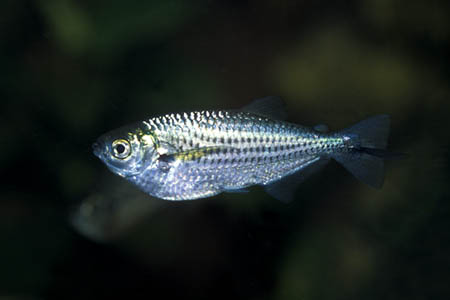
Triportheus angulatusDusky Narrow Hatchetfish
authority not recorded
Max length165mm SL6in SLTank120 × 30cm48 × 12inTemp22–30°C72–86°FpH5.0–7.5An attractive but not often seen species in the hobby. This is quite odd considering how common it is in many of its native habitats, where it is known as sardina. It has very strong pectoral muscles, and uses these to jump from the water to catch flying insects or to escape potential predators. It can make leaps of several metres in length....
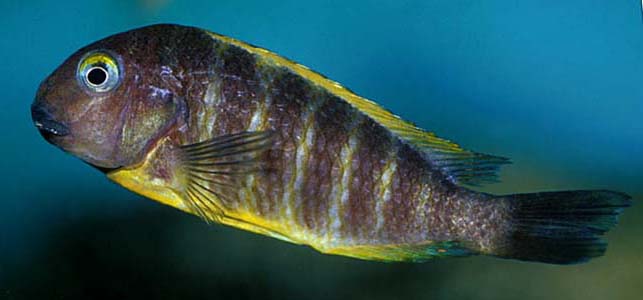
Tropheus brichardi
authority not recorded
Max length115mm SL5in SLTanknot recordedTemp23–27°C73–81°FpH8.0–9.5Like others in the genus, Tropheus brichardi is something of an enigma in the aquarium hobby, and is not a good species for the beginner. There has been much arguement and discussion about how best to maintain it in the aquarium, and some of these debates still rage on. We have provided the generally accepted method of keeping the fish, but in reality what works for one aquarist may not for another. One aspect which is always true is that water quality is of the utmost importance in a Tropheus t...
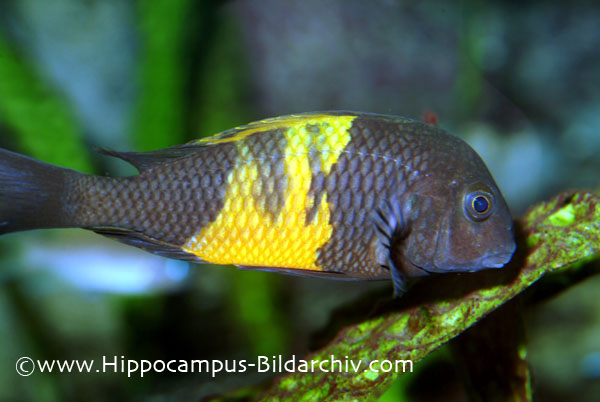
Tropheus moorii
authority not recorded
Max length145mm SL6in SLTanknot recordedTemp23–27°C73–81°FpH8.0–9.5Like others in the genus, Tropheus moorii is something of an enigma in the aquarium hobby, and despite it's popularity is not a good species for the beginner. There has been much arguement and discussion about how best to maintain it in the aquarium, and some of these debates still rage on. We have provided the generally accepted method of keeping the fish, but in reality what works for one aquarist may not for another. One aspect which is always true, is that water quality is of the utmost...
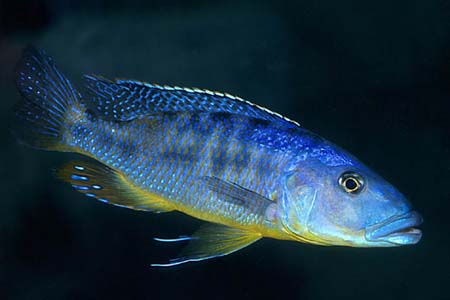
Tyrannochromis macrostomaBig-Mouth Hap
authority not recorded
Max length350mm SL14in SLTank180 × 45cm72 × 18inTemp24–28°C75–82°FpH7.6–8.8T. macrostoma is an ambush predator in nature, lurking behind rocks and in crevices as it stalks its prey. It is rarely seen in the hobby and is usually quite expensive. Juveniles are easily confused with the similar T. nigriventer, but are easily distinguished when adult, as nigriventer does not develop the dark belly of macrostoma. Interestingly, this species exhibits reverse countershading, as also seen in the common Upside-down catfish, Synodontis nigriventris. This means that unlike the...
Variabilichromis moorii
authority not recorded
Max length100mm SL3.9in SLTanknot recordedTemp23–27°C73–81°FpH7.5–9.0V. moorii exists in several geographical morphs but interestingly the only variation in colour occurs in juvenile fish. All adults exhibit a dark patterning but depending on locality the fry may be dark (like adults), yellow or orange with the yellow and orange juveniles taking on the adult colouration as they mature. It is has been observed that the forms which undergo this colour change may 'plant' broods among fry of other species with similarly coloured young, leaving them to be gu...
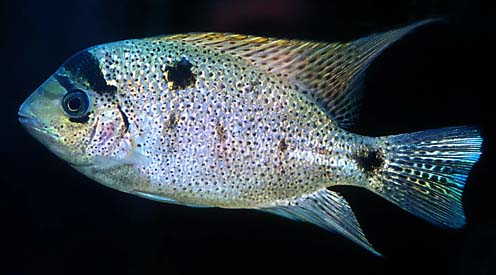
Vieja argenteaSilver Cichlid
authority not recorded
Max length300mm SL12in SLTank120 × 45cm48 × 18inTemp26–30°C79–86°FpH7.0A strikingly coloured, if somewhat aggressive fish. Also referred to as the White Cichlid, it is occasionally available in the UK through specialist cichlid dealers.
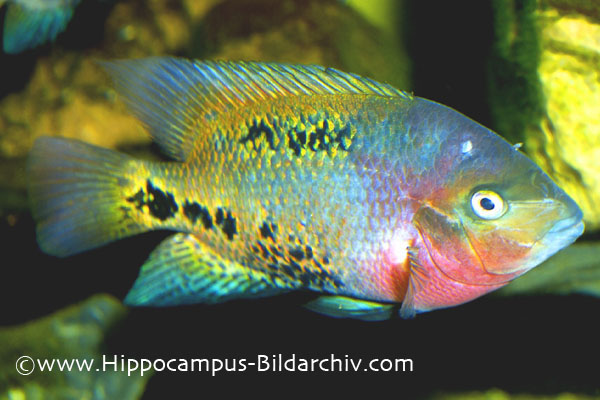
Vieja synspilaRedhead Cichlid
authority not recorded
Max length350mm SL14in SLTanknot recordedTemp24–30°C75–86°FpH7.0Widely and incorrectly referred to as vieja synspillum, this colourful fish is the most commonly available of the vieja species to the hobby. Although not as aggressive as some of its family, it is still a fish to treat carefully. It can be found in mildly brackish waters in its natural range but this is not recommended or required in captivity....
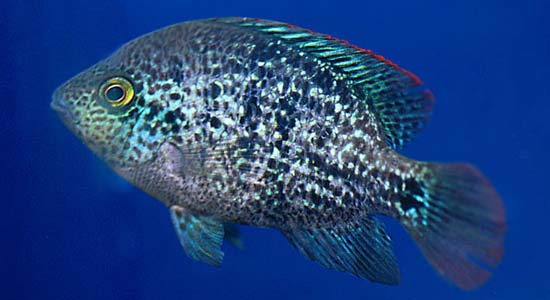
Vieja zonataOaxaca Cichlid
authority not recorded
Max length250mm SL10in SLTanknot recordedTemp23–30°C73–86°FpH7.0–7.5A hardy and easy to keep cichlid, albeit a moderately aggressive one. Rarely available in aquatic stores, this fish is occasionally available through specialist cichlid dealers.
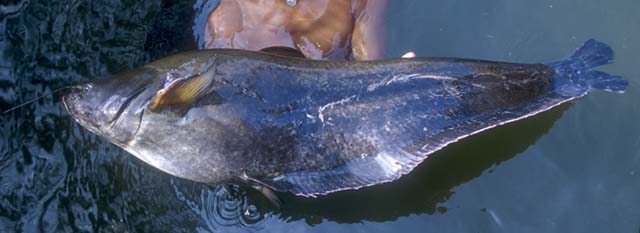
Wallago leeriiStriped Wallago Catfish
authority not recorded
Max length2032mm SL80in SLTanknot recordedTemp22–26°C72–79°FpH6.0–7.0Wallago are fearsome predatory catfish that are fairly widespread in southeast Asia. There are currently five recognised species, W. attu, W. leerii, W. hexanema, W. maculatus and W. micropogon. The latter was described to science in 2004 by renowned catfish expert Heok Hee Ng and was previously considered to be a geographic variant of W. leerii. All members of the genus possess an enormous mouth full of backward pointing teeth, which are used to rip chunks from their prey. Smaller fish or amphi...