Search the catalogue
Type a name: scientific, common, or one a species used to go by. Or narrow the catalogue with the filters.
Filters
Thayeria ifatiHalf-striped Penguin Tetra
authority not recorded
Max length50mm SL2.0in SLTank60 × 38cm24 × 15inTemp23–28°C73–82°FpHnot recordedThere are only three species in the genus Thayeria, of which T. ifati is the least often seen in the hobby. This is a shame as it's a very pretty little fish. The holotype was collected from the upper Rio Maroni, close to the settlement of Gaa Kabaon on the French Guiana/Suriname border by the famous ichthyologist Jacques Géry in 1957. Géry also described the species in 1959. Of its congeners, it was the type species T. obliqua that was originally given the common name of &quo...
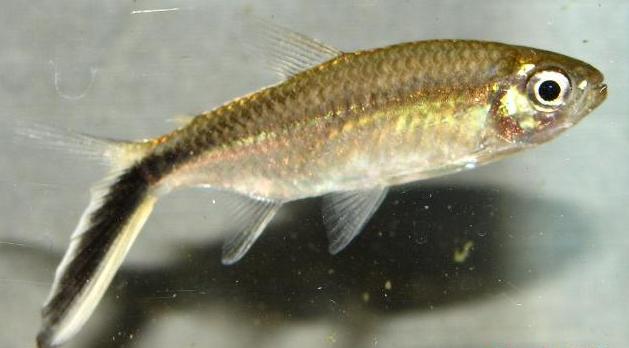
Thayeria obliquaPenguin Tetra
authority not recorded
Max length80mm SL3.1in SLTank60 × 38cm24 × 15inTemp22–28°C72–82°FpHnot recordedThere are only three species in the genus Thayeria, of which Thayeria boehlkei is by far the most popular in the hobby. This is a shame, as T. obliqua is an equally attractive fish. It is the type species of the genus and was the original "penguin" fish or tetra, although Thayeria boehlkei is now usually sold under this name. T. sanctaemariae, described by Ladiges in 1951 is now classed as a synonym of T. obliqua. The species are easy to tell apart, as in Thayeria boehlkei the thic...
Theraps bocourtiChisel-tooth cichlid
authority not recorded
Max length300mm SL12in SLTank150 × 60cm60 × 24inTemp26–28°C79–82°FpHnot recordedA rather elusive species in the hobby, this beautiful cichlid is sometimes referred to as the "Chisel-toothed" cichlid. Despite being described in 1902 it was not until the mid-1990s that it appeared in the aquarium trade, wild specimens being collected by American aquarists Ross Socolof, Harry Specht, and Rusty Wessel in 1994....
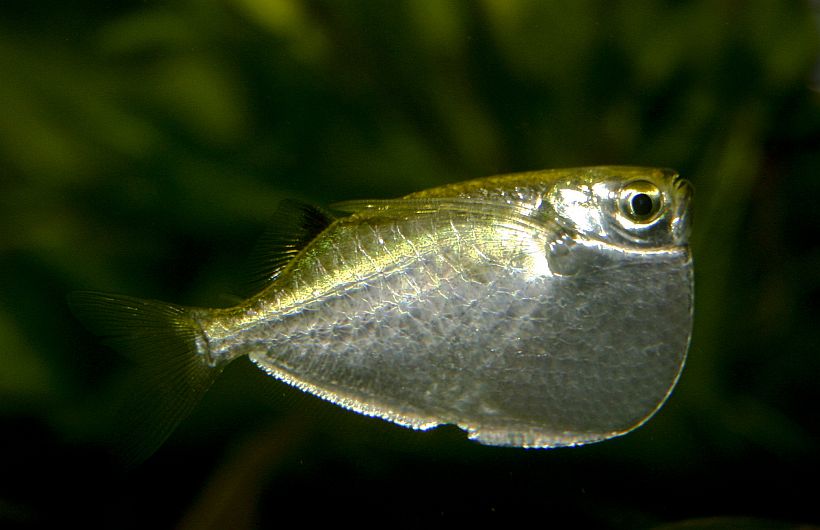
Thoracocharax stellatusSpotfin Hatchetfish
Kner, 1858
Max length70mm SL2.8in SLTank120 × 45cm48 × 18inTemp20–28°C68–82°FpH5.0–7.5T. stellatus is superficially similar to its only congener T. securis, but can immediately be identified by the presence (vs. absence) of a prominent dark spot in the dorsal-fin. It is sometimes traded as 'platinum hatchetfish'. The genus Thoracocharax was originally erected by Fowler in 1906 as a subgenus of Gasteropelecus, but was elevated to generic status by Weitzman (1960).
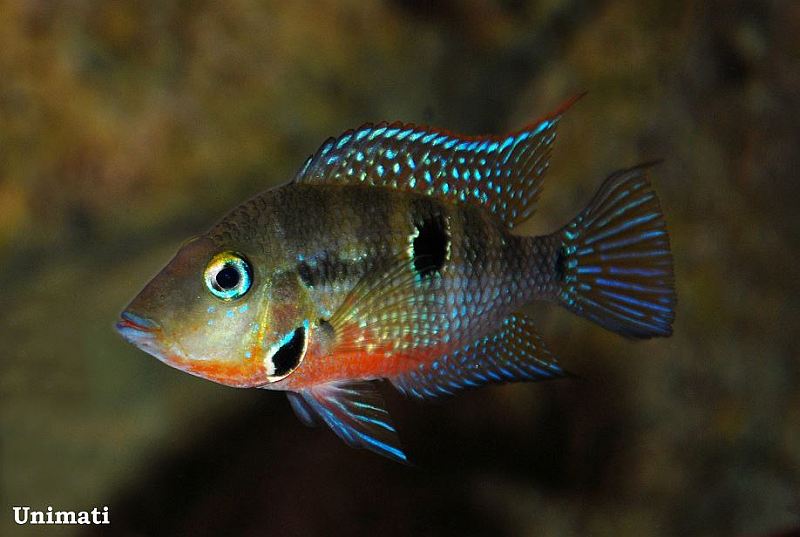
Thorichthys meekiFiremouth Cichlid
Brind, 1918
Max length120mm SL5in SLTank120 × 30cm48 × 12inTemp20–32°C68–90°FpH6.5–8.5This species has been a popular aquarium fish for a considerable period and virtually all fish traded are now raised commercially for the purpose. It is easily identified by the characteristic bright red or orange underside of the head, which is more pronounced in adults. Following Miller and Taylor (1984), the genus Thorichthys is identified...
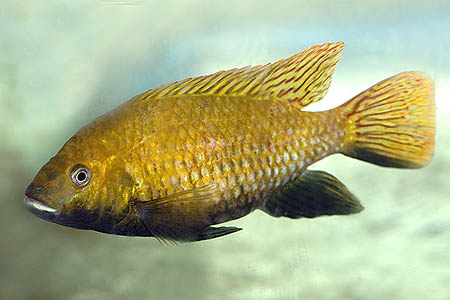
Tilapia guinasana
authority not recorded
Max length140mm SL6in SLTank120 × 30cm48 × 12inTemp19–25°C66–77°FpH7.0–7.8Rare in the hobby, this species is unfortunately considered critically endangered in the wild. The lake in which it is found is receiving less groundwater than it once was, due to extraction of water for agriculture. Even if this were not the case, the species is found over such an enclosed range that it would still be at extreme risk. All attempts at captive breeding are therefore to be encouraged, with care being taken to keep the different lines pure. Interestingly, as there are no natural...
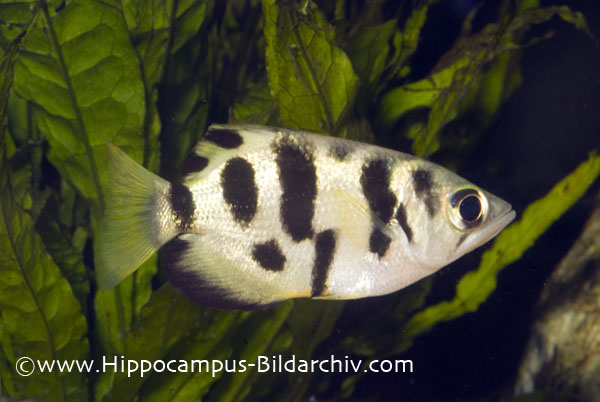
Toxotes chatareusLargescale Archerfish
authority not recorded
Max length400mm SL16in SLTank120 × 60cm48 × 24inTemp25–30°C77–86°FpH7.0–8.0The Largescale Archerfish is one of a fascinating group of fish that have evolved this very distinctive feeding pattern. The family contains six species, of which toxotes jaculatrix is the most commonly available (sometimes sold incorrectly as t. jaculator). Toxotes chatareus is offered for sale in the UK although much less frequently. There are reports that juvenile archers can be kept in fresh water but it is recommended that a brackish setup is always used. Eaten as a food fish in many...
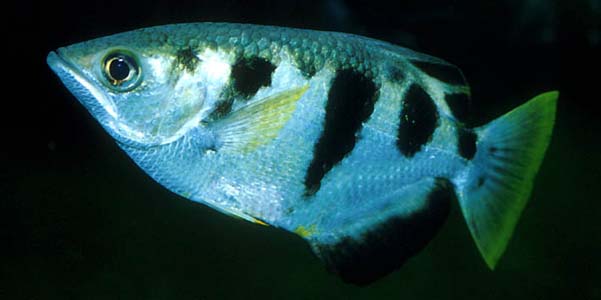
Toxotes jaculatrixBanded Archerfish
authority not recorded
Max length300mm SL12in SLTank120 × 60cm48 × 24inTemp25–30°C77–86°FpH7.0–8.0The Banded Archer fish is one of a fascinating group of fish that have evolved this very distinctive feeding pattern. The family contains six species, of which toxotes jaculatrix is the most commonly available (sometimes sold incorrectly as t. jaculator). Occasionally, the similarly marked toxotes chatareus is offered for sale in the UK although much less frequently. There are reports that juvenile archers can be kept in fresh water but it is recommended that a brackish setup is always used. ...
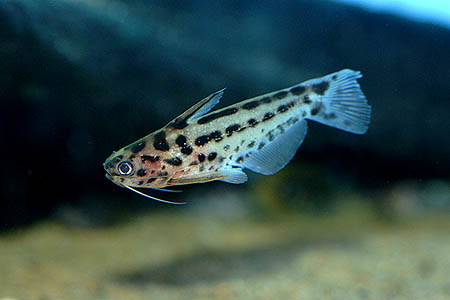
Trachelyichthys decaradiatus
authority not recorded
Max length80mm SL3.1in SLTank60 × 38cm24 × 15inTemp20–28°C68–82°FpH6.5–7.0Very similar to its congener T. exilis, it can be distinguished by looking at the position of the eye which is set much further forward in exilis. Also, the humeral process (long spine extending from the back of the gill plate), is broader and shorter in this species than exilis. Neither are seen very often in the hobby....
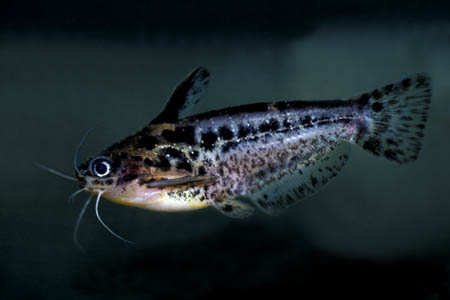
Trachelyichthys exilisPygmy Driftwood Catfish
authority not recorded
Max length80mm SL3.1in SLTank60 × 38cm24 × 15inTemp22–25°C72–77°FpH6.5–7.0Very similar to its congener T. decaradiatus, it can be distinguished by looking at the position of the eye, which is set much further back in decaradiatus. Also, the humeral process (long spine extending from the back of the gill plate), is longer and thinner in this species than decaradiatus. Neither are seen very often in the hobby, but are sometimes available at specialist outlets....
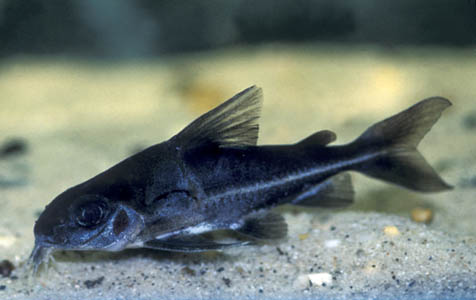
Trachydoras steindachneri
authority not recorded
Max length86mm SL3.4in SLTank90 × 38cm36 × 15inTemp24–26°C75–79°FpH6.0–7.0A rare sepcies in the hobby that is seldom offered for sale.
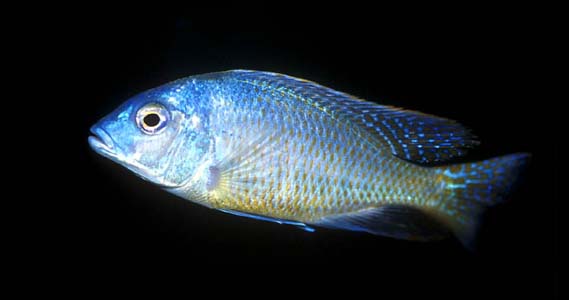
Tramitichromis intermedius
authority not recorded
Max length160mm SL6in SLTank120 × 38cm48 × 15inTemp24–28°C75–82°FpH7.6–8.8Sand dwelling Malawian cichlid species such as this can be somewhat delicate in the aquarium. A rigorous tank maintenance schedule is recommended to keep them in top shape; with small, regular partial water changes a necessity. Also take care with feeding as discussed above. It is likely this species will eventually be assigned to a different genus, as there is some confusion surrounding Tramitichromis and it's scientific validity. The fish included in the genus differ from Lethrinops sp...
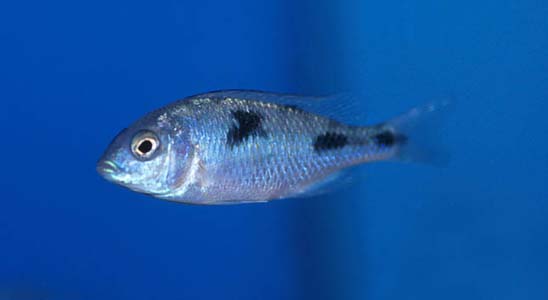
Trematocranus placodonSnail-Crusher Hap
authority not recorded
Max length250mm SL10in SLTank150 × 38cm60 × 15inTemp24–28°C75–82°FpH7.6–8.8An ideal species for the larger Malawian community but one not often seen for sale. In nature, it is a molluscivore, feeding primarily on snails. It has specially developed pharyngeal teeth, which can crush and grind the shells of these animals with ease. Several other species were originally assigned to the genus but currently, only 3 species of Trematocranus exist, most having been reclassified as Aulonocara or Alticorpus....
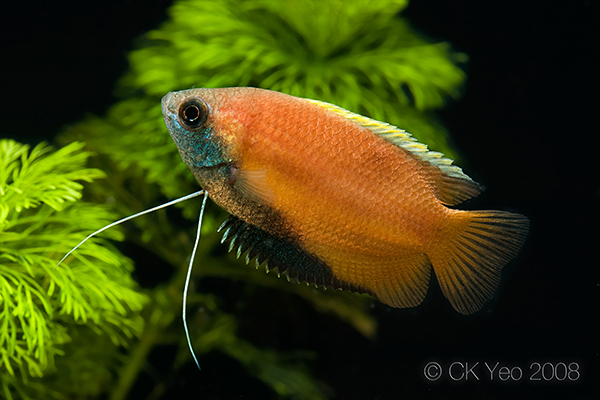
Trichogaster chunaHoney Gourami
Hamilton, 1822
Max length55mm SL2.2in SLTank60 × 30cm24 × 12inTemp22–27°C72–81°FpH6.0–7.5This species is readily available in the aquarium trade and is a good subject for those new to the hobby given its peaceable nature and relative adaptability in terms of water chemistry. It's sold under various names including A number of selectively-bred ornamental strains have also been produced including 'red', 'sunset', and 'golden', for which care is identical to the natural form.
Trichogaster fasciataBanded Gourami
authority not recorded
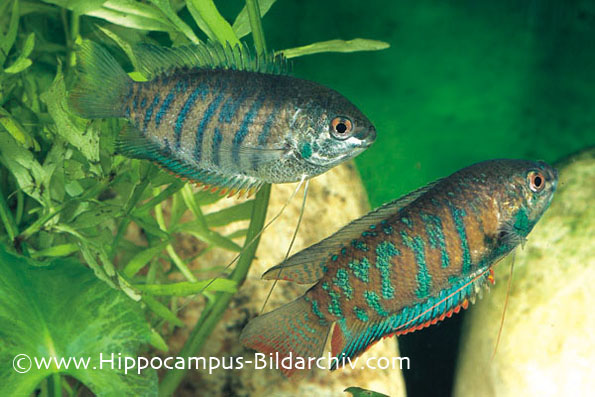
Max length100mm SL3.9in SLTanknot recordedTemp21–28°C70–82°FpH6.0–7.5This species is a popular food fish in it's native countries. It is not often seen for sale these days, although it is both beautiful and peaceful. The alternative common name of 'Giant Gourami' is not particularly apt, although it is the largest species in the genus. Like others in the suborder Anabantoidei, the species possesses an accessory breathing organ known as the labyrinth organ. So-called due to its maze-like structure, this organ allows the fish to breathe atmospheri...
Trichogaster labiosaThick-lipped Gourami
authority not recorded
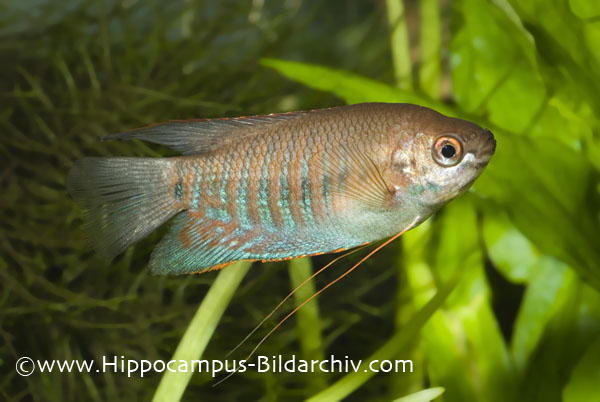
Max length100mm SL3.9in SLTank74 × 30cm29 × 12inTemp22–27°C72–81°FpH6.0–7.5Despite its ease of keeping and peaceable nature, this species is not particularly popular in the hobby, although it is imported quite regularly. A gold or 'sunset' strain exists, in which the barred patterning is replaced by an overall orange/gold colouration. This is not a natural variation, but has been selectively bred for the trade. The female of this form is almost as colourful as the male. Like others in the suborder Anabantoidei, the species possesses an accessory breathing...
Trichogaster laliusDwarf Gourami
authority not recorded
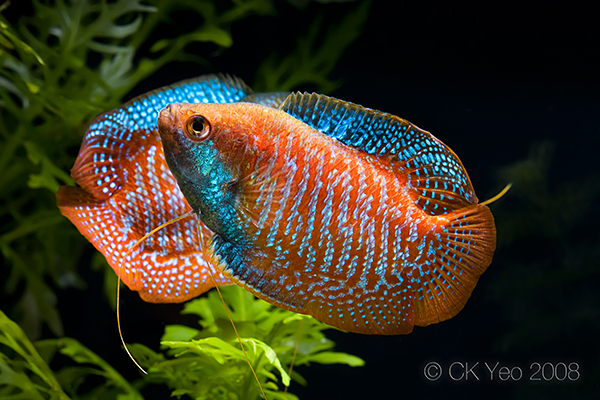
Max length88mm SL3.5in SLTanknot recordedTemp22–27°C72–81°FpH6.0–7.5The Dwarf Gourami is one of the most ubiquitous freshwater species in the aquarium hobby, and is unarguably a beautiful fish. Several colour forms have been line-bred for the trade and have also proved popular. These include "Sunset" (also sold as "Red" or "Robin") and "Neon" varieties, although it's highly debatable whether these come close to matching the brilliance of the natural form. Unfortunately the general quality of dwarf gouramis availab...
Trichopodus leeriiPearl Gourami
authority not recorded
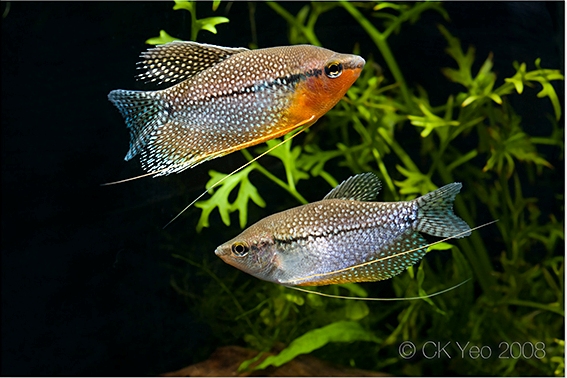
Max length120mm SL5in SLTank90 × 30cm36 × 12inTemp24–30°C75–86°FpH5.5–8.0A very hardy, beautiful species which is highly recommended to the beginner. A male in full breeding dress is one of the most stunning fish available in the hobby. T. leerii is alo fairly long-lived and may survive for 8 years or more in the aquarium. These fish will also consume the aquarium pest hydra....
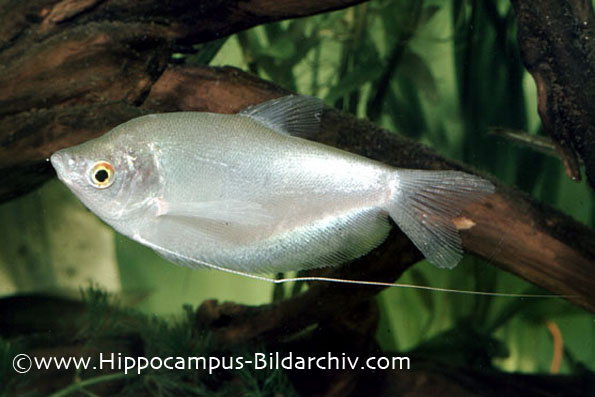
Trichopodus microlepisMoonlight Gourami
authority not recorded
Max length150mm SL6in SLTank90 × 30cm36 × 12inTemp25–30°C77–86°FpH6.0–7.5T. microlepis is not as colourful as some other gouramis but can make a striking addition to the community tank. The modified ventral fins are considerably longer than in other gourami species. It is often used as a food fish in its native countries....
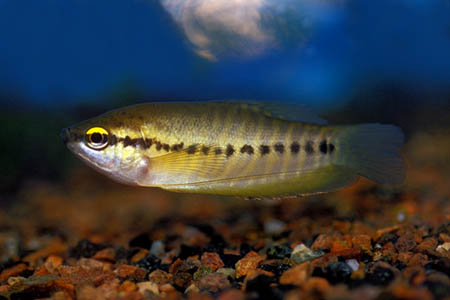
Trichopodus pectoralisSnakeskin Gourami
authority not recorded
Max length300mm SL12in SLTank120 × 30cm48 × 12inTemp22–30°C72–86°FpH5.8–8.5This species is not often seen for sale but is a very good addition to the larger community tank. It is cultured commercially for food in it's native countries, and is used to make a particularly tasty fish soup! The snakeskin gourami can also produce 'cracking' noises, especially during breeding or territorial exchanges....