Neochela dadiburjori
Dadio
Formerly Laubuca dadiburjori Menon, 1952 · Chela dadiburjori Menon, 1952 · Laubuka dadiburjori Menon, 1952
Last revised 2026Edit this page
On this page13 sections
Quick factsEdit
Difficulty6 of 8 measures
- Space
- large tank
- Water
- flexible
- Temp
- needs a steady temperature
- Diet
- unknown
- Temperament
- peaceful
- Social
- needs to be in a group
- Compatibility
- fine with others
Other demands
Each of these can raise the rating on its own, whatever the measures above say.
- Hardiness
- unknown
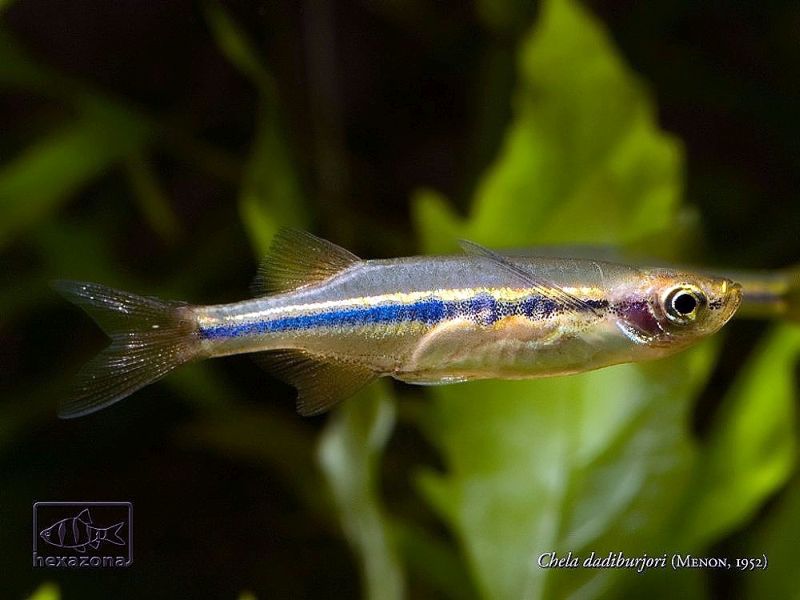
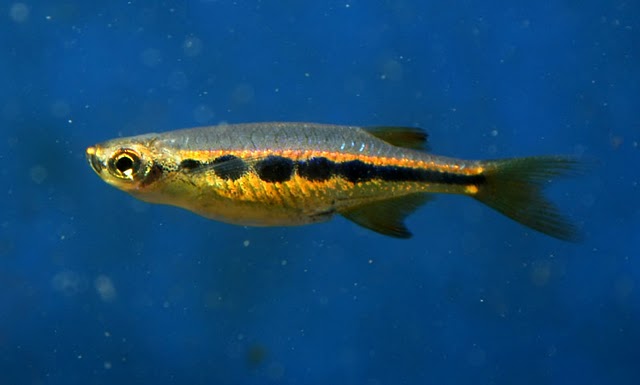
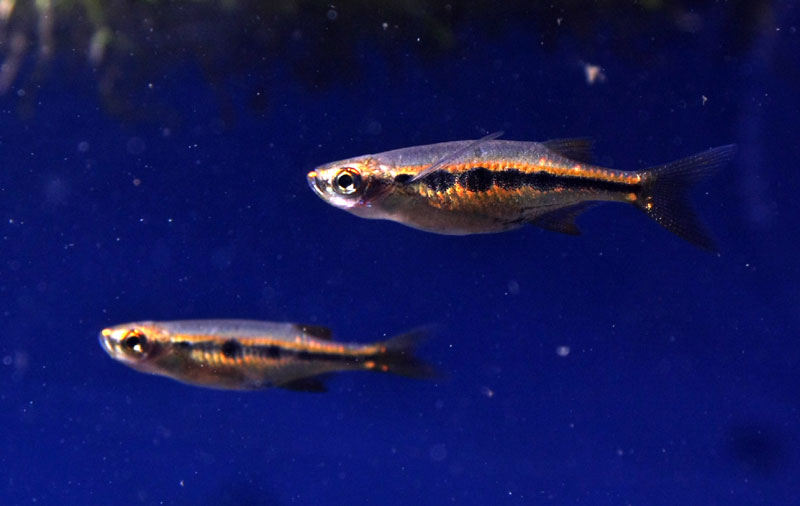
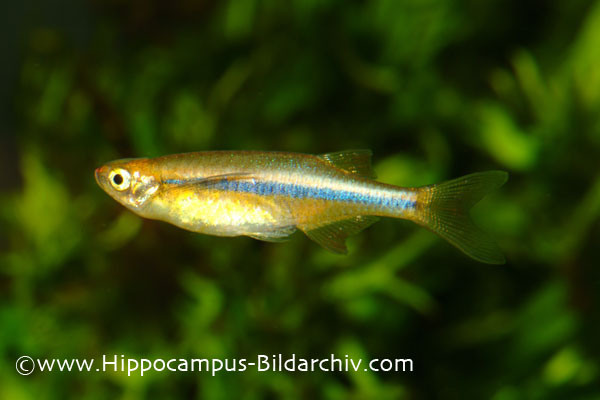
The dadio, Laubuka dadiburjori, is a small cyprinid endemic to southern India, recorded from Goa, Karnataka, Kerala and Tamil Nadu. It has also been marketed as 'Burjor's brilliance', 'orange chela' and 'orange hatchetfish', and does not exceed 30 mm SL. A dark bluish stripe runs from the eye to the caudal peduncle, typically forming 2-5 round spots. There is a suggestion that it is not a direct relative of other Laubuka and may warrant its own genus.
Etymology
EditLaubuka: from Layubuka, a vernacular Bengali name for L. laubuca, the type species of the genus.
dadiburjori: named in honour of Bombay aquarist Sam J. Dadiburjor, who collected, spawned and “brought this interesting fish to the notice of science”.
Distribution
EditEndemic to southern India with records from the states of Goa, Karnataka, Kerala, and Tamil Nadu, including the rivers Meenachil, Bharatapuzha, Chalakkudy, and Sita.
Type locality is 'Cochin, Kerala, India'.
Habitat
Write a noteEditInhabits small tributary streams and freshwater pools, and is typically associated with dense riparian or aquatic vegetation.
Aquarium size
Write a noteEditAn aquarium with base dimensions of 90 ∗ 30 cm36 ∗ 12 in or equivalent should be the smallest considered.
Maintenance
Write a noteEditShould ideally be maintained in a planted set-up with some water movement, with a layer of vegetation covering at least part of the surface.
Some clumps of Taxiphyllum or similar would be a useful addition as they will provide a source of micro-organisms upon which both fry and adults can feed, and they may also be used for egg deposition. An air-powered sponge-type filter unit is best and should be matured before the fish are added.
Water conditions
EditThese recommendations come from this profile’s own figures. They contain affiliate links, so we may earn a commission.
Diet
Write a noteEditLikely to feed on small invertebrates and other zooplankton in nature. In the aquarium it will accept dried foods of a suitable size but should also be offered meals of small live or frozen fare such as Daphnia, Artemia, grindal worms and suchlike.
Behaviour and compatibility
Write a noteEditThis species is very peaceful and places no special demands in terms of water chemistry thus it can be combined with many other species. As always when selecting a compatible community of fish thorough research is essential, and its small adult size must be a consideration.
It’s a schooling fish by nature and should be kept in a group of at least 8-10 specimens. Maintaining decent numbers will not only make the fish less nervous but result in a more effective, natural-looking display.
Sexual dimorphism
Write a noteEditSexually mature females are deeper-bodied and tend to grow slightly larger than males.
Reproduction
Write a noteEditAn egg-scattering spawner that does not exhibit parental care.
If the fish are in good condition they will spawn often and in a densely-planted, mature aquarium it’s possible that small numbers of fry may start to appear without intervention.
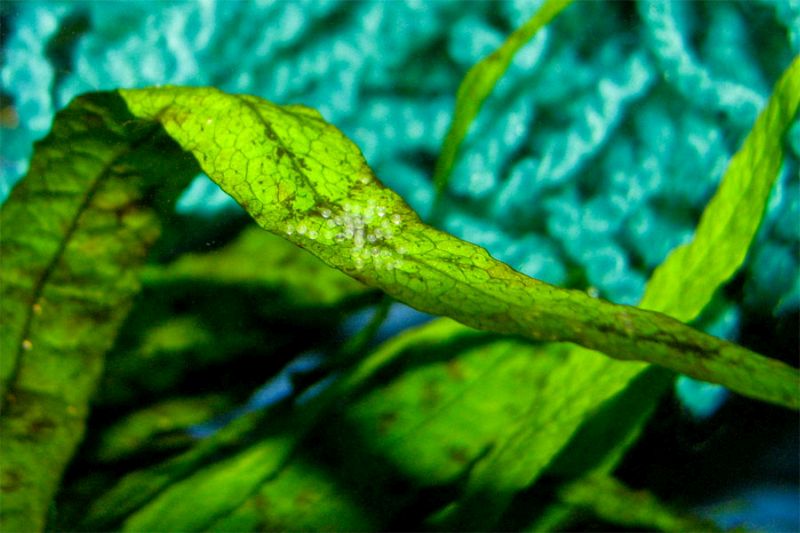
However if you want to increase the yield of fry a slightly more controlled approach is recommended; males tend to choose plant leaves or similar near the water surface as spawning sites therefore providing some suitably arranged décor is the first step. This can be done in the main tank or separately, as you prefer.
When the fish spawn the leaf holding the leaves is removed and placed into a separate container with some water from the aquarium it came from and a few drops of fungicide. An airline set to bubble gently should also be added.
Fertile eggs hatch in 2-3 days, and the fry become free swimming in a further 4-5 days. At this point they should be offered an infusoria-grade food, until large enough to accept Artemia nauplii and such like.
Notes
EditL. dadiburjori has also been marketed as 'Burjor's brilliance', 'orange chela', and 'orange hatchetfish' in the aquarium trade.
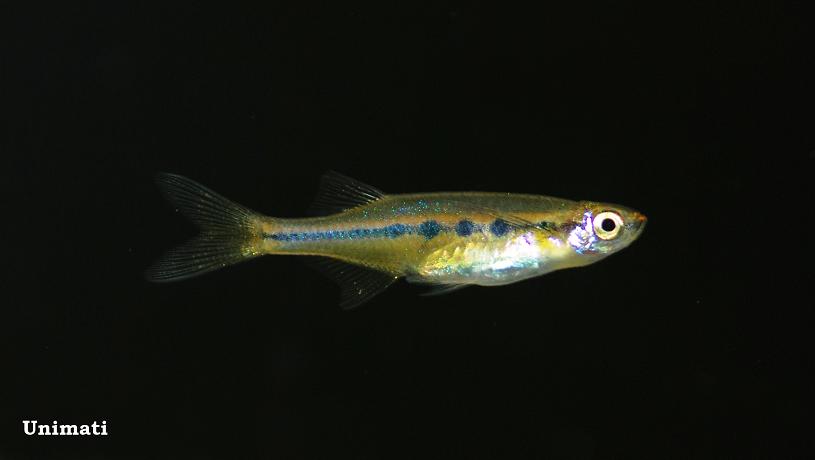
It can be distinguished from other members of the genus by the following characters: lateral line absent or perforating only 2-5 scales; pharyngeal teeth hooked; body size small, not exceeding 30 mm SL; body depth less than 25 % SL; colour pattern comprising a dark bluish lateral stripe extending from the eye to the caudal peduncle, typically, but not always, forming 2-5 circular spots along its length.
The generic name tended to be spelled 'Laubuca' for a number of years, but it is now established that Bleeker used 'Laubuka' first, therefore this spelling has priority.
Among other cyprinids Laubuka species are closely related to the genera Chela, Malayochela, and Devario according to recent phylogentic research, which also supports the splitting of the fomerly much larger Chela grouping into Chela, Malayochela, and Laubuka. There is also a suggestion that L. dadiburjori is not a direct relative of other Laubuka species and may warrant placement in its own genus.
References
- Menon, A. G. K. (1952). Notes on fishes in the Indian Museum. XLVI. On a new fish of the genus Laubuca from Cochin. Records of the Indian Museum (Calcutta) v. 49 (pt 1), 1-4
- Kulabtong, S., S. Suksri and C. Nonpayom (2012). A new species of genus Laubuca Bleeker, 1860 cyprinid fish from Bangladesh (Cypriniformes, Cyprinidae). Biodiversity Journal 3(1), 93-95
- Fang, F., M. Norén, T. Y. Liao, M. Källersjö and S. O. Kullander (2009). Molecular phylogenetic interrelationships of the south Asian cyprinid genera Danio, Devario and Microrasbora (Teleostei, Cyprinidae, Danioninae). Zoologica Scripta 38(1), 1-20
- Pethiyagoda, R., M. Kottelat, A. Silva, K. Maduwage and M. Meegaskumbura (2008). A review of the genus Laubuca in Sri Lanka, with description of three new species (Teleostei: Cyprinidae). Ichthyological Exploration of Freshwaters 19(1), 7-26
- Ramsay, G. (2011). Laubuca dadiburjori – Dadio Available online at: http://fcas.wordpress.com/2011/10/26/laubuca-dadiburjori-dadio/
Species images · 10
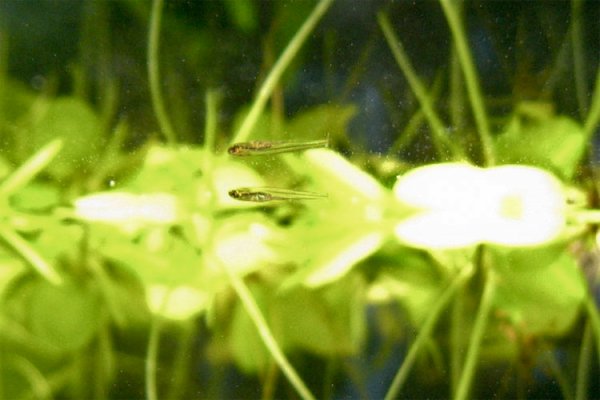
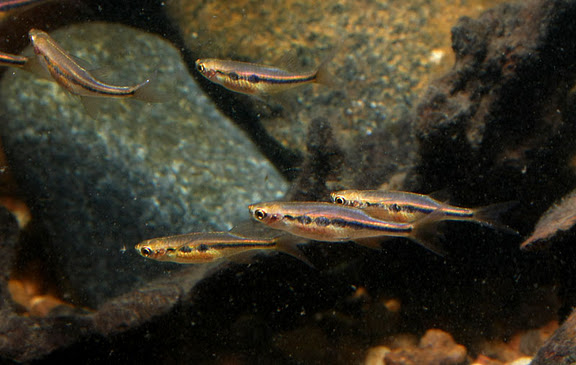
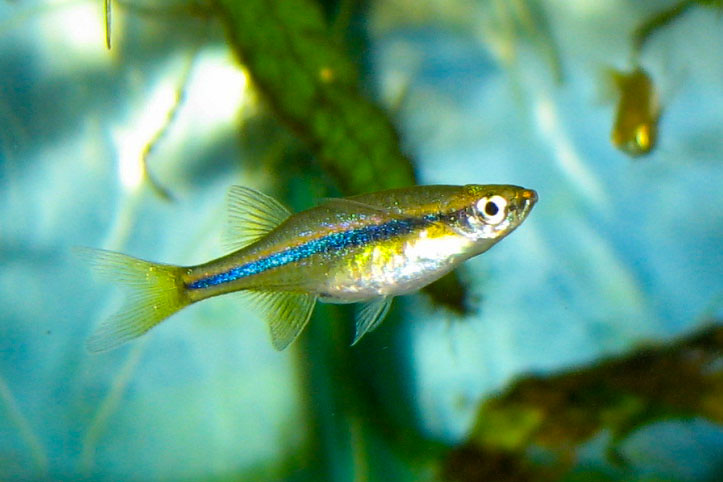
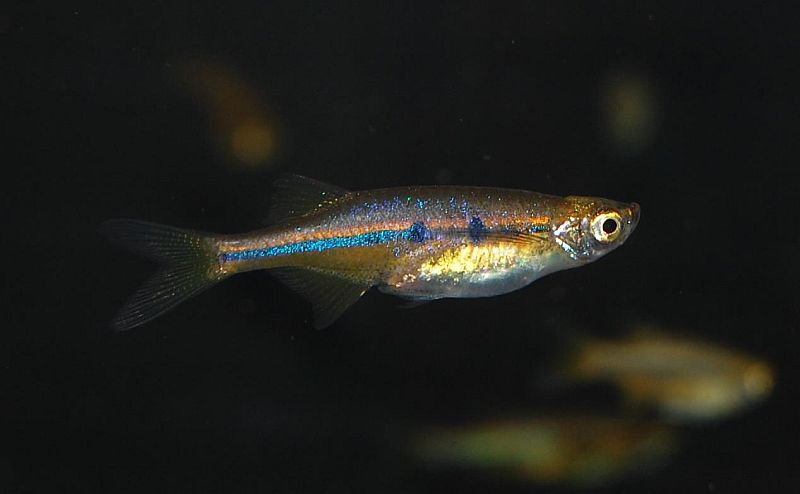
These photographs are used with each photographer's permission.
Send a photographHow the name has changed
Kottelat (2013) places dadiburjori in Neochela, with FishBase agreeing.
2013The fishes of the inland waters of southeast Asia: a catalogue and core bibliography of the fishes known to occur in freshwaters, mangroves and estuaries.
Distribution
Profile completeness23 of 24
Community
Questions about Neochela dadiburjori?
Ask on Discord