Neoheterandria elegans
Tiger Teddy
Last revised 2014Edit this page
On this page12 sections
Quick factsEdit
Difficulty6 of 8 measures
- Space
- small tank
- Water
- needs a steady pH
- Temp
- flexible
- Diet
- unknown
- Temperament
- needs a tank of its own
- Social
- needs to be in a group
- Compatibility
- choose tankmates carefully
Other demands
Each of these can raise the rating on its own, whatever the measures above say.
- Hardiness
- unknown
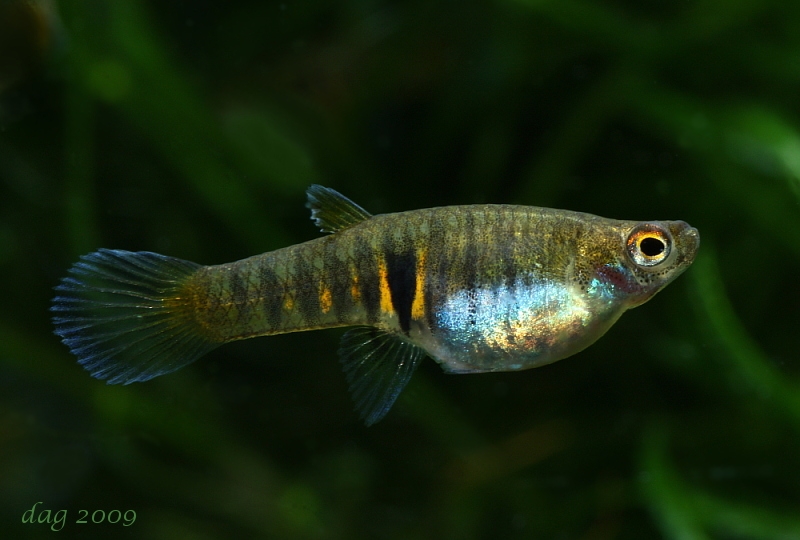
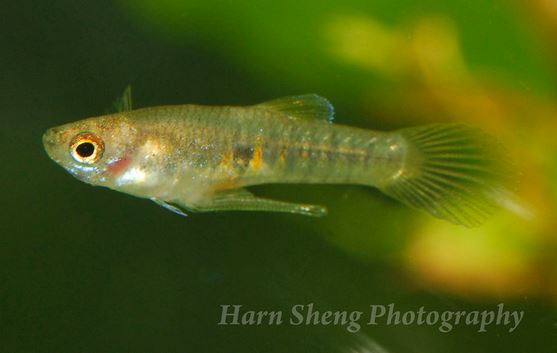
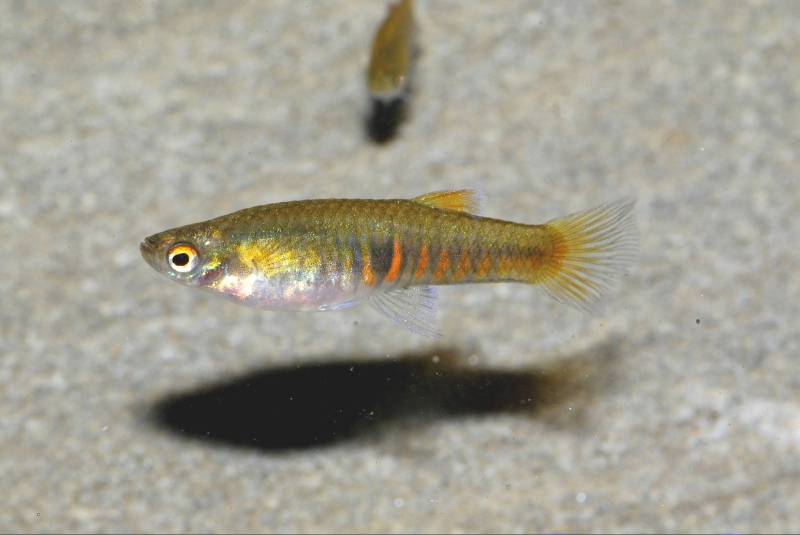
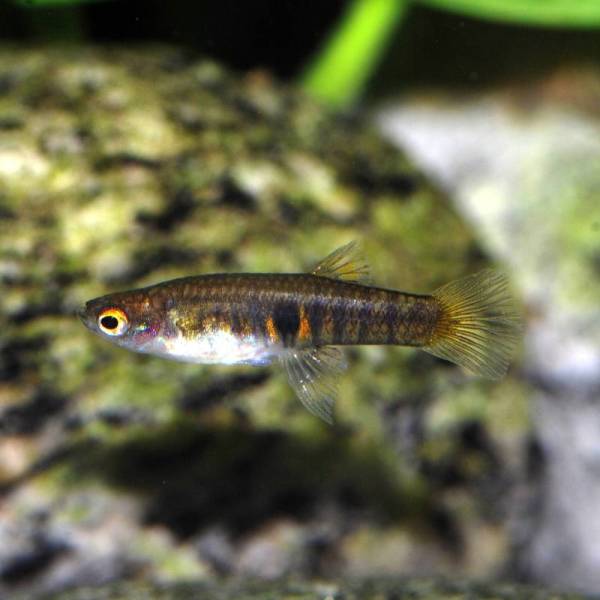
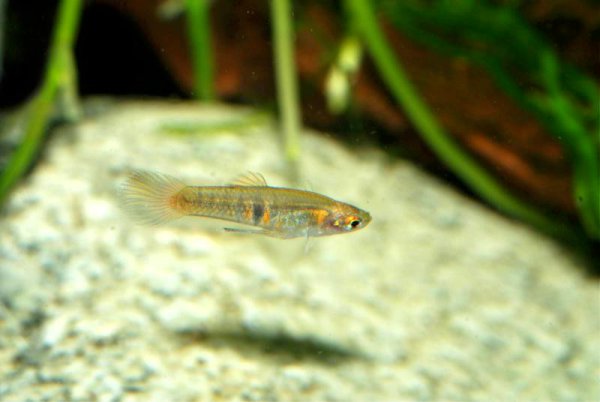
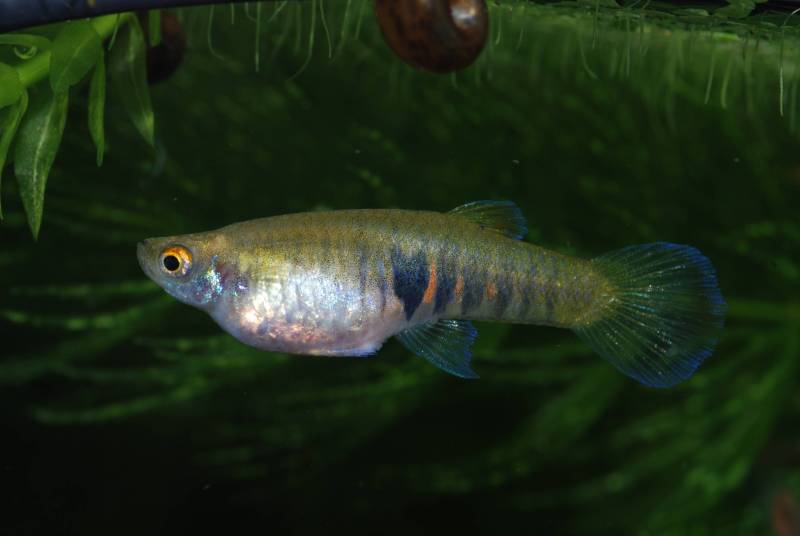
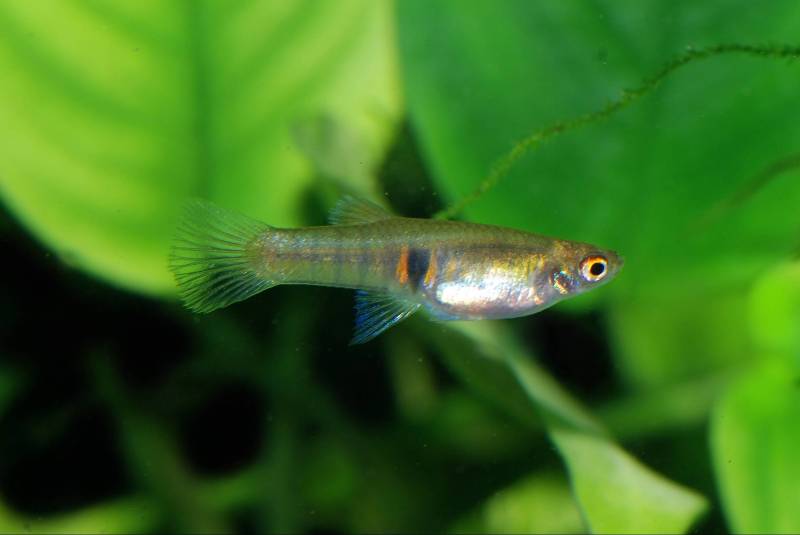
The tiger teddy, Neoheterandria elegans, is a small livebearer endemic to the Río Atrato drainage in northwestern Colombia. It appears to be quite rare in the wild and in the hobby. Shy and diminutive, it is best kept alone in a small colony in a heavily-planted tank with exceptionally clean water. The fry are only 2-3 mm long and initially need infusoria-type foods.
Etymology
EditNeoheterandria: from the Ancient Greek νεο- (neo-), meaning 'new, young', ἕτερος (heteros), meaning 'other, another, different', and ἀνδρός (andros), meaning 'male'.
elegans: from the Latin elegans, meaning 'fine, elegant, handsome'.
Distribution
EditAquarium size
Write a noteEditA pair can be maintained in an aquarium with base dimensions of 30 ∗ 20 cm12 ∗ 8 in but larger quarters are necessary for a group.
Maintenance
Write a noteEditA gently filtered, heavily-planted set-up suits is recommended, and exceptionally clean water is a prerequisite meaning weekly water changes of around 50% are required.
Water conditions
EditTemperature: 24 – 30 °C75 – 86 °F, although values towards the upper extreme of this range should not be maintained for extended periods of time.
pH: 7.0 – 8.0
Hardness: 5 – 25 dGH; unlike many poeciliids this species will tolerate softer water.
These recommendations come from this profile’s own figures. They contain affiliate links, so we may earn a commission.
Diet
Write a noteEditUnfussy and omnivorous, it will accept most foods offered. Being a micro predator, it’s particularly fond of small live or frozen varieties such as Artemia or Daphnia, although crushed dry foods are also accepted.
If the aquarium contains plenty of fine-leaved plants, sufficient micro-organisms for the young should be available.
Behaviour and compatibility
Write a noteEditUnsuitable for the general community aquarium due to its diminutive size. It is more shy than the somewhat similar Heterandria formosa and is best kept alone in a small colony.
Females are sometimes aggressive and this can cause casualties, but such behaviour can be reduced by maintaining a heavily planted set-up as mentioned above.
Sexual dimorphism
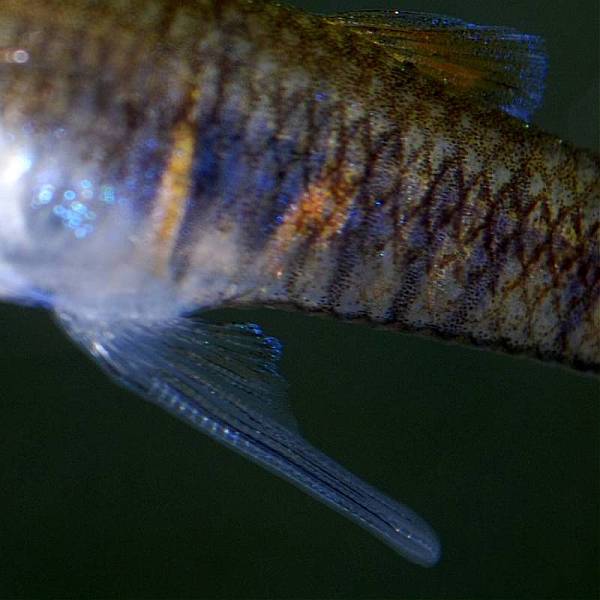
Write a noteEditMales are significantly smaller than females and possess a prominent gonopodium.
Reproduction
Write a noteEditThe primary issue is that the fry are only 2 – 3 mm0.1 in long and cannot eat microworms, freshly hatched Artemia and suchlike for the first few days. They initially require infusoria-type foods but grow fairly quickly and are able to reproduce at an age of as little as 3 months.
The gestation period is around 30 days. This species has a slightly different method of fry production to most other livebearers, involving a process known as ‘superfoetation’. This is defined as ‘formation or development of a second foetus when one is already present in the uterus’. Fry at different stages of development can therefore be present in the uterus of the fish at any given time. In addition, the egg yolks of the species are nutritionally poor, and the developing fry derive much of their nourishment via organs that function in a similar way to the placenta of mammals. As a result of this process, fry are dropped continually rather than in defined broods. You’ll see a few fry appearing every day or two for about a week. If well fed, the adults will usually not harm them.
Notes
EditThis beautiful, shy species appears to be quite rare in the wild as well as in the aquarium hobby, but is is occasionally available from specialist retailers or breeders.
The genus Neoheterandria has been included in the nominal tribe Heterandriini within the family Poeciliidae as first proposed by Hubbs (1924). The included genera have changed several times but most commonly comprise Priapichthys, Neoheterandria, Heterandria, Poeciliopsis, and Phallichthys.
Modern phylogenetic studies do not tend to support the monophyly of this assemblage, however, with the most recent suggesting Neoheterandria to be more closely-related to the genera Scolichthys and Xenophallus (Morales-Cazan & Albert, 2012)[2] or to form a distinct geographic sub-clade with Poeciliopsis (Hrbek et al., 2007)[3].
Thanks to Karsten Plesner.
References
- Henn, A. W. (1916). On various South American poeciliid fishes. Annals of the Carnegie Museum 10(1-2), 93-142
- Morales-Cazan, A. and J. S. Albert (2012). Monophyly of Heterandriini (Teleostei: Poeciliidae) revisited: a critical review of the data. Neotropical Ichthyology 10(1), 19-44
- Hrbek, T., J. Seckinger, and A. Meyer (2007). A phylogenetic and biogeographic perspective on the evolution of poeciliid fishes. Molecular Phylogenetics and Evolution 43, 986-998
- Wischnath, L. (1993). Atlas of livebearers of the world. T.F.H. Publications, Inc., United States of America, 1-336
Species images · 8
These photographs are used with each photographer’s permission.
Send a photographDistribution
Profile completeness23 of 24
Community
Questions about Neoheterandria elegans?
Ask on Discord