Neolamprologus lemairii
Lemaire's Lamprologus
Formerly Lamprologus lemairii
Last revised 2026Edit this page
On this page11 sections
Quick factsEdit
Difficulty3 of 8 measures
- Space
- large tank
- Water
- flexible
- Temp
- needs a steady temperature
- Diet
- unknown
- Temperament
- unknown
- Social
- unknown
- Compatibility
- unknown
Other demands
Each of these can raise the rating on its own, whatever the measures above say.
- Hardiness
- unknown
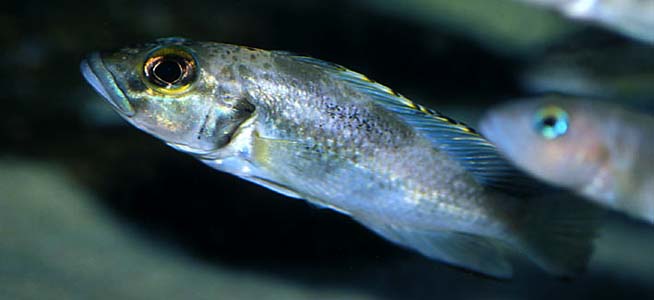
Lemaire's lamprologus, Neolamprologus lemairii, is a piscivorous cichlid endemic to Lake Tanganyika, growing to around 25 cm. An ambush predator, it lies motionless on the substrate so that its mottled pattern makes it appear dead to the smaller fish that come to investigate. It is unsuited to the general aquarium and should be kept alone, with tankmates too large to be considered food. In nature it spawns in caves.
Distribution
EditHabitat
Write a noteEditThis species has no specific habitat, although it is most often seen around the shorelines of the lake.
Aquarium size
Write a noteEdit120 ∗ 45 ∗ 38 cm48 ∗ 18 ∗ 15 in - ~205 litres~54 US gal
Maintenance
Write a noteEditN. lemairii has no special requirements with regards to decor. A sandy substrate is preferable, and the tank can be decorated with piles of rocks as with general Tanganyikan setups.
Water conditions
EditTemperature: 23 – 27 °C73 – 81 °F
pH: 7.5-9.0
Hardness: 10-25°H
These recommendations come from this profile’s own figures. They contain affiliate links, so we may earn a commission.
Diet
Write a noteEditBehaviour and compatibility
Write a noteEditShould only be kept with robust species too large to be considered food. Suitable tankmates include Frontosa, Benthochromis tricoti and other large Rift Lake species. It is a loner in nature and therefore should be kept as a solitary specimen in the aquarium.
Sexual dimorphism
Write a noteEditCannot be sexed by external means.
Reproduction
Write a noteEditIt has not been bred in captivity but is known to spawn in caves in nature.
Notes
EditA highly piscivorous, predatory species unsuited to the general aquarium. It is an ambush predator in nature, often being seen hanging motionless around rocky structures or on the floor of the lake. It is a sedentary species and does not move around a lot. This is a behavioural adaptation known as thanatosis, or 'playing dead'. This strategy is usually used as a defensive means in other animals, but in N. lemairii it is adapted for offensive means. The fish has a mottled colour pattern and this, combined with the aforementioned ability to lie motionless on the substrate, makes the fish appear dead to unsuspecting prey. When a smaller fish attempts to investigate the 'corpse' it recieves a nasty surprise! We do not recommend this fish for the home aquarium, except to true enthusiasts.
Species images · 2
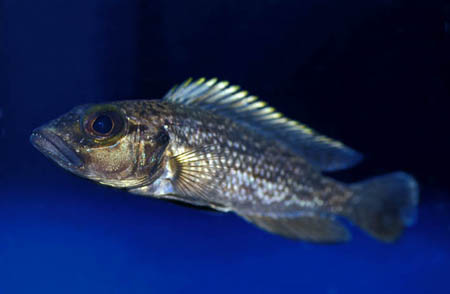
These photographs are used with each photographer’s permission.
Send a photographHow the name has changed
Moved from Lamprologus lemairii to Neolamprologus lemairii.
Distribution
Profile completeness18 of 24
75% complete
Also missing: taxonomic authority, etymology.
Community
Questions about Neolamprologus lemairii?
Ask on Discord