Sarotherodon melanotheron
Black Chin Tilapia
Formerly Sarotherodon melanotheron melanotheron
Last revised 2026Edit this page
On this page11 sections
Quick factsEdit
Difficulty4 of 8 measures
- Space
- large tank
- Water
- needs a steady pH
- Temp
- flexible
- Diet
- unknown
- Temperament
- eats smaller fish
- Social
- unknown
- Compatibility
- unknown
Other demands
Each of these can raise the rating on its own, whatever the measures above say.
- Hardiness
- unknown
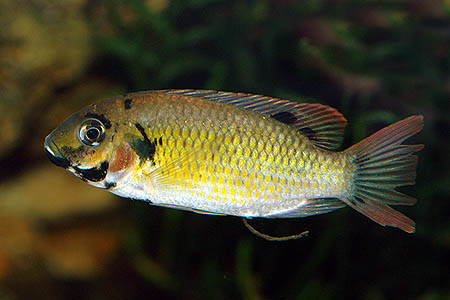
The black chin tilapia, Sarotherodon melanotheron melanotheron, is a salt-tolerant cichlid from coastal western Africa. Its main habitat is estuarine water, especially mangrove areas. One of five subspecies of S. melanotheron, it is a paternal mouthbrooder. It has been introduced for aquaculture, and thriving populations exist in parts of Asia, Europe and the USA.
Distribution
EditWidespread in coastal regions throughout Western Africa, being found in Nigeria, Cameroon, Senegal, Ivory Coast, Guinea, Liberia, Togo, Democratic Republic of Congo, Benin, Gambia, GuineaBissau, Republic of Congo, Mauritania, Ghana and Sierra Leone.
Habitat
Write a noteEditA salt-tolerant species whose main habitat is estuarine waters, especially in areas of mangrove. It is also found in fresh water lagoons and rivers.
Aquarium size
Write a noteEdit120 ∗ 38 ∗ 30 cm48 ∗ 15 ∗ 12 in - ~137 litres~36 US gal.
Maintenance
Write a noteEditNot critical. A sandy substrate is preferable but decor is basically down to personal choice. This could include smooth rocks, pieces of driftwood and robust plants such as Anubias sp. Softer leaved varieties will most likely be eaten. It seems to do equally well in neutral to hard fresh water or under lightly brackish (1.005 sg) conditions.
Water conditions
EditTemperature: 23 – 28 °C73 – 82 °F
pH: 7.0-8.0
Hardness: 9-19°H
These recommendations come from this profile’s own figures. They contain affiliate links, so we may earn a commission.
Diet
Write a noteEditFeed a varied diet of dried, live and frozen foods. Ensure the fish receive some vegetable matter in the diet, such as spirulina flake, nori etc.
Behaviour and compatibility
Write a noteEditNot particularly aggressive, unless spawning and can be kept with similarly robust African cichlids or more docile Central American species, Loricariids, Synodontis species, etc. Small fish will be eaten. When not breeding, it occurs in schools in nature and can be kept in groups in aquaria. A very large tank is required, however, as the fish do become territorial when breeding.
Sexual dimorphism
Write a noteEditNot at all easy to sex. Male fish tend to have more black around the head area and when mature have a god-coloured operculum, which is transparent in females.
Reproduction
Write a noteEditPossible. Paternal mouth-brooder. The fish are tolerant of a wide range of water conditions and are not choosy about tank decor, although a substrate of sand or fine gravel is recommended. Condition the fish on a varied diet.
Courtship in this species is fairly lengthy and is initiated by the female. When in condition, she will begin to excavate a pit in the substrate. When a male is receptive, he joins the female in excavating the spawning site. At this point the pair begin to show a marked increase in territorial behaviour, particularly the male. During spawning itself, the female lays her eggs directly onto the substrate in the centre of the pit, and the male fertilises them immediately, but does not pick them up until the female has finished laying. There may then be a period of some time before he proceeds to pick up the whole brood in his mouth. The female leaves the male's territory after spawning and plays no further part.
The eggs hatch in 4-6 days and the male continues to hold the fry as they develop, eventually releasing them after 2-3 weeks. Brood care by the father ceases at this point and the fry are left to fend for themselves. If you wish to raise the whole brood, it may be wise to remove the male to a separate tank after spawning.
The fry are large enough to accept newly hatched brine shrimp, sieved daphnia or microworm from the moment they are released.
Notes
EditAt present there are 5 sub-species, Sarotherodon melanotheron melanotheron, S. m. heudelotii, S. m. leonensis, S. m. nigripinnis and S. m. paludinosus. Confusingly, some of these are maternal mouthbrooders.
It has been introduced into several countries for aquaculture purposes and thriving populations now exist in areas of Asia, Europe and the USA.
Species images · 2
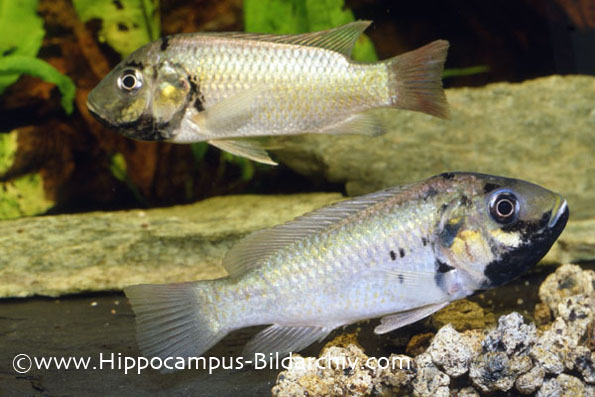
These photographs are used with each photographer's permission.
Send a photographHow the name has changed
Renamed from Sarotherodon melanotheron melanotheron to Sarotherodon melanotheron.
2026Eschmeyer's Catalog of Fishes: genera, species, references
Distribution
Profile completeness20 of 24
83% complete
Also missing: etymology.
Community
Questions about Sarotherodon melanotheron?
Ask on Discord