Synodontis granulosus
Formerly Synodontis granulosa
Last revised 2026Edit this page
On this page11 sections
Quick factsEdit
Difficulty4 of 8 measures
- Space
- very large tank
- Water
- needs alkaline water, kept steady
- Temp
- needs a steady temperature
- Diet
- unknown
- Temperament
- territorial
- Social
- unknown
- Compatibility
- unknown
Other demands
Each of these can raise the rating on its own, whatever the measures above say.
- Hardiness
- unknown
- Needs a very large tank
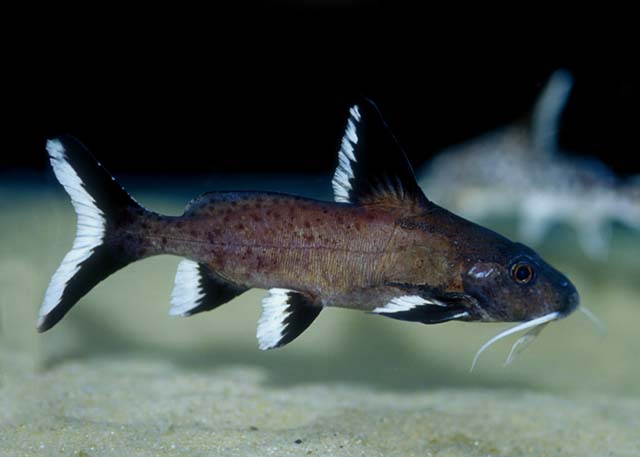
Synodontis granulosa is a large Synodontis catfish endemic to the northern end of Lake Tanganyika, in Burundi and Tanzania. Its deep-water habitat, limited range and solitary lifestyle make collection difficult, so it is rarely seen for sale. It is territorial with its own kind and can be very aggressive in smaller aquaria, though settled fish often become tame enough to feed from the hand. Captive-bred fish from Eastern Europe have been reported to be hybrids.
Distribution
EditBurundi, Tanzania. This species is endemic to the northern end of Lake Tanganyika.
Habitat
Write a noteEditBurundi, Tanzania. This species is endemic to the northern end of Lake Tanganyika.
Aquarium size
Write a noteEdit150 ∗ 60 ∗ 60 cm60 ∗ 24 ∗ 24 in - ~540 litres~143 US gal. It can be very aggressive and territorial when kept in smaller aquaria.
Maintenance
Write a noteEditShould be housed in a Lake Tanganyika biotope setup, with piles of rocks arranged to form caves and areas of open water for swimming.
Water conditions
EditTemperature: 24 – 28 °C75 – 82 °F
pH: 7.8-8.5
Hardness: 8-35 dH
These recommendations come from this profile’s own figures. They contain affiliate links, so we may earn a commission.
Diet
Write a noteEditSynodontis are omnivorous and are most unfussy in terms of feeding. Frozen, live and dried foods are all accepted. It also relishes vegetable matter in the form of shelled peas, cucumber etc., which it will rasp at with the teeth in its lower jaw.
Behaviour and compatibility
Write a noteEditShould not be kept with any fish so small as to be considered food but makes a good addition to a community of larger hard water cichlids, ideally of Tanganyikan origin. It is territorial with conspecifics and a group would require a huge tank.
Sexual dimorphism
Write a noteEditAdult females are plumper than males. It can also be sexed by examining the genital papillae. This is not for the amateur however. The fish should be held ventral side up in the palm of your hand. The dorsal fin should be taken between your middle and ring fingers in order to avoid being pierced by the sharp dorsal fin rays. The genital area you are looking for is concealed beneath the pelvic fins. This can be exposed by pulling (gently) on the caudal fin. A male fish will exhibit an extended papillae which should be pointed and ridged. The spermatoduct can be seen on the caudal side. Females also have a clearly visible papillae but this is more rounded and the oviduct is on the opposite side to the male's spermatoduct. Most species of medium/large Synodontis can be sexed using this method but it should be noted that most species take 2 years or more to reach sexual maturity.
Reproduction
Write a noteEditNotes
EditOne of the most stunning and sought after species of Synodontis and though the cost of ownership has dropped slightly, it still commands a high price. Its natural deep water habitat, limited range and solitary lifestyle make collection for the hobby difficult and so it is rarely seen for sale. It also appears that the areas of the lake in which it occurs are threatened with ecological disaster.
In the aquarium S. granulosus is intelligent and can develop into a real character, with many specimens becoming tame enough to feed from the owner's hand. Once settled, they can be observed cruising the aquarium whatever the time of day.
A truly spectacular specimen catfish and comes highly recommended.
Species images · 2
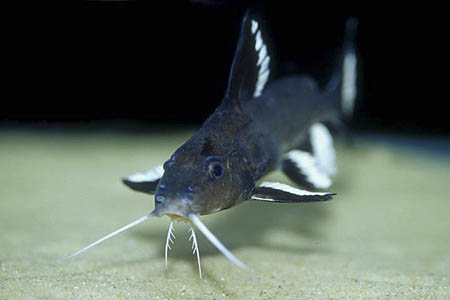
These photographs are used with each photographer's permission.
Send a photographHow the name has changed
Renamed from Synodontis granulosa to Synodontis granulosus.
2026Eschmeyer's Catalog of Fishes: genera, species, references
Distribution
Profile completeness19 of 24
79% complete
Also missing: a common name, etymology.
Community
Questions about Synodontis granulosus?
Ask on Discord