Hobbyist group · Other groups
Synbranchiformes
Synbranchiformes spans 2 families.
- Species
- 7
- Families
- 2
- Genera
- 4
- Photographed
- 6 of 7
- Difficulty rated
- 7 of 7
Families
Where they come fromnative records only
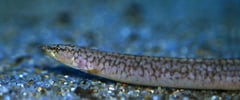
Caecomastacembelus albomaculatus
Mastacembelidae · authority not recorded
Caecomastacembelus albomaculatus is a spiny eel endemic to Lake Tanganyika, where it inhabits rocky areas around the shoreline. Rarely seen in the hobby, it suits a Tanganyikan community of species too large to be considered food, and its hard, alkaline water requirements rule out most other freshwater tanks. The stiffened dorsal rays that give spiny eels their name mean care is needed when handling it.
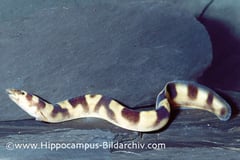
Caecomastacembelus plagiostomus
Mastacembelidae · authority not recorded
Caecomastacembelus plagiostomus is a spiny eel endemic to Lake Tanganyika, found in shallow water over rocky areas around the shoreline. Very rarely seen in the hobby, it suits a Tanganyikan community of species too large to be considered food and is somewhat territorial with conspecifics. It grows to 300 mm SL, and its stiffened dorsal rays call for care when handling it.
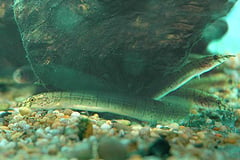
Macrognathus zebrinusZebra Spiny Eel
Mastacembelidae · authority not recorded
The zebra spiny eel, Macrognathus zebrinus, is a spiny eel from Myanmar, found in rivers and swamps with large amounts of aquatic vegetation. It was previously included in the closely related genus Mastacembelus. The sharp dorsal rays that give spiny eels their name can easily puncture human skin. Peaceful with fish it cannot swallow, it tends to be territorial with its own kind and grows to 460 mm, although usually smaller in aquaria.
Mastacembelus armatusTyre-Track Eel
Mastacembelidae · authority not recorded
The tyre-track eel, Mastacembelus armatus, is a spiny eel from India, Thailand and Sumatra, also known as the white-spotted spiny eel. Growing to around 91 cm, it hides during the day and often buries itself, so it needs sand, plenty of hiding places and a close-fitting hood. It eats live fish in the wild, and tankmates should be too large to be considered prey.
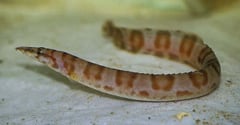
Mastacembelus ellipsiferTanganyikan Spiny Eel
Mastacembelidae · authority not recorded
The Tanganyikan spiny eel, Mastacembelus ellipsifer, is a spiny eel endemic to Lake Tanganyika. It is found around the shores, most often where the rocks give way to sandier substrates, and spends much of its time burrowed in the substrate, so the aquarium needs a layer of sand. Nocturnal and predatory, it is best kept in a Tanganyikan community with species too large to be considered food.
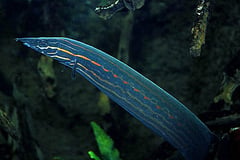
Mastacembelus erythrotaeniaFire Eel
Mastacembelidae · Bleeker, 1850
The fire eel, Mastacembelus erythrotaenia, is a spiny eel recorded from Laos, Vietnam, Cambodia, Thailand, Malaysia and Indonesia. It usually inhabits sluggish lowland waters including floodplains and slow-moving rivers, and is also a food fish in its native countries. In the aquarium it hides away during the day and often buries itself, so it needs a sand substrate, plenty of cover and a close-fitting hood.

Monopterus albusSwamp Eel
Synbranchidae · authority not recorded
The swamp eel, Monopterus albus, is very widespread, found from India and China to Japan, Indonesia, the Philippines and Australia. Not a true eel, it has a single gill slit and an accessory breathing organ, and during dry spells it burrows into wet earth. Growing to around 100 cm, nocturnal and piscivorous, it is best kept singly, and the tank must have an extremely tightly-fitting, heavy cover.