River
Pattani
Only species with a profile on Seriously Fish are counted.
- Species
- 3
- Families
- 3
- Photographed
- 3 of 3
- Difficulty rated
- 3 of 3
Basin
Shares fishes withspecies recorded from both
Runs through
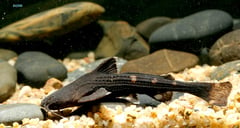
Acrochordonichthys rugosusAsian Banjo Catfish
Akysidae · Bleeker, 1846
The Asian banjo catfish, Acrochordonichthys rugosus, is an akysid catfish from Java, Sumatra, Borneo, Peninsular Malaysia and southern Thailand. The most commonly encountered member of the genus in the trade, it is still by no means common, and body colouration varies widely even among fish from a single locality. Like its congeners it can secrete a milky substance from the axillary pore when stressed, and this can quickly kill other fishes in the confines of an aquarium.

Betta imbellisCrescent Betta
Osphronemidae · Ladiges, 1975
The crescent betta, Betta imbellis, is a labyrinth fish thought to be native to southern Thailand, Peninsular Malaysia and northern Sumatra. It has been line-bred for aggression in southern Thailand and hybridised with B. splendens and other congeners for the ornamental trade, producing colour forms that do not occur naturally. Introduced ornamental forms and other Betta spp. are having an adverse effect on the genetic integrity of some wild populations.

Labiobarbus leptocheilus
Cyprinidae · Valenciennes, 1842
Labiobarbus leptocheilus is a large cyprinid widespread in Southeast Asia, from the Mekong and Salween to the Greater Sunda Islands. Different populations vary somewhat in appearance, and it may turn out to represent a group of closely-related species. The Cambodian Mekong population has been considered a distinct species, Labiobarbus lineatus, and that name is widely used in the ornamental trade although it is currently a synonym. It grows to 260 mm SL and needs spotless, well-oxygenated water.