Results for “species”
Type a name: scientific, common, or one a species used to go by. Or narrow the catalogue with the filters.
Filters
Herichthys cyanoguttatusTexas Cichlid
authority not recorded
Max length300mm SL12in SLTanknot recordedTempnot recordedpH6.0–7.5Like many cichlids, members of the genus Herichthys share something of a confused taxonomic past. Erected in 1854 with H. cyanoguttatus the type species, its members were moved into Cichlasoma by Regan in 1905. However following a reclassification of Cichlasoma by Kullander in 1983 it was once again deemed valid. In 1996 Kullander suggested Herichthys should only contain species "sharing a colour pattern of short vertical bars or black spots posteriorly from the middle of the side, and a un...
Herichthys pearsei
authority not recorded
Max length425mm SL17in SLTank240 × 60cm96 × 24inTemp24–30°C75–86°FpH7.2–8.5Like many cichlids, members of the genus Herichthys share something of a confused taxonomic past. Erected in 1854 with H. cyanoguttatus the type species, its members were moved into Cichlasoma by Regan in 1905. However following a review of Cichlasoma by Kullander in 1983 it was once again deemed valid. In 1996 Kullander suggested Herichthys should only contain species "sharing a colour pattern of short vertical bars or black spots posteriorly from the middle of the side, and a unique breed...
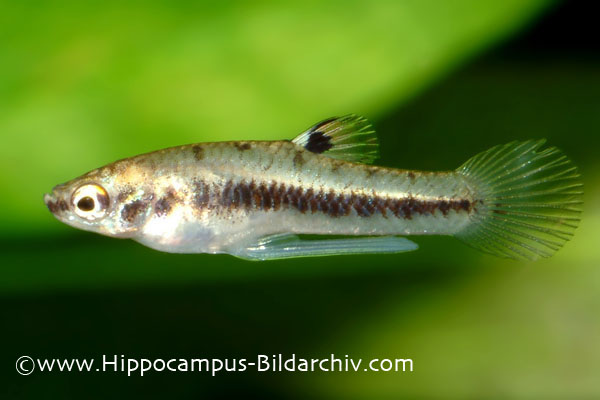
Heterandria formosaLeast Killifish
Girard, 1859
Max length20mm SL0.8in SLTanknot recordedTemp20–26°C68–79°FpH7.0–8.0Also known as the mosquito fish, least killifish or dwarf top minnow, H. formosa is the smallest known livebearing fish species, and one of the smallest overall fish species in the world. It's not often seen for sale these days, although it's quite widely available in hobbyist circles. When buying these, ensure they have been identified correctly as they're sometimes confused with the much more aggressive mosquito fish of the genus Gambusia....
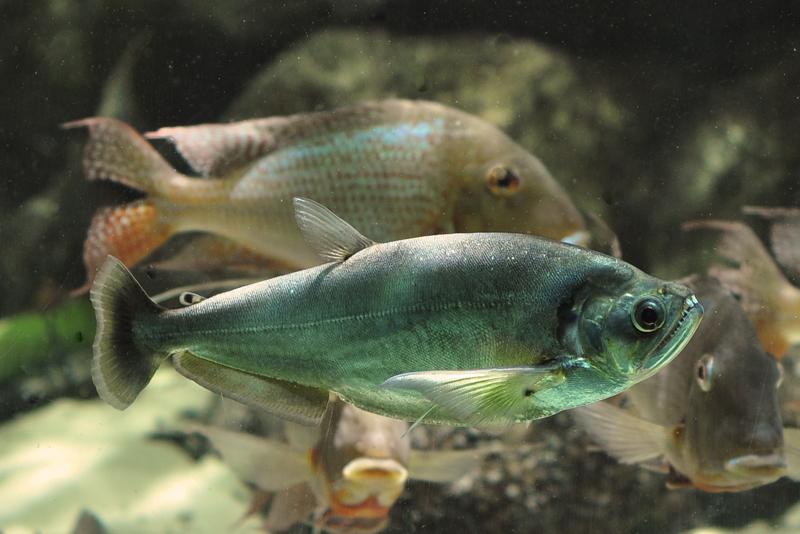
Hydrolycus scomberoidesVampire Tetra
Cuvier, 1819
Max length300mm SL12in SLTank210 × 75cm84 × 30inTemp24–28°C75–82°FpH6.0–8.0This species may be referred to using a variety of names including 'scomb', 'sabre tooth tetra', 'sabre tusk barracuda', 'dog tooth characin, 'vampire fish', 'Cachorra' or Pirandirá (the latter two names being used in Brazil where they're also applied to congeners). It's regularly confused with the payara, H. armatus, though that species grows considerably larger, is pop...
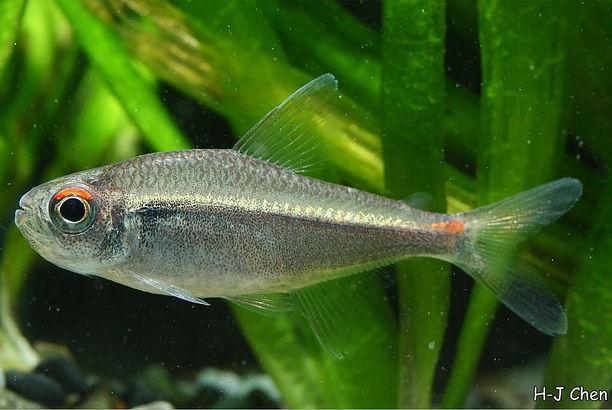
Hyphessobrycon agulha
Fowler, 1913
Max length42mm SL1.7in SLTank80 × 30cm31 × 12inTemp20–28°C68–82°FpH5.5–7.5This species is relatively rare in the aquarium hobby but is occasionally traded as 'red-tailed flag tetra'. It lends its name to the H. aghula group of closely-related species within the genus as proposed by Géry (1977, see below) of which members share the following characters which set them apart from other characids: lower half of the body dark, especially above the anal-fin; usually possessing a laterally-elongate humeral spot, more-or-less united wit...
Hyphessobrycon bentosiOrnate Tetra
Durbin, 1908
Max length45mm SL1.8in SLTank90 × 30cm36 × 12inTemp20–28°C68–82°FpH5.0–7.5A beautiful species that is very similar to a host of others in the genus, some of which are undescribed. The most frequently encountered of these in the trade is the rosy tetra, H. rosaceus. H. bentosi may also be seen for sale as 'Bentos' tetra' or 'White-tipped tetra'. As with the closely related Hemigrammus, the taxonomic status of all species in the genus Hyphessobrycon is currently Incertae Sedis, meaning uncertain. The genus is currently used as something of a ...
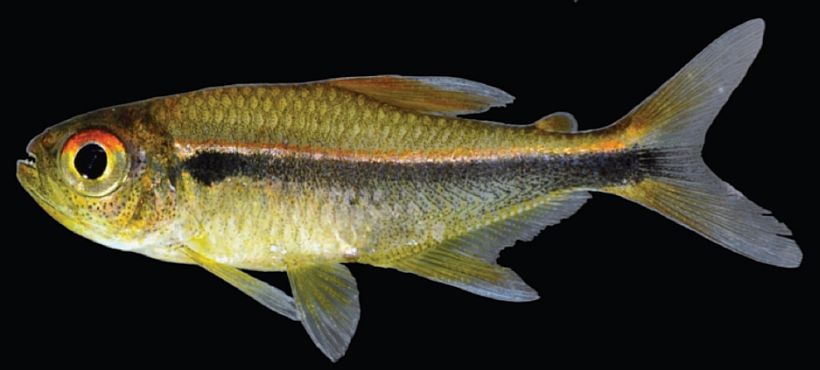
Hyphessobrycon eschwartzae
Román-Valencia & Ortega, 2013
Max lengthnot recordedTanknot recordedTempnot recordedpHnot recordedH. eschwartzae is told apart from other laterally-striped Hyphessobrycon species from the Madre de Dios watershed by the following characters: 4 simple anal-fin rays (vs. 3 in other species listed); 13-15 dentary teeth (vs. 5-11); 6 teeth in the internal premaxillary ro...
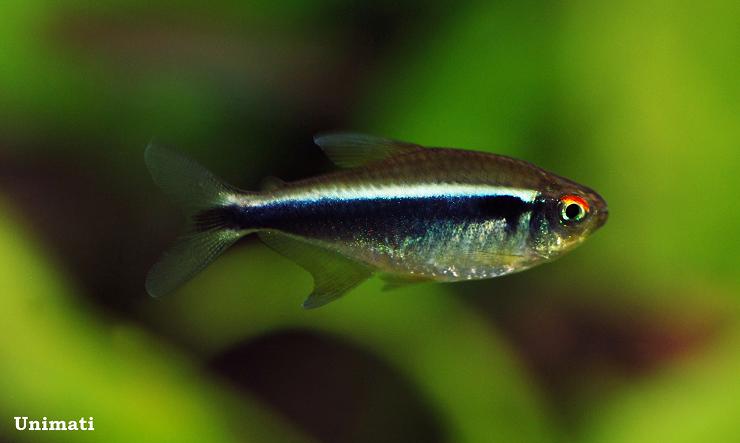
Hyphessobrycon herbertaxelrodiBlack Neon Tetra
Géry, 1961
Max length35mm SL1.4in SLTank80 × 30cm31 × 12inTemp20–28°C68–82°FpH5.0–7.5This species has been a ubiquitous aquarium fish since its discovery, and is produced on a commercial basis in several countries, therefore wild fish are no longer collected. An ornamental albino form is sometimes available. Apart from its distinctive colour pattern, it can be identified from related species via the following combination of charac...
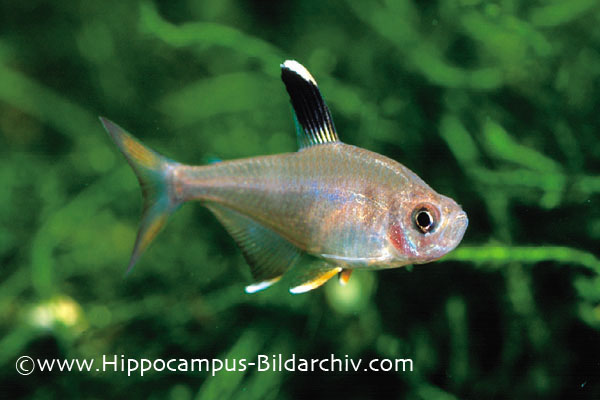
Hyphessobrycon rosaceusRosy Tetra
Durbin, 1909
Max length40mm SL1.6in SLTank60 × 38cm24 × 15inTemp24–28°C75–82°FpH5.5–7.5A beautiful species that is very similar to a host of others in the genus, some of which are undescribed. The most common of these in the hobby is H. bentosi. The two are so similar in appearance that H. rosaceus was once considered to be a subspecies of H. bentosi. The easiest way to distinguish them is by the presence of a dark marking just behind the operculum in H. bentosi, which is lacking in H. rosaceus. As with the closely related Hemigrammus, the taxonomic status of all species in the...
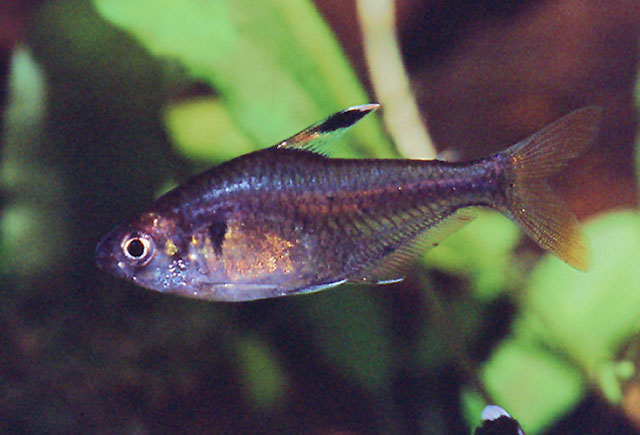
Hyphessobrycon simulatusFalse X-ray Tetra
Géry, 1960
Max length35mm SL1.4in SLTank80 × 30cm31 × 12inTemp20–28°C68–82°FpH5.0–7.0This species is uncommon in the aquarium trade although its name is sometimes applied to other species. It was originally described in the monotypic genus Pseudopristella, and can be distinguished from the vaguely similar Pristella maxillaris by possession of a relatively large (vs. relatively small) humeral spot and having black pigmentation in the anal-fin restricted to the first ray (vs. a prominent distal blotch).
Hypostomus sp.
authority not recorded
Max length200mm SL8in SLTanknot recordedTemp23–27°C73–81°FpH6.0–7.5This undescribed species is part of the Hypostomus cochliodon species complex, all members of which were previously included in the genus Cochliodon, now considered a synonym of Hypostomus. Members of this group can be distinguished from congeners by several differences in morphology, most notably the hump-backed profile of mature fish and spoon-shaped dentition. These features, along with the fishes tendency to eat wood, are shared with the Panaque genus of the Ancistrinae subfamily, but the tw...
Hypselecara coryphaenoidesRio Negro Chocolate Cichlid
authority not recorded
Max length150mm SL6in SLTank120 × 45cm48 × 18inTemp24–30°C75–86°FpH5.0–6.5This species is much rarer in the trade than the only other member of the genus, H. temporalis. If the collection locality of the fish is known, identification of the species is easy, as the distribution of the two appears not to overlap in nature. Failing this, distinguishing physical characteristics include body shape, as H. coryphaenoides is a more elongate fish than the quite squat-looking H. temporalis. There are also differences in colour and patterning, although these are less reliable me...
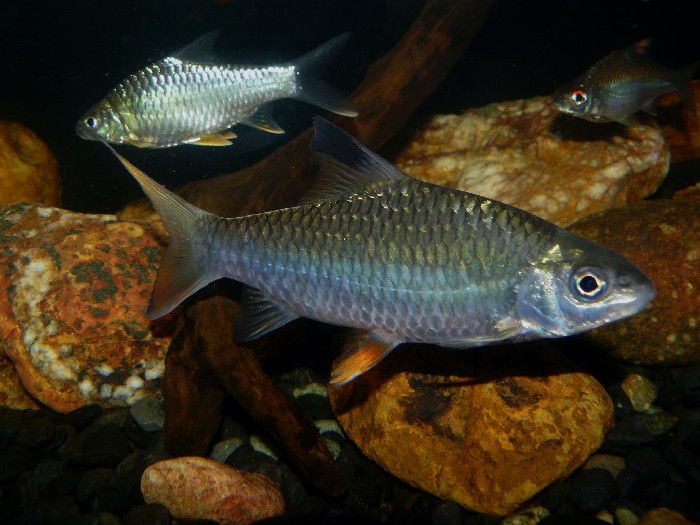
Hypselobarbus jerdoniJerdon's Carp
authority not recorded
Max length460mm SL18in SLTank240 × 120cm96 × 48inTemp20–26°C68–79°FpH6.5–7.5There are currently eleven species in the genus most of which have previously been included in Puntius, Barbus and the now defunct genus Gonoproktopterus. Of these the only ones we've seen in the trade are H. jerdoni and H. curmuca although it's possible that others have been exported in small numbers or as contaminants among shipments of other species. Even these two are very rarely encountered and little has been written about the group as a whole....
Ilyodon furcidensGoldbreast Goodeid
authority not recorded
Max length70mm SL2.8in SLTank75 × 30cm30 × 12inTemp18–24°C64–75°FpH7.0–8.0The species name 'furcidens' is derived from the interesting fork-shaped teeth of this fish. This species may develop a cervical hump as it matures. As with other goodeids, there is less of a size difference between the sexes than in many other livebearers. This is thought to be related to the relatively primitive structure of the andropodium, as the fish tend to choose mates that are of similar size so that the sex organs are synchronised. Goodeids are unique among livebearers in t...
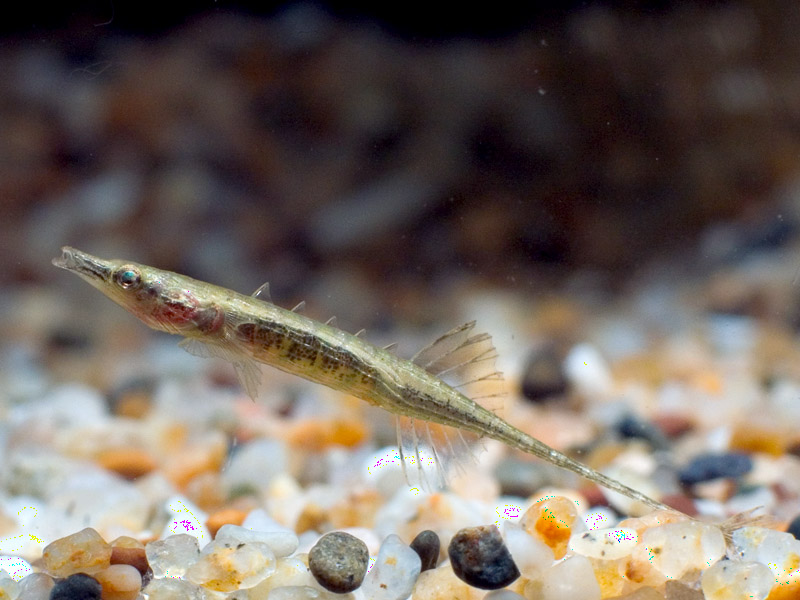
Indostomus paradoxusArmoured Stickleback
Prashad & Mukerji, 1929
Max length30mm SL1.2in SLTank40 × 20cm16 × 8inTemp22–27°C72–81°FpH6.5–7.5This species is rare in the aquarium hobby though its name is often misapplied to the closely-related I. crocodilus. It can be told apart from congeners by the following characters: dorsal and anal fins without dark markings, with a light brown bar in breeding males; ventral surface light brown; throat white, occasionally with a few brown spots; ridges of head bones weakly serrated or not serrated, depending on the bone. The family Indostomidae currently contains just a single genus with three species of which I. paradoxus is the type. It was raised alongside both family...
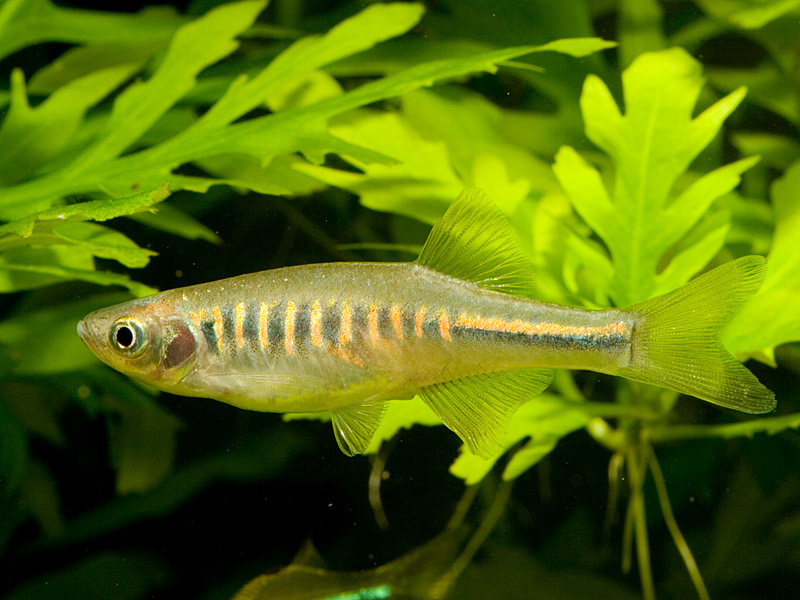
'Inlecypris' shanensis
Hora, 1928
Max length60mm SL2.4in SLTank80 × 30cm31 × 12inTemp18–26°C64–79°FpH6.0–8.0This species is sometimes referred to as 'Hora danio' or Salween danio'. It is distinguished from similar-looking species by a combination of characters as follows: lateral line complete or incomplete with 22-33 pored scales; absence of infraorbital process; 7 branched dorsal-fin rays; usually 10 or 11 branched anal-fin rays; barbels absent or rudimentary; flank markings comprising a series of narrow vertical bars on the anterior portion of each flank, fol...
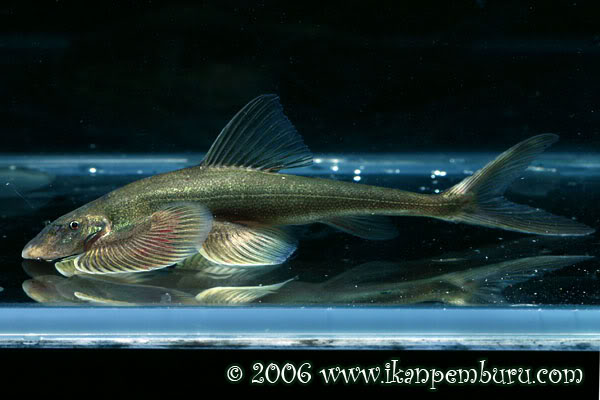
Jinshaia sinensis
Sauvage & Dabry de Thiersant, 1874
Max length75mm SL3.0in SLTank90 × 30cm36 × 12inTemp20–24°C68–75°FpH6.0–7.5This species may not yet have been seen in the aquarium trade outside its native country but has been maintained by a few private collectors. There are currently three species recognised in the genus, all endemic to the Yangtze river drainage, and they're separated from other balitorids by a combination of characters including: relatively long, deeply-forked caudal-fin; roun...
Julidochromis marlieriMarlier's Julie
authority not recorded
Max length150mm SL6in SLTanknot recordedTemp23–27°C73–81°FpH7.5–9.5Julidochromis are commonly known as "Julies" in the hobby. This particular species may also be seen for sale as the Chequered Julie. A truly characterful cichlid exhibiting quirky behaviour, it will swim hugging the rock surfaces no matter what the angle is. As with other Julies, large water changes should be avoided as this can cause mated pairs to turn on one another. Several geographical morphs are available. However, no two species or morphs of Julidochromis should be kept togethe...
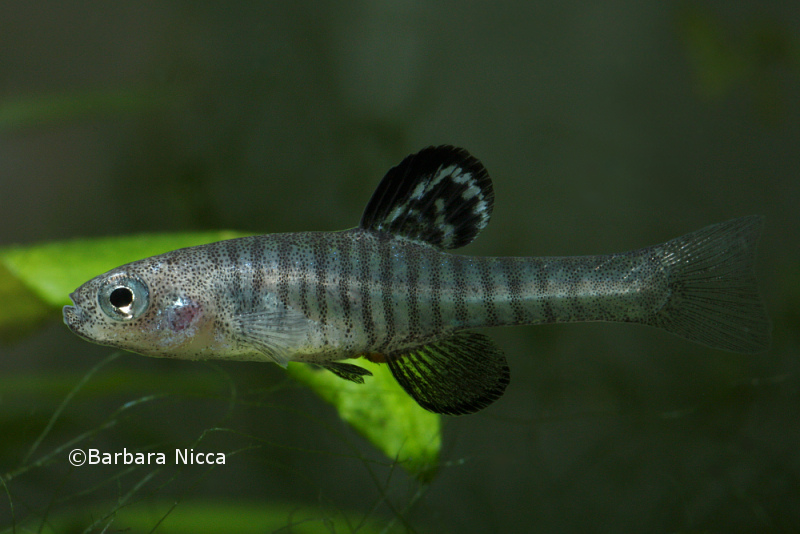
Kosswigichthys asquamatusHazar Toothcarp
Sözer, 1942
Max length40mm SL1.6in SLTank120 × 30cm48 × 12inTemp12–28°C54–82°FpHnot recordedThis little-known, relict species possesses some unique morphological and behavioural traits when compared with its congeners and the genus Kosswigichthys was erected for it in the original description. It has a much more elongate body profile than other Aphanius spp., almost total absence of scalation on the body and three rows of conical (as opposed to tricuspid in all other species) teeth which set it apart. Work by Franz and Villwock in the 1970s revealed it to be a member of Aphanius and showed ...
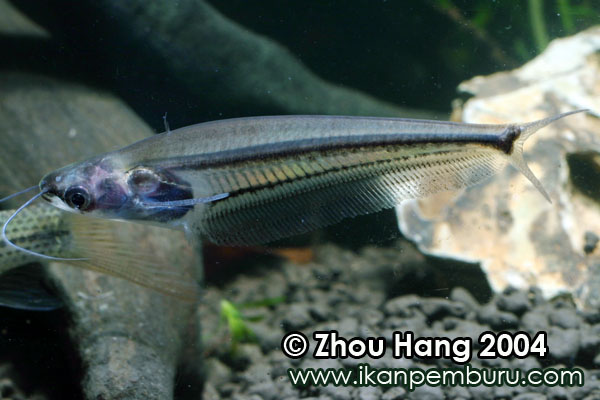
Kryptopterus palembangensis
Bleeker, 1852
Max length140mm SL6in SLTank120 × 30cm48 × 12inTemp20–28°C68–82°FpH6.0–7.5This species is almost unheard of in the aquarium trade though may occasionally be exported among shipments of wild fishes from Sumatra. It's closely-related to K. bichirris but is told apart by presence (vs. absence) of a prominent, dark lateral stripe on each flank. Kryptopterus species are found only in Southeast Asia and the genus has been consi...