Results for “fry”
Type a name: scientific, common, or one a species used to go by. Or narrow the catalogue with the filters.
Filters
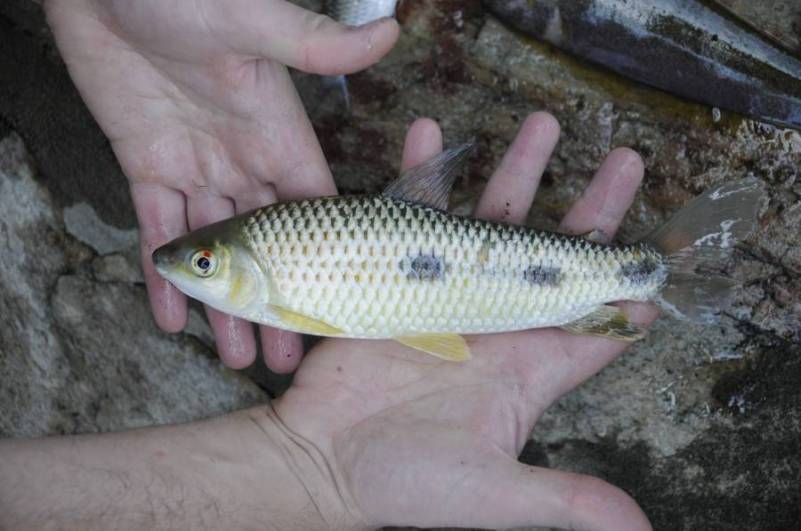
Leporinus fridericiThreespot Leporinus
Bloch, 1794
Matched on Salmo friderici, a name it was formerly known by
Max length400mm SL16in SLTank240 × 90cm96 × 36inTemp20–28°C68–82°FpH5.0–8.0This species was described from Suriname but no specific locality was given. It's currently accepted to occur throughout much of the Amazon river system in Brazil, Peru and Bolivia with additional records from coastal drainages of Guyana, Suriname and French Guiana plus the island of Trinidad (Trinidad and Tobago).
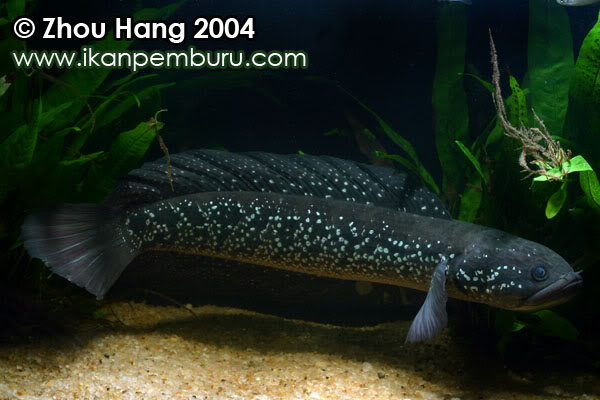
Channa asiaticaChinese Snakehead
Linnaeus, 1758
Max length350mm SL14in SLTank100 × 40cm39 × 16inTemp15–25°C59–77°FpH6.0–8.0No bubble nest is built and several thousand eggs simply float at the surface with both male and female remaining to defend the eggs and fry. The eggs hatch after 24-36 hours depending on temperature and the fry are free swimming in a further 24 hours. At this point they resemble 6-7 mm long black tadpoles. It is important to constantly feed...
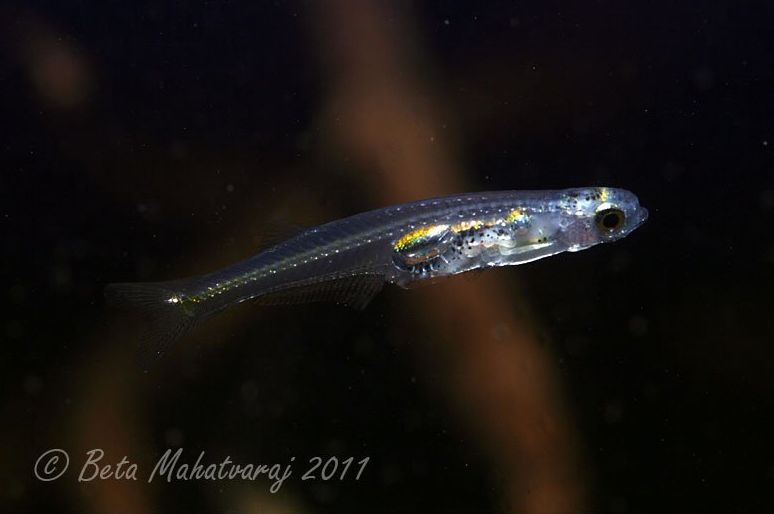
Danionella priapus
Britz, 2009
Max length16mm SL0.6in SLTank45 × 30cm18 × 12inTemp18–24°C64–75°FpH6.0–8.0As far as we know this species has not been bred in aquaria although Pete Liptrot and Paul Dixon of the Bolton Museum Aquarium, UK, have achieved great success with an unidentified congener. They first noticed fry from their group of 24 adults after moving the school to a dedicated set-up planted with mature Java moss and have since rewarded with regular batches of fry.
Variabilichromis moorii
authority not recorded
Max length100mm SL3.9in SLTanknot recordedTemp23–27°C73–81°FpH7.5–9.0V. moorii exists in several geographical morphs but interestingly the only variation in colour occurs in juvenile fish. All adults exhibit a dark patterning but depending on locality the fry may be dark (like adults), yellow or orange with the yellow and orange juveniles taking on the adult colouration as they mature. It is has been observed that the forms which undergo this colour change may 'plant' broods among fry of other species with similarly coloured young, leaving them to be gu...
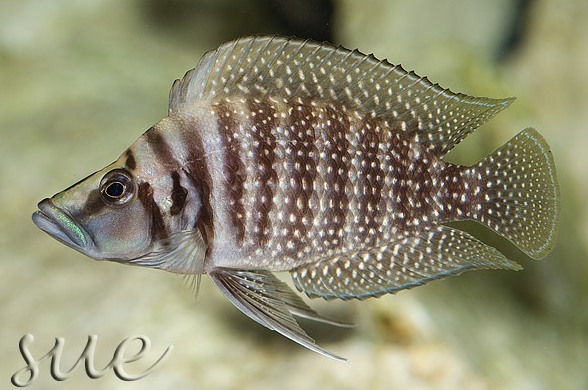
Altolamprologus calvusCalvus Cichlid
Poll, 1978
Max length138mm SL5in SLTanknot recordedTemp24–27°C75–81°FpH7.5–9.0A. calvus is a predator by nature and its body shape has been adapted to allow it to enter small crevices and gaps in the rockwork of Lake Tanganyika to prey on eggs, fry and small fish. Its laterally compressed shape makes the fish hard to spot head on, giving it an advantage over would be predators and prey alike. It is also quite well-armoured, possessing thick scales which can be turned towards potential attackers. These can cause real damage with their serrated edges. Several colour form...
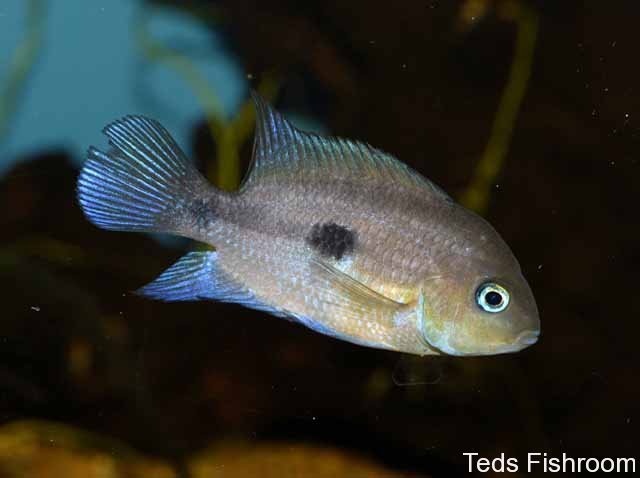
Cryptoheros myrnae
Loiselle, 1997
Max length♂ 100 · ♀ 80mm SL♂ 3.9 · ♀ 3.1in SLTank90 × 30cm36 × 12inTemp23–26°C73–79°FpH7.0–8.5In its natural waters, females have been observed caring for mixed broods containing both their own fry and those of another cichlid, Amphilophus bussingi. It is unknown if these are mixed by accident (as the two species have also been recorded tending broods in close proximity to one another) or if this represents an adaptive behaviour to increase numbers in a brood and therefore decrease the chance of predation.
Cynotilapia afraDogtooth Cichlid
authority not recorded
Max length100mm SL3.9in SLTank100 × 30cm39 × 12inTemp25–29°C77–84°FpH7.5–8.5C. afra is easily confused with some species of Pseudotropheus, but can be distinguished by its smaller adult size and unicuspid (as opposed to bicuspid) teeth. Also in this species the black bars on the flanks continue into the dorsal fin, unlike in Pseudotropheus zebra, for example. It exists in many different colour forms in nature. These forms should not be mixed in aquaria as they may spawn with each other, producing unwanted hybrid fry. Despite this ability to interbreed, it's probabl...
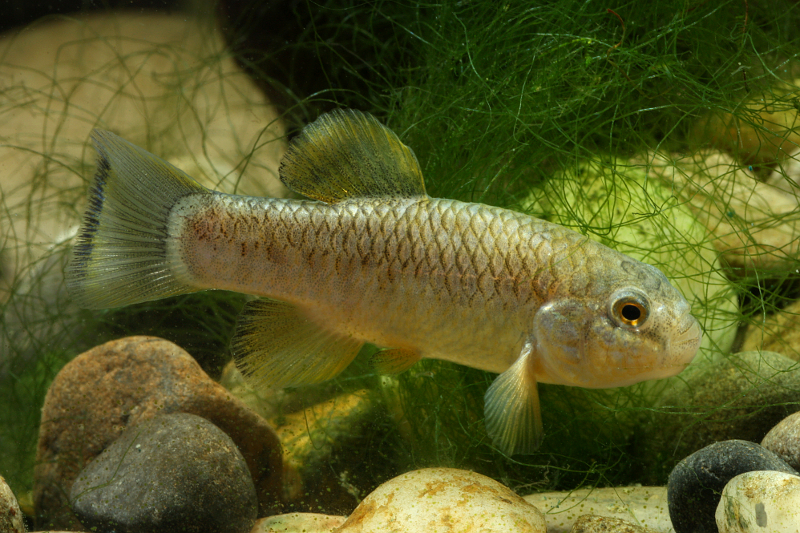
Cyprinodon pachycephalus
Minckley & Minckley, 1986
Max length45mm SL1.8in SLTank60 × 30cm24 × 12inTempnot recordedpHnot recordedNeed not be too complicated so long as there are plenty of broken lines-of-sight. Provide plenty of cover in the form of aquatic plants, wool mops, etc., and if using filtration air-powered, sponge-type units are best as these will not harm eggs or fry. Lighting is unimportant but can be use...
Dicrossus maculatusSpadetailed Checkerboard Cichlid
authority not recorded
Max length53mm SL2.1in SLTank60 × 30cm24 × 12inTemp26–30°C79–86°FpH3.4–5.4Dicrossus Maculatus are not commonly available in the trade. Sometimes they are mistaken for the more common and popular Dicrossus Filamentosa. The Spadetailed Checkerboards are an absolutely fascinating species to keep. They are a challenge to breed, requiring such acidic and soft water, but when it does happen it is a very rewarding experience. Reports maintain that the pH and temperature of the water when conceived, eggs laid, eggs hatched and in the first month of the fry's life c...
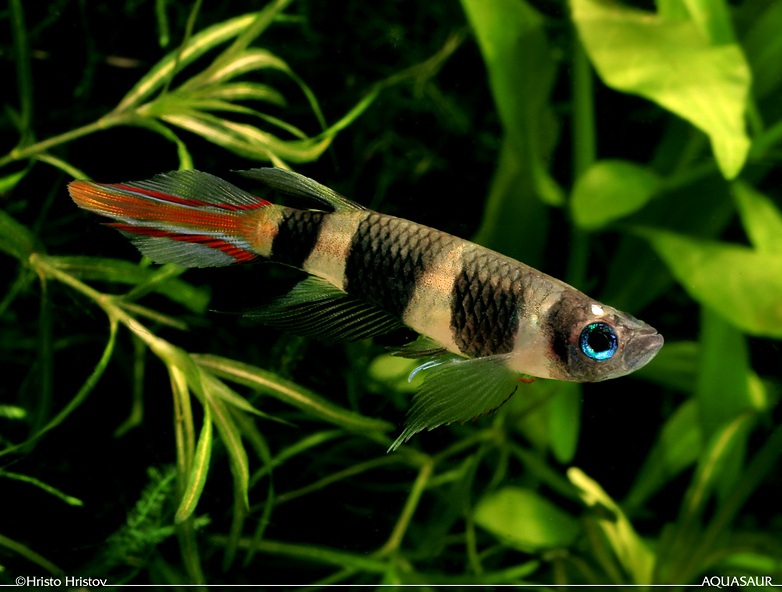
Epiplatys annulatusClown Killifish
Boulenger, 1915
Max length35mm SL1.4in SLTank45 × 30cm18 × 12inTemp20–26°C68–79°FpH4.0–7.0Perhaps looks best in a heavily-planted set-up or natural-style arrangement comprising a sandy substrate plus some driftwood roots and branches. The addition of dried leaf litter would further emphasise the natural feel and as well as offering additional cover for the fish brings with it the growth of microbe colonies as decomposition occurs. These can provide a valuable secondary food source for fry and the humic su...
Melanochromis chipokae
authority not recorded
Max length120mm SL5in SLTank120 × 45cm48 × 18inTemp24–28°C75–82°FpH7.6–8.8This species belongs to the group of Melanochromis often called "Pike Auratus". These species predate on the fry of other species, although M. chipokae will also eat crustaceans and algae. Female and juvenile male M. chipokae are easily confused with M. auratus. However, it can be distinguished by its noticeably more pointed mouth, denoting the predatory nature of this species (auratus has a rounded mouth which is designed for feeding on algae). The striped patterning in the also exten...
Melanotaenia fluviatilisAustralian Rainbowfish
authority not recorded
Max length100mm SL3.9in SLTank90 × 30cm36 × 12inTemp20–25°C68–77°FpH6.5–8.0Also known as the Murray River or crimson-spotted rainbowfish, this species is not as common in the hobby as some of its relatives, but can still be found from time to time. It is easily confused with the very similar M. duboulayi, indeed these two were once grouped together as a single species. However, there are clear differences in patterning, fin ray counts and the way in which their eggs and fry develop. The range of M. fluviatilis extends further south than any other rainbowfish, and a...
Nannacara anomalaGolden Dwarf Cichlid
authority not recorded
Max length76mm SL3.0in SLTank46 × 38cm18 × 15inTemp22–25°C72–77°FpHnot recordedNannacara Anomala are widely available in the trade, and are generally regarded as an excellent beginner's fish. If a beginner is interested in keeping Cichlids and learning about breeding, then these fish are absolutely ideal. Anomala are attractive, hardy and usually quite cheap to purchase. Like some species of the Apistogramma genus, the mother may use fascinating body language to communicate with her fry when she is caring for them. If there is more than one male in a tank smalle...
Neolamprologus fasciatusBarred Lamprologus
authority not recorded
Max length150mm SL6in SLTank90 × 38cm36 × 15inTemp23–27°C73–81°FpH7.5–9.0N. fasciatus is a predator by nature and its body shape has been adapted to allow it to enter small crevices and gaps in the rockwork of Lake Tanganyika to prey on invertebrates, eggs, fry and small fish. The lateral compression exhibited by this fish also makes the fish hard to spot head on, giving it an advantage over both its predators and prey. It hunts in a head down position a few feet above the substrate, moving its body in sinuous motions to counteract the water currents. It is sometimes...
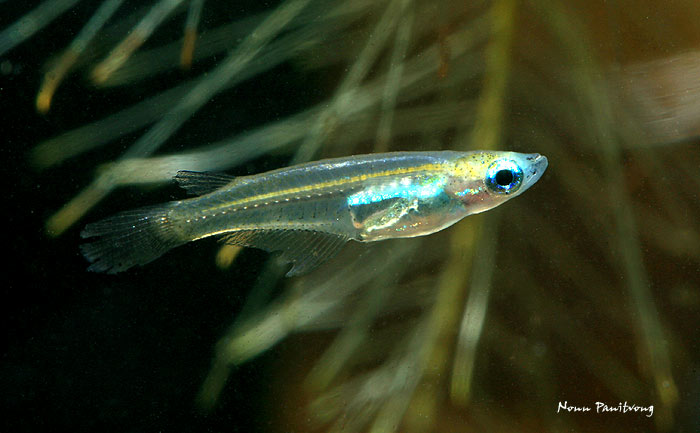
Oryzias minutillusDwarf Medaka
Smith, 1945
Max length17mm SL0.7in SLTank40 × 20cm16 × 8inTemp23–32°C73–90°FpH6.0–7.5Best maintained in a heavily planted set-up, ideally with a dark substrate, patches of dense vegetation, and some open areas. Other décor can consist of twisted roots and pieces of bogwood, while surface vegetation is also appreciated by the fish. When maintained under such conditions they're more likely to display their best colours, and planted aquaria also offer fry a more favourable chance of survival alongside the adults.
Phenacogrammus interruptusCongo Tetra
authority not recorded
Max length80mm SL3.1in SLTank120 × 30cm48 × 12inTemp23–28°C73–82°FpH6.0–7.5P. interruptus are quite sensitive to water quality and if a high standard is not maintained the development of the males' fins may be impaired and the fish will lose colour. They are also quite an easily frightened fish, particularly if they are not maintained in numbers. This species is most often seen for sale as a fairly drab, greyish 1 1/2" fish and is often overlooked. However once they are settled into the aquarium and have begun to mature they develop spectacular colouration. ...
Protomelas sp. steveni "Taiwan reef"
authority not recorded
Max length140mm SL6in SLTank120 × 45cm48 × 18inTemp24–28°C75–82°FpH7.6–8.8Protomelas sp. "steveni taiwan reef" is often sold as a subspecies of P. fenestratus, but is actually thought not to be synonymous and is currently undescribed. It can be distinguished from similar species such as P. fenestratus and P. taeniolatus by the bright redof adult males. None of these related species or morphs should be kept together in aquaria as they may hybridise. Some captive spawns of this species have resulted in albino fry. It is one of the more popular and readily a...
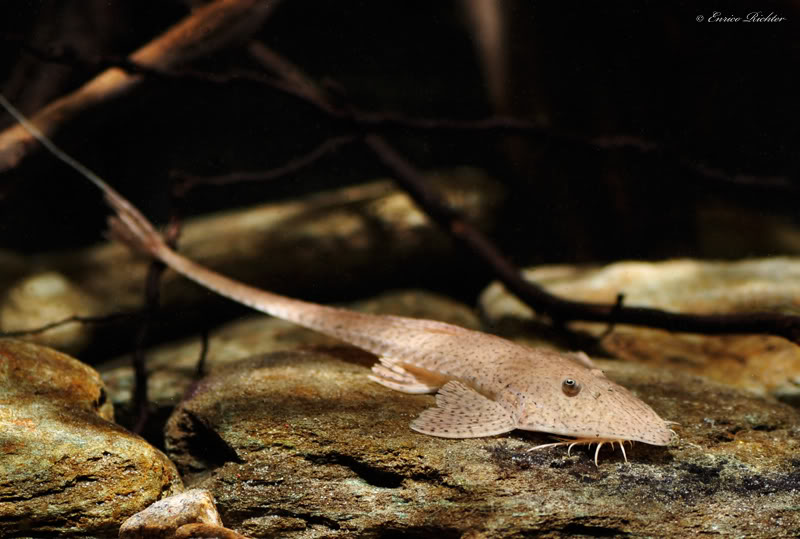
Pseudohemiodon laticepsGiant Whiptail Catfish
Regan, 1904
Max length300mm SL12in SLTank180 × 60cm72 × 24inTemp18–24°C64–75°FpH6.0–7.5A paternal 'lip brooder' which has been bred in aquaria. Post-spawning the male carries the eggs attached to his labial barbels for a period of 12-14 days after which the fry hatch with a large yolk sac attached, this being absorbed over the next 48 hours or so. During incubation the behaviour of the male i...
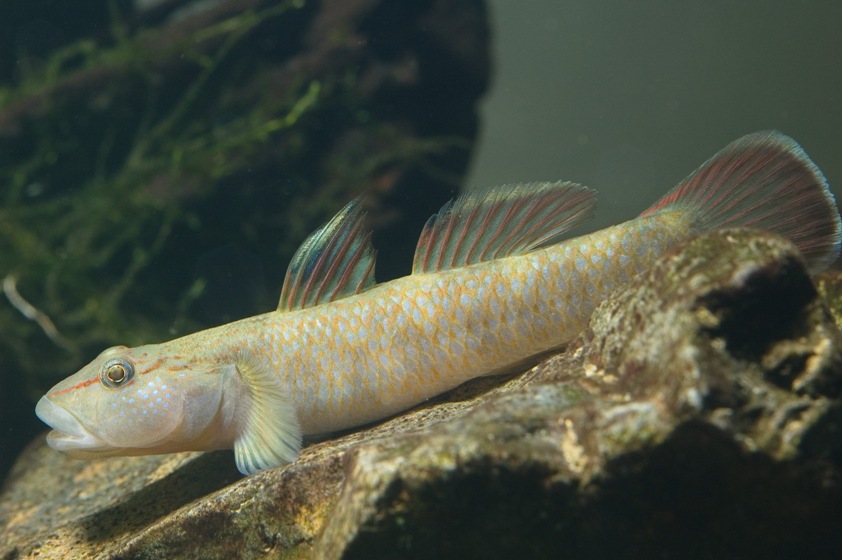
Rhinogobius sp. 'CO'
authority not recorded
Max lengthnot recordedTanknot recordedTempnot recordedpHnot recordedSome wild populations have evolved a complex amphidromous breeding strategy in which adults live and spawn in freshwater or brackish streams and the pelagic post-hatch larvae are washed downstream to the sea where the post-larval fry spend the first part of their life developing in estuarine nursery zones under brackish to full marine conditions. Once they reach a certain stage of development they begin to migrate upstream with some mov...
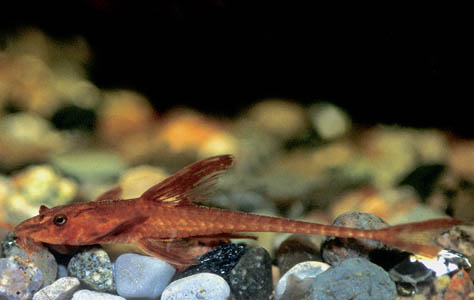
Rineloricaria sp.Red Lizard Catfish
authority not recorded
Max length110mm SL4in SLTank75 × 30cm30 × 12inTemp24–29°C75–84°FpH6.0–7.5As mentioned above, this fish may or may not be a man-made, or even hybrid, species. There are a few theories regarding this currently in circulation. Some believe that the fish are derived from a true wild caught fish, possibly of Paraguayan origin. These wild-caught red whiptails are supposed to breed true, producing all red fry, although there is no concrete evidence that they actually exist. The second possibility is that it's a selectively-bred form of Rineloricaria lanceolata, but thi...