Country · North & Central America
Nicaragua
Only species with a profile on Seriously Fish are counted, whether native or introduced.
- Species
- 7
- Families
- 4
- Genera
- 6
- Found only here
- 1
- Photographed
- 7 of 7
Shares its fishes withspecies recorded in both
Found only here1
1 of the species on this page are recorded in Nicaragua and in no other country. This is not the same as being endemic.
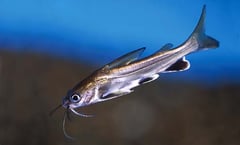
Ariopsis seemanniColombian Shark Catfish
Ariidae · Günther, 1864
The Colombian shark catfish, Ariopsis seemanni, is an ariid catfish from river mouths along the Pacific coast of the Americas, from Mexico to Peru. Usually sold as a silvery 2 to 3 inch juvenile, it grows to 350 mm SL and lives mostly in brackish water, so it is not recommended to those lacking the facilities to house it for life. Venom glands at the base of the first dorsal spine can cause a painful swelling.

Cichlasoma urophthalmusMayan Cichlid
Cichlidae · authority not recorded
The Mayan cichlid, Cichlasoma urophthalmus, is a large cichlid native to eastern parts of Mexico, Belize, Guatemala, Honduras and Nicaragua. Also known as the Mexican mojarra, it lives in swamps, marshes and coastal lagoons, can tolerate and even breed in full marine conditions, and is often seen spawning around mangroves. Territorial and fairly aggressive, it is regarded as a potential pest fish in the USA, where introduced populations exist.
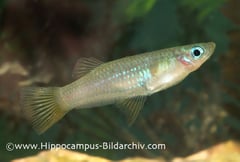
Alfaro cultratusKnife Livebearer
Poeciliidae · Regan, 1908
The knife livebearer, Alfaro cultratus, is a poeciliid from rivers, streams, ditches and backwaters in Costa Rica, Nicaragua and Panama. The common name comes from a keel of modified, paired scales running from the base of the anal fin to the caudal fin. Exceptionally hardy and adaptable, it can be aggressive, especially towards conspecifics, and breeds readily in the aquarium.

Amatitlania nigrofasciataConvict Cichlid
Cichlidae · Günther, 1867
The convict cichlid, Amatitlania nigrofasciata, is a Central American cichlid native from Guatemala to Panama. One of the most ubiquitous fish in the hobby, it is hardy and very easily bred, but aggressive and territorial, becomes violent when breeding and is best kept in a species tank. Pink, long-finned and marbled forms exist, and it has been introduced to several countries including the USA and Australia.

Amphilophus citrinellusMidas Cichlid
Cichlidae · Günther, 1864
The midas cichlid, Amphilophus citrinellus, is a large cichlid from Nicaragua and Costa Rica, found in lakes, ponds and slow stretches of rivers. It is often confused with the red devil, A. labiatus, but has a bigger nuchal hump and a more thick-set build. One of the most belligerent cichlids, it needs careful handling with any tankmate, including its own kind. Intentional hybridisation with other species has given rise to the parrot cichlid and the flowerhorn.

Amphilophus labiatusRed Devil Cichlid
Cichlidae · Günther, 1864
The red devil cichlid, Amphilophus labiatus, is a large cichlid endemic to Lakes Nicaragua and Managua in Nicaragua, living near submerged rocks. It is often confused with the midas cichlid, A. citrinellus, and the two have been hybridised in the hobby so much that a purebred fish of either can be hard to find. Wild fish are mostly grey, and the colour forms in the trade come from breeding those with orange or red patterning. It is one of the most aggressive cichlids kept.
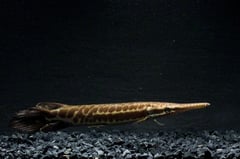
Atractosteus tropicusTropical Gar
Lepisosteidae · Gill, 1863
The tropical gar, Atractosteus tropicus, is a gar from Caribbean and Pacific-slope drainages of Central America, from southern Mexico to Costa Rica. It grows to 1250 mm SL and can live for several decades, so it should not be considered a home aquarium subject, though juveniles are occasionally offered in the trade. Like other gars it can breathe atmospheric air to a certain extent through a modified, vascularised swim bladder.