Pao palembangensis
Humpback Puffer
Formerly Tetraodon palembangensis
Last revised 2026Edit this page
On this page11 sections
Quick factsEdit
Difficulty4 of 8 measures
- Space
- large tank
- Water
- needs a steady pH
- Temp
- needs a steady temperature
- Diet
- needs snails to wear down its teeth
- Temperament
- unknown
- Social
- unknown
- Compatibility
- unknown
Other demands
Each of these can raise the rating on its own, whatever the measures above say.
- Hardiness
- unknown
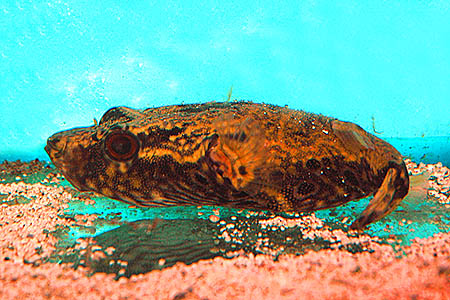
The humpback puffer, Pao palembangensis, is a predatory puffer from Thailand, Laos, Malaysia and Indonesia. An ambush predator, it is very inactive and some specimens move only when food is offered, so it is seen in the trade infrequently and suits the true enthusiast. It is unsuitable for the community tank, though several can share a large tank with plenty of hiding places.
Distribution
EditHabitat
Write a noteEditInhabits freshwater streams, slow-moving rivers and ponds.
Aquarium size
Write a noteEditNot a particularly active puffer, a single one of these can be comfortably housed in a tank measuring 120 ∗ 30 ∗ 30 cm48 ∗ 12 ∗ 12 in - ~108 litres~29 US gal.
Maintenance
Write a noteEditThis species appreciates cover as unlike some other species of predatory puffers it doesn't tend to burrow into the substrate. Pieces of driftwood, large rocks and clay flowerpots are all suitable for this. It can be kept in a planted setup without problems, although plants aren't essential. Like all puffers, it's very sensitive to deteriorating water conditions, so regular partial water changes are a must.
Water conditions
EditTemperature: 24 – 28 °C75 – 82 °F
pH: 6.8-7.6
Hardness: 8-20°H
These recommendations come from this profile’s own figures. They contain affiliate links, so we may earn a commission.
Diet
Write a noteEditRelishes all kinds of shellfish, as well as worms and other live and frozen foods. It should be fed snails and unshelled shellfish (such as crab legs, mussels etc.) regularly, in order to maintain its sharp teeth. As with other puffers, their teeth grow continuously and become a problem for the fish if they're not kept ground down. It's sometimes a little reluctant to accept dead foods initially, but can usually be weaned onto them with a little patience. Due to its inactive nature it doesn't need daily feeding. Every other day is fine for juvenile fish, while adults require only one or two feeds a week.
Behaviour and compatibility
Write a noteEditUnsuitable for the community tank due to its piscivorous nature. It can sometimes be kept with similarly sized or larger, active species such as bigger characins or cyprinids, but the risk is always there.
Surprisingly, while best kept as a single specimen, it's not especially hostile towards its own kind and several can be maintained in a large tank as long as plenty of hiding places and visual barriers are provided. Some squabbles will inevitably occur, so do keep a close eye on proceedings if you decide on a group.
Sexual dimorphism
Write a noteEditUnknown.
Reproduction
Write a noteEditHas occured in aquaria, albeit very rarely. The fish is a substrate spawner, with the eggs being laid in a pre-excavated pit within a cave. After spawning the male takes care of the eggs until they hatch, at which point the adult fish should be removed. The fry can be fed brine shrimp nauplii and even bloodworm from birth. They're quite belligerent with one another so plenty of cover is required.
Notes
EditPuffer fish are so called as they have the ability to inflate their elastic stomachs with water or air. This is usually a response to some kind of threat, although in the aquarium many specimens appear to inflate themselves for no apparent reason. The fish becomes 2 or 3 times it's normal size, which makes the fish both big enough to scare away many potential predators, and difficult to swallow.
Many parts of the body of puffers contain the deadly neurotoxin tetrodoxin. This is the same poison found in the notorious blue-ringed octopus. When ingested in sufficient quantities, it can cause paralysis and death. As yet there is no known antitoxin and to humans it is over 1000 times deadlier than cyanide. Grotesquely, the victim usually remains conscious as he or she becomes paralysed. It's a famous delicacy in Japan, but is prepared only by highly-trained chefs, and even then many people have died from eating it.
An ambush predator, P. palembangensis is a very inactive fish, some specimens only moving when food is offered. As such it's really only suitable for the true enthusiast. Correspondingly palembangensis are not seen in the trade very often.
Species images · 2
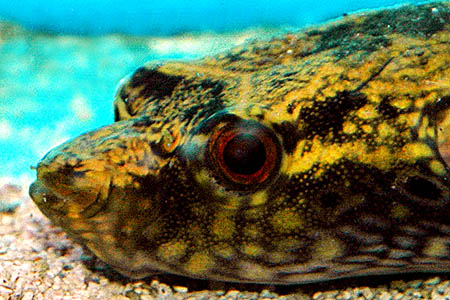
These photographs are used with each photographer's permission.
Send a photographHow the name has changed
Moved from Tetraodon palembangensis to Pao palembangensis.
2013The fishes of the inland waters of southeast Asia: a catalogue and core bibliography of the fishes known to occur in freshwaters, mangroves and estuaries.
Distribution
Profile completeness18 of 24
75% complete
Also missing: taxonomic authority, etymology.
Community
Questions about Pao palembangensis?
Ask on Discord