Every species
Filters
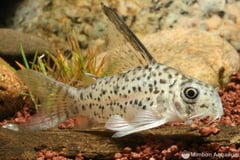
Hoplisoma armatum
(Günther, 1868)
Max length65mm SL2.6in SLTanknot recordedTemp22–26°C72–79°FpH6.0–7.5Hoplisoma armatum, long known as Corydoras armatus, is an armoured catfish from the Río Huallaga watershed in Peru, to which it may be endemic. Fish from the upper rio Madeira in Brazil and Bolivia have been traded as C. sp. 'dorsalis' and C. sp. 'ogawae' and are officially considered conspecific, although the two areas lie almost 2500 km apart. It can also be confused with H. loretoense but has a deeper body and a longer, slightly curved dorsal-fin spine.
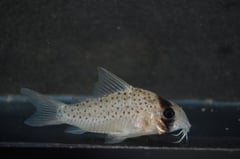
Hoplisoma atropersonatumFairy Cory
(Weitzman & Nijssen, 1970)
Max length50mm SL2.0in SLTanknot recordedTemp21–27°C70–81°FpH5.0–7.0The fairy cory, Hoplisoma atropersonatum, long known as Corydoras atropersonatus, is an armoured catfish known only from the Tigre and Nanay drainages in Ecuador and Peru. It is sometimes confused with Brochis sychri, a more elongate fish with a longer snout, and more closely with C097, traded as C. sychri 'longnose'. C097 has a snout of intermediate length and better-defined, more widely spaced dark spots.
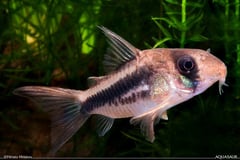
Hoplisoma axelrodiAxelrod's Cory
(Rössel, 1962)
Max length50mm SL2.0in SLTanknot recordedTemp22–26°C72–79°FpH5.0–7.0Axelrod's cory, Hoplisoma axelrodi, long known as Corydoras axelrodi, is an armoured catfish apparently endemic to the Río Meta drainage in Colombia, a tributary of the Orinoco. Also known as the 'pink corydoras', it has between one and three dark stripes on each flank. It resembles H. loxozonum, C003 and CW021, and all four are sometimes traded as C. 'deckeri'. In H. axelrodi the principal stripe runs around midbody.
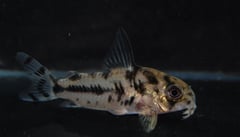
Hoplisoma boesemaniBoeseman's Catfish
(Nijssen & Isbrücker, 1967)
Max length45mm SL1.8in SLTanknot recordedTemp21–28°C70–82°FpH5.5–7.5Boeseman's catfish, Hoplisoma boesemani, long known as Corydoras boesemani, is an armoured catfish endemic to the upper Suriname River system in Suriname. It appears abundant there, in clear, soft, acidic water over sand, mud and leaf litter, with juveniles forming large aggregations and adults smaller groups. It is uncommon in the hobby but has been collected on a handful of occasions.
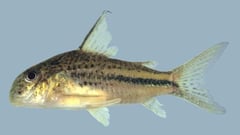
Hoplisoma bondiBlackstripe Cory
(Gosline, 1940)
Max length50mm SL2.0in SLTanknot recordedTemp20–26°C68–79°FpH6.0–7.5The blackstripe cory, Hoplisoma bondi, long known as Corydoras bondi, is an armoured catfish from Venezuela, Guyana and Suriname, including the Essequibo and Courantyne systems. It was once considered common in the hobby, but many fish traded under the name may be the similar H. sipaliwini or H. coppenamense. H. sipaliwini has larger body spots and a dark marking on the first dorsal-fin rays, while H. coppenamense is more orangish.
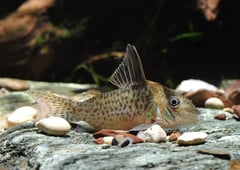
Hoplisoma brevirostreSpotted Cory
(Fraser-Brunner, 1947)
Max length60mm SL2.4in SLTanknot recordedTemp20–26°C68–79°FpH6.0–7.5The spotted cory, Hoplisoma brevirostre, long known as Corydoras brevirostris, is an armoured catfish usually said to occur in the Orinoco system in Venezuela and coastal Suriname. It was described from an aquarium specimen and its wider distribution is somewhat vague. It belongs to a group of similar congeners, including H. melanistium, Brochis delphax and B. ephippifera, that are widely misidentified, and is generally identified by a short, rounded snout and dark bars in the caudal fin.
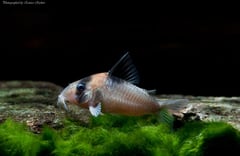
Hoplisoma burgessiBurgess' Cory
(Axelrod, 1987)
Max length55mm SL2.2in SLTank80 × 30cm31 × 12inTemp20–28°C68–82°FpH5.0–7.0Burgess' cory, Hoplisoma burgessi, long known as Corydoras burgessi, is an armoured catfish apparently endemic to the upper rio Negro basin in Brazil. One of several similarly patterned congeners, including H. adolfoi, H. davidsandsi and H. duplicareum, it has a black marking restricted to the area beneath the dorsal fin and extending into it, with a yellowish patch on top of the head. Rio Negro habitats are mostly blackwater tributaries and flooded forest.
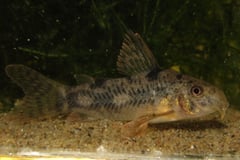
Hoplisoma carlae
(Nijssen & Isbrücker, 1983)
Max length45mm SL1.8in SLTanknot recordedTemp15–22°C59–72°FpH6.5–8.0Hoplisoma carlae, long known as Corydoras carlae, is an armoured catfish endemic to the lower Río Iguazu in Misiones province, northern Argentina. It appears restricted to small tributaries above the Iguazu Falls with clear, fast-flowing, shallow water, and needs stable, clean conditions. Two large, indistinct dark blotches on each flank separate it from most similar congeners, and it was introduced to the hobby by Hans-Georg Evers in 2010.
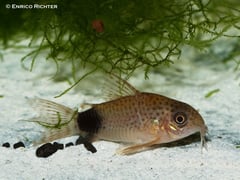
Hoplisoma caudimaculatumTailspot Cory
(Rössel, 1961)
Max length50mm SL2.0in SLTanknot recordedTemp20–26°C68–79°FpH6.0–7.0The tailspot cory, Hoplisoma caudimaculatum, long known as Corydoras caudimaculatus, is an armoured catfish endemic to the rio Guaporé (Iténez) drainage in western Brazil and Bolivia. A well-defined blackish spot on the caudal peduncle separates it from H. simile, in which the marking is a smudged bluish one. Gastrodermus guapore has a comparable pattern but a distinctly rounded snout, and tends to swim above the substrate.
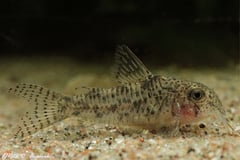
Hoplisoma cochuiBarredtail Cory
(Myers & Weitzman, 1954)
Max length35mm SL1.4in SLTanknot recordedTemp20–28°C68–82°FpH6.0–7.5The barredtail cory, Hoplisoma cochui, long known as Corydoras cochui, is a small armoured catfish native to the upper rio Araguaia in central Brazil. It grows to around 35 mm SL and has been assigned the code C022. It can be told apart from the similar H. habrosum by the 4 to 5 dark markings along each side of the body, where H. habrosum has 2 to 3.
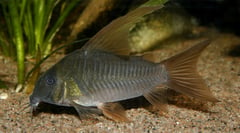
Hoplisoma concolorSlate Cory
(Weitzman, 1961)
Max length60mm SL2.4in SLTank80 × 30cm31 × 12inTemp20–26°C68–79°FpH5.5–7.0The slate cory, Hoplisoma concolor, long known as Corydoras concolor, is an armoured catfish restricted to parts of the Orinoco river system in western Venezuela. Its uniformly greyish colour pattern sets it apart from congeners, along with a deep body, large eye and relatively long dorsal-fin spine. Mature males develop an extended dorsal fin.
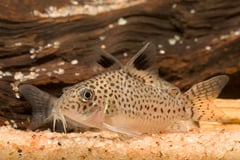
Hoplisoma copei
(Nijssen & Isbrücker, 1986)
Max length50mm SL2.0in SLTank80 × 30cm31 × 12inTemp20–26°C68–79°FpH5.0–7.0Hoplisoma copei, long known as Corydoras copei, is an armoured catfish from Peru, apparently endemic to the Río Pastaza basin and possibly the lower Río Marañón. It is not well known and rarely traded. It looks very similar to several congeners, particularly H. acrense and H. cruziense, and little has been written about it since its description.
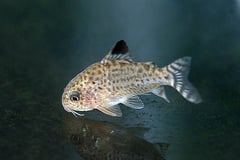
Hoplisoma cruzienseSanta Cruz Cory
(Knaack, 2002)
Max length50mm SL2.0in SLTank80 × 30cm31 × 12inTemp20–28°C68–82°FpH6.0–8.5The Santa Cruz cory, Hoplisoma cruziense, long known as Corydoras cruziensis, is an armoured catfish from the Bolivian portion of the Río Madeira basin. The precise extent of its range is unclear and may include the Mamoré and Beni drainages. It is not well documented, but is said to differ from C. punctatus in having larger dark body markings, which form an irregular midlateral stripe in some specimens.
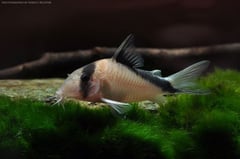
Hoplisoma davidsandsiSand's Cory
(Black, 1987)
Max length60mm SL2.4in SLTank90 × 30cm36 × 12inTemp20–28°C68–82°FpH5.0–7.0Sand's cory, Hoplisoma davidsandsi, long known as Corydoras davidsandsi, is an armoured catfish apparently endemic to the rio Unini system in the lower rio Negro basin, Brazil. One of a group of rio Negro species with an oblique dark bar along the back, it shares with H. melini a bar that splits in two above the caudal peduncle. It has a pale orange area between the facial stripe and dorsal bar and no further dark markings on the flanks.
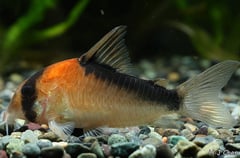
Hoplisoma duplicareum
(Sands, 1995)
Max length50mm SL2.0in SLTanknot recordedTemp20–26°C68–79°FpH4.0–7.0Hoplisoma duplicareum, long known as Corydoras duplicareus, is an armoured catfish known only from a small portion of the upper rio Negro system in Brazil. It belongs to a group of rio Negro congeners with an oblique dark bar along the back, and is most easily confused with H. adolfoi. The bar tends to be broader and the orange nape patch more intense in H. duplicareum, but neither character separates the two reliably.
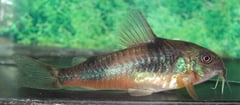
Hoplisoma ehrhardti
(Steindachner, 1910)
Max length50mm SL2.0in SLTanknot recordedTemp18–23°C64–73°FpH6.5–7.5Hoplisoma ehrhardti, long known as Corydoras ehrhardti, is an armoured catfish from eastern Brazil, known from southern São Paulo to northern Santa Catarina states. It inhabits minor rivers and small streams with soft substrates, a number of them modified by human activity. It is rarely traded and resembles several congeners, including H. carlae, H. paleatum and H. steindachneri.
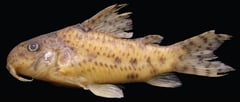
Hoplisoma flaveolum
(Ihering, 1911)
Max length50mm SL2.0in SLTanknot recordedTemp20–25°C68–77°FpH6.0–7.5Hoplisoma flaveolum, long known as Corydoras flaveolus, is an armoured catfish from tributaries of the rio Tietê in the upper rio Paraná basin, São Paulo state, Brazil. It is exceptionally rare in the hobby. Its closest congener is H. lacrimostigmata, from which it differs in having more serrations on the pectoral- and dorsal-fin spines, a rounded snout and flanks and fins densely patterned with spots and bars.
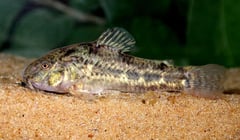
Hoplisoma gladysae
(Calviño & Alonso, 2010)
Max length38mm SL1.5in SLTank60 × 30cm24 × 12inTemp8–16°C46–61°FpH7.5–8.5Hoplisoma gladysae, long known as Corydoras gladysae, is an armoured catfish known only from two localities in the Río Calchaquí watershed in Salta province, northwestern Argentina. The Calchaquí is a swift, snow-fed mountain river with hard water, and the species shows adaptations to life among rocks in flowing water, including a cryptic colour pattern, short fin spines and reduced body depth. It is unlikely to be collected for commercial purposes.
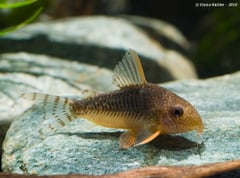
Hoplisoma gosseiPalespotted Cory
(Nijssen, 1972)
Max length55mm SL2.2in SLTank90 × 30cm36 × 12inTemp24–28°C75–82°FpH5.5–7.5The palespotted cory, Hoplisoma gossei, long known as Corydoras gossei, is an armoured catfish from the rio Mamoré watershed in Rondônia state, northwestern Brazil. It is also likely to occur in northern Bolivia, since the Mamoré forms the border between the two countries at the type locality. Also known as 'smokey cory' and 'Gosse's cory', it shares its colour pattern with Brochis seussi from the same river, which has a noticeably prolonged snout. A form referred to as 'CW069' appears intermediate between the two.
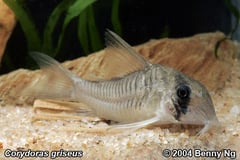
Hoplisoma griseum
(Holly, 1940)
Max length50mm SL2.0in SLTank90 × 30cm36 × 12inTemp20–26°C68–79°FpH6.0–7.5Hoplisoma griseum, long known as Corydoras griseus, is an armoured catfish from Guyana, where it may be restricted to the Potaro River in the Essequibo watershed. It was described from aquarium specimens said to come from 'very small water courses of the Amazon', and the type locality was later corrected to the Potaro by Nijssen and Isbrücker (1980). Similar-looking fishes from Rondônia state, Brazil, carry the 'C' numbers C040 and C073, and C134 from Amapá state is also comparable.