Hobbyist group · Siluriformes
Talking Catfishes
- Species
- 14
- Families
- 1
- Genera
- 12
- Photographed
- 13 of 14
- Difficulty rated
- 13 of 14
Families
Where they come fromnative records only
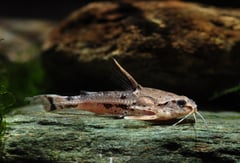
Amblydoras nauticusMarbled Talking Catfish
Doradidae · (Cope, 1874)
The marbled talking catfish, Amblydoras nauticus, is a small doradid catfish from Peru, described from Nauta in the Peruvian Amazon. It is often still sold as A. hancockii, a name now considered a synonym of Platydoras hancockii. Hardy and tolerant of a wide range of water conditions, it is secretive and rarely seen by day. It makes audible sounds by grinding its pectoral spines in their sockets and by resonating the swim bladder, and its spines tangle easily in nets.
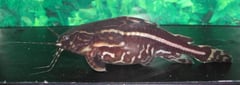
Acanthodoras cataphractusChocolate Talking Catfish
Doradidae · (Linnaeus, 1758)
The chocolate talking catfish, Acanthodoras cataphractus, is a doradid catfish from the northern Amazon basin and Atlantic drainages of the Guianas. It is most often exported as bycatch among Platydoras armatulus and is sold under the same trade names as A. spinosissimus, which has pale blotches on the back between the dorsal and caudal fins where this species has pale lines or no markings. Largely nocturnal and gregarious, it is best kept in a group of at least four.
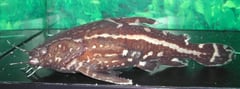
Acanthodoras spinosissimusChocolate Talking Catfish
Doradidae · (Eigenmann & Eigenmann, 1888)
The chocolate talking catfish, Acanthodoras spinosissimus, is a doradid catfish from the northern Amazon basin and the Essequibo in Guyana. Usually exported as bycatch among Platydoras armatulus, it is sold under the same trade names as A. cataphractus, and the most useful difference is the pale blotches on its back between the dorsal and caudal fins. Largely nocturnal and gregarious, it is best kept in a group of at least four.
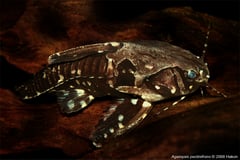
Agamyxis pectinifronsSpotted Talking Catfish
Doradidae · (Cope, 1870)
The spotted talking catfish, Agamyxis pectinifrons, is a doradid catfish from the Amazon basin in Bolivia, Brazil, Colombia and Peru. Very common in the trade, it is hardy and relatively long-lived, and recommended to beginners and experienced aquarists alike despite its adult size. It closely resembles A. albomaculatus, known only from the Río Orinoco drainage in Venezuela, and the two are probably sold under the same trade names.
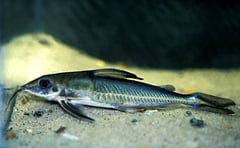
Hassar orestisBlack-top Mouse Catfish
Doradidae · authority not recorded
The black-top mouse catfish, Hassar orestis, is a doradid catfish recorded in Ecuador, Colombia, Venezuela, Guyana, Peru and Brazil. It can be delicate when first imported, and fish without a rounded belly or with sunken eyes are emaciated and seldom survive long. It resembles Nemadoras leporhinus, which has longer first fin rays and a clear dorsal fin with a dark patch at the base. Like other doradids it produces audible sounds, and its pectoral spines tangle easily in nets.
Leptodoras linnelliElongate Mouse Catfish
Doradidae · authority not recorded
The elongate mouse catfish, Leptodoras linnelli, is a doradid catfish from river drainages of northern South America in Venezuela, Guyana and Brazil. It is found over sandy substrates in deeper, flowing sections of rivers and prefers cooler water than many related species. Totally unaggressive and schooling in nature, it is seldom exported and usually turns up only as bycatch among shipments of Opsodoras leporhinus or Hassar orestis.
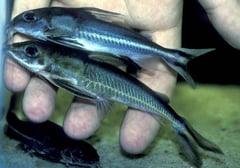
Nemadoras leporhinusMouse Catfish
Doradidae · authority not recorded
The mouse catfish, Nemadoras leporhinus, is a doradid catfish recorded from Venezuela, Guyana and Brazil. Rare in the hobby, it sometimes shows up as bycatch among Hassar or Hemidoras species and is most often confused with Hemidoras stenopeltis. N. leporhinus has a clear dorsal fin with a dark patch at the base and a more rounded snout. It is shy and nocturnal.
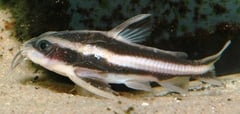
Platydoras armatulusHumbug Catfish
Doradidae · authority not recorded
The humbug catfish, Platydoras armatulus, is a doradid catfish ranging from the Rio Orinoco basin to the Amazon, Tocantins and Parnaíba basins. Also sold as the striped dora, striped raphael or striped talking catfish, it is hardy, but its secretive nature, adult size and habit of eating smaller tankmates suit it only to communities of larger fish. It produces audible sounds by grinding its pectoral spines in their sockets or by resonating the swimbladder.
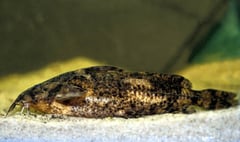
Rhinodoras boehlkeiFog Talking Catfish
Doradidae · authority not recorded
The fog talking catfish, Rhinodoras boehlkei, is a doradid catfish from the upper Amazon basin in eastern Ecuador and Peru. It is usually found sheltering among roots or sunken logs in flowing rivers and tributaries. Shy and nocturnal, it is totally unaggressive but will eat smaller fish, so tankmates need to be too big to be considered food.
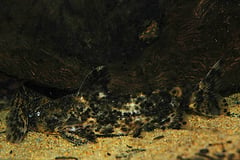
Rhinodoras dorbygnyi
Doradidae · authority not recorded
Rhinodoras dorbygnyi is a talking catfish from the Rio Paraná basin in Bolivia, Paraguay, Uruguay, Argentina and Brazil. It shelters among roots or submerged vegetation in slow-moving and standing waters. Shy and nocturnal, it grows to at least 30 cm and will eat smaller fish, although it is otherwise totally unaggressive.
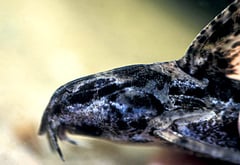
Rhynchodoras woodsiParrot Doradid
Doradidae · authority not recorded
The parrot doradid, Rhynchodoras woodsi, is a doradid catfish that appears to be endemic to the Rio Marañon basin, Ecuador. Rare in the hobby, it takes its name from its inquisitive feeding habits and a bony growth extending from the upper mouthparts, whose use is not known. Very peaceful and tolerant of conspecifics, it does not compete well for food with other bottom dwellers.
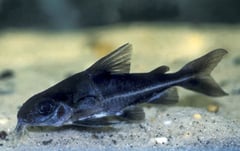
Trachydoras steindachneri
Doradidae · authority not recorded
Trachydoras steindachneri is a doradid catfish from the Amazon basin in Ecuador, Colombia, Peru, Bolivia and Brazil. Rare in the hobby, it is seldom offered for sale. Primarily nocturnal, it is a bottom feeder that suits a peaceful community with tetras, barbs and dwarf cichlids.
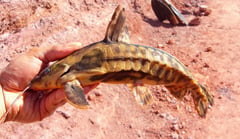
Megalodoras uranoscopusGiant Raphael Catfish
Doradidae · authority not recorded
The giant Raphael catfish, Megalodoras uranoscopus, is a large doradid recorded from the Essequibo, Tocantins and Amazon river systems. It is also known in the US as the 'ripsaw catfish', and older literature often refers to it as M. irwini, now a junior synonym. Growing to 600 to 700 mm, it is very peaceful and can be combined with many other species in suitably sized systems.
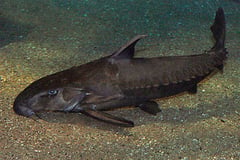
Oxydoras nigerRipsaw Catfish
Doradidae · authority not recorded
The ripsaw catfish, Oxydoras niger, is a large doradid catfish from many of the major river systems of northern South America. Reaching 90 cm, it is only for the experienced fishkeeper and best suited to public aquaria. Much more peaceful than its common name suggests, it takes that name from the spines along the lateral line. It was previously referred to Pseudodoras niger.